High Crimes ~ by Joseph Finder

I got on a Joseph Finder kick since reading Vanished a few days ago.  (And it was on sale.)  It is older though and it shows – 15 years of progress in technology is a tell, imo, but the book is good enough I was able to get past that –  the fact that it’s part legal thriller helps.   lol –  and I know next to nothing about military justice system.

The premise:   Claire and Tom Chapman have been happily married for several years and they live with her young daughter from a prior relationship in Boston where she teaches law at Harvard and takes cases on her own from time to time.    The story is generally told from Claire’s vantage point although not in first person.

highcrimes

*******
High Crimes
by Joseph Finder
1998 /  400 pages
read by Therese Plummer
Rating –  A+  /  legal thriller –  (military courts)
*******

One day the small family is walking through a local mall after a nice meal when they are suddenly confronted by military police who want Tom because,  after he gets away in a blaze of a short chase – they tell Claire he’s not really Tom Chapman.  He’s Ron Kubik and he’s  wanted for murder.

Turns out this Ron Kubik is not wanted for just any old murder,  but for the assassination of 87 people in a remote village in San Salvador.   He is then accused of a couple other crimes based on the same incident  which happened 13 years prior, in 1985.      The police say he’s been in hiding ever since and they found him only because of careful cross checking of fingerprints taken from simple burglary.

Characters are good,  writing flows,  suspense builds of its own accord,  no alternating chapters,  no foreshadowing.    The background being the military justice system makes the book a bit twisty as well as more suspenseful and interesting.

Posted in 2023 Fiction | Leave a comment

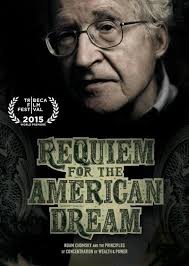
Requiem for the American Dream: ~ by Chomsky

I’ve wanted to read a book by Noam Chomsky for a long time (he’s now 88 years old!) but something always interfered.  I’ve watched him attack the system and support his causes for since the anti-Vietnam War years.   I tend to agree with him in so many ways.   But … I have problems with some of his assumptions.

Once a book I tried (?)  went kind of over my head and was very dry.  Other times the books seemed like they might be somewhat dated.   But this came across my path and it was originally filmed (first) and published after our disastrous elections so I thought maybe it might be accessible.   (The interviews were conducted over a period of about 4 years –  but it was still published after the elections – still relevant – more relevant perhaps.)

requiem.jpeg

*******
Requiem for the American Dream: The 10 Principles of Concentration of Wealth & Power 
by Noam Chomsky
2017 /  192 pages
read by Donald Corran  — 3h 50m
rating –  10 /  political/economics
*******

Chomsky writes about a good many things –  linguistics, philosophy,  history,   politics and social criticism – maybe more.   Take a peek at his Wikipedia write-up as well as the separate page for his bibliography and filmography:

https://en.wikipedia.org/wiki/Noam_Chomsky_bibliography_and_filmography

Requiem for the American Dream is about politics and economics and how the rich have suppressed the population for their own purposes by these 10 (or 11) methods.  It seems to cover so many things in one slim volume (and the film was first).

These are the chapter titles:

1 Reduce Democracy
2 Shape ideology
3 Redesign the Economy
4 Shift the Burden
5 Attack Solidarity
6 Run the Regulators
7 Engineer Elections
8 Keep the Rabble in Line
9 Manufacture Consent
10 Marginalize the Population

  1.  Reduce Democracy has been done historically via voting and other rights – watch the media –  keep democracy moderate.
  2. Shape Indoctrination:   In the second chapter Chomsky talks about the media and education and control.  He talks about the end of free education –  charter schools – it’s coming.  Destroy public institution like giving medication to kindergarteners because they’re not doing well in school.   “The masters of society have decided that.”    We can’t be having an excess of democracy – that Jacksonian ideal that led to the Civil War.   (That one’s a paraphrase.)
  3.  Redesign the Economy:  What government is doing is just getting more powerful and supporting the status quo – the auto industry is the case in point.  Investors want short-term gain –  restrain worker wages by a variety of means –
  4. Shift the Burden:   Taxes –  The “plutonomy” is a new category of wealth –  make the very rich very much richer.  Goals are profits – that is the only goal – profit.    ** The average Joe often believes he too can be one of the super-rich.  A back-lash is probable but it’s not in the near future.  **
  5. Attack Solidarity:  Basically pit one group against the other by interests or nationality – Plutocrats stick together across national lines –  Take care of yourself only – don’t care for anyone other than yourself.  Get rid of Social Security –  (imo – here’s the backlash.)   Public schools are also a part of solidarity  –  we all pay for the schools whether we have kids in the schools or not.   Same with health care but the “masters,”  as Chomsky calls them,  do not want this.   Drug prices are a huge example.   With all our resources,  we have become a 3rd world country in terms of infrastructure and education (like free college).
  6. Run the Regulators:  Banking and economics –  (enough said)
  7. Engineer Elections:   From the 14th amendment to Citizens United – corporate personhood .  Privileged access.   Build from the base, constantly  – T-Party did this.   How much can a person (including a corporation) spend on a campaign.  It all costs money.  Even internet has a price.   Politicians have to talk about what media and other politicos want to talk about.
  8. Keep the Rabble in Line:  –   Unions are a democratizing force.  (?) –  New Deal got unions involved.   The “masters” were split on some things including unions.   Labor has always had a lower class feel to it.   “Those who work in the mills ought to own them.”
  9. Manufacture Consent:  –  If the masses understand that they do have power then power as we know it will collapse –   Public Relations industry in freest countries.
  10. Marginalize the Population:  Trap the workers into jobs because they need the money to buy things.  Consumerize the population.  (Is making irrational decisions the fault of the advertising companies?   Some corporation heads make irrational decisions, too – like having mistresses or luxury yachts.  Propaganda –  Children’s ads for junk –  smoking for women – etc.   He goes on against the “neo-liberals.”

There was really nothing in this book I wasn’t aware of on some level, mostly quite consciously but unarticulated.  That said,  Chomsky says it very well and the book is nicely organized and to the point.  I agree with most of what he says but … I have a pragmatic side and I’ve seen that many laborers in the 21st century do not want unions.  They want the “right to work”  without unions fearing that unions will keep business (jobs) away. .  I’ve seen that many people are fed up with public schools and want charter schools for their own kids.   I’ve seen people get addicted to buying more and more stuff.   I’ve seen that people are very selfish –

The issues which do concern me are climate change (and related problems),  gun control.  It seems not to matter that the public truly does have an opinion.  Congress and the elites  – “the masters” –  don’t care.   “The people”  are also split on the issues of abortion,  race and GLBT where nobody is making any money off of those. (Advertisers target them too –  equal opportunity spending I guess.)

Chomsky talks about much of this as though there were some huge premeditated conspiracy to defraud the workers of the US.   I don’t agree – companies moved their plants to Mexico and China without any agreement with anyone else to do it.  Workers were cheaper there and so off they went.  (Like some people shop at Walmart – because it’s cheaper.)    Actually,  they probably wanted to get one up on the competition.  Unions made it harder to make those big almighty profits in the US than get them in India even with shipping.   (And if the US doesn’t want to pay for schools then we will continue to be dependent on other nations for workers in some industries –  immigration is a pretty hot topic.)

Advertising is done to get “one-up” on the competition – not to trap the workers en masse. Trapping the workers is a side-effect – (And Grandma in her youth ogled the Sears catalogue the same way the kids today ogle the new stuff in the mall or online.)

Chomsky says that we’re  still relatively free –  we have to build large movements to create more freedom.  We can do it if we choose to – I think.   (If we actually think we can’t –  it’ll be harder.)

I agree – there is something fundamentally wrong with capitalism – I just haven’t seen a system which works better in countries not as rich as Norway.  But perhaps Chomsky just wants us to see it for what it is,  for what it has become.

Posted in 2023 Fiction | Leave a comment

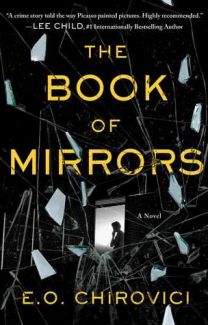
The Book of Mirrors ~ by E.O. Chirovici

Memories are tricky things – especially after 20 years has passed.   But some things stick – some true,  some not –  some get placed in the wrong context.   This isn’t so much a “thriller” as it is a literary crime book,  more on the order of Julian Barnes mixed with Thomas Cook (Sandrine’s Case and others).  I say that because most of it concerns the theme of how memory is really unreliable.   Others have described the book as “a cross between Donna Tartt’s The Secret History and Carlos Ruiz Zafón’s The Shadow of the Wind.”   (The Guardian)  or  “in the vein of Night Film and Crooked Letter, Crooked Letter”  (Simon & Schuster

mirrors.jpg

*******
The Book of Mirrors
by E.O. Chirovici  (Rumania/UK-English)
2017 / 288 pages
read by Jonathan Todd Ross and cast –
7h 5m
Rating:   A /  literary crime 
*******
Peter Katz, a literary is intrigued by a partial manuscript he receives in the mail from one Richard Flynn who also sends an email cover-letter as a follow-up.   Flynn, who is now very sick,  was a student of the famous psychologist and professor,  Joseph Weider who was brutally murdered in 1987.  The case was never solved.   Now Flynn is writing about it – is he confessing?  Accusing?  Just giving an insider’s information which he has just remembered?   Hard telling because the next night Flynn died in his hospital bed.  The rest of the manuscript is nowhere to be found.

Katz is curious – he reads the excerpt and decides to have John Keller,  follow up and see what he can find in the way of the crime and/or the manuscript.  The idea is to write a True Crime book based on Keller’s investigation.

The theme concerns cognitive psychology and its relationship to memory,  mental stimulus and reaction – the way memories are formed and more.   And Weider’s thoughts on memory as well as his experiments are included in Flynn’s excerpt.   Weider’s research has included studies on how memory is sometimes erased,  scrambled, distorted and even invented.  Weider was also experimenting with his ideas and becoming very famous for it.

So that  little discussion sets up the complexity for when some of the characters mentioned,  an interesting bunch in themselves,   turn out to remember one way and other characters another way and some not at all.  The rest of Flynn’s  manuscript is missing along with a couple people and another manuscript.

It’s a goodie – Chirovici’s first in English,  his second language.


Posted in 2023 Fiction | Leave a comment

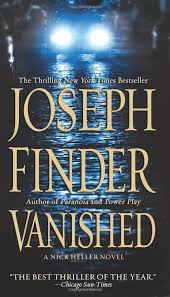
Vanished ~ by Joseph Finder

I’ve read two of Finder’s novels prior and I loved one (Company Man)  and didn’t much care for the other (Paranoia).  I wasn’t going to read any more but this one caught my eye for some reason – on sale at Audible,  perhaps.  ? –   Anyway I gave it a try and was pleasantly surprised.

vanished
*******
Vanished
by Joseph Finder
2009/ 395 pages
read by Holler Graham 10h 42m
Rating:   A / crime 
*******

Nick Heller’s brother,  Roger,  is missing.  He and his wife Lauren had a date night and while Lauren was smacked,  Roger disappeared.   When Lauren regained consciousness in the hospital there was no evidence of him anywhere.  What happened to him?  Where was he?

With his mother in the hospital,  Gabriel, Laura’s 14-year old son and Roger’s stepson, places a phone call to  his uncle Nick who arrives pronto to help find his brother.   After that,  well,  things get complicated.

Nick is a trained spy who works for Special Forces seeking out embarrassing information and the dark secrets of powerful people.  This this time it looks like the dangerous head of a huge international corporation is involved,  at least according to something Roger said to Lauren earlier – Roger found something incriminating.  They might want him out of the way.   So,  where is Roger?

One twisty thread is that the father of Roger and Nick is doing a long prison sentence  for big-time corporate fraud.  He’s not a nice guy.   I’m not going to say any more except that Nick has been highly trained and has skills and talents way beyond your average street cop.  He’s also very smart,  determined, and willing to get into the physical parts of a risky  chase.

The plot is good,  the characters are really well done, the writing is smooth.  The only downside is that the thriller aspect – the chase scenes – take over.   That said,  yes,  I’ll read book 2 in this series.   But Company Man is still better.

Posted in 2023 Fiction | Leave a comment

The Refugees by Viet Thanh Nguyen

The Refugees had been on my radar for several weeks – since it was released actually,  because I totally enjoyed The Sympathizer by the same author.   And this book then won several awards (as did The Sympathizer) and then I procrastinated.   And then I got it.  Today.   And I like to buy and read as I go so I read it today.

refugees.jpeg

*******
The Refugees
by Viet Thanh Nguyen
2017/ 224 pages
read by Viet Thanh Nguyen  5h 5m
rating:   9.2  /  stories
*******

“We had no belongings except our stories.”

And that’s the theme and the main arc of the themes.   The refugees each tell their own story –  it’s all they have.

Story 1 –   a young woman works as a ghost writer and then sees ghosts and remembers a tragedy.

Story 2 –  Liam, a vulnerable young gay man,  living in a city in California –  remembers the past and tries to avoid it while he learns how to hope.

Story 3 –  A teenage boy in San Jose  works at his parents’ store called The New Saigon.  The customers speak Vietnamese and barter with his parents.   The story of denial and continued support for a lost cause,  lost people.  (1st person and similar to the author’s own biography.)

Story 4 –  Arthur Arellano eats with his friend Louis Vu in an upscale Vietnamese restaurant in Little Saigon in Orange County California. The two men are connected in more than one way but there has been a serious mix-up and Arthur has nothing much to offer.

Story 5 –  “I Love You To Want Me” –    Professor Khanh who is getting dementia starts calling his wife by a stranger’s name.   A very touching story.

Story 6 – “The Americans”  –  James Carver  (from Alabama)  and his wife Mitchiko (from Japan)  are visiting Cambodia and Vietnam to see their adult daughter Clare who lives there and works as a teacher.   Claire’s boyfriend  Khoi Legaspi  who is Asian appearance is also with them.  At one point Khoi makes a wry comment about being a “black man in Japan.”    Claire is a teacher and has decided to live in Vietnamese and work as a farm person as he had.   Very interesting dream.   Very multi-ethnic and dual generational story,  satirical, my favorite.

Story 7 –  A young male school teacher of Vietnamese heritage whose Vietnamese mother has died recently.   He was born in a refugee camp .  His wife, Sam, is divorcing him because she wants children but he despises his father. So he invited his father to live with him.  This was a mistake – hie father is loco.   Now Sam is pregnant.

Story 8 –  A woman successfully immigrates to the US and returns much later to visit her family –  she gets a lot of surprises but then,  she has a surprise for them, too.

This one needs a reread.  And I may have to read Nguyan’s  award-winning “Nothing Ever Dies: Vietnam and the Memory of War,”  too.

http://www.startribune.com/review-the-refugees-by-viet-thanh-nguyen/414016003/

Posted in 2023 Fiction | Leave a comment

When Breath Becomes Air ~ by Paul Kalanithi

This has been read and reviewed highly rated and ranked for so long I just finally caved in.   It’s the memoir of a young brilliant neurosurgeon who discovered in 2013,  while still in his mid-thirties, that he had cancer and it was terminal – he had about a year to live.  So he wrote, a first love,  his memoirs.  

breathpaul.jpeg

*******
When Breath Becomes Air
by Paul Kalanithi
2015 / 256 pages
read by  Sunil Malhotra, Cassandra Campbell / 5h 35m
rating:  10 / memoir
*******

I think maybe the hype messed me up at first and I was expecting more than what was apparent in the first couple of chapters.  But then I got caught up in it and yes,  by the end I got teary and yes the book was also very thoughtful as well as illuminating.

It opens with the author having symptoms and finally talking about them and then getting a diagnosis.   Then the reader is taken into a kind of sweet memoir of his childhood and educational  experiences including studies in literature which were preempted by a call to take up medicine.   But the literature studies shine through.  This is by all means a literary memoir.

So then we get to travel with Kalanithi as he works at a 6-year residency program,  studies neurosurgery and survives the births and deaths of patients.  He starts to wonders if knowledge is enough because he becomes aware that the profession also demands moral clarity and wisdom.   “The grave digger with the forceps.”  And because he’s a Christian by birth (his mother converted from Sikh)  there’s a smattering of religious ideas scattered throughout – never heavy – just a presence because it was present in his life.

During this time he also marries a young woman named Lucy and she sticks it right out with him.  That’s the background – we get to know Paul as a human being and as a doctor.  The next part deals with Paul as a patient  –  a dying patient.

In spite of his diagnosis,  or maybe because of it,  Paul took to reading literature again,  and having a child with his wife.   And then he realizes that he’s not dead yet,  so he gets back to life as much as he can just going through the changes while he prepares for death.  The stages of grief and go on while he works at his chosen profession  – through shock and magical thinking and denial – each in its own time.

The thing is Paul intellectually knowledgable and aware of what was going on up to the end – he’d seen it in his own patients  – he’d counseled  them.   But on a personal level he searched for meaning while the doctor becomes the patient.  This is that story.

Kalanithi has a gift for words so the narrative is clear and informative but also quite literary in some ways – many ways.    To me this is a tale of rare courage and a willingness to live for meaning as long as was possible. Once again in the hospital, it became harder to breathe and  Paul declined as had been predicted.  Paul Kalanithi  finally died surrounded by family in March 2015.   He had been writing the book for the year prior to his death.

It’s a beautiful book – much more than I expected as it turns out,  and certainly more than most memoirs.     The Epilogue says the book,  as published,  was not entirely finished,  but it is,  in all ways,  complete,  because Paul Kalanithi lived *with* his cancer and he lived until he died.

http://www.chicagotribune.com/lifestyles/books/ct-prj-when-breath-becomes-air-paul-kalanithi-20160302-story.html

Posted in 2023 Fiction | Leave a comment

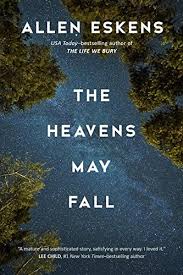
The Heavens May Fall ~ by Allen Eskens

Ahhhhhh…..  another juicy legal thriller – it’s not out of my system  yet I guess.

I read  Eskens’ prior crime novel,  The Life We Bury (2014)  back in January of 2016 and enjoyed it pretty well although it seemed a bit like a young adult novel because of the ages of the protagonists/amateur detectives.    But it was an award-winning novel so when this one came out it intrigued me.  It intrigued me even more when it went on sale at Audible.  lol

heavens.jpeg

*******
The Heavens May Fall
by Allen Eskens
2016 / 270 pages
read by R. C. Bray, David Colacci, Amy McFadden  9h 32m
rating A+
*******
The hype says this book is different and they’re right – actually.    The police have found the body of a woman who has been murdered.  Under the supervision of Detective Max Rupert the police  investigate.  The woman is tentatively identified and her husband,  Ben Pruett  who is in Chicago at the time,  returns to identify her.  Their daughter is safe and sound,  but needs to be told.   Max is concerned that Pruett is involved because he had a bad experience with him in the past – illegal on the part of Pruett.   The husband comes in for questioning but leaves because Max seems  to be targeting him.   And then it gets different.

Part 2 opens with the Ben Pruett going to see Boady Sanden,  a retired defense attorney and professor and we get his side.   But then we go back to the procedural and the police interviews.   Bodie has problems with the past also – he lost an important case which resulted in a man’s death.

The chapters and sections alternate between the stories of Max Rupert and Pruett/Sanden –  this is actually between the prosecutor and the defense and that thread doesn’t wind up very late in the book.   But there’s also a thread dealing with the unresolved murder of Max Rupert’s wife 4 years prior.   It’s related in rather surprising ways.

The title comes from the legal and Latin saying:   “Fiat justitia ruat caelum” which means “May justice be done though the heavens fall.”   The ideas is that justice must be served regardless of the consequences. –  This is quoted by Sanden and represents a kind of theme in the book.

Apparently both Boady and Rupert were in Eskens’ prior novel,  The Guise of Another but it didn’t look like this was a series so I skipped that one.   But there’s another novel coming out in October of this year so if I’ve missed one of a series – so be it.  I know nothing about the upcoming novel and I may have to go back and pick up the prior.

Posted in 2023 Fiction | Leave a comment

Kitchens of the Great Midwest ~ by J. Ryan Stradal

Well,  how could I not read a book where the first chapter is entitled,  “Lutefisk”?   With both Audible and Kindle versions on my devices,  I started reading/listening.   Then I got really bored for some reason,  but I kept going because lutefisk is sacred food, dontcha know,  and I partake as often as possible – every year or couple years.

kitchens

*******
Kitchens of the Great Midwest

by J. Ryan Stradal
2016 /  320 pages
read by Amy Ryan and Michael Stuhlbarg  10h 7m
rating –  9 (* for enjoyment alone) general lit / humor  
(both read and listened)
*******

So out of a sense of love of family and all things Norsk,  I kept reading.  Then,  after the first chapter it took a turn for the better when Eva (age 11)  shows up.  And it gets better yet when Eva’s cousin Braque,  who is a college freshman intent on sports, gets the main character focus.    Very, very hot chili peppers play a huge part now –  this is an equal opportunity character list.   At this point I’m laughing and kind of caring about these strange young characters – wondering how they’ll get out of their predicaments.

There are a few recipes – not many – maybe a dozen (?).   It’s definitely a foodie book.   It’s well enough written for a fluffy type  book – but I may be prejudiced because of the lutefisk thing.  lol  And it may not be all that bad – it got a NY Times review (see below).

The book opens in about 1950 when the Thorvald family buys the lutefisk outlet in Detroit Lakes,  Minnesota.  After a chapter about how the three boys turn out the action switches to Lars grown up and relocated to the Twin Cities where he worked as a chef, married Cynthia and had a child,  Eva.

Then the story switches to the child, Eva Thorvald,  at age eleven.  That little bit covers to about page 35 so there are no real spoilers.   Eva takes after her parents in her love of food and she develops into quite an amazing woman with some interesting adventures.  But there are other points of view included such as those of her cousin Braque and  boyfriend, Will Prager.

The chapters are named for food items and there are usually even a few recipes included. And each chapter features a different character through whom we see Eva somewhere,  but not necessarily front and center.   The major characters are wonderfully well developed although not all necessarily “likable.”

It’s about love and food mostly,  and families,  mothers, fathers,  addictions, connections, a bit of feminism and growing up.  And there’s a bit of gentle satire in there,  too – sometimes poking at the city folks, other times at the more rural folks,  sometimes at younger people,  other times at the oldsters.   Because the whole story takes place over the course of about 25-30 years there’s a fair amount of change involved.

The book is just totally warm and funny and a nice respite from Sjon’s Moonstone or Judas by Amos Oz  and the crime books I’ve been reading.    I love walleye pike – love lutefisk and lefse and also always have jalepeños on my turkey sandwiches (and on Mexican food, too, fwiw).

Another thing is that the book is very tighly connected to the era of its times – For instance Neutral Milk Hotel was a band of the 1980s.  https://en.wikipedia.org/wiki/Neutral_Milk_Hotel
There are dozens of references like that.  But not everything – some references are totally fictional.

On the whole,  if you’re looking for something light and humorous but filled with lots of love (but no “romance” per se) –  go for it!   Oh –  and the ending is to die for.


Posted in 2023 Fiction | Leave a comment

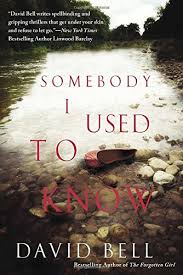
Somebody I Used to Know ~ by David Bell

I wasn’t sure what kind of a book this is supposed to be but it’s categorized as “mystery/suspense”  at Audible so I guess I’ll go with that –  there are several mysteries including a murder or two.   And it is suspenseful although not over-the-top, rather,  the suspense builds and ebbs and builds again.    There are no professional cops involved except at a rather minor character level.
somebody.jpeg

*******
Somebody I Used to Know
by David Bell
2015 / 432 pages
read by Andy Paris – 10h 51m
rating –  A
*******

The thing is,  Bell unwinds the suspense slowly – then a twist  -then slowly again,  just kind of spooling it out.  I wasn’t too sure I really wanted to continue with this even after several hours of listening.   There’s a wee bit of procedural and a wee bit of legal stuff in the book – there’s a cop and an attorney involved.

Mostly it’s about a single man in his mid-30s who as our 1st person protagonist explains his situation regarding his college girlfriend,  the love of his life,  suddenly dead.   The story picks up when he sees her,  or thinks he sees her,  in a grocery store.  When the woman sees him she takes off out of the store,  but is found murdered that night in a motel room with a slip of paper on which is written the name Nick Hanson.  Yes.  Our protagonist himself.

So the police decide Nick has more to do with it than simply seeing her in the store and he hires a lawyer.  He’s eliminated as a suspect pretty quickly but the whole situation raises some questions –  like who the heck is she and what does she want with him?

Nick has some friends,  a woman who is divorcing him,   a woman he’s he’s dating, and another old female friend with connections who wants to help.  Apparently they have to do the investigating themselves because the police are really only interested in who killed the girl in the motel room.  Nick is more interested in finding out what happened to his girlfriend (dead in the fire?)  and her family who moved,  right off the grid,  disappeared,  shortly after the events.

The suspense is controlled and sometimes subtle,  but it heightens as the book goes on so if you pick this one up and feel a bit bored,  keep going.  The characters get pretty well developed and the plot twists like a braid.   It’s worth it.

Posted in 2023 Fiction | Leave a comment

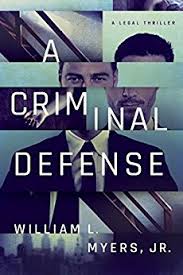
A Criminal Defense ~ by William L. Myers

Alright already -enough legal shemgal unless something really great comes along –  this one wasn’t it although it wasn’t bad.  The narrator was over-the-top and that had a really negative effect.

criminal.jpeg
******
A Criminal Defense 
by William L. Myers
2017 –  380 pages
read by Peter Berkrot 12h 41m
rating –  B
******

A prominent Philadelphia attorney is accused of the murder of Jennifer Yamora,  a beautiful and aggressive young reporter,  and it looks really bad for him what with his non-alibi and money laundering schemes.  Also,  there are some crooked cops investigating the case.  So he gets his  long-time good friend,  Mick McFarland, to defend him.  Things look worse.  The wives and families are involved and there’s a lot of money at stake.  Lives are at stake.

For those who enjoy legal thrillers this has lots of courtroom action and no real gore or chase scenes.  The characters are believable enough although maybe a tad more evil than necessary.  (I really only liked the brother.)   How many lies can one book hold? If anything the plot gets a bit too complex.

Peter Berkrot took the narration to a new level and this is irritating to me- to my ears and nerves.  It gets tiring to have every paragraph read like it’s the ultimate shocking conclusion.   But Myers also took the twists to extremes, too.   I think I’ll pass on any more books read by Berkrot –  I may be open to Myers.

Posted in 2023 Fiction | Leave a comment

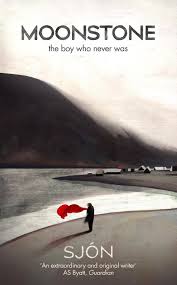
Moonstone: The Boy Who Never Was by Sjön

This seemed like it was pretty expensive for a 2-hour listen, but I’ve read a couple of Sjön’s prior works and they are exquisite (“From the Mouth of the Whale”  and “The Blue Fox”)     So okay – I went for it.

Imagine Iceland circa 1918 and a teenage boy who has to earn his living as a male prostitute.   The story opens with young Mani Steinn graphically involved in his general occupation, then goes into his yearning for a woman,  Sóla G,  after which it turns to a bizarre notion of seeing his own head in a casket.    It’s also about music,  motorcycles, movies and the Spanish flu and has a twist at the end which is truly unforgettable.

moonstone.jpeg
*******
Moonstone:  The Boy Who Never Was
by Sjön  (Iceland)
2016 / 160 pages
read by Vikas Adam 2h 6m
Rating:  8.7  / historical fiction
(warning – a gay child prostitute is the main character)  

*******

“The Boy” of the title is Mani,  a parentless soul who lives with his great-grandmother and her sister in Reykjavík, Iceland.   At age 15 or 16 he loves movies and what he learns about the world from them.  Although silent and with a very dark  atmosphere,  Mani watches movies obsessively at two theaters.  His favorite movie is the 17-hour long “The Vampires”  by Louis Feuillade.

(Is this like the books about girls who read too much fiction and it ends up messing with their real lives?  – I suspect there’s a connection – see Northanger Abbey by Jane Austen or a few others.  But where those are somewhat comic,  there is not one humorous line in  Moonstone.)

But these movies,  grim as they are,  are sometimes  preferable to what he learns in his real world of 1918 – about his customers and about the plague of deaths from the flu epidemic brought by seamen fighting  the Great War in Europe which rages on.   And then there’s the the volcano,  Katla, which spewed more fire and smoke that same year.

One night “the boy”  accepts a customer and says his name is Mani Steinn which the foreigner pronounces as “Moonstone.”

At the movies Mani meets a girl who looks just like his favorite actress (Irma Vep of The Vampires)  and the two of them are friends although she’s from the upper class and he’s from the very lowest of the low.  All classes can go to the movies and it seems to like the movies are open 24/7 and Mani can go almost any time.  They’re black and white,  and silent.    His movie life and his real life get enmeshed.  Mani is a true outsider – an outsider of outsiders.  Yet he survives in his own fashion – and so  does Iceland in  getting its independence from Denmark that same year,  1918.

Katla_1918.jpg

Katla in 1918

The narrative is loose, dreamy,  very grim and somewhat fantastical at times.   It is beautifully written with even some poetry included from time to time – by Sjön.  But it’s really hard to stay focused on the book – which is possibly explained at the end.  Brilliant.

The ending is a knockout going from the hellish streets of Reykjavík to much much later and far away and back again,  presenting a cycle in a way.  And in the turning we’ve forgotten all about Mani/ Moonstone – the boy who wasn’t.

I’m a bit hesitant about recommending this one because it has some really graphic homosexual scenes in it but if you think you can get past that,  it’s worth it.

Posted in 2023 Fiction | 3 Comments

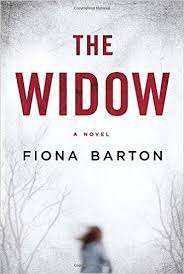
The Widow by Fiona Barton

I’m still on a crime roll.  I almost ended it last night with the purchase of some nonfiction (history of Christianity),  but had been tempted by this debut novel by Fiona Barton for some time.   (sigh)   It’s getting to the point where I’m getting a bit weary of crime novels – so many seem similar and they feel grittier.   Maybe I’m getting pickier – or – I’m hitting less worthy books – or – I’m just getting full of it.    Yes,  each book is a bit different in some way or another,  but building tension seems to be the common denominator. These are not the gore-free  “who done it” puzzles of Agatha Christie at all.  These newer books seem to focus on how deviant the bad guys can be and/or how nail-biting a chase scene can be.  In this case the bad guy is seriously ugly,  but fortunately there are no graphic scenes.   Also, there are no chase scenes.   It’s straightforward suspense created out of “did he or didn’t he?”  and “what did she know?” and using journalism,  police work and courtroom scenes plus the memory of a woman brought out by a skilled journalist.

widow.jpeg


*******

The Widow
by Fiona Barton
2016 / 340 pages
read by Hannah Curtis and cast:  10h 24m
Rating:  B  / suspense-procedural-courtroom 
*******

More and more crime novels have crossed sub-genres.   And what we have is suspense/ procedural/ legal mixed up with a woman whose memories are not always reliable.

And it’s compelling also because it has an interesting structure with this  journalist person interviewing the newly widowed Jean Taylor whose husband died only a few weeks prior.  This is in 2010.  The trouble is,  and we know this from very early on,  her husband,  Glen Taylor,  was suspected of having abducted and probably killed a small girl back in 2007.   So the media is fascinated and Kate Waters is on the scene making the most of that.

The narrative goes back to pick up on the events of 2007 and 2008 as Jean reflects on her life and marriage to Glen Taylor.  Glen died suddenly when he was hit by a bus only a few days prior to the interview.

Alternating with those chapters on Jean’s memories is the same case of the child kidnapper from the point of view of Detective Bob Sparks and his team’s involvement in from getting an alert that a child is missing,  through procedurals and courtroom dramas to the very ending,  about 3 1/2  years.

Jean Taylor, the widow of the title,  is a curious and well developed but reticent character – her husband, the “pervert” as the media calls him,  is creepy,  Bob the cop is a good cop in general and the newspaper reporter is good in general – but we all make mistakes.

Posted in 2023 Fiction | Leave a comment

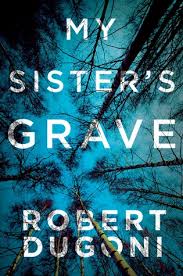
My Sister’s Grave by Robert Dugoni

I’m taking a break from reading the hard stuff and going with whatever comes my way for fun.  Crime novels are good.  Legal thrillers are better.  This is a new-to-me author and I’m generally pleased if not wow’ed. –  mostly procedural but there are a couple of good courtroom scenes.

sistersgrave.jpeg

*******
My Sister’s Grave
by Robert Dugoni
2014 / 416 pages
read by Emily Sutton-Smith 10h 49m
Rating:   B+  /  police procedural/legal, thriller
(#1 in the Tracy Crosswhite series)
(mostly listened but some reading)

*******

Twenty years prior to the main action Tracy Crosswhite’s sister was brutally raped and murdered.  At least that’s what everyone thought –  no body was ever found.  A local bad guy was tried and convicted though – conveniently and using somewhat less than well examined evidence.

Now the body has been found and Tracy, who is currently employed as a homicide detective across the state in Seattle,  is on the scene for it.  She’s not convinced that the man in prison is guilty of this particular crime – she’s very suspicious of the evidence – or lack of it – and she wants to know what really happened to Sarah.

So she hires an old friend who is now a local attorney (and divorced …  sigh) and together they try to find the truth.    The truth is that this is a sleep-stealer and I was up way too late even knowing I wouldn’t be able to finish.

There’s one huge error in the book – provided they’re charged cell phones work just fine without electricity.  It’s one of the benefits.  This is a serious irritation in the book.

Other than that,  it’s well enough written for a crime novel (police procedural – legal – thriller) with an undistinguished cast of characters and a kind of lack-luster plot line up to the ending – which is definitely interesting.   The best parts,  for me anyway,  are the courtroom scenes.  There’s a certain amount of who-done-it in almost every legal crime book.

The back-story of Tracy and her sister is inserted at intervals and slowly catches up with the frame story.  These portions are in italics so it’s a good thing I got the Kindle book because the switch between past and present would have thrown me.

All-in-all a very good crime book – nothing special – a tad too much romance for my tastes but otherwise …

Posted in 2023 Fiction | Leave a comment

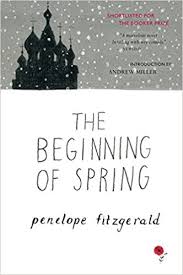
The Beginning of Spring by Penelope Fitzgerald x2

Moscow circa March,  1913 -so although the characters can’t know it,  World War I and then the Revolution is only a year away.  What they do know is there is unrest in the city.  There is the student unrest,  the labor strikes and even some activity in the at the print shop which the Englishman Frank Reid owns and operates.   There is a spiritual revival going on which includes Tolstoy and his ideas.   And more than that,  it’s the week of Ash Wednesday – the beginning of Lent – the most important holiday in the Russian Orthodox religion.   This is such a delicious book!

springfitz.jpeg
*******
The Beginning of Spring
by Penelope Fitzgerald
1998/ 272 pages
Rating: 9.4 / historical fiction
*******

I’m reading this for the second time and I have some different impressions – that happens with good books and multiple readings.   First,  although there’s a lot of seriousness going on,  it’s really funny at times – I laughed out loud.     Also,  it seems like a good deal of  research  must have gone into the project – there’s an authentic feel to it.

The story concerns Frank Reid, an English print shop owner in Moscow who is married and they have three very individualized children.  One early spring day his English wife takes the children and leaves him but sends the children back. Within the next few days Frank hires a replacement – a lovely young native Russian woman named Lisa.  There are several characters adding interest – Selwyn Crane who is deeply spiritual and always knows and does what is morally correct,  a chaplain’s wife who suggests an unlikely governess,  the strange unlikely governess herself,  a business acquaintance of Frank’s who is rather down-scale from Frank and somewhat of a rowdy status-seeker,   a student who breaks into the print shop,  a couple more employees,  etc.    All of the characters are a somewhat mysterious but Selwyn,  Nellie Reid,  Lisa and the student are actually secretive.

Can we ever really know anyone?  These characters are incredibly well articulated and still mysterious – as is Russia.

Another plus is that the history is meticulously researched yet never over-played.  There’s a real feeling of authenticity – I suppose it’s in the details.  Actually,  I think Fitzgerald’s forte is the understatement – the minimal – the unrevealed.

A major theme may be the ways we keep track of time.  From following minute train schedules to the birches in various seasons –  natural measuring vs man-made measuring.

In 1912 in Moscow, Easter was celebrated on April using the Julian Calendar because Russia did not convert to the new Gregorian calendar until 1918.  Most of the West was using the Gregorian Calendar by then and their date for Easter was April 14.   (It was on the same day but the Russians called it something other than what the West called it.)

Characters
Frank Reid - the young English owner of Reid's Press in Moscow
Nellie Reid -  his English wife -  bourgeois
Dolly Reid -  the eldest child - precocious and a bit bossy
Ben Reid -  younger brother
Annushka -  youngest girl
Grace Cooper -  Nellie's mother
Charlie Cooper -  Nellie's brother
Yacob Tvyordov -  compositor in the print shop
Korobyev -  a worker who keeps track of dues and fines
Selwyn Crane  (Osipych) -  Reid's assistant,  intellectual and spiritual - a Tolstoy fan
Toma -  Frank's servant
Dunyasha -  the children's governess
Kuriatin -  Frank's  2nd grade business acquaintance - house of bears and children
Mitya Kuriatin -  daughter
Masha - son -  hell raisers
bear -  in Kuriatin home
Mrs Graham - Chaplain's wife -
Muriel Kinsman -  friend of Mrs Graham,  seeks job as governess
Reverend Edwin Graham -  Mrs Graham's husband,  chaplain -
Lisa Ivanova - Selwyn's friend,  needs a job,  beautiful
Bernov -  2nd accountant at Reid's -
Volodya Vasilych - student who breaks in to Reid's
Guilanin - Reid's watchman.

The years around 1913 were a time of material changes,  like telephones and automobiles and light bulbs – even a Singer sewing machine  – and spring has more changes so people go to their dachas to be with the seasons and nature.  In a longer view,  the Bolshevik Revolution is coming in 1917 along with the Gregorian Calendar in 1918 – there were 13 days lost or skipped when the new calendar was implemented.   There are other ideas  in the book –  religion comes up a fair amount.  and in the end the windows are thrown open and Nellie comes back.  Like Spring returns.

So what occurs in the book is just before the  but also Shrove Tuesday and the railway schedules – the Lvov children’s timetable.  Time for vespers,  “quickest at that time,

Nellie Reid is quite a mysterious character – she’s afraid others know something she doesn’t and she has to find out.  Fitzgerald is never explicit about the sex – or about several things.  There is so much under the surface here – and it’s left open for the reader to respond to – to conclude about.

Birch trees are huge symbols in the book.  Selwyn writes a whole book about the thoughts of these trees.    They are survivors of winter – as are some of our characters.    –   And birch bark is sometimes  used for writing –  in Russia the birch symbolizes new growth (which is nice for Easter, too).

We never find out a lot of things in this book but I figure that Nellie took off because “nobody was going to get the better of her.”   She wanted to know what Selwyn was talking about – the mystical experience of Russia.  Selwyn might think she wanted to meet with him for a sexual tryst but I doubt it –  that doesn’t seem like Nellie.

And what was Lisa doing with the trees at the dacha? –

Did Lisa and the student have something going on? –  Where did Lisa go?

http://www.tandfonline.com/doi/abs/10.1080/00144940109597141?journalCode=vexp20

Posted in 2023 Fiction | 3 Comments

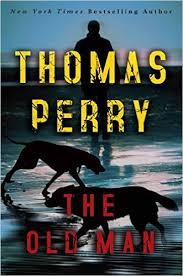
The Old Man by Thomas Perry

Having finished several wonderful but more challenging books in the last couple weeks,  The Hidden Life of Trees,  Lincoln in the Bardo,  Citizen,   I thought it was time to chill and read something just for fun.   I lucked out.

The man we know as “Peter Caldwell” is not really Peter Caldwell.  Rather he’s a man seriously wanted by several people and agencies of the Federal government.  Many years ago he did something very illegal in Arab American relations and he’s been on the run ever since.   On the run with a lot of money.

oldman.jpeg

*******
The Old Man 
by Thomas Perry 
2017 / 352 pages
read by Peter Berkrot 11h 13m
Rating:  B+  / crime   
*******

The book opens with Peter killing someone who has apparently found him after which Peter leaves the area to set up housekeeping in Chicago.   He travels with his dogs,  Dave and Carol.  In Chigago he moves into a situation of sharing a rental with Zoe,  a very nice divorced middle-aged woman,  and the two of them start a relationship.   His daughter will not know where he is but has to simply trust he’s okay until told otherwise – he contacts her in various ways.

Peter is a very good guy but he has an agenda and needs Zoe, and her daughter,  to trust him on a fairly high level. He’s also very suspicious and alert,  almost to the point of paranoia, and has his ID and financial accounts in order to escape if necessary – and it was.  His daughter never knows where he is.  He’s off the grid and has to stay there.   Zoe makes it pretty easy but that’s rather risky on several levels.

It makes for some fascinating reading to watch a man in hiding stay in hiding.  He covers his trail,  keeps himself safe,  stays low on anyone’s radar – along with Zoe now.

The other major character in the book is a young black man named Julian Carson.  He’s working under independent contract with the military to bring “Peter” in.  He’s kind of trapped into the situation of having to do this so the reader gets to know Julian to the point of sympathizing with him.  It’s an odd alternating chapter effect in which the opponents are both anti-heros.  Very tense.

Overall it was great but the ending was a bit disappointing – kind of clichéd.

Posted in 2023 Fiction | Leave a comment

The Hidden Life of Trees: by Peter Wohlleben

This is an amazing book –  I’ve loved trees since I was in grade school and did “reports” on them,  collected leaves and made sketches.  I’ve always wanted to live in a tree house – even today – they’re so big and so mellow,  not at all dangerous or even threatening in any way.

But biology and the natural sciences are not my forte – I’m generally bored to tears with detailed explanations of the chemistry, physiology and neurobiology of the natural world from whales to snails and abellia to zinnia.  (Geology and astronomy are usually okay.)

trees.jpeg

*******
The Hidden Life of Trees:  What They Feel, How They Communicate — Discoveries from a Secret World
by Peter Wohlleben
read by Mike Grady  7h 33m 

2016 /  288 pages
Rating:   8.75
(read 1x, and listened 2x) 
*******

That said,  toward the end of my first reading I suddenly got into the “spirit” of the book.  Where prior I had been somewhat turned off by the mixing of anthropomorphic descriptions of the functions of trees,  suddenly it occurred to me that this was the author’s way of personalizing the account – of sharing his love.  The book is actually a love letter to trees.

From the Introduction:
“When you know that trees experience pain and have memories and that tree parents live together with their children, then you can no longer just chop them down and disrupt their lives with large machines”

Also,  just reading through the chapter titles is illuminating:

  1. Friendships
  2. The Language of Trees
  3. Social Security
  4. Love
  5. The Tree Lottery
  6. Slowly Does It
  7. Forest Etiquette
  8. Tree School

    24.  A Question of Character
    25.  Street Kids

So the second reading was approached with that attitude and it worked.  This time I was following along with the Kindle version and it helped tremendously.  I “caught” Wohllenben’s enchantment – sense of wonder – whatever the word is.

I suppose this book might be automatically fascinating to someone who is drawn to  scientific parts,  but to me it’s basically common sense except perhaps the parts about memory and communication.  When the author says trees communicate with each other I’m not sure about his definition of “communicate.”   Apparently smell is a big part of that “ability.”   But I wonder if that would be like saying the soup on the stove is communicating with me when it smells good –  does it want to be eaten?

Wohllenben includes tree anatomy and physiology as well as mating, family building, water use,  dropping leaves vs evergreens,  aging, as well as weather,  climate,  light and environmental issues along with how all these work together in the forest environment.   As to predators,  he covers fungi, insects, birds, beavers, bats, owls and other plants and animals and their part in the tree’s life – and afterlife as a rotting trunk and climate change.

Wohllenben uses a lot of anthropomorphic language to describe the biology and  physiology of trees.   As a forest manager in Germany he has worked with trees for decades and I suppose they have become his friends in a way –  he obviously cares for them a great deal.

Yes, I understand about feeling an empathic pain when I see a tree being trimmed or chopped – and even when someone “nails” a poster on one.  (I learned about bark as skin as a child.)

And the style is a bit dreamy and fantastical – he takes things a mite too far so as to include the idea of a place for “tree memory” in addition to the communication skills of trees.   Also there’s the little idea that trees move because their seeds drop and get blown or moved by animals to different locations.   Yes, okay,  in a mystical kind of way that’s true.

But the idea of a Wood Wide Web is not new with Wohllenben –  And it does feel  kind of mystical –  and it is being seriously studied by researchers –  see links below.

Another problem I had is that I’m not familiar at all with the well-managed forests of Germany.  I’ve seen forests all over the US (especially California and Minnesota) and Canada and a bit in Norway and Finland.  But I believe Germany’s forests are different.

But although my mind found itself wandering quite a lot, I kept listening, two times (!) That might be due in part to the dreamy voice of the narrator,  Mike Grady.

The book ends on what sounds like a rather radical note – that we take care of plant rights with the same care we take care of human rights.   We don’t go around snapping the blooms of flowers,   forests are not lumber factories –  they are complex environments for thousands of creatures and for man himself.

A couple of relevant passages which further demonstrate the anthropomorphic tone:

From Chapter 6:  “Scientists have determined that slow growth when the tree is young is a prerequisite if a tree is to live to a ripe old age.”

From Chapter 13:  “Many Central European tree species have similar ideas about the ideal place to live, because similar criteria for well-bieng hold true for most of them.”

From Chapter 13:  “The yew, the epitome of frugality and patience, has decided to make the most of these decisions.”

From Chapter 25:   “As I’ve just described, fungi now march deep into the foolish trees and put them in danger.”

Still,  the dreamy style is compelling in its own way – it’s certainly not dry.  So perhaps oddly enough,  I’d recommend this to any of my relatives or friends who enjoy natural science – I can think of one person in particular.

(An odd personal irritation / distraction:  every time the narrator said the word “beech” I, being a California girl, thought of the “beach.” –  So … “Beaches are in danger” had a little bit of a jar to my brain.)

http://www.bedlamfarm.com/2016/02/01/the-hidden-lives-of-trees/

http://www.npr.org/sections/13.7/2016/09/23/494989594/a-web-of-trees-and-their-hidden-lives

Wood Wide Web:

Suzanne Simard – the originator of the idea – and author of the “Note From a Forest Scientist” at the end of the book
https://www.ted.com/talks/suzanne_simard_how_trees_talk_to_each_other

http://www.newyorker.com/tech/elements/the-secrets-of-the-wood-wide-web

http://www.bbc.com/earth/story/20141111-plants-have-a-hidden-internet

And from:  http://www.mymotherlode.com/news/local/283574/trees-are-the-forest-the-wood-wide-web.html

“We usually think of a forest as a vast area filled with individual trees. We just assume they are individuals and, aside from pollinating and dropping seeds to propagate, they don’t have anything to do with one another. Nothing could be further from the truth. Under the forest floor is a network of soil fungi that, through the roots, connects all the trees together. This has been referred to as the “wood wide web” and is a means of communication from one tree to another. A forest can be thought of as a super-organism with electrical pathways connecting it”

Posted in 2023 Fiction | Leave a comment

New York 2140 by Kim Stanley Robinson

Oh my goodness – why did I not find Robinson’s books before?  Oh well – time to catch up because I really enjoyed this one.  It’s way, way more than genre science fiction.

I can’t even begin to describe what all goes on in this tale of climate catastrophe in New York circa 2140.   First of course,  the globe has warmed and New York is a big wet mess with Lower Manhattan submerged under water and buildings collapsing into the brine.  This is slowly  and irregularly, of course,  and it’s been continuing for some time.     People just try to make do and life goes on as usual,  as much as possible anyway.   Robinson gives us some back-story on that –  not a lot, just what’s necessary.  (The oceans really are rising, fwiw:   http://oceanservice.noaa.gov/facts/sealevel.html  )

newyork.jpg

*******
New York 2140
by Kim Stanley Robinson
2017 / 613 pages  
read by Suzanne Toren plus cast
Rating: 8 ~ A+ / literary sci-fi – economics
(stand-alone) 

*******

The tale follows the adventures of several residents of the MetLife building which is in Midtown Manhattan where they can get a good view of both the basically submerged Lower Manhattan and the skyscrapers of Upper Manhattan.  Robinson  gives us some details of the refurbished buildings,  underground nightclubs, overhead skybridges,  etc.  More streets as canals. (Look at that cover!)   Living conditions are different in each section and include some underwater living spaces and rooftop gardens as well as new materials to reinforce walls and structures.

I think a main idea here is that if global warming starts wreaking some terrible damage,  life will go on anyway.   We won’t all disappear in a matter of weeks or months or years  or even decades because global warming and other forms of climate change do not have steady patterns and they take time.  On the other hand,  we can’t prevent change and preserve life exactly as we know it.

Another of Robinson’s themes is value – what creates value in terms of the markets and money as well as what values do the characters have – what values create value?  This gets fairly philosophical but for the purposes of the book,  what happens to New York and other coastal property values when they’re going under water?   How do people not change?  What scams lay hidden beneath the surface of capitalism as we know it?

Anyway, it’s 2140 and global warming has taken a serious toll,  but life in New York City  is going on as best it can with the rich doing much better than the poor, as usual, because  big-money capitalism is trying to hold things together as best it can for as long as it can.  The police,  private security firms protect the higher-ground and upscale  apartments  from the worst of the waters and refugees.   Lower Manhattan,  where many refugees are from,  is essentially submerged but thanks to engineering and new products some parts are useable.  Midtown is livable with roof-top gardens and various kinds of boats for general transport.  Upper Manhattan has sky-scrapers and although the streets are like canals here, too,  the apartments are luxurious and nicely maintained – the owners are frequently away so many are empty at any given time.

Robinson has a goodly number of characters most of whom who live at the MetLife building having adventures which thread through the narrative with their tales mostly told in alternating chapters.

Mutt and Jeff (Muttchop and Jeff Rosen),  both finance computer coders,  have ideas on how to “fix” the system using sixteen points of coding/economic theroy.   Jeff sets off a test run which might have worked.  Mutt was not so enthusiastic about this scheme,  but then … the two disappear.

Two young orphaned boys,  Stephan and Roberto,   find what they believe to be a treasure under the water.   When a building partially collapses the old man  who has been working with the boys to locate this lost treasure,  loses his home (and historical maps) as it is slowly toppling into the waters.   The boys save him, bringing him to the MetLife where they know Vlade, the manager because the boys sleep illegally at the roof-top farm.

Amelia is a video star who gets involved with transporting polar bears from their homes in the melting  northern Greenland glaciers but she gets way-laid with the bears in New York,  lands at the MetLife en route to Antarctica  – this is pretty funny.

Then there’s Franklin Garr, a savvy finance man who meets and then dates Jojo, another employee in finance but more interested in venture capital in projects which will help humanity than Franklin.     Franklin and Jojo live separately at the MetLife.  He explains things to her.

Franklin senses a deal in real estate (everyone is always interested in real estate).  Considering the situation,  not much of the real estate south of Midtown has a lot of value at this point,  but there is an odd offer for the MetLife building for more than it’s worth and not much is known about that.  Franklin thinks about the future of real estate.

Charlotte is a lawyer dealing in refugee settlements as well as a resident in the old MetLife building – very cynical and rather grouchy because of the way the “system” manipulates people,  her clients.  As an owner/occupant,  she is also concerned with the financial offer made for the MetLife building. –  Finance is really quite a big part of this novel –

Jen is a cop, NYPD,  first looking for Mutt and Jeff,  and wondering who put out a bid on the MidLife building.  Jen goes to Lower Manhattan where the old subway tunnels have been renovated and people can live in some places and there are lounges and pools and Jen has several friends and contacts and gets involved in some serious business.

There are other characters, but the narrative switches between these main characters as it develops tension and speed.  Some characters tell their stories in first person while other sections are told in third-person.  Robinson makes masterful use of the structure in several ways.    But for all that,  the speed and tension rarely get really high thanks in part to a very loquacious narrator who,  although full of informative and relevant information interferes.

These characters are well drawn and fleshed out,  easily distinguished from one another.  These are not the flat little 20th century genre sci-fi characters of my youth.   There is also a really lecturing type of narrator.

There are quite a lot of literary allusions and references sprinkled throughout – rather fun and insightful.

The main theme concerns value.   What makes value,  how financial value via markets works,  the value of  capitalism, bubbles, busts,  and what might happen if this or that plays out.    There are other themes such as love and alienation,  choice and creativity.  Science plays some part in the novel, but mostly it’s dystopian futurism with an emphasis on finance.

Tidbits:
http://untappedcities.com/2013/07/23/mailbag-are-millions-gold-from-hms-hussar-shipwreck-still-in-east-river/

https://www.scientificamerican.com/article/q-a-kim-stanley-robinson-explains-how-he-flooded-manhattan/

http://www.nytimes.com/1982/01/19/arts/plaque-honors-melville-new-york-s-own.html

Posted in 2023 Fiction | Leave a comment