Eileen ~ by Ottessa Moshfegh

This is not for the feint at heart!    I might have read it anyway,  but it was chosen  for a group (BookerPrize Group  for August).   I  postponed it until closer to the discussion,  but couldn’t wait anymore     I knew the schedule and it came up on sale.  (lol)

I disliked every single character in this book.  They are all (every one of them) sick, ugly, and very realistically drawn.   That said,  the combination makes for a good story and I certainly don’t judge a book by if I “like” the characters.  .

eileen.jpeg

*******
Eileen 
by Ottessa Moshfegh
2016 / 272 pages
read by Aylssa Bresnahan – 8h 46m
rating – 7/A  –   literary suspense 
*******

Eileen Dunlop is a youngish woman whose mother died some years prior and at the point of the main story lives alone with her father.  Her father is a chronic drunkard – a danger.    Eileen is not much better,  but she’s young,  employed at a juvenile detention center,  and not really dangerous.   She tells us her story in 1st person from the vantage point of a couple decades later.

Eileen’s mental issues are apparent from the start –  she’s incredibly self-pitying,  resentful and judgmental.  She and her father have let the house fall apart in the worst ways and she’s lazy,  smelly,  skinny,  friendless –  hateful really.   She even despises herself and she’s horribly lonely.  She’s wanted to leave for years.   Eileen seems to be telling us the truth of the ugly situation – as she sees it anyway – that’s not a problem.

Then one day a new co-worker shows up at the detention center and befriends Eileen.  Rebecca St. John is everything Eileen wants in a friend.

The suspense is excellent and the writing quite good – it was even short-listed for the Man Booker Prize.  If you enjoy suspense and can tolerate a fair amount of wickedness, (retold,  not graphic)   I say go for it.

Posted in 2023 Fiction | 2 Comments

Homegoing ~ by Yaa Gyasi

I think I was foiled by the hype on this one – and the award – or maybe it’s my having read several similar books lately.   I don’t know.  I wonder if I would have read it had it not been for a nod from a reading group.   ?   Anyway,  I was kind of looking forward to it but ended up disappointed.

homegoing.jpeg
*******
Homegoing 
by Yaa Gyasi
2016 / 320 pages
read by Dominic Hoffman 13h 10m
Rating:  7. 25 / historical fiction – 
*******

The novel, or more accurately the interwoven stories,  opens in the mid-18th century near where Ghana is today.   Effia and Esi are pre-pubescent half-sisters who don’t know each other because of different mothers.   They  live with their own mothers,  but Effia is an unfortunate omen due to a fire on the night of her birth.   There is competition for the marriage of the girls and their father likes to play the big man.

But slave sales are at a peak in the Asante and Fante tribes and the atrocities are committed by all (whites and blacks) while the Dutch and English are paying for good bodies.   Effia, the beauty,  is married off to a white boss. but Esi is sold to the whites and kept in a dungeon waiting for transport.    These chapters are  pretty graphic and  horrendous – for my tastes anyway.  I’m not saying they don’t need to be written,  just that tastes differ.

The narrative then follows the generations alternating between those in Africa and those in the US,  each as an almost stand-alone story.   The main characters change with each story because it’s the next generation or on the other continent – probably 7 generations.

Life in Africa is not easy and of course life in the US is horrendous,  even after the Civil War.   Women always seem to get the brunt of it all and there was a bit more sex than I really thought necessary to the plot.   Also,  some stories were much more compelling than others,  but I suppose that’s to be expected but it gave the overall impression of being quite uneven.  The stories toward the end of the book are written in a really passive voice  – no more “show,”  it feels like a lot of “tell”  (which is often fine at the end of novels and sometimes stories, but these are individual stories aren’t they?)   And I was really glad to finish.

Posted in 2023 Fiction | 4 Comments

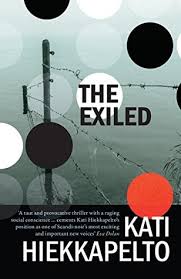
The Exiled ~ by Kati Hiekkapelto

I got this a few weeks ago while stocking up a bit at an Audible sale.  (I think this is the last book of the haul.)    I was interested because not only is it a nominee  for Best Scandinavian crime novel (Petrona Award) but it’s also by a Finnish author and I’m part Finnish.

exiled.jpeg

*******
The Exiled
by Kati Hiekkapelto  (Finland)  
2016 / 300 pages
read by Julie Maisey  9h  29m
(Translated by David Hackston) 
*******

Anna Fekete is on vacation from her job as a detective with the Helsinki police force and she goes to her native Serbian village to see her mom and family.   But her purse is stolen and then the thief is found dead by the river -well – Anna just has to look into this.

The police certainly don’t seem interested in the murder – she’s got her purse back,  what’s the problem?   They resent this cop from Finland interfering.  As she probes the case she comes across a lot of curiosities.   There was a small girl with the thief.  There is a huge influx of Romani immigrants.   Also,  her father was a police detective in this town but he was murdered years prior.  The case is apparently  not completely closed.

Anna is a cop – she’s not married and not involved with any one man.  This irritates her mother to no end.  Great character –  I wish Audible had the full series but they’re supposed to work as stand-alones so we’ll see.

Posted in 2023 Fiction | Leave a comment

The Idiot~ by Fydor Dostoevsky

Yes,  I’m reading The Idiot for the third time.   One of my groups chose it May,  and the last time I read it was about 5 years ago  (SEE THIS LINK).  I wasn’t  sure what all I remembered other than the general outline of the tale, the major characters,  some scenes, the major themes.     In my blog entry for that reading I said it was my second reading so I suppose I must have first read it in my 20s when I first discovered Russian lit. ??

Reading the third time was pretty easy,  but rather boring for some reason.   I remembered as the story went along and it kind of rolled out.  The names and relationships weren’t so difficult this time.   I was familiar with the symbolism and I really didn’t care to go deeper,  into a careful reading or anything.   So I basically just glided over the text for review.

idiot.jpeg
*******
The Idiot
by Fydor Dostoevsky
1869 / 720 pages (or so) 
read by
rating
* Translated by Constance Garnet 

(both read and listened)
*******

Prince Lev Nikolayevich Myshkin – our hero – the self-proclaimed  “idiot”  is a strange man – he is afflicted with seizures ( epilepsy)  and has been treated in Switzerland for many years.  He’s quite passive and very polite,  naive,  innocent.   One might say “Christ-like” but I’m not sure about that.     Things seem to come to him but they disappear just as quickly because his interest and love is of people.   He seems not to be really suited for 19th century Russia and has complex troubles with love,  money,  and relationships of all kinds.

On release from the hospital he travels to the home of a distant cousin and her family, the Epanchins,   in Petersburg becoming acquainted with a couple of men on the train.   A month or so later  he becomes involved with a woman named Nastassya Filippovna who has a lot of problems of her own,  primarily with a guy named Rogozhin who was on the  train.

Rogozhin represents the bad and dark side of humanity the way that Myshkin represents the good.   There’s a lot of money thrown around and then there’s another woman,  Aglalia Epanchin,  with whom Myshkin becomes involved.

Myshkin doesn’t love either one in any romantic way.  And he doesn’t view the money in the way the others do.  He doesn’t want power or prestige.   Myshkin cares only for the truth – for love and charity.  So nobody understands – not him,  not the women,  not the friends.  And he doesn’t really understand them.

Basically it’s a good story,  very nicely written, and interesting in terms of psychology and spirituality (?).  Dostoevsky is asking if  the very, very good,  the innocent and saintly souls, are fit to live in Russia of those times –  or any times for that matter.  In the world where the focus and motivation are on money and sex and status and power.  What would happen to such a person, a person whose behavior, by nature,  defied society’s  norms? –

interesting map of the locations mentioned in The Idiot:
http://www.communitywalk.com/the_idiot_map/map/1998612

The best the good could do is intellectually understand  Myshkin’s ideas of love and charity,  the openness. They recognize the “goodness”  but  they aren’t able to actually live that way,  they aren’t innocent,  they aren’t naive.  Even Aglalia, who is really attracted to Myshkin,  can’t do it.

One thing which strikes me, as a result of recently reading Mrs Dalloway by Virginia Woolf,   is the absence of modern or contemporary techniques and devices.   (Well, duh,  but …)   There is no “stream of consciousness” which would certainly fit in some scenes,  no back stories which would work nicely in other places.   It wasn’t noticeable on prior readings,  but this time it seems a bit odd after I noticed it.   If the story were to be completely redone by a contemporary author,  and the skeleton is definitely worth repeating,  there would certainly be both interior monologues and back-stories,  perhaps to the point of a non-linear chronology.

But the characters in The Idiot are always talking to someone,  even when they are reading something they wrote about themselves.  Ippolit’s  long long monologue is a case in point – he reads what he wrote out loud and it goes on for pages and pages – close to stream of consciousness but still,  he’s explaining things to an audience in his writing – not the same thing.

With Crime and Punishment there is plenty of thinking,  but it takes the form of “interior dialogues” – the protagonist is talking to other people in his mind.

In Mrs Dalloway there is a fair amount of backstory scattered throughout.  With Dostoevsky one character is always telling another what the background to a story is.

And Dostoevsky (or his translator) is very careful about punctuation with quote marks within quote marks when necessary,  commas and semi-colons as carefully and frequently used as in Dickens.   These niceties are absent in the works of  both Woolf and James Joyce.

Psychologist William James, brother of writer Henry James, wrote in his principles of psychology–

Consciousness, then, does not appear to itself chopped up in bits. Such words as ‘chain’ or ‘train’ do not describe it fitly… It is nothing jointed; it flows. A ‘river’ or ‘stream’ are the metaphors by which it is naturally described. In talking of it hereafter, let us call it the stream of thought, of consciousness, or of the subject of life.

I’m really digressing –  bottom line,  I think I’ll pass on reading it again – I don’t think I got anything really new this time.

http://www.propellermag.com/July2013/MorganDostoyevskyJuly13.html


Posted in 2023 Fiction | Leave a comment

Yes ~ 26 books read in April

avatar-reading
I posted a whole bunch of reviews in the last few days,  but that’s because I read a whole bunch of books in April – 26 to be exact.   April is generally a good month for me – last year it was 21 books read in April but I think some were longer books.  Otherwise I usually run about 15 or 16 books a month with lows in the summer around 8 or 9 a month.

Anyway,  I really did read all those books in April that I posted about up until the last couple days and then even a couple reviews didn’t get posted until the 1st of May because I simply forgot.  😦

Now? Whew – I don’t feel like reading a lot but I am –   rereading The Idiot by Dostoevsky and a bunch of goodies lined up for May.  But I’m retired and live alone – sometimes I like to cook or go out with friends but that’s not a lot.  I mostly read.   Summers are different because I’m in North Dakota and visiting the grandkids.

Anyway,  of the 26 total,  7 were general fiction, 12 were crime novels,  3 were classics and 4 were nonfiction with 8 women authors and 4 translated books.   Here’s a rundown of April  with links to the reviews:
https://beckyldroos.wordpress.com/42017-2/

Posted in 2023 Fiction | 4 Comments

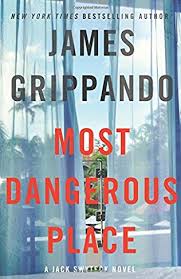
Most Dangerous Place ~ by James Grippando

Well this is fun –  two legal thrillers in a row.  This one is the most recent in the Jack
Swyteck series. I think I really like this one – but it’s #13 already.
Unknown.jpeg


*******
Most Dangerous Place
by James Grippando
2017 / 365 pages
read by  Jonathan Davis 12h 9m
Rating:   B
*******

It started out like gangbusters – coming back to the United States for an operation to save her daughter’s hearing,   Isabel Bornelli, a native of Venezuela,  is arrested at the Miami International Airport.   Her husband Keith Ingraham, a high-power international banker,  can only stand by and watch.

Jack Swyteck has to unravel the ins and outs of a case which goes back many years,  to the time when Isabel was raped and her rapist then murdered.  Isabel is an obvious suspect.  But her father is a very powerful and cruel man and he and Isabel parted ways  when he would not accept that his daughter had been raped.  Keith never knew anything about this – he didn’t know a lot of things about her life prior to their meeting in Switzerland.

It’s a page-turner of the good old legal crime variety – my favorite.  It’s a bit gritty for my tastes but it works.  (Have crime novels got more and more involved with rape and other forms of graphic violence?)

Posted in 2023 Fiction | Leave a comment

Autumn ~ by Ali Smith

I’ve read a number of Smith’s books and enjoyed most of them.  I especially enjoyed Hotel World, and How to Be Both but wasn’t too fond of The Accidental – although it was okay.    I actually read this about 4 or 5 days ago but didn’t get the post up.

This one is funny and sad at the same time – it’s just lovable for the humanity of it.  It’s also a bit scary for the reality.

autumn
*******

Autumn
by Ali Smith  (Scotland)
2016 / 272 pages
read by Melody Grove / 5h 27m
Rating:  9 /  contemp fiction
(both read and listened)
** first of a seasonal quartet **
*******

Daniel Gluck,  a very old man, over 100 years,  is dying. His much younger but very good friend Elisabeth Demand goes to visit him.  The two have been friends for a long time – since her childhood.  He taught her a lot about art and life and reality and time.   He had a very interesting life but he’s often in a semi-coma-like state, not really dealing with the present, and dying.

Elisabeth has a hard time even getting to see Daniel because she’s not a relative and she doesn’t have proper ID (and that’s a whole funny story having to do with today’s real world right up through Brexit).   But she does get in and spends many evenings reading to him while he remembers things.   Elisabeth remembers some things with him – yes – Smith is different that way.   They are family essentially – truly loving each other – she calls him her grandfather.

Time is porous when you are in a dreamlike semi-coma and Daniel’s time floats here and there – nonlinear.  Smith does this very well,  it’s fascinating.

During his lifetime Gluck was an art critic and Elisabeth becomes an art historian/professor.  They both study the works of  one Pauline Boty who worked in collage.   Her mother collects “collectables” while the racism of Brexit rages and Daniel finds peace with Lisabeth.   It’s really a beautiful book – Smith is a wondrous writer –  luminous, if I might use that cliched expression.   The book is just for the love of it –  if you have time –

** NOTES>>>>>** 
https://www.nytimes.com/2017/02/17/books/review/autumn-ali-smith.html?_r=0


Posted in 2023 Fiction | Leave a comment

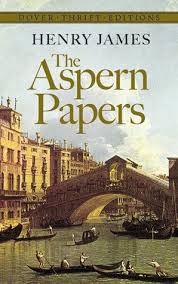
The Aspern Papers ~ by Henry James

I really wanted to read this for a long time because it’s so short and I’ve read and very much enjoyed  many other works by James.  It’s very highly regarded and I can see why.

A first person male character is narrating how he and his fellow journalist searched for the papers of Jeffrey Aspern, a fictitious famous American poet of the early 19th century who has been dead many years.   This unnamed protagonist goes to Venice to visit the elderly Miss Bordereau and her niece to see if he can get the papers somehow.  He’s helped by his friend Mrs Prest who, because of their American connection,  happened to know where they live.  The women are not starving but they are surviving without much money.

aspern.jpeg
*******
The Aspern Papers
by Henry James
1888 / 100 pages (or so)
read by Jonathan Epstein 3h 36m
rating:  10   / classic English
(read and listened)
*******

The very charming but shady journalist gains admission to the Bordereau home and then to Tita Bordereaux,  the plain, middle-aged niece.  On the next day he is introduced to Juliana,  the subject “of some of Apern’s most exquisite and most renowned lyrics.”

Our hero rents a suite of rooms for a rather steep price.  The Bordereau’s need the money.   He agrees to it,  but if he’s going to pay that much he’s determined to get the papers for nothing,  probably by toying with the affections of Tita,

This is great the stuff of the best of Henry James in the tradition of his shorter middle works – like The Turn of the Screw and Daisy Miller,  but different.

The setting is perfect,  James did live for a time in Venice and loved the city.  He wrote often about Americans in Europe including in Italy.   As always with James,  the characters are well defined or “rounded” as they say,  and in this case they are at their best.   Still,  James manages to make them all quite mysterious.  Also,  there’s a certain ghostly quality to it – the “presence” of the deceased Aspern,  the crumbling mansion,  two old lovers of which one of the beloved is dead,  the use of the word “ghost” or “ghostly” and “phantasmagorical.”

It was good to be reading James again.

Posted in 2023 Fiction | 3 Comments

A Quiet Life in the Country ~ by T.E. Kinsey

It was on sale.  It’s the first of a series.  I went for it.  I’ll not be bothering with more of these.

51dR3IbRBFL._SL150_.jpg
*******
A Quiet Life in the Country
by T.E. Kinsey
2014 / 258 pages
read by Elizabeth Knoweldon
rating:   C- / very cozy historical mystery
A Lady Hardcastle Mystery – #1
******

The story is set in 1908 – the main characters are Lady Hardcastle, a widow who travels with her maid,  Florence Armstrong,  the second main character.   The tale is told by Florence in 1st person.  Both main characters have mysterious backgrounds.

A body is found hanged and the police are not doing their jobs.  So Lady and maid get interested and then involved and the rest is pretty standard fare.   There were some cute aspects and there was no romantic nonsense, but still,  even though I do sometimes enjoy a nice cozy mystery, this isn’t one of them.  We were not amused.

Posted in 2023 Fiction | Leave a comment

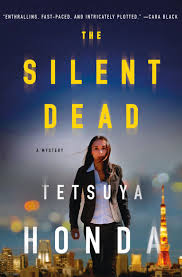
The Silent Dead ~ by Tetsuya Honda

This is a Japanese import which intrigued me but when I first saw the “cast of characters” in the Kindle edition I got nervous.  I’m listening and those kinds of names are quite difficult for me to distinguish.  Fortunately,  I was able to access the list in the Kindle sample as well as on the Amazon site via the “Look Inside” feature.    silent.jpeg

*******
The Silent Dead
by Tetsuya Honda
2016 / 304 pages
read by Emily Woo Zeller 9h 35m
Rating:   C+  / crime
*******

I read it for the 4-MA group (4 Mystery Addicts)  and I really tried to like it.  The first half or so was very nice but then it got too gritty for my tastes and although that isn’t always a breaker,  there was not a lot else to improve the rating.  I enjoyed the characters and the interaction of a procedural.

The Prologue has a teenage girl killing her seriously abusive parents.   This girl grows up and we get her thoughts throughout the novel but with audio only it’s hard to distinguish who is sharing these thoughts.  I was confused for a long time.

In part 1,  Reiko Himekawa, the main character of the series,   is a fairly young unmarried woman and a Lieutenant and squad leader with the Tokyo Metropolitan Police Department.   But this is what she has wanted to do ever since she … well … that would be a spoiler.

The first few chapters after the Prologue were a bit off-putting with Reiko having to fend off male police officers,  but that let up.  She can be very sharp-tongued.  She’s pretty tough and a bit egotistical as well – fights her superiors and does things her own way.  Her own squad is very loyal to her but there are others on the force who resent her.

We are usually seeing things from Reiko’s point of view  but for awhile starting in Part 2 we get to visit inside Kesaku Katsumata’s head – this is definitely not a good place – ugly guy and not the villain.    The transitions from thought to speech are well done – I believe these comments are italicized in the book – hard to distinguish if the character thinking said them or not.

Although I can see where this will make a good series,  Reiko is definitely an interesting protagonist, I doubt if I’ll return for the second in the series.

**  Strawberry Night,  mentioned in the book, is from a book by that name by Tetsuya Honda and the movie was released in Japan in January 2017.
https://en.wikipedia.org/wiki/Strawberry_Night

Posted in 2023 Fiction | Leave a comment

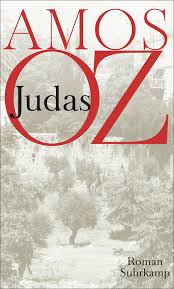
Judas ~ by Amos Oz

I’ve been a fan of Amos Oz for a long time, but only read A Tale of Love and Darkness,  Scenes From Village Life, and perhaps some essays.
Judas.jpeg

*******
Judas
by Amos Oz
2016 / 320 pages
read by Jonathan Davis  10h 46m
rating –  9 / historical fiction 
******* 

Shmuel Ash is a young man of socialist leanings who after dropping out of school as a graduate student heading for a PhD, and having been dumped by his girlfriend,  has chosen to continue to study the Jewish reaction to Jesus.   His job is to  keep Mr Vault company and do a few odd jobs. He’s somewhat asthmatic, naive and intelligent.

Gershom Wald is Ash’s landlord and employer as well as teacher.  He’s an old man who mostly wants to talk about ideas.

Atalia Abravanel is Vault’s housekeeper.  She is middle-aged, 40-something,  beautiful and absolutely in charge of Vault.   She instructs Ash and the whole set-up seems a bit spooky at first.  She is the daughter of a Jewish intellectual/ politico  Shealtiel Abravanel (fictional) who was dismissed by David Ben-Gurion.  This sets up a part of the action.

Ash studies and he and Vault have debates.  Oz lets us in on the backgrounds as well as the discussions and ideas.   The Roman historian Josephus is referenced for his views on Jesus (about 12 lines) and Christians, possibly added later.

There are several books and old revolutionary items in Shmuel’s attic room – Castro and Guevara and others including the Israeli fighters in the war of Independence – other spooky items.

Vault can be a bit bawdy – Shmuel has a personal history with a traitor, a Judas, in it but the guy was really a double-agent.

But the point is that Vault and apparently want to hide something from the world.  What is it?

Meanwhile it’s the mid-1950s in Jerusalem and the Cold War is heating up.  Eisenhower is issuing statements and Egypt is getting weapons from Russia.

There is discussion of a book criticizing The Polemic of Nester the Priest which was written by Nestor (a converted Jew)  in the 10th century.  https://en.wikipedia.org/wiki/Nestor_the_priest

And then the book hits the meat of it – who was Jesus and what do Jews think of that – throw the baby out with the bathwater or keep what is good – if they can find it.

Meanwhile Shmuel is becoming more and more attracted to Atalia – becomes more disturbed and thinks about leaving.   Vaults talks about about Jewish history and living in peace.

In Chapter 27 Shmuel asks questions which I guess he has no answers for but I’ll tell him about why the Jews did not accept Jesus at the time he was around –  the Jews of the higher church or the peasants – either one.  But those are minor questions among larger ones here –

The narrative switches back and forth between two threads – more or less.   There is  the current time with Shmuel having adventures in love, and listening to Vault’s tales and caring for him.   And then there’s the search for  old Jewish writings concerning Jesus and Christianity and Judas as well as some other related material intellectuals might think about.   The second thread is woven into the first but it feels like two threads.

The main plot line is what will happen to Shmuel  – will he stay in the house,  will Atalia fall in love with him,  will he go back to school,  and so on.  On the second thread the plot is more or less what will he find in these old documents –  who was/Judas? –  There is a theme running through both threads.  –

What were the arguments for and against the setting up of the state of Israel? Were there discussions about it at all? –

Was Atalia Abravanel’s father (fictional) a traitor?  What about Vault’s son who died in the war?  What value is independence – how important were the wars –  Vault is beside himself because the war that he espoused was the one his son died in.

Vault is angry that his son died and that anger spills over onto Shmuel – because Shmuel didn’t die in any war.   But he apparently supports the wars.  In 1948 the war was unavoidable – for the state of Israel to even exist war had to be fought.  Vault and Atalia and her father, Abravanel,  were not impressed by nationalism or statehood.  They were  naive? –  How could they call themselves Zionists?

Ben Gurion was the dreamer – who led them into war and eternal hatred.  And Atalia’s  husband,  Vault’s son,  Micah (?),  followed right along and died.

Abravanel and his side wanted to try to live side by side with the Palestinians rather than try to erect a single state.  And now the arabs live day by day with their defeat and the Jews live with their vengeance.   Both sides are self-righteous.

To go to a 2-party state at this point denies the sacrifice their heroes made in order to establish the state of Israel – and this was in 1958 or so!

Just as Judas believed in the divinity of Jesus (earlier in the book) Vault and Atalia believed in the divinity of the Jewish people –  Michah and perhaps Shmuel and Abravanel believed in creating a state.   –  Like Christians who built an organized religion – something Jesus never intended.  (He came to uphold the law – but it’s taken piecemeal.)

Abravanel’s ideas are explored along with Judas’  – both “traitors” to a “cause,”  but both true believers in the divinity –  of Judaism (the people, the religion and NOT the state),   or Jesus (the divine,  NOT the dogma which sprang up).

The two-state idea is silly according to Abravanel – a murderous delusion.  It would only mean perpetual war.  The state would wither anyway according to Abravanel.

So was the War of Independence in 1948

http://blogs.timesofisrael.com/book-review-judas-by-amos-oz/

https://www.ft.com/content/b4055ba2-84b8-11e6-8897-2359a58ac7a5

Posted in 2023 Fiction | 2 Comments

A Power Governments Cannot Suppress ~ by Howard Zinn

Howard Zinn (1922 -2010) is best known for his book,  A People’s History of the United States first published in 1980.  In 2017 some congressman in the state of Arkansas proposed that all of Zinn’s books be banned from the public schools.   The effort “fizzled.”
https://www.commondreams.org/views/2017/04/03/arkansas-howard-zinn-witch-hunt-fizzles

Meanwhile,  in support of Zinn, the All-nonfiction reading group decided to read something by Zinn and since most of us had read A People’s History of the United States we chose “A Power Governments Cannot Suppress”  (2006)

power.jpeg
*******
A Power Governments Cannot Suppress
by Howard Zinn
2006/ 293 pages
Rating –  8.75 –  /  nonfiction politics and history
*******

This is a collection of essays about different aspects of US history related to the then current war in Iraq and prior wars in Iran and Afghanistan,  as well as other wars,  war in general, freedoms and capitalism/socialism.   The premise is that some book should write optimistically about the heroes of the fight for peace and freedom.

I write in order to illustrate the creative power of people struggling for a better world. People, when organized, have enormous power, more than any government. Our history runs deep with the stories of people who stand up, speak out, dig in, organize, connect, form networks of resistance, and alter the course of history.

I’m not a complete pacifist because I can’t imagine not fighting Hitler or the Civil War.   I’d love to be a real socialist, but I fail to see where really large scale central planning of production and distribution has worked terribly well anywhere.  That said,  food, clothing, shelter,  medical and educational needs should be provided for all the people in some way.   And anarchism is simply pie-in-the-sky idealism, imo.

So for me,  although Howard Zinn has a lot of really good and important things to say,  I don’t agree with everything.

He points out the oft stated problems with going to war but offers no alternatives.  He doesn’t approach either the Civil War or Hitler in terms of what we should have done instead.   (I rather agree with him about WWI.)

We live in a post-Trump age.  The glorious ‘people,”  many without jobs or influence at all,  stood up and proudly voted for Trump.   I suppose we could also say that they stood up for him on the basis of his lies,  but that’s not the whole story.   These people truly are against immigration,  scared of Muslims,  want to feel hugely patriotic about making America great again.

It was the America First people who pushed Wilson to go to war.  We should have just left Iran to its own devices? – (This is also pre-ISIS,  a product of the wars in Afghanistan and Iran.)

Still,  his goal (above) is worthy and he does address that even if he gets waylaid by more general issues.  There are some chapters which are definitely well worth reading –  Chapter 4 – “Big Government” is mainly history and fairly interesting although Zinn does cherry-pick the facts-   but so does everyone and he’s bringing out that which is not regularly reported by history books.)

Chapter 8 deals with the original premise –  “Unsung Heroes”  –   Chapter 17 deals with Henry David Thoreau and civil disobedience,  20,  “The Supreme Court”  and 21 “Civil Liberties During Wartime”  are excellent.

Overall I feel like I’ve read it all before and come to believe that it’s irrelevant in a time when money is scarce and capitalism reigns and the populists have spoken.   I know there is another side to my argument –  that now is the time to stand up and do brave things because the majority do not go along with what is happening to schools and medical care and so on but –  again,  and he doesn’t really cover this –  how?

Posted in 2023 Fiction | 2 Comments

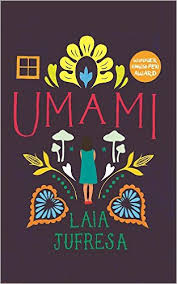
Umami ~ by Laia Jufresa

Umami (/uˈmɑːmi/), or savory taste, is one of the five basic tastes (together with sweetness, sourness, bitterness, and saltiness). It has been described as brothy or meaty.   (Think soy sauce or parmesan cheese.)

This is the completely delightful and  brilliantly told story of a group of neighbors who live in little complex called the Belldrop Mews located somewhere outside of Mexico City.   It takes place over a period of 5 years and is told in reversed chronological order.   The residents all have problems –  mostly concerning grief and families.   The families  are also identified by the unit in which they live –  Bitter, Sweet, Salty, Sour and Umami.

umami

*******
Umami

by Laia Jufresa
2016 / 240 pages
Read by Karina Fernandez – 7h 13m
Rating – 9.5
translated by Sophie Hughes
(read and listened) 
*******
>>>>>NOTES>>>>>

Also a debut novel and nominated for the Best Translated Book Award – 2017.

The structure is intriguingly different – There are 4 Parts each of which is broken into 5 chapters.   The chapters in each Part work their way backwards from 2004 through 2003, 2002, 2001 and then 2000.

The first chapter in each Part is titled 2004 and is told by a 12-year old girl named Ana Perez-Walker.   Ana is the daughter of Victor Perez and his US ex-pat wife, Linda Walker,  both professional musicians.  The Perez-Walker family is grieving the loss of their youngest daughter,  Luz, who drowned at age 5.

The second chapter in each Part is titled 2003 and is told by a neighbor,  Marina, who is a single 21-year old woman with an eating disorder.   She is also an artist with a talent for colors.

The third chapter in each Part is titled 2002 and concerns the first person narrator of Doctor Alfonso Semitiel.   He’s grieving his wife Noelia who was a cardiologist.  Alf was an academic anthropologist.  He is the landlord.

The fourth chapter in each Part is titled 2001 and features Luz,  the 5-year old sister of Ana, Linda’s daughter,  who drowned.  She tells her story in first person.

The fifth chapter of each Part is titled 2000 and has a 3rd person narrator but the point of view is that of Pina,  Ana’s best friend, who also lives in Belldrop Mews.

So this results in Part 1- 2004 story  (about Ana) being continued in the Part 2 -2004 story and then in the Part 3-2004 story and then in the Part 4-2004 story

Which house they each live in is revealed as the story goes on and there’s a brilliant little post-modern twist a bit past half-way mark.

Tensions build in each story but the device is more along the lines of “how did that happen?”  or “what is that about?”   And then we go back to the year prior from someone else’s viewpoint and find out.  It would be interesting to go through all the 2004/Ana chapters and read them as one narrative – or 2002 chapters from Doctor Alfonso Semitiel.

The themes are families, parenthood, childhood, love, loss, community and taste – food   interwoven with denial, fantasy, guilt, sex, growing up, and gardening.

Enjoy.

https://tonysreadinglist.wordpress.com/2016/07/07/umami-by-laia-jufresa-review/

Posted in 2023 Fiction | Leave a comment

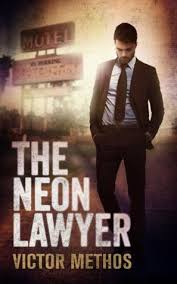
The Neon Lawyer ~ by Victor Methos

Another sale book (I kind of stocked up at this last sale) and this one is quite good although very short.   That’s okay –  it’s not a really serious book – it’s quite humorous and a nice refreshing break from my usual fare.   That said,  the underlying crimes are very, very serious  –  chillingly serious.    Odd –  if I were in a different mood …

neon

*******
The Neon Lawyer
by Victor Methos
2014 / 178 pages
read by Nick Podehl 4h 28m
rating:  A++  /  crime – legal 
*******  

Brigham Theodore has a brand new law degree,  passed his bar exam, and been certified to practice law in Utah.  Now he needs a job and rather than offer his services for free,   he’s hired by a local low-life defense attorney.   His first case involves a speeding ticket and he gives the defense of “entrapment” a try.   He loses.

But Tommy,   his new boss with a Russian accent,  doesn’t mind – he finds Theodore’s  defense rather original and promotes Theodore to a homicide  case.   Amanda Pierce is accused and has been arrested for the murder of  the man who abused and murdered her young daughter.  She did this in broad daylight and with several  witnesses.   She also admits to “meaning to kill him.”    Amanda  has pathetic history,  a disabled army vet,  divorced from an abusive husband and with no other family.    Now she faces the death penalty.

Meanwhile,  Molly Becker,  another lawyer in Tommy’s office, is quite friendly to Theodore and helps him sort things out because although he studies hard.   Theodore doesn’t really have a clue what to do,  but he follows his instincts (which are the same ones which used an entrapment defense on a speeding ticket).

I thought I’d get the 2nd in the series right after this,  but the ending is really intense.  Maybe the book after next.  (g)

Posted in 2023 Fiction | Leave a comment

Blood, Salt, Water ~ by Denise Mina

We’re not in Glasgow for this book in the series,   but in the nearby community of Helensburgh where a woman is being murdered and is subsequently thrown into the water.  One of the murderers,  gets haunted by his conscience.

Then in the second chapter,  Alex Morrow  (of the prior 5 novels in this series)  and her current partner in detection get called in to headquarters when a child telephones to report that his mother is missing.   This is not just any mother –  it’s Roxanna Fuentecilla, a “person of interest” in money laundering or drug sales or something – the national police aren’t sure,  but they’ve been watching her and her monied ways for some time.   Now she’s missing?

blood jpg.jpg

*******
Blood, Salt, Water
by Denise Mina  (Scotland) 
2016/304 pages
read by Cathleen McCarron
rating:   C+  /  crime (procedural) 
*******

Helensburgh is a touristy upscale community which is not too far from home for the detectives.  It’s on the edge of Loch Loman – and a body washes up later.

There are a lot of characters and a good twisty plot so what’s my problem?   First, dialects are hard for me to understand,  and second,  the plot is pretty murky with various sorts of characters with various sorts of  legal issues all running around.  And I really didn’t like switching back and forth between the suspects’ point of view  and the cops when I’m  reading a procedural.   The suspects in this case are sometimes presented as being really sympathetic.  This isn’t a “rule” or a generalization because when I do that a book pops up doing that very thing and I love it.   I just didn’t this time – there were too many other difficulties.

That said,  when I really paid very good attention,  I enjoyed it quite a lot.

Posted in 2023 Fiction | Leave a comment

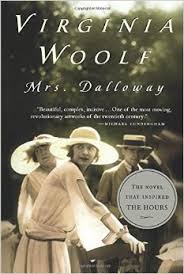
Mrs Dalloway ~ by Virginia Woolf

I read this years ago and then much later I read The Hours by Michael Cunningham and not really liking either one I put them away – even out of my mind.  (I love To the Lighthouse and A Room of One’s Own.)    Whatever –  a reading group decided to read Mrs Dalloway and I thought it might be interesting to revisit – maybe I missed something. (Obviously I missed something – lol.)   It’s very complex.

dalloway
*******
Mrs Dalloway
by Virginia Woolf
1925 / 177 pages
Read by Phyllida Law  7h 25m
Rating – 9 /  classic 20th century Eng.
(both read and listened)
*******

Mrs Richard Dalloway (Clarissa) is  giving a party – Clarissa loves giving parties and she’s quite good at it.   The day of this party,  in mid-June of 1920, she takes a walk to buy flowers and sees people and places while thoughts drift through her mind.  Sometimes the narrative focuses on what is in the mind of some of the people she encounters,  but it’s not stream of consciousness like it is with Clarissa.

Another character with the stream of consciousness treatment is Septimus Smith, a WWI veteran,  who is mentally unsound due to the war.  There are many, many other walk-by characters including Septimus’  wife,  but mostly name dropping of how many people Clarissa knows.  A royal limousine passes and an airplane flies over  so there’s a bit of chitter-chatter.   Clarissa gets back home where she thinks some more – about Sally,  her teenage love,  about other people,  love, clothes,  Buckingham Palace.  She’s not a thinker of ideas – she’s rather shallow so it’s generally all about people and things.

There were no “chapters” as such in the version I read but the hours are ticked off as the day goes by.

Yes, it’s a lot like Ulysses,  James Joyce’s magnum opus, which I’ve read twice and don’t love but do admire – I probably don’t really “understand”  the half of it.   In some ways Woolf mimicks Joyce in the “day in the life of…”  approach as well as the stream-of- consciousness.   But I think she expanded on it in her own way, too.

Rather than Stephen, Leopold and Molly types,  Woolf  used a woman with nothing particularly intellectual or sexy about her thoughts.  The thoughts of Septimus Warren Smith are not  really about reality.   Clarissa’s thoughts are completely steeped in feelings and emotions – some thinking about other peopel.   – Septimus is lacking any feelings that he’s aware of – he thinks about his best friend in the war.   Also  Peter,  Clarissa’s old love,   and Lucreza,  Septimus’ wife,  seem to have minor inner dialogues.    But there are probably a hundred named characters coming in and out of the action (such as it is) and some of them have some inner dialogue which is more than simply,  “‘_______,’ he thought to himself.”

I also suspect Woolf thought she’d improve on Joyce by having her stream of consciousness come from a fairly normal but snobby and very social woman doing her normal things, (being an upscale homemaker),   and a man who was made mentally ill from WWI.   There are no twisted intellectual games like Joyce used in addition to his Irish history embedded in a  parallel to The Odyssey.   Instead,  Woolf uses some very curious characters and intriguing insights.

And where the themes of Ulysses revolve around a quest or two in addition to memory,  time, and sex,  Woolf  has her own themes which include  time and memory, of course,  but also the ravages of World War I,  mental illness,  love of various sorts and the role of women in society.

Reading Mrs Dalloway  today gives an interesting insight to the times of  post-World War I in England and  I sense a connection to some of T.S. Elliot’s poetry and ideas – they did work together sometimes.

There are some really fine parts in this book – but other parts are just plain boring.  I think it might be the kind of book a student would enjoy studying and taking apart in various ways but I’m really not all that interested at the moment –  too many good books to read.

http://mentalfloss.com/article/61330/10-interesting-facts-about-mrs-dalloway

Posted in 2023 Fiction | Leave a comment

Truly Madly Guilty ~ by Liane Moriarity

Truly, Madly Guilty started out feeling  like quite a disappointment after Big Little Lies and if you’re looking for a lot of suspense or a thriller you’d better keep looking.   On the other hand it’s quite good if you could also be interested in a book about relationships amongst married people,  their friends and mothers.  And there are several surprises toward the end – the result of the suspense.  They’re good, too – unexpected.    Moriarity is very talented at building suspense,  but then she seemed to get way-laid in the details of life –  don’t worry about it – keep reading.

The themes concern family and relationships,  but the idea of  guilt is huge – who is guilty and for what in this bunch of somewhat messy but realistic actions and interactions and relationships amongst characters who do not have completely well-balanced personalities (“Madly Guilty”).   Because of the rest of the story I’m rating this as contemporary fiction rather than as suspense.  As true suspense it might get a rating of a  B- or a C.

The narrative follows three married couples before and after a backyard barbecue at which something happened,  but what happened exactly is an unknown until about midway and then the consequences are explored and some more information about that event is revealed as the story continues.  Good stuff after  I got into it.   Because Moriarity is also very skilled at developing full characters.

truly

*******
Truly Madly Guilty
by Liane Moriarity
2016 / 432 pages
read by Caroline Lee 17h 27m
rating:   8  /  contemporary fiction 
*******

The couples:

Clementine,  a professional cello player,  is married to Sam a “retired” businessman who is more caretaker of the children.  These two are very married,  but not happily at this point.   They have two children,  Holly who is a rather precocious 6-year old and Ruby who at about age 2 1/2 is still in diapers.

Erika grew up with Clementine and they were good friends at Clementine’s mother’s insistence.   She’s become an anxiety-ridden,  pill-popping woman who looks out for her mother who is a hoarder – “like on TV.”    And she’s married to Oliver who is devoted to her and really wants a child but Erika never has to this point.

Tiffany and Vid  –   These are Erika’s neighbors and Vid has seen Clementine play her cello.  Tiffany is very sexy and Vid is charismatic.  They live in a large lovely home and it  they are comparatively quite well off,   although Vid is an electrician – perhaps a contractor.   Erika and Vid give a barbecue and invite Erica and Oliver and  Vid wants Clementine and Sam there.  This couple has one child, Dakota age 10.

Everyone has secrets – except perhaps,  Vid.

So  Vid and Tiffany invite Erika and Oliver to a barbecue and also request they invite Clementine and Sam.  This event is the focal point of the whole story,  although parts of the narrative takes place before the event, other parts take place the day of the event,  and still other parts take place at various times after the event.   These parts alternate until they catch up with each other.  Finally the event occurs about 1/2 way through the novel.  Then the sections alternate between  before after and during the event.

If you’re looking for suspense the book is going to be very long and boring – these are people with problems which are not exactly earth-shattering or even terribly strange.  Normal people with normal problems living in normal circumstances.  But something happens on  “The Day of the Barbecue”  and then we get the aftermath.   And then the surprise.

The women have relationship issues with mothers and each other as well as with their husbands.    Clementine is basically a nice person because her mother has trained her to be that.  And Erika is needy and that’s the basis of the relationship with Clementine.  Tiffany is the newcomer and she and Vid might be the most normal – although they’re not.

I was really expecting suspense like Big Little Lies,  but this is a different book.  This is more along the lines of The Slap by Alex Dimitriades but again,  a different story.

If you’re looking for an exploration of relationships under pressure this might be the book for you.   I started enjoying the narrative about 1/3 of the way through (maybe 150 pages?)  –  and it’s a long book with a slow reader who tries her best to add some suspense.    At about the half-way mark (the actual barbecue)  the relationships became more important to me than the suspense,  but I really wanted to know how it all ended and there is still some very slow but sure suspense building because there is an ending.

Fwiw,  the narrator’s voice is grating at first and it was very difficult to distinguish between Clementine and Erika.  ALso difficult to distinguish between Holly (the 6-year old) and Sam,  her father,  Clementine’s husband.   I got used to the voice in general but had to listen carefully to know which character was speaking.

Posted in 2023 Fiction | 2 Comments