The Autobiography of Gucci Mane ~ by Gucci Mane

For those who don’t know –  Gucci Mane (Radric Delantic Davis) is a famous rap artist who writes some very interesting (and sexist,  violent an drug oriented) lyrics.  I’d never heard of him before,  but the blurbs and sample sounded quite interesting (I enjoy memoirs) and besides,  it had good reviews and was on a great sale.

Mane wrote the book while he was in federal prison for a final charge of being a felon with in possession of a guy.   The felon part was due to a variety of prior charges including drugs, guns and more probation violations.

I recommend it if you’re interested in the music business but otherwise it can get somewhat boring with his complex relationships with other Atlanta and wider based musicians as well as law enforcement.   The best parts are the first and last sections.

gmaneauto.jpeg


*******
The Autobiography of Gucci Mane
by Gucci Mane
2017/ 304 pages
read by Guy Lockhard – 6h 29m
rating:  7  / autobiography
*******

The first part about his family in Alabama and Atlanta until he was in about age fourteen is great.  His mother had worked with him at home and that helped him to succeed in school which led to his starting to write poetry and then rap music.   The lyrics run to gratuitous drugs, violence and the debasement  of women – the kind of thing several celebrities have spoken out about.   (Google it.)

But he got involved in drug sales for the money (becoming
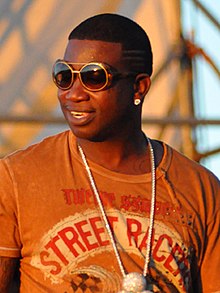
guccimane.jpg

Gucci Mane 

addicted later) and that led to other things,  but meanwhile he parlayed his music into a career so those two businesses became his life.  That’s when the book gets a bit boring because there are so many names and music connections along with criminal activities it gets a bit too confusing to bother paying attention.

Gucci Mane is a con artist and a self-promoter – it still shows.  He’s cleaned up some and that’s part of this story (that’s the part which interested me) but there’s still a lot of ego in the narrative – he’s so impressed with himself –  (at least the way that Lockhard reads it).

Finally,  in Chapter 18 (out of 25) Gucci starts getting into the ultimate downfall suggested in the Prologue.  It’s compelling here – there’s a note of honest self-examination – but not much – but it builds to a pretty fair ending where Gucci seems to have lost some of his arrogant and reckless ways,  gained a bit of humility. I hope he makes it.  He was released a couple years ago and he’s done well so far.

The writing is okay,  it is noted that it was written with the assistance of Neil Martinez-Belkinand, a rap rock magazine editor,  and  Guy Lockhard reads it like Gucci is talking right to his audience.

rs-1045-square.jpg

Gucci’s famous ice cream cone tattoo

Posted in 2023 Fiction | Leave a comment

The Story of Lucy Gault ~ by William Trevor

The Booker Prize Reading Group chose this one for the month of May – I read it back in 2004 and lost it in my house somewhere –  either that or gave it to the cleaning lady (a reader).   So I got the Audible version but I’m spoiled when it comes to good books and I really wanted the Kindle version to go with it.   Okay – caved.

I don’t really remember the story but I’m reminded as I read along.   In the summer of 1921,  an Englishman shoots a gun and accidentally hits a trespassing boy whose parents resent the English presence in Ireland .  There is trouble.  The family really has to move after a fire is attempted –  to protect their young daughter,  Lucy, if nothing else.     But they don’t want to go, Lucy especially.   And on the day of moving she wanders off with her own plans and can’t be found.  Her parents are beside themselves,  but after a few weeks,  and the statements of fishermen,  they leave,  grief stricken.

lucygault.jpeg

*******
The Story of Lucy Gault
by William Trevor
2002 / 240 pages
read by Kathryn Borowitz – 8h 38m
rating 9 / contemp fiction (Ireland)
(read and listened)
*******

The remaining narrative is divided into Parts and Chapters and covers a number of years as the parents and Lucy go about their lives of grief in alternating chapters.

But what’s it really about?  It’s about deep guilt and grief and love and abandonment over the span of decades,  forgiveness and waiting maybe.

Very good book –  slow and haunting with an odd character at its center.   The writing is  clear and concise, not a lot of wasted words and the dialogue is spot on.

https://en.wikipedia.org/wiki/Ribbonism

Posted in 2023 Fiction | 5 Comments

The Secret,  Book and Scone Society by Ellery Adams

Oh it was sale time at Audible and I got about 10 books, one cozy along with two other mysteries and a sci-fi plus five (5!)  nonfiction books.    Omg –  I,  who have been so proud of not having a working TBR pile.  lol  (This made twelve in the new pile because I had one which is probably not going to get read and another which I’m saving.)   But now I’m down to ten  because I read  one. (So now I’ll buy another book which is scheduled. – heh-  I’ll read it right away, though.)

Anyway,   about this book ,  The Secret,  Book and Scone Society –    sometimes,  although rarely,  I’m just in the mood for a nice cozy mystery,  but I’m kind of picky about little to no romance and a good plot.    Monica Ferris and Alexander McCall Smith write great stuff for this,  but not too many others.   Ellery Adams’ Miracle Springs series is okay – but not a series I’ll follow.

secret book.jpg


*******
The Secret,  Book and Scone Society
by Ellery Adams
2017 / 304 pages
read by Cris Dukehart – 8h 31m
rating  B  /  cozy crime
*******

By the good graces of a bank loan, Nora Pennington has opened a bookstore in Miracle Springs, a small town in North Carolina with a thriving tourist trade due to its reputation for healing waters and a relaxing ambiance.   The scars on her face are from some tragic secret which she keeps close to her heart.

She makes three friends,  also single women with secrets.  Estella,  who is a fairly sharp but very unhappy beautician and lifelong resident of Miracle Springs.  There’s  June,  who works at health/bath spa and Hester,  who owns a bakery where she creates what are called, “comfort scones.”   All four women are book-lovers and all four have mysterious pasts which they keep secret – until their Club.

Nora is a pretty skillful reader of people and gives, or sells,  her customers books tailor- made for their issues – therapy reading.   Hester, too, knows how to make scones to suit her customers’ needs and has a thriving business at the Gingerbread House.   Still,  these are very unhappy women who,  with Nora’s encouragement,  form their “Secret, Book and Scone Society”  dedicated to sharing secrets and helping others.

One lovely day a traveling businessman Nora was getting acquainted with in her shop dies when he lands on a railroad track with a train coming.   It wasn’t a simple fall – it was a shove.    And before long there’s another murder,  this time by poison.  Their friend Estella, who likes making temporary friends with traveling men,  is arrested.    The women think it has to do with the new subdivision being built,  possible real estate and banking fraud.  They set out to investigate the situation to get their friend out of jail.

There is enough romance to turn me off,  but not enough to make me close the book.   It’s cute.  Basically that’s my one word review –  cute.   I’ll likely not read another one – too many other better books out there.

Posted in 2023 Fiction | 2 Comments

The Inner Life of Animals: ~ by Peter Wohlleben /  

Selected by the Allnonfiction Reading Group for our May read,  I figured I would enjoy this tremendously because of The Hidden Life of Trees (link to my review) –   Ah well – it isn’t quite as good,  but it’s very interesting and nicely written.  It’s really just an anecdote filled memoir than a serious exploration of what science is finding out these days –

innerlife.jpg
*******
The Inner Life of Animals: Love, Grief, and Compassion — Surprising Observations of a Hidden World

by Peter Wohlleben /  translated by Jane Billinghurst
2017/ 272 pages
rating:  7  / science
*******

The author,  his wife and sons went to live in a cabin near the German forests where they kept chickens and goats and horses and so on.   Wohlleben is a very careful observer and so when he feeds the animals he doesn’t just put the grub out there – he watches it get eaten.

And he tells us of about what he has seen in his world of animals and what he thinks about and some of what researchers have found to this point.  As the subtitle says,  it’s a book of observations.

The chapters include

Selfless Mother Love
Instinct
Loving People
Anybody Home
Pig Smarts
Gratitude
Lies and Deception
Stop, Thief

It’s an interesting book,  lightish, chatty, engaging but not terribly compelling for me for some reason – it took me a few days to finish because I found myself reading other stuff or doing other things.   It’s kind of fun though.


Posted in 2023 Fiction | 4 Comments

Beneath a Scarlett Sky ~ by Mark Sullivan

Selection for May at Bookgroup List – I wasn’t going to read it but then I tried the Prologue and it was okay and then (!) it went on sale.   So –  I found myself both reading and listening with way more interest than anticipated –  especially after I knew the background  which is in the Preface.

It seems that in real life,  a young man named Pino Lella was a spy during WWII in Italy.  His career was only two years long (1943-1945) when he was only 17-19 years old.  This is a book of historical fiction which adheres, according to the author and his Preface, as closely to the truth as possible – but not entirely.

beneath.jpeg

*******
Beneath a Scarlett Sky
by Mark Sullivan
2017 / 526 pages
read by Will Damron  – 17h 43m
rating:   8  / historical fiction
(both read and listened)
******* 

The story starts in Milan where Pino is living with his middle or upper-middle class family and is probably a pretty typical young man of 17.  The city is being bombed by the Allies and  Pino’s very frightened father sends Pino to live with an uncle in the mountains of in the north – at a monastery.

There Pino learns about cars and gets busy helping Jews escape Nazi persecution by escorting them over the mountain passes to Switzerland.

After a couple of close call adventures there he is called back home by parents who are more scared because he will be eligible for the draft and found by the Nazis.  They advise him- order him –  to enlist with the Germans.   He does,  but he gets wounded pretty quickly and reassigned as the driver to a very highly placed German general.   So begins Lalla’s life as a spy – a 17-year old one.

It’s not written with any particular literary finesse,  but the story,  and the fact it is based on verified history/reality/memory – is what is so compelling.

This is a work of fiction which, the author says, is closely based on fact.  Sullivan lived in Italy to do much of the research,  and he interviewed as many people as he could still find alive but the events took place 72 years ago so even the few still living might not remember a lot of things exactly right and it’s impossible to separate the fact from the fiction.  Still a great story though and Pino Lella is a deserving hero.

There may be a movie coming – it certainly has action.

https://publishingperspectives.com/2017/09/beneath-a-scarlet-sky-mark-sullivan-rights-rush/

Some questions and answers about Lella:
https://www.goodreads.com/questions/1032396-is-pino-lella-still-living-what-a
Yes,  he’s still living  –

More on the history:
http://www.militarypress.com/the-17-year-old-wwii-hero/

http://www.historyinanhour.com/2013/09/12/the-rescue-of-mussolini-summary/

Posted in 2023 Fiction | 2 Comments

Plato at the Googleplex: ~ by Rebecca Goldstein

Wow –  certainly one of the best non-ficiton book I’ll read this year unless some amazing books show up.   What Goldstein has done,  in addition to explaining a lot about the ideas of Plato and Socrates as well as their ideas and the environment of ancient Greece  is to that bring Plato into the 21st century and use  the question/response dialogue technique on current viewpoints.   (I both read and listened to this and it was so worth it –  the Audible does not include the impressive footnotes,  but Dennis Holland does an excellent job reading the dialogues.  – However,  if I had to choose one or the other of the versions,  I’d choose the Kindle version.)

So Plato shows up at the Google complex in Mountain View,  California to discuss knowledge (the “cloud” and “crowd-sourcing” fascinate him)  along with Marcus Aurelius and his fictional book-tour guide, Cheryl,  who is working with some publisher to promote his books.

platoat.jpeg


*******
Plato at the Googleplex: Why Philosophy Won’t Go Away
by Rebecca Goldstein
2014/ 434 pages
read by Dennis Holland – 16h 43m
rating:   10 /  nonfiction-philosopy
(both read and listened)
*******

Then after another well-footnoted information chapter,  “In the Shadow of the Acropolis,”  which gives a lot of background on Plato’s Athenian environment,  he appear onstages at the 92nd Street Y in New York for a panel discussion where child-raising is the theme.  The other panelists include an expert, a “tiger-mom,” who believes in pushing children to be exceptional and one who very much opposes any oppression of children.   (Plato wants pushing for the best without the parental oppression.)

And so the book progresses with a fact- and explanation-filled,  wonderfully footnoted and  nicely written Chapter of information  followed by a Chapter of 21st century “dialogue” between Plato and one or two other people which is related to the information in the prior Chapter.  Plato works with the above characters plus an advise columnist (Dear Abby kind of thing),  a cable TV news host, and a couple of brain scientists.   The result is both amazingly informative and great fun – but it’s not a quick read –  it’s meant to be savored.

Critics have said that Goldstein cherry-picked and over-simplified the arguments of her fictional Plato’s opponents but –  isn’t that what Plato himself was accused of doing when his critics said he created straw men?   lol –  Oh well –

The concepts developed in the book make for some challenging reading but Goldstein never gets overly serious.   And then she gets to hilarious.

https://thehumanist.com/magazine/september-october-2014/arts_entertainment/book-review-plato-at-the-googleplex-why-philosophy-wont-go-away

https://www.theatlantic.com/magazine/archive/2014/04/playing-with-plato/358633/

Posted in 2023 Fiction | Leave a comment

Police at the Station and They Don’t Look Friendly ~ by Adrian McKinty

Good solid crime procedural from Ireland during their “Troubles” in the 1980s with the Provisional (activist) IRA.

Back in 1988 in Belfast,  Ireland,  a man is found dead in his yard with a cross-bow bolt in his back.   Homicide detective Sean Duffy is called to the scene and gets involved in way more than a domestic dispute.   The opening scene,  a prologue of sorts,  involves Duffy being forced to dig his own grave in the forest and it pulls the reader right into the book.

policeat.jpeg

*******
Police at the Station and They Don’t Look Friendly
by Adrian McKinty
2017 / 322 pages
read by Gerald Doyle- 9h 49m
rating A+ /  crime – procedural (Ireland)
(#6 in the Sean Duffy series) 
*******
I’ve only read one of Duffy’s books prior (#2,  I Hear the Sirens in the Street – my review) and although it was jumping ahead,  the Police at the Station … title was so intriguing I had to put it on the wish list knowing I would be getting it.   Actually,  I nominated it for a group read at the 4-MA group.  And it was chosen  🙂

From what I gather this was supposed to be a trilogy,  but was so popular and McKinty  got involved with his characters,  it morphed into 6 books.  This is the 6th.

Duffy is a  hard-drinking and cigarette-smoking detective of the old order.  He’s a bit of a loose cannon sometimes.  He enjoys movies and literature and music which are referred to numerous times.  At work he’s  involved with the usual elements of criminal procedures and forensics which go along with murder.    The thing is he’s Catholic in Protestant Ireland and there are serious problems with associated with that  –  both personal and professional problems.  His relationship with the mother of his child is rocky as usual  – she’s Protestant! –  but they’re trying and I really appreciated Beth and her situation.

The Sean Duffy books are fast-paced,  harrowing thrillers – they can get gritty but never gratuitously so.  I would like to read the others and #1 is now on my Wish List.   🙂

Posted in 2023 Fiction | 1 Comment

The Known World ~ by Edward J. Jones

In a reading group discussion of the century’s Pulitzer winners – since 2001 –  I realized I’d read 16 of the 17 books and mentioned the one I’d missed.    So  many of the group said how great this book was –  okay –  (lol).    Although I’d tried to read it a couple times back in 2002 or 2003 or something (when it was kind of new) it just didn’t click.  This time I made it a project-  I would read it.

known.jpeg


*******
The Known World
by Edward J. Jones
2003 / 437 pages
read by Kevin Free – 14h 13m
rating:   9  –  historical fiction 
*******

First off,  this is NOT an easy book and I really wasn’t in the mood or something so it took me awhile to get into it.  (But then I did,  big time.)

Besides that,  the Audible reader was rather dry by comparison to the newer readers so that added nothing.   That said,  The Known World is a very, very good book – an amazing book – and worthy of the Pulitzer in every way.  By the time I was about 1/2 way through or a bit less,   I was totally hooked.

As a lover of historical fiction,  I was very interested in Jones’ research so I googled that –   and found out that although Jones knew some stuff (like there were some free blacks who owned slaves in Virginia),  but other than general info – the story is totally imagined – even where it seems like it must be a fact somewhere.  Because the Jones’ style here is to be as detailed as possible (more later).

In a fictional county in antebellum era Virginia the narrative opens with the death of Henry Townsend, the black owner of a small plantation and 33 slaves.   Long ago Henry had been a smart, brave, lucky and determined young slave who,  after his previously freed parents purchased his freedom,  bought his own slave and under the tutelage of his former master,  learned how to run a plantation.   His  intent was to be a “good shepherd” and conduct his relationships with everyone as God would have him do it –  he would “tend to his flock,”  so to speak.  There are a lot of Biblical  references and allusions in the book used in every sort of way.

Henry then went on to buy land and more slaves,  to learn the ways of masters and to teach his own slaves how to treat act and how to him.  He married a lovely woman who also believed that slaves should be treated with as much humanity as possible.  Still,  the slaves were not unhappy when their master died and  that’s telling.  Henry tried to be the “good master,”  but failed because …  and that’s the main theme of the book –  slavery was so pervasive and oppressive that everyone was perversely affected – even the abolitionists.

I have to add that the idea of buying,  owning and selling human beings is far more important here than the idea of race or the actual work and lifestyles of the slaves.  And I think it’s the far-reaching tentacles of the stigma of flesh-peddling which penetrates even into today’s difficulties dealing with race relations in the US.

The buying, selling and owning of human beings gets grim and Jones does not skimp on the details.  At the same time there is never a hint of moralizing or bias –  that’s simply because the actions speak very powerfully for themselves – any bias at all would be an over-statement.

There are many characters and the chapters focus on the history of several of them via intertwined back- and future- stories,  the point being that the social situation is very, very complicated with slavery putting a particular onus on everyone,  whites, blacks, Cherokees, mixed race,  slaves (current or past), relatives or outsiders, lawmen, outlaws,  abolitionists and those who upheld the institution.   No character is completely good or completely bad –

Interesting to note that even the minor characters are fully fleshed out with backgrounds and futures included.  Jones’ characters and events  are ALL drawn with as much detail and as realistically as possible which adds to the feeling he must have done an enormous amount of research.  Jones created a world this reader totally bought into and the ideas transferred to the historical reality of the  world.


Posted in 2023 Fiction | 2 Comments

The Only Story ~ by Julian Barnes

I’ve read quite a bit of Barnes and mostly enjoyed them and although this is by no means my favorite, I liked it better than  The Sense of an Ending (2011).   This is the first person tale of an older man,  past middle age,  who is remembering (an ongoing Barnes theme) the love of his life from it’s beginning many years prior,  to its end several years before the actual telling.    The span of years is probably from the early 1960s to the late 1980s or maybe early 1990s  – roughly – decades.

Paul thinks back to when he was a 19-year old college student living with his upper middle class parents in an upstanding suburb south of London when he met Susan Macleod  age 40-something,  well-to-do, and married.   They were both playing tennis at the country club that summer when something clicked between them.   The romance didn’t end in the fall.   I’m not going to say much about it because that would really give things away which I think should be left to unfold in their sad way.

onlystory.jpg


*******
The Only Story
by Julian Barnes
2018 / 261 pages
read by Guy Mott – 7h 21m
rating:  9 / contemp fiction
*******

Needless to say it’s a story of  the May-December  variety of love,  the book is not long,  and  it’s beautifully written with an exquisite sensitivity.  Barnes has parts spot on and something tells me the man knows whereof he speaks.   I identified with Susan in many,  many (!), places.

But where the protagonist in The Sense of an Endingplayed little games with truth and memory,   Paul is really trying as best he can to be honest – to find and tease out the truth from a tangle of time and memory and ego.

Barnes waxes very philosophical/psychological trying to understand in hindsight the most important aspect of  his life – his “only story”  wondering in many ways if it was  “better to have loved and lost or to have never loved at all.”

Thank you,  Mr Barnes –  good book!

Posted in 2023 Fiction | 1 Comment

The Trouble with Goats and Sheep ~ by Joanna Cannon 

A lucky, luck find for me!  (But it’s a darned strange little book!)  It’s YA but NOT a children’s book at all!  It means Young Adult – ages 16 to 22 or something –   like the The Fault in Our Stars by John Green which both my 16-year old granddaughter and I loved – as well as many other adults.

Anyway,  not knowing the YA part (I didn’t know that about  The Fault in Our Stars, either)   I picked this out months ago while browsing amongst the Audible selections,  reading, sampling,  etc.  It just looked like something I thought I might enjoy. – a crime story I thought.    But it stayed on my Wish List until I nominated it for the BookGroup List and they chose it for the May read.  That time is coming up soon, so I’m read it.    YAY!!!! –   I did good!  (Good for me anyway-  heh –   however,  this tale may not be for everybody. )

This site is extremely helpful for a character list and house numbers but try to skip the spoilers:  (There are lots of characters.)
https://groupreads.blogspot.com/2017/10/the-trouble-with-goats-and-sheep.html

troublegoats.jpg
*******
The Trouble with Goats and Sheep
by Joanna Cannon 
2017/ 368 pages
read by Paula Wilcox – 11h
rating:   A/8  (for fun)/  very British literary suspense  (set in the 1970s) 
*******

Mrs Creasy has gone missing somehow – and she apparently left without her shoes.    And Grace along with her best friend Tilly, both age 10,  have the whole hot summer of England circa 1976  ahead of them to find her – and to find God as well,   because,  as the vicar said,  God is everywhere and helps those who need to be found.    🙂

Taking this to heart,  the precociously   clever and charming Grace (who is not  quite as naive as her parents think,  but a lot more naive than she thinks),   along with the very good-natured Tilly who has her own problems,  go knocking door-to-door,   They interview their neighbors as to their belief in God and their knowledge of Mrs Creasy,  among other things.  They’re in no big hurry.  They find out lots of stuff – mysteries – which unfold in due course.

Meanwhile,  in scenes without Grace and Tilly,  the adult neighbors express concern for the security of their secrets which the lovely Mrs Creasy apparently knows and might tell.  Furthermore, they don’t like Mr Creasy as he is one of several odd ducks in the neighborhood so they know he’s up to something – but ??? –  would he murder his wife?

These neighbors have known each other for many years and their memories are just as long – back to when a crime  involving a missing baby was committed.   And there’s Walter Bishop,  the weirdo whose mother suspiciously died in a house fire, or Brian Roper,  who is apparently in on something.  And in addition to suspecting each other of various nefarious deeds,   it seems they all have their own secrets which they have confided to the now missing Mrs Creasy.

When the police become involved in finding the missing woman and an official investigation starts,  Grace and Tilly try to observe everything, listening in on various conversations and watching closely as the hot summer goes on and the neighborhood becomes tense. .

The story shifts in some chapters  to those events of a decade ago which the adults really want to keep under wraps and especially away from the police in some cases.

I am not kidding when I say that this book had me laughing out loud until tears appeared – and more than once, too,  many times.     In my very American view,  this little British girl and her friends are exceptionally cheeky in the Aussie sense of the term.   And the adults,  particularly the women,  are hilarious in a drier kind of way.   The men are mostly serious and somewhat scary.

That said,  there is plenty of suspense,  the palpable late-night kind,  and it’s well executed because serious crimes have been committed and the girls are could be messing with some dangerous people.  The neighborhood is rife with fear and suspicion of anything different or new.

The main thing is in the  themes – religion (Christianity), outsiders,  “un-belongers”   people who are different in any way,  fear and when good people do bad things,  (“Goats and Sheep”) etc. And then there’s the whole idea of guilt.   Some of this is from a kid’s understanding.

I love the way Cannon describes almost everything,  although there might be a wee tad of simile overload,  and Paula Wilcox reads it very nicely.

The only complaint I have about the book,  and I don’t know if it’s the book or the narrator,  the tone doesn’t really change between adults and kids – although the kids are often funnier –  it’s kind of a range of one tone / one voice.

Cannon has a new one coming out in August  –  I’ll be getting it.

Posted in 2023 Fiction | 4 Comments

The House of Broken Angels ~ by Luis Alberto Urrea

“Big Angel was late to his own mother’s funeral.”

So begins the story of two Angels – “Big Angel” and “Little Angel” –  half-brothers by the same father,  Antonio de la Cruz,  and also related to a  whole lot of other people.  Antonio was originally from La Paz but he left his wife and their children for a gringo woman and with her begat one more son,  also named Angel.  So the young one became “Little Angel,” when he eventually came to live with his father and Big Angel for a time.

It’s about family and language and love and memory – and borders of various kinds which need to be crossed for the sake of love.

At the time of the book,  Big Angel is 70 years old and is in the final stages of  cancer after a long life of hard work and child raising in a community south of San Diego.  And he wants to have a final birthday party.   So with the help of his wife Perla and daughter Minnie,  he invites all the relatives and they set it up.

angels.jpeg

*******
The House of Broken Angels
by Luis Alberto Urrea
2018 /  336 pages
read by Luis Alberto Urrea – 9h 46m
rating:   8/ contemp fiction 
*******

Unfortunately,  Big Angel’s own mother who is almost 100 years old,  dies just a few days prior to the planned party and a whole lot of people come first for the funeral and then just a day later by Big Angel’s party.

Little Angel, age about 50,  is now a professor in Seattle,  unmarried and feels a bit lost with all these people from all over the southwest.  He’s not quite a part of this big family,  but it’s what he has and it is his own brother who is also dying.   All these  relatives are of documented,  undocu-mented and Dreamer status who,  in a nod to the current US policy,  need to keep a sharp eye out for immigration control  (ICE).  Most all of them speak English with varying degrees of accent,   but there are  a few  don’t even speak Spanish anymore.   Their culture is mix of what you find today in big middle class families,  a few lower class,  some middle class and a few who really have some status and make good money.  It’s a family.

So the book starts out sad because not only did  Big Angel’s mother die and there’s a huge funeral,   but Big Angel is dying, too.  This is his last blow-out.

But the novel is not sad because much of the narrative deals with the memories of the lives of the main characters – how they came together and split apart and had successes and failures.  There are a lot of characters but most are just walk-ons – the main stories concern just a few which straighten out easily enough.   Big Angel still loves his wife so much even at this point;  Lalo wants to be different from what he is;  Little Angel is searching for his place in the family,  and there are a few other characters who get a focus.  By the end of the novel they’re all very nicely delineated and fleshed out –  but as with getting to know any family –  it takes time.   I think because of the language he uses so masterfully,  Urrea pulls the love,  even joy,  out of these difficult, difficult situations and it’s felt by the reader.

Posted in 2023 Fiction | 2 Comments

A Higher Loyalty: Truth, Lies and Leadership by James Comey

Extraordinarily compelling.  Not a bunch of scandal-sheet material,  but rather a thoughtful examination of the major national issues which involved the FBI during James Comey’s tenure as chief as well as his prior life – as much as is appropriate.

I had to finish a couple books prior to settling in with this one,  but I got it just as soon as I could.   It’s good,  it’s well-written,  it’s personal – everything the hype has said.   And it’s not full of scandal-sheet gossip – which is a good thing in my mind.   It’s a book about what good leadership is – and isn’t – especially in regards to Comey’s experience, both private and career,  and in particular his close connections with three presidents,  GW Bush,  Barak Obama and Donald Trump.

loyalty.png

*******
A Higher Loyalty: Truth, Lies and Leadership
by James Comey
2018 / 304 pages
read by James Comey –  9h 4m
rating: 9.5    /  current events –
*******

First,  Comey reads his own work and although  it’s not often a good idea for an author to narrate – it works nicely here.

Okay – I’m a fan already (although not blind)  as I think Comey is a man of honor who values his own personal sense of  right and wrong more than he does accolades, power, and glory.  He tries to do the “right” thing – a bit naively perhaps,  with a sense of arrogance perhaps – but he follows his own truth.   I’ve felt that way since Obama chose him, a Republican, to stay on as head of the FBI.

Although I’m a fairly liberal and solid Democrat,  I have some respect for few of the Republicans I see around,  and have little use for a few of the Democrats as well – but no one is completely “good” or “evil.”    I even feel somewhat sympathetic toward G.W. Bush these days.

But I didn’t “follow” Comey’s career so a lot of this was a huge refresher on some of the big events which came down in Washington during those years.

The book opens with a life-changing incident which happened to him in his senior year in high school a wee bit of college years and then he skips to his working  life – first to pick up a kind of role-model in Wisconsin and then on to the New York offices and the anti-Cosa Nostra and Gambino family cases and then there’s Martha Stewart –  hmmm….

Some parts of the book were obviously difficult, painful, for Comey to write,  but other parts seemed like they must have been very enjoyable because they’re personal and funny – like when he met GW Bush while hiding his newly bleeding forehead (the result of a run-in with a low ceiling) or using a very mild epithet in the presence of the puritanical John Ashcroft.

That said,  there is a lot of serious stuff in the book –  Comey worked as US Attorney General for the Southern District of New York and then as  US Deputy Attorney General under GW Bush after which he was employed in the private sector for awhile followed by serving as the (Republican) Director of the FBI as appointed by Obama  and then under the Republican President Trump,  who fired him.  He’s kind of non-partisan, but rather looks at other issues and we see the problems through his eyes, his values.

And because that’s been his life,  he reviews case after old case from the times of the GW Bush administration with the names of Scooter Libby and Dick Cheney and Karl Rove as well as the John Ashcroft hospital-bed thing  and his problems with after 9/11 with Alberto Gonzalez and – um –   what was it Condi Rice was doing/not doing?     Comey was right there and it makes for fascinating reading.   As we have seen for years,  Republicans are totally opposed to “obstruction of justice”  – by Democrats who are deeply opposed to the “obstruction of justice” by Republicans –  and all for the sake of the Republic,  of course,  ya’ know.

And he explains why he did what he did with the Hillary Clinton email issue –  in his mind,  it was a matter of “speak or conceal”  two weeks before the election and I agree with Chuck Schumer’s comments to Comey,   “You were in an impossible situation,  John.”

And then, of course, he was fired rather abruptly.

Comey has come to value doing the “right” thing for his country and the people much more highly than being “in” with the bosses.  He’s smart and funny and loyal, as the title says, to something greater than any one person or party.

Go read it.

Posted in 2023 Fiction | 1 Comment

The Painted Queen ~ by Elizabeth Peters and Joan Hess

I read the first few (4?) of the long running Amanda Peabody books and enjoyed them,  but haven’t had time to continue the series.   Elizabeth Peters (the pen name of Barbara Mertz)  died a couple years ago and her friend and co-author,  Joan Hess,  was kind enough to, at the request of Peters’ family,  finish the last book in the series which Peters had been working on at the time of her death.  This book, the title had already been selected,  is the result –  #20.   It was chosen as the discussion book for the 4-Mystery Addicts reading group and so I bravely skipped ahead and read it.   I’m generally glad I did but …

paintedq.jpeg

*******
The Painted Queen 
by Elizabeth Peters and Joan Hess
2017/ 355 pages
read by Barbara Rosenblatt –  13h 17m
rating:   A+  /  crime – historical (Egypt in   1922 or so)
*******

The thing is I haven’t been following the series so I wasn’t sure about some of the characters and they got mixed up for me.
Also the plot is pretty complex and overall there are a lot of characters as well as the job of finishing things up for the whole series.

Ratcliffe and Amelia are getting ready to do their excavating thing when Amelia is attacked in her Cairo hotel room but the attacker collapses on the floor before he can put a knife in her.  He has a knife in his own back.  He manages to say “Murder!” before he dies and he’s holding a paper with Amelia’s information on it.   He also has a little calling card type thing with the word “Judas” on it.   He wears a monocle – a kind of theme.

Sethos, the couple’s nemesis and arch criminal, is on the scene,  but Ratcliffe and Amelia go off to the site at Amarna  https://en.wikipedia.org/wiki/Amarna.  And the adventure continues.

I honestly think I’d like to read this again because I was interrupted and got distracted too often for the understanding I’d like to have.   I can’t do it now but … next time I need a good crime book I’ve got one.

Posted in 2023 Fiction | 4 Comments

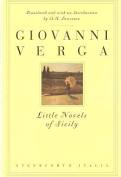
Little Novels of Sicily: by Giovanni Verga

I think I was expecting something like James Joyce’s Dubliners but this is certainly not that!    Verga was a good socialist who wrote about the lives of the common people in the style of Zola –  realistically – even if some of them are pretty funny.   Also,  Verga wrote a good 30 years prior to the time Joyce wrote his novels and Verga was describing the Sicily of his youth and the days of revolution,   the 1860s.

Furthermore,  the styles are completely different – Joyce is Joyce,  even in Dubliners.   And all I can say is Verga is Verga and shows us a kind of bird’s eye view of the lives and land in the real life in Sicily which Verga knew in his youth.  There is a distinct emphsis on the class strtuggle.  Although Verga was of the upper classes, he wrote about the people in the villages and farms  near where he was born,  which he left for his middle years,  and to which he returned in his later years.  But Verga loved Sicily as Joyce loved Ireland – and they both supported overturns of the status quo.

And Verga just whisks us through the land and the lives of his characters in the realism he adapted under the influence of Zola.  What the title refers to as “Novels” Lawrence in his introduction calls “sketches” and that’s a much better word I think,  although the word “novels” keeps them really separated and they do come together in the end – in a way.

sicily.jpeg


*******
Little Novels of Sicily:
“Novelle Rusticane” 
by Giovanni Verga
translated by D.H. Lawrence
1883 / 156 pages
rating:  10/  classic short stories 
*******

I gave it a 10 because although it’s difficult to get into,  if the reader takes the time and makes the effort,  this is a really incredible volume.  Besides,  it’s stood the test of time so that’s a point or two.

The stories:

HIs Reverence:   The story of a very secular and what happens to him during the wars of revolution and unification.

So Much for the King – about a litter-driver who has to drive the king and his little queen (historical) through the crowds knowing that the king could have his head cut off for any infraction.

Don Licciu Papa:  An old woman will be taxed for allowing her pig to be in the road and caught by the town pig-snatcher.  That starts the story of how law works in the village with pigs in its streets until they’re not.  And the Reverend from story one has a little piece, too.

The Mystery Play:   The village puts on a play about a Bible story and props are confiscated,  actors selected,  Mishaps happen and the audience has its own issues to say nothing of the author who is trying to calm everyone but it only makes things worse.

Malaria  – very touching story of a town which  is stricken with malaria and people die – lots of people.  Only a few don’t.

The Orphans – the mother of a small girl dies and the neighbors gossip and try to hook her father up with another wife.  The two are both orphans of a sort.

Property –  Mazarro owns a LOT of land now,  but it wasn’t always this way.  Born poor,  he worked very hard (he slaved),  did some shrewd bargaining (cons), and  lived a prudent life  (miserly)  focused entirely on getting more property and growing more crops and making more money – in pieces not paper.  But you can’t take it with you …  (very short)

Story of Saint Joseph’s Ass – the story of the life of a donkey from it’s first sale as a foal to it’s demise as it is owned by various peasants to do various things.

Blackbread – love stories and the hard work of the really poor peasants –  Santo loves Nena but Nena has no dowry and Santo is poor.  They marry anyway but his sister, Lucia, lives with them along with his mother.  There are lots of inlaw problems as well as Lucia’s plans and getting money by prostitution (implied).

The Gentry-  A rich man is not charitable toward the poor or the church and the fathers kind of pay him back. Then the mountain explodes and the lava flows down on everyone and he gets his pay back.

Liberty –  when Garibaldi and the liberation arrived and there was chaos,  but the consequences as usual after that.

Across the Sea –  The rich can escape by ship and fall in love etc.   The poverty the reader has witnessed is left behind by two travelers,  a man and a woman.   The stories are briefed over but the new lovers get separated and wish they could be permanent like the lovers who wrote their names in stone.


http://www.socialiststories.com/writers/giovanni-verga/

Posted in 2023 Fiction | Leave a comment

An afterthought on the Pinker and Gordon books:

(all links to my reviews)

I finished the Robert J. Gordon book,  The Rise and Fall of American Growth:  (2015) and it is superb.  Yes!    And I reread quite a lot of Steven Pinker’s Enlightenment Now:   and again,  excellent – for what it is.   And I just have to write up the comparison because they certainly are different.

In a somewhat ironic note,   Pinker refers to the Gordon book in Enlightenment Now and Gordon refers to Pinker’s 2011 work,  The Better Angels of Our Natures  in hisBN-LZ627_Gordon_FR_20160106185410enlightenment

book.   And the reason they refer to each other is that they both look at the past in order to understand today and how we got here  – also,  possibly, in the case of Gordon to predict and suggest, or with Pinker, to show cause for outright optimism.
But where Pinker tries to convince his readers not to give up hope,  Gordon is a realist and harbors no illusions.  but isn’t predicting a crash or anything – just “more of the same”  as has been for 40+ years, for the US and from here on out – the good old boom times are NOT coming back.   (This is pretty much straight economics,  not psychology or philosophy.)

Gordon has some policy proposals at the tail end of his work while Pinker barely admits there are problems.   Bill Gates loves the Pinker book,  but only the first 80% of Gordon’s.   LOL!  Pinker and Gates take a world view that life as we know it is improving.   Meanwhile,  Gordon’s book is concerned with the US only –  and it is an economics book by an important economist.

Gordon looks at both today and the last 150 years with eyes open.  His conclusion is that 1870 – 1970 was a time of exceptional progress in the US for several reasons:  1.  the actual inventions and immigration of the late 19th century;  2. the innovations of the early 20th century;  3. WWII boom;  and 4. the Baby Boomer generation with more and better education,  equality,  and opportunity available than ever prior.  This is all backed up in many ways and with some serious stats.

But!   It’s gone. And that kind of boom time won’t happen again.  (Gordon’s nay-sayers are primarily Silicon Valley enthusiasts like Bill Gates.)

I’m not recommending this here because it’s really long and kind of boring if you’re not interested because all that detail gets a bit tedious.  Plus he kind of goes on and on and then reviews – heh.   But if there are some things you’d like to check out I’d say go get the book from the library and take a peek especially at Part 3 – where he gets into the issues facing the economy today.  –  His policy proposals include immigration (yes!),  education (yes!),  incarceration rate (yes!),  drug legalization (yes to his ideas),  minimum wage changes (yes!),   changes to the tax structure (yes!), changes to the regulations on business (yes! – to his ideas),  using gas instead of oil due to carbon emissions (yes but I’d like more solar and wind!).    And even if all his proposals were somehow put into action it would still not bring about the conditions which resulted in the boom years of 1870-1970.  Those days are gone.  This is the new normal.

Back to Pinker:  I still like him and his book because without some kind of hope that we can improve things  (like with Gordon’s policy ideas) then who cares?  Just abandon all hope?  –  No – because we need hope in the form of Enlightenment Now:  Reason, Science, Humanism and Progress to just deal with the issues we have even if the results are not as splendid as we would like.  (And climate change is a whole ‘nother issue along with capitalism –  see This Changes Everything: Capitalism vs the Climate  by Naomi Klein and Capital in the 21st Century by Thomas Piketty. (my reviews)

And re Pinker,  I hope my happiness quotient isn’t completely dependent on my standard of living (given a reasonable bottom $$ level) and more on my quality of life – which has to do with so many things outside of the almighty dollar.

Posted in 2023 Fiction | Leave a comment

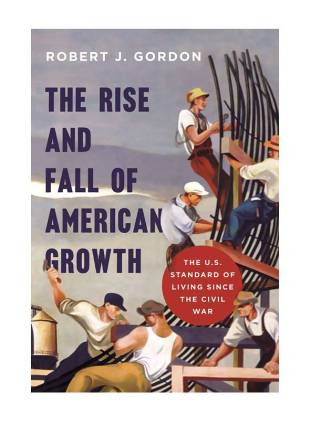
The Rise and Fall of American Growth:  ~ by Robert J. Gordon

I started reading this in Kindle format about a year ago and got 1/3 of the way through.  It’s a macro-economics book and very, very detailed in the telling of the progress of the US between 1870 and 1970 (not as absolute cut-off dates but very convenient).   It was fascinating but i had other books to read and put this one aside.

But my more recent read,  Steven Pinker’s Enlightenment Now (my review),  refers to Gordon and Pinker seemed to Gordon’s information quite a lot, so … I kind of skimmed the first third again of The Rise and Fall… nd kept going.   I think Pinker either misses the point of the Gordon book (the decline of American growth in the last 40+  years) or he’s got his own point really skewed by over-emphasizing the rosy view of the “miracle century” (Gordon’s phrase) and neglecting the very real problems we need ” Reason, Science, Humanism and Progress” right now (!) because it seems to be disappearing in skeptics, young people and the media. (See the review of my second reading of Enlightenment Now.)

risefall

*******
The Rise and Fall of American Growth:  The U.S. Standard of Living Since the Civil War
by Robert J. Gordon
2016 /  764 pages 
read by Michael Butler Murray – 30h 18m
rating –  10   /nonfiction- economics
(read and listened)
*******

Anyway,  in general,  what Gordon has done is specifically outline and describe the progress in the standard of living witnessed by the United States between the Civil War and 1970 and how that progress has slowed a lot since then – especially since 1970.  –   And he really sees no way of that kind of growth ever returning – although he has some policy suggestions which *might* mitigate the problems.

There are a LOT of details – graphs and tables, facts and figures,  with the sources to match.  It’s great – and it’s wonderfully well organized.  (Whew!  What a job.)  And it’s nicely written managing to avoid the dryness of factual, quantitative statements of fact piled on one on top of another (although that’s close in some places).   The reader – Michael Butler Murray,  helps keep the pace up.

Following a Preface and Introduction to the whole book, there are three main Parts – Part 1 examines the remarkable progress which took place from 1870 to 1940.  Part 2 looks at the years 1940-2015 which includes a Golden Age as well as the  beginnings of  a slow-down.  And Part 3 analyses “The Sources of Faster and Slower Growth.”   The first two parts are considerably longer than Part 3.  The Parts are separated by “Entr’actes” explaining what happens in the transitions.  Each Part has an introductory paragraph or couple pages,  then each Chapter (9 in Part 1,  6 in Part 2 and 3 in Part 3) has its own little section of  introductory comments.   Also,  each Part and Chapter has it’s own Conclusion and the book ends with a Postscript.  (Whew!)

But yes,   you can dip into chapters which are more interesting to you,  or you can skim pretty effectively paying attention to introductions,  conclusions,  first sentences,  and intermissions.

“Part 1 –  1870-1940”:   My mom and I had a few good chuckles while remembering  canning and washing clothes on the farm – both of  my grandmothers were full-time farm wives and I very much remember my mom’s mother.  She lived in North Dakota wheat farm from her birth in 1893 to her death in 1986 – (she lived in town the last several years).   She saw a huge change in the face of America,  in her standard of living and the quality of her life.   This Part is basically how Americans lived after the Civil War with emphasis on the cities and northern farms.  Then there are chapters about how that life changed between 1870 or so and WWII.  “What They Ate and Wore,”  “The American Home,”  “Motors Overtake Horses and Rail,”  “From Telegraph to Talkies”  ” Illness and Early Death,” “Working Conditions”  and finally “Consumer Risks.”   –  This Part is about 300 pages long.

“Part 2 – 1940 to 2015:  The Golden Age and the Early Warnings of Slower Growth” is equally well organized,  well written and full of fully “footnoted” data.   Now we’ve got chapters on Food,  Clothing and Housing;  Cars and Planes; Entertainment and Communications; Computers and the Internet;  Medicine;  and finally,   Work, Youth and Retirement.”   This Part is a little less than 200 pages.

Finally in Part 3 we get to the analysis –  the causes of the great leap forward;  “Innovation” and what comes next;  along with “Inequality” and other “Headwind” issues.   This section has fewer than 100 pages.

And then, finally, a 10-page Postscript deals with an overall discussion of the problems ahead and policy suggestions.

Bill Gates on Gordon’s book:  (He likes the first 80%):

https://qz.com/742686/bill-gates-recommends-this-economics-book-so-long-as-you-skip-the-last-two-chapters/

But it’s the last two chapters which have the real meat for the future –  Gates is a serious optimist and he takes a world view.

Posted in 2023 Fiction | Leave a comment

The Red-Haired Woman ~ by Orhan Pamuk

Oh I do so love the way Pamuk writes –  I just get sucked into his books because it seems there’s always an underlying  meaning to the words which comes together in layer after layer along with the complexities of the plots.   It takes thinking for me to read something by Pamuk.

The Red-Haired Woman reminds me a bit of Pamuk’s earlier tales,  Snow especially perhaps.  There’s a mystical,  mythical quality even if the story takes place in the contemporary world.  And they’re often about Turkey (with Pamuk’s beloved Istanbul) and the clash between East and West along with old and new and other issues.

This is probably a minor work from a Nobel Award winner.   His best,  imo, is My Name is Red which I read long ago and I’ve read most of his other novels.  I’m only missing the novels Silent House and A Strangeness in My Mind which I WILL get to.    I’ve also read the nonfiction Istanbul: Memories and the City.  

redhaired.jpeg


*******
The Red-Haired Woman
by Orhan Pamuk
2017/ 254 pages
read by John Lee 7h 22m
rating 9.25  /  contemp fiction
(read and listened) 
*******

So in The Red-Haired Woman we have a 16-year old boy,  Cem Celik,  who was abandoned by his father at a fairly young age. When he got to high school he was apprenticed for a summer to a professional well-digger.  This is not at all what Cem is suited for,  but it pays well and Cem is a good kid,  saving for college.  He wants to be a writer,  but eventually becomes an engineer (revealed at the outset and pertinent to the story). His boss, Master Mahmut,  an unmarried middle-aged man,  takes the place of a father in many ways.

The book is divided into three Parts – the first of which sets up the whole rest of the book – his well-digging teenage summer when he met a red-haired woman and got involved with some very old myths.  In Part 2 Cem is a middle-age man dealing with life as he’s lived it but plagued by the ideas of father-son relationships – due in part to the conse-quences of that long-ago summer.  To reveal any of Part 3 would be a spoiler.

The main theme of this book is right up front there in Part 1  –  father-son relationships – ala Oedipus for the Greeks but Rostam and Suhrah for the Muslim Turks.  –

On a trip to the nearest city our hero sees a young woman with red hair who fascinates him and with whom he becomes obsessed.   Meanwhile, Mahmut is obsessed with finding water.

So the story of Oedipus, which Cem tells his boss one night,  hangs in the background – along with Master Mahmut’s own story of prophesy, or maybe fate.

RostamMournsSohrab.jpg

Rostam and Sohrab

Hopes and dreams and prophesies and stories as well as the related issues of what is real and what is not.

The sensual nature of Pamuk’s descriptions and metaphors in Part 1 are so delicious – they aren’t so apparent in Part 2 probably in part because the desert is gone after 30 years.

I had to look some things up  – either because I had no idea or to refresh my memory:

https://en.wikipedia.org/wiki/Oedipus

https://en.wikipedia.org/wiki/Rostam_and_Sohrab

https://en.wikipedia.org/wiki/Shahnameh


Posted in 2023 Fiction | Leave a comment