This is a puzzler along the lines of the old Agatha Christie with added post-modern touches- or at least contemporary techniques – mixing levels of fictionality. The story picks up several years after Magpie Murders leaves off with Alan Conway, the author of a famous murder mystery, dead without revealing the ending of his novel.
Moonflower Murders by Tony Horowitz / 2020 Read by Lesley Manville & Allan Corduner: 18h 28m Rating: A / literary who done it Book 2 of Magpie Murders
His publisher and the protagonist of both novels is Susan Ryeland who has retired to run a hotel on Crete with her boyfriend, but now needs money. So she accepts a job offer of helping a couple (also hotel owners) find their daughter who has disappeared after her sister’s wedding. She knows them because of the book Conway wrote – the daughter who has run off might have known who the murderer was.
So it gets tangled and in the middle of the book, taking up several chapters, is the text of Conway’s book which started it all based on the real wedding day murder of years prior. There are a lot of characters, a lot of relationships, a lot of motives and it gets dangerous for Ryeland.
If you enjoy well written and tangled who-done-its this book is for you but be sure to read Magpie Murders first.
Good book for the winter holiday season because it’s set in the cold snowy northern parts of the United Kingdom, Northumberland. It’s the 9th of the Vera Stanhope mysteries and the reader gets to know her a bit better. I really loved the Shetland series but this series not so much, but I can’t put my finger on why not.
The Darkest Evening by Ann Cleeves – 2020 read by Janine Birkett 11h 16m Rating – B+ / mystery
From the publisher: On the first snowy night of winter, Detective Inspector Vera Stanhope sets off for her home in the hills. Though the road is familiar, she misses a turning and soon becomes lost and disorientated. A car has skidded off the narrow road in front of her, its door left open, and she stops to help. There is no driver to be seen, so Vera assumes that the owner has gone to find help. But a cry calls her back: a toddler is strapped in the back seat.
Vera takes the child and, driving on, she arrives at a place she knows well. Brockburn is a large, grand house in the wilds of Northumberland, now a little shabby and run down. It’s also where her father, Hector, grew up. Inside, there’s a party in full swing: music, Christmas lights and laughter. Outside, unbeknownst to the revelers, a woman lies dead in the snow.
As the blizzard traps the group deep in the freezing Northumberland countryside, Brockburn begins to give up its secrets, and as Vera digs deeper into her investigation, she also begins to uncover her family’s complicated past.
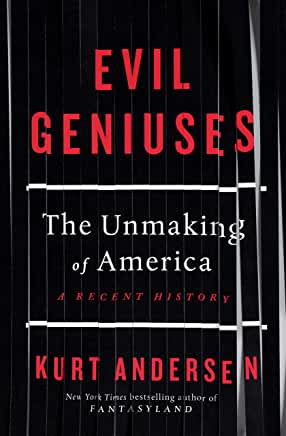
I read Kurt Andersen’s “Fantasyland: How America Went Haywire: A 500-Year History” several years ago, but that’s not what inspired me to read “Evil Geniuses.” Rather my reading group -https://groups.io/g/AllNonfiction – chose to read it and I’m so glad they did. Personally, I would have been put off by the title. Now though, having read the book, I understand why he chose it.
******* Evil Geniuses: The Unmaking of America: A Recent History By Kurt Andersen 08/2020 – 416 pages Read by author: 16h 24m Rating – 9 / history – current events (both read and listened) *******
I keep coming across articles and books which seem to say that everything changed in the 1970s and ‘80s. Well yeah – looking at the big picture of American history, they certainly did change. I wonder if all these authors who are saying this read “The Rise and Fall of American Growth: The U.S. Standard of Living since the Civil War” by Robert J. Gordon. Andersen did for sure but he takes off on a somewhat different slant in that he looks at what happened after the “Fall” (1970 or so). The idea that American economic growth increased dramatically between the years 1870 and 1970 after which it stalled and then started decreasing seems pretty well established now. It was a miracle century. So the storyline in Chapters 2 and 3 is much the same as in the Gordon, but using Anderson’s ideas and language.
But “Evil Geniuses” takes off where “The Rise and Fall…” stops and where Gordon’s book is about the economics (in depth), Anderson’s covers the right wing business politics of economics. They are both history books at heart. I remembered quite a lot of the material from having lived it, but starting in Chapter 7 a lot was new because I just hadn’t put it together like this.
The economic pendulum went from the peak of prosperity in the very early 1970s and followed that with Reagan’s ’80s continuing on up to now and Trump’s call to “Make America Great *Again.*” I knew this stuff – why had I not put it together with the nostalgia either? Of course folks are nostalgic!
Another book Anderson makes use of, seems rather close to, actually (but which I haven’t read) is “Dark Money: The Hidden History of the Billionaires” by Jane Mayer. That was a hot book a few years ago and I might have to read it now – to catch up on things which I’m sure are still going on.
From the Civil War to 1970 the US saw incredible growth and prosperity. But we hit our peak and although we didn’t sink immediately, we started the long slide. And instead of looking at the big picture, we as individuals (some of us) looked at how we weren’t individuals getting “our share” and blamed immigrants and entitlements and what were seen as the evils of liberalism.
Sad to say, the book gets kind of boring starting at Part Two, Chapter 8 and continuing to about Chapter 11. It’s Reagan and Reagan-omics and consists of a rehash of what happened politically during the Reagan years. Bo-ring – or maybe it’s me, because when it turns back to the economics I got interested again. I’d say Chapter 12 through the end. I’ll have to reread the chapters where I lost interest. There might be more there than meets a bored reading.
From Wiki: https://en.wikipedia.org/wiki/Evil_Geniuses:_The_Unmaking_of_America Evil Geniuses examines coordinated efforts to achieve conservative economical and political changes in the United States from the 1970s to 2020, and discusses how the resulting unfettered laissez-faire approach to capitalism has resulted in an extreme level of economic inequality.
******* Telling Tales by Ann Cleeves 2006 – 416 pages Read by Julia Franklin 11h 53m Rating: B- / mystery *******
I read this weeks ago and forgot to blog it so here it is. (I use this blog to see what I’ve read and when and what I thought of it.)
From the publisher (because at this point I remember very little): Telling Tales is the second book in Ann Cleeves’ Vera Stanhope series – which is now a major TV detective drama starring Brenda Blethyn as Vera.
It has been ten years since Jeanie Long was charged with the murder of fifteen-year-old Abigail Mantel. Now residents of the East Yorkshire village of Elvet are disturbed to hear of new evidence proving Jeanie’s innocence. Abigail’s killer is still at large.
For one young woman, Emma Bennett, the revelation brings back haunting memories of her vibrant best friend – and of that fearful winter’s day when she discovered the body lying cold in a ditch.
As Inspector Vera Stanhope makes fresh enquiries, tensions begin to mount. But are people afraid of the killer, or of their own guilty pasts?
Squeeze Me By Carl Hiaasen 2020 / Read by Scott Brick – 11h 9m Rating: B / comic crime
Kiki Pew Fitzsimmons, age about 72 and very rich, may have been dead prior to her encounter with the python. And her friends, the local Trump neighbors down there in Florida, freak at the thought of some rabid illegal person killing her and disposing of the body in some way – Trump uses that thought to his own advantage.
Meanwhile Melania is having an affair with one of her guards. And the “Potussies,” some old ladies in Palm Beach who love “the Mastadon” – (aka Trump) are aghast. They can’t find their friend’s body! LOL. But never fear, Angie Armstrong is on the case – and there are some very dirty characters hanging around there, too. Have you ever read anything by Carl Hiaasen? They’re very funny books if you can stand the stupid.
But it did the trick – it got me diverted from current events and covid. Kudos.
Another good book! And right on time – :-). I’d been wondering about this book since probably June but for awhile I thought it would be too much for me considering the situation with the coronavirus here. But now- even with the virus worse here – (I’m in North Dakota) I got intrigued and ended up buying both the Audible and the Kindle versions (I like to see pictures and footnotes and graphs and whatever).
I want to put this link to an interesting site here – it is by the author of the book and compares the pandemic of 1918, the Spanish Flu, to our current Novel Coronavirus-19.
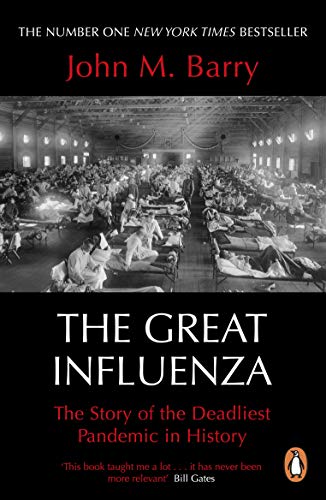
The Great Influenza: The Story of the Deadliest Pandemic in History by John M. Barry * 2004 – 546 pages Read by Scott Brick 19h 26m Rating 9.5 – / history – medicine
I’ve been interested in the “Spanish Flu” since high school days but never really read much specifically about it. And there are no more recent books about this except for some really slim ones. (C’mon Beck, 2004 is not exactly “old,” but …). I really, really do wish I’d asked my grandparents about it. I understand that’s when one of my great aunts went into nursing – her photo is in the home where my mother is living. I know there were many deaths here – the cemetery has lots of 1918s on the marker
I’ve got to put this in here – it’s a well stated review from Wikipedia *****
A 2004 Journal of Clinical Investigation review said that the book was “well conceived, well researched, and extremely well written” targeting a broad audience-physicians, scientists, medical students, and history buffs.[1] Barry Gewen of The New York Times praises it saying “He is a good teacher, in part because he assumes that his readers don’t know anything. He explains the technical stuff clearly, with nice, homey analogies”[2]https://www.ncbi.nlm.nih.gov/pmc/articles/PMC450178/
Reaction[edit] In the summer of 2005, President George W. Bush read the book while on vacation at his ranch in Crawford.[3] His study would later set forth plans for the federal government to prepare for future pandemics in a November 2005 speech.[4]https://www.ncbi.nlm.nih.gov/pmc/articles/PMC1283304/
There’s a lot in this book – Part 1 is about the medical situation – the US was way behind in terms of theory and process. We still looked at medicine as a matter of observation and logic. There was no room for experimentation. Germ theory had just been discovered and was being slowly accepted.
Part 2 deals with the virus itself and the biology of it – how it spreads, how it mutates and kills humans. This aspect and the scientists who worked on the search for a cure or vaccine or whatever they could do is a big part of the book!
Part 3 deals with politics and WWI and why those two played into the horrendous spread of the disease. From propaganda and censorship to the crowded barracks in many cases government policy and statements only made things worse. The doctors featured did an admirable job and the US banded together, but there were glitches, sometimes serious ones which led to an inability to deal with a pandemic of this scope. So because lies were told, information was withheld and people were dying, the panic grew. (“And they said, ‘Oh well, it’s just influenza.'”)
In Part 4 we get to the pandemic as it hits the US in the middle of a World War – and it hit all over the world – First, on March 18, 1918 the influenza struck at Haskell and then Funston, both Kansas military bases and and then wherever the troops were sent, from Georgia (US) to France and beyond as far away as China, Russia and Kenya. (This place of origin is agreed on by virtually all authorities although there are a few who hold out.)
The thing about the Spanish Flu and the Covid-19 attack is that the US was at war when the Spanish Flu hit and it hit first in the over-crowded American military bases. This was in February of 1918. From there it spread to other bases and the world. The US was trying to focus on fighting WWI which we’d joined in April 1917.
Almost any disparagement of the war effort was regarded as bad for morale at least and actual treason at most (See the different responses of Eugene Debbs AND Woodrow Wilson). Information about the Spanish Flu barely got out and when it did it was always about the country having “got past it.” (Oh why does this part feel like déjà vu?) The war effort was the news.
Philadelphia was hit early and very hard – possibly the worst hit – because they ignored the influenza (“It’s just the flu!”) and held a massive war bond effort including a huge parade instead. This was in September of 1918 and everyone had to support the war.
The book is full of the horrendous details regarding the nature of the disease itself, biologically and the physical effects it had on people. It is estimated that almost 500 million people died world wide. But because so many of the fatalities were military related, or uncountable in remote areas, there are no firm figures for death the toll.
In 2020 the Coronavirus-19 did not attack US military bases first and we were not involved in a world war. But still, the US was unprepared for a real pandemic because we did NOT learn our lesson.
There we were given plenty of information – but much of it was false and people already did not trust the government thanks to the election of 2016.
The main lessons for today (2018 – pre-Covid-19) of Barry’s book include the usual ideas about increasing investment in vaccines and transportation, but he also says that we should continue to prepare and when it happens, and it will, to not let fear turn into the terror and panic of 1918.
By withholding official information and not coordinating mitigation efforts, Trump did just exactly that and then made it worse by not taking any action and insisting that all was well – “we’ve turned the corner.” The lies of the officials and the press prevented the public from knowing the concrete facts. And the panic which resulted threatened to break the country apart – again – and again.
Salt, Fat, Acid, Heat is the best cookbook I’ve read since The James Beard Cookbook by the eponymous author (1959) and I read that in 1970, back when I was a new bride. Beard’s cookbook was, to me, a gigantic compendium of advice and techniques – an encyclopedia of sorts – and I used the heck out of it. Other similar books have been published in the half-century since. And I do enjoy reading cookbooks.
Salt, Fat, Acid, Heat By Samin Nosrat – 2017 / 619 pages Read by the author 5h 57m (256 pages – 1st half or so) * both read and listened to the 1st half
Mostly, until I got married, I cooked like my mother did (Norwegian-based) and after that it was somewhat like my mother-in-law (Irish). But because I was really on my own to figure out how to cook, I also learned to scour cookbooks and actually started collecting them. But James Beard was my standard; his books taught me stuff like how to bake a potato which is not a recipe but a matter of method based on principles.
Nazrat’s book is like that as it tells the reader/cook how to work with the basics in a real life kitchen. The pages are not just full of recipes or the epicurean cuisine of some famous chef. This book is for everyone who stirs a pot of soup on their old kitchen stove and wonders how it could be made tastier or what would best go with it. This book contains the information gained via experience and intuition which lies behind the recipes. So it’s about methods and rationale and is, in reality, a comprehensive overview of ideas and principles combining science with senses, intuition, memoir (Nazrat’s hands-on experience) and of course, the appearance, smell, sound, texture and taste of good food cooking.
It’s beautifully written, describing the sensory elements of food:
“Salt should taste clean, free of any unpleasant flavors. Start by tasting it all on its own. Dip your finger into your salt cellar and let a few gains dissolve on your tongue. What do they taste like? Hopefully like the summer sea.”
I think maybe the best part is how insistently usable this book is. I was stirring some celery and onions in butter the other evening and remembered what Nazrat had said about it. I remembered the admonition about salt. When cooking meat I think I should have remembered that slow cooking is not for every piece of pork – lol. I won’t forget that again. The point is to think like a chef.
I’m giving this book as a gift to a couple people, people who are interested in cooking the way I am – it’s that good.
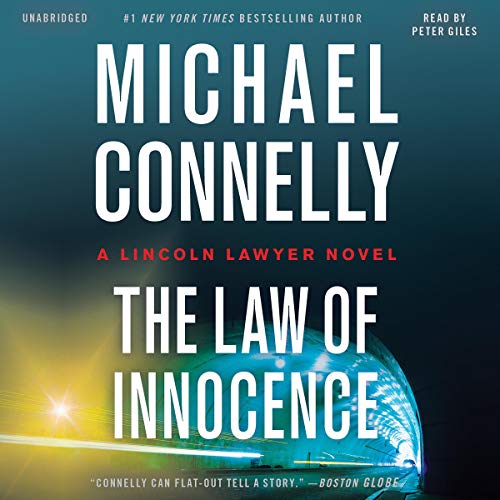
I’ve read a lot of legal crime, both courtroom dramas and legal thrillers, but I’ve never come across a novel in which the main character defends himself on a murder charge. This was fascinating. Mickey Haller, an LA-based defense attorney, is arrested on murder charges after a dead man is found in his car trunk. He decides to represent himself because he feels some investigation is in order and other lawyers wouldn’t see to it properly.
The Law of Innocence By Michael Connelly 2020 Read by Peter Giles 12h 27m Rating: A+++ / legal thriller (Micky Haller series #6)
Haller now (book in book 6) has his own practice with his own staff and he also has two ex-wives an ex-girlfriend and a daughter. Also, he’s the half-brother of Harry Bosch, Connelly’s main lead character, a detective, of another series.
The narrative is tight, the story compelling and the tension builds fast but naturally. The main characters are as well drawn as a professional could write.
There’s nothing particularly literary in this book although it’s nicely written. I love a good legal thriller and Connelly is one of the best for his continuing characters, his plot twists and masterful tension building.
Four septuagenarians in a retirement village get together to solve cold case crimes for fun. Elizabeth is the leader and she has police connections. Joyce acts as scribe, Ibrahim is a retired psychologist and Ron is politically oriented. Now a body has turned up on the village’s property and it looks like it was murder. The victim turns out to be one of the construction contractors. Well what do the club members do? They start sleuthing with the help of a couple cooperative detectives from local law enforcement.
The Thursday Murder Club By Richard Osman Read by Lesley Manville12h and 24m Rating: 6 / crime
There are lots of characters who talk about old loves and memories in addition to crime-solving. The writing was very good so the digressions were okay, but listening was difficult because the narrator did not seem to distinguish between male and female voices. And what with few references to names or even pronouns it made keeping track difficult at times.
And then in my real life there was the ballot count to keep me off the book, so it took me 3 or 4 days to finish what should have been a 1 or 2 day quickie. That alone was irritating and interrupted the flow and my focus.
Still – I gave it a 6 – why? Because the premise was fun and interesting although it didn’t pan out as the more fun, less realistic amateur procedural I expected. Also, there were parts which were compelling in their own way.
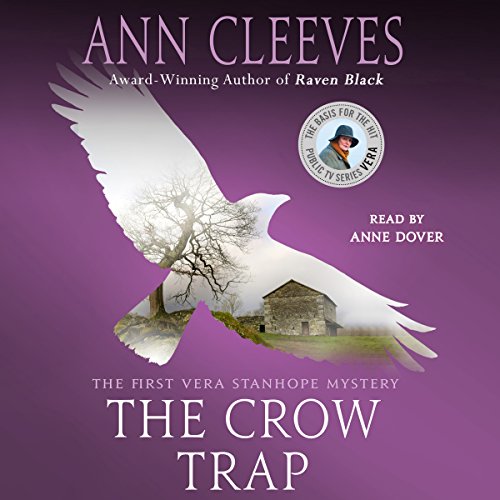
Ho hum. I loved Cleeves’ Shetland Island series with Jimmy Perez and I read every book. But this Vera Stanhope thing just did not do it for me. I don’t know why not. Perhaps it’s just the lack of focus during this time of the Covid and elections and Halloween. I’m having a hard time with focus and this book is not a “page-turner” in the normal sense. I don’t even want to reread to see what I missed. But I won’t send it back because I don’t know if it was the book’s problem or temporary thing of mine – I think my problem but it’s more than focus.
The Crow Trap B by Ann Cleeves – 2001 – Read by Ann Dover – 14h 8m Rating – C / crime series
I’m kinda bummed with this last reading. I was loving the heck out of it – the feeling like Robert Bolaño – but then somewhere in the middle it started taking long breaks from action – any action – and eventually slowed down to boring. I did finish though. Still – I’ll have to give it a 5 (mixed review).
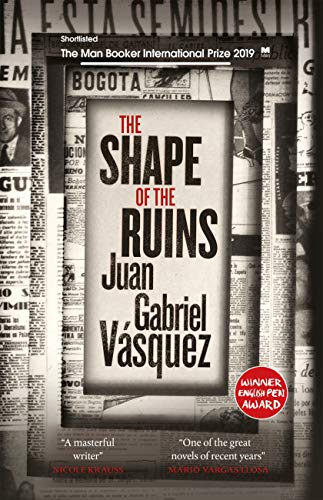
The Shape of the Ruins by Juan Gabriel Vasquez 2018 / 526 pages Read by Sheldon Romero – 17h 26m Rating: 5 / B-: literary crime (Both read and listened)
The book opens in 2016 (?) or so with the arrest of Carlos Carballo for the attempted theft of the clothes Jorge Elizcer Gaitan was wearing on April 9, 1948, the day of his assassination. Carballo is taking the suit from a museum in Bogotá, Colombia which is dedicated to Gaitan, a Colombian politician. But it goes back further to the assassination of Colombia’s Gen. Rafael Uribe Uribe in 1914. It seems there are a lot of parallels.
The 1st person narrator, Juan Gabriel Vasquez (the same name as the author), is watching this theft on TV and commenting on the nature of the assassination, the riotous reaction of the crowd and city, the resemblance to the assassination of JFK in the United States, and the idea of conspiracies and those who follow the conspiracies.
The story goes from there to the ideas of life being snatched from a victim (assassination) or being surrendered by the victim (a devastating disease). There are conspiracies everywhere, historical and contemporary and Carballo is totally involved but Vasquez is intrigued although put off. He finally succumbs and learns the tale(s) of it all.
Meanwhile, Vasquez has his own problems with newborn twins who are very much alive and his wife wants help with them. But that’s just a side story. The main events are the assassinations and their aftermaths as well as a courtroom drama.
My first thought upon reading the opening pages of this incredible book: Huh? It won the Pulitzer Prize because of the increased attention given Blacks since the death of George Floyd in May. WRONG-O. The Pulitzers were awarded and announced prior to Floyd’s horrendous death and the ensuing increase in Black Lives Matter activity. Good show!
Sweet Taste of Liberty: A True Story of Slavery and Restitution in America By W. Caleb McDaniel 2019 / 340 pages Read by Paul Heitsch 9h 51m Rating: 10 / US slave history (Both read and listened)
My second thought: I feel like I’m reading a young adult narrative history. – WRONG AGAIN! This is a masterfully researched tome written to give maximum clarity to the complex subject and issues involved. The Notes bear this out, the maps and photos are wonderful additions to the book.
Third thought: The Pulitzer for history has done it again! Yay!
The story itself is so complex that the apparent “simplicity” of the first pages of narrative is deceiving. This is not an easy-read history. It recreates the era in ways I never imagined. McDaniel has thoroughly sourced his material and lets us know how he found and chose his material and he has put much of it on the web, fwiw.
Garrett Goodlove is a lawyer who lives and runs a small office in a fictional city in Humboldt County California (home of a lot of redwoods and marijuana agriculture). He and Jen his lawyer-wife, Nicole his lawyer-daughter, and Carly his brilliant but deaf twin sister, run the office along with their older and eccentric investigator, Luella Davis and a secretary. They’ve dealt with various cases over the course of 3 prior books and I’ve been delighted with every one. The books are smart and funny and not heavy-handed in any way, but they have good mysteries and great characters Imo, they should be read in order as there’s an entertaining over-arching plot line which develops as they go.
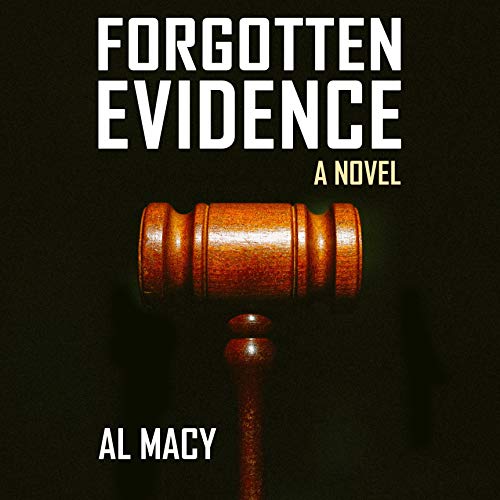
Forgotten Evidence By Al Macy 2020 Read by Nick Sullivan – 6h 54m Rating: A+ / legal crime (#4 Goodlove and Strech series)
This time Arthur Toll, an older scientist at a local lab working on a special formula, goes missing. But before he does he leaves an envelope in the care of Garrett Goodlove with instructions telling him it should NOT be opened unless something happens to him. Goodlove puts it away but a few days later the man goes missing.
Toll is found but it appears he has profound amnesia and remembers nothing about his life except the intellectual material. In the meantime, his rather sexy co-worker has been found dead and Toll is the prime suspect.
It’s a good book! The thing I like about a good series is that it gives the author time and space to develop both the plots and the characters. Good mysteries whether they’re legal crime or not need creative plots – actually, this is the basic thing in a good mystery novel. And so quality character development often gets lost, think Agatha Christie mysteries or even Elmore Leonard. But with a series where the lead detective and his close people are the same characters over the course of several books then they can come unto their own and you get hooked into them – the reader wants to know what happens in their lives.
I really enjoy the Goodlove and Shek series for the setting, the excellent puzzlers, the legal play and courtroom action as well as more of the company of Garrett Goodlove and his crew.
This was a second read because it was a reading group selection. My first review is here:
My opinion: I really don’t think this book should have tied for the Booker Prize this year. It’s not THAT good but it’s the sequel. I figure The Handmaid’s Tale, the first book in this series of two, surpassed expectations in becoming an extraordinarlily popular tome, a phenomenon (in its own way) and although it made the Booker Short List back in 1985, it likely should have won the biggie that year. Or so we think 15 years later following a successful movie and television series. But the powers-that-be missed it at the time. Okay fine. But giving Atwood the top prize for the sequel? No, no, no…. in so many ways, no!
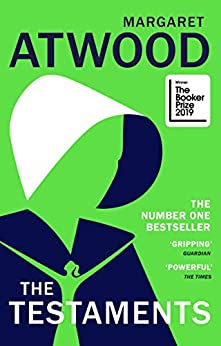
The Testaments by Margatet Atwood 2020 / 421 pages read by Derek Jacobi – 15h 18m rating: 8.5 / literary sci-fi (read and listened)
But it’s happened before. For instance, my favorite example is Tim Winton winning the Booker Prize in 1994 for a so-so book called The Riders which is NOT one of his best. He should have won the prize four years earlier, in 1990, for Cloudstreet – a masterpiece of literature and the book he’s famous for – his magum opus, imo.
I totally understand missing a book’s importance within a year of publication, but I do NOT understand giving the prize to that author for a mediocre subsequent book 15 years later! That feels like a consolation prize.
Oh bother.
The Testaments is a very good science fiction type book – part ideas, part thriller – set in the future, with some science bits – mostly a social science emphasis. It’s like Atwood’s sci-fi trilogy, the Oryx and Crake books, in some ways. She claims she’s NOT a sci-fi author but that’s malarkey – a different definition of sci-fi.
Atwood truly created a world when she wrote The Handmaid’s Tale. Creating a world is often the most important part of a good sci-fi book. In The Testaments she continues working with that same world by developing a structure in which several characters alternate in the telling of a complex tale. The main characters are kind of flat which is common in sci-fi. They have multiple names and are easily conflated. I think that device used here helps build tension as the reader doesn’t quite know what’s happening to whom or which character knows what.
Read The Handmaid’s Tale first then read The Testaments. And read Girl, Woman Other by Bernardine Evaristo whenever you want – soon. (That’s the book which tied with The Testaments – it’s great.)
This is the third in Grisham’s old Jake Brigance series. It was preceded by “A Time to Kill” (2011) and “A Time for Justice” (2013). Now comes “A Time for Mercy.” Jake is a lawyer in the small, fictional Mississippi town Grisham is known for, Clanton. Grisham is also known for being seriously anti-death penalty.
A Time for Mercy by John Grisham – 2020 Read by Michael Beck – 19h 59m Rating: A+ / legal crime
Josie Gamble and her two children, 16-year old Drew and 14-year old Kiera, are living with Stuart Kofer, a really despicable human being who happens to be a cop, a drunk and abusive cop. One night he comes home drunk and beats Josie almost to death. This night the children were upstairs and heard it. Thinking Kofer had killed his mother, the 16-year old boy, shot Kofer and called 911.
Now what? The local sheriff is Ozzie Walls (from A Time to Kill), a black man who is very popular in most circles. And Jake Brigance gets the case.
Grisham takes his time. His firm has another case they’re working and it involves a great deal of money. He develops characters and their interactions from various 3rd person scenarios. The plot twists and turns and tugs the heart. The end result is a 465 page (or 20-hour) treat for those seeking immersion. It’s not usually page-turning but the trials and the last 100 pages are the stuff midnight oil was invented for. If you’re a fan – enjoy!
This is a very strange book, but it comes up on the lists of All-time Best Mystery Novels and it’s closing in on Halloween. I suppose the book comes up a lot more on literary type lists than on thriller lists. Anyway, okay fine. I enjoy reading a book or two to match the season between October and Valentine’s Day. A second book this month might be Rebecca by Daphne du Maurier – we’ll see. I’ve read it before but it’s a good book.
Perfume: The Story of a MurdererB y Patrick Suskind – 1985 Translated by John E. Woods Read by Nigel Patterson – 9h Rating – 6 / literary crime
Anyway, as I said, this is a strange book concerning a young man whose olfactory senses are extraordinary but everything else about him seems rather pathetic. Jean-Baptiste Grenouille is born in Paris in the 18th century and immediately orphaned, abandoned to foster care. He is profoundly influenced by the smells around him. One day he becomes obsessed with an adolescent girl and murders her for the smell. (Yes.)
Life goes on and he works at tanning and then a perfume making apprenticeship for a wealthy businessman. The story kind of curls around and around like smoke and I’ll not get into spoilers. I suppose it’s a good story for Halloween, but I didn’t particularly care for it because of the content.










 Becky's Books -