Black Flags: The Rise of Isis by Joby Warrick

This looked interesting and was on my wish list even before it won the Pulitzer Prize for General Nonfiction.  So picking up that award brought it to the top – and here we are.
Actually,  the book was coming along so nicely I wanted a bit more – so I got the Kindle version where there are maps and lists of characters etc.

I’ve not read all that much about ISIS so I really need a bit of a background in order to catch up and this felt  like it was the right book for it –  where did Zarqawi come from and how did it all come to what we have today?

blackflags

***********
Black Flags:  The Rise of Isis
by Joby Warrick
2015 / 368 pages
read by Sunil Malhotra  13h 33m
rating –  9 /  general nonfiction
*********** 

I had to read the Prologue  twice –  I listened, then bought the Kindle version and started over.   Good thinking – there’s a lot of material here,  a lot of names,  places and events – it’s an overview of sorts.

This is the story of how Abu Musab al-Zarqawi, a Jordanian and veteran of the battles in Afghanistan,  came to form the now infamous ISIS,  a  group of many thousands  bent on the destruction of the old corrupt regimes in the Middle East and the West in general, specifically Israel,  Europe and the US.  Zarqawi  was joined by a small group of radical Islamic thugs,  the ousted leaders and military from the old regime in Iraq which the US (in all its wisdom) simply removed when they took out Saddam Hussein.  They apparently had some unwitting help from a few other people including the Bush, Clinton and Obama administrations.  And even after Zarqawi was killed there remained a small tight group under the leadership and training of Abu Bakr al-Baghdadi, which managed to use what was left to take advantage of the civil war in Syria.

Warrick starts his story with a Prologue dealing with the February, 2015 execution of Sajida al-Rishawi,  “Zarqawi’s woman.”  She had been the suicide bomber whose vest failed to explode back in the terrorist attack in the horrendous  2005 bombings in Jordan.  Now she was finally being executed but ISIS  wanted her back –  they were claiming her – and that was the point – there had been no real ISIS in 2005 – by 2013 they were an army.

The story of the execution of al-Rishawi bookends the Prologue. The interior covers the crime she was convicted of as well as the “ties” between ISIS and al-Qaeda; the incredible growth in strength due to the erroneous  “connection” between Zarquawi and Iraq were  involved in 9/11;  the attacks on Iraqi Shiite communities,  the naming of their group ISIS, the reluctance of the US to get involved after a couple of  botched attempts and more.  It gets scary:

*****
In the prophetic passages of the Muslim holy texts known as the Hadith, Zarqawi saw his fate foretold. He and his men were the black-clad soldiers of whom the ancient scholars had written: “The black flags will come from the East, led by mighty men, with long hair and beards, their surnames taken from their home towns.” These conquerors would not merely reclaim the ancient Muslim lands. They also would be the instigators of the final cataclysmic struggle ending in the destruction of the West’s great armies, in northern Syria. “The spark has been lit here in Iraq,” Zarqawi preached, “and its heat will continue to intensify until it burns the Crusader armies in Dabiq.”

Warrick, Joby (2015-09-29). Black Flags: The Rise of ISIS (pp. 8-9). Knopf Doubleday Publishing Group. Kindle Edition.
*****

This is a really well conceived, nicely organized and well  written book.   There’s a basic chronological order,  but because there are so many threads which have their own backgrounds Warrick has to use some digressions to weave them in. He does this with perfect timing.

Chapter 1 takes the story back to the Ikhwan  the origins of al-Jafr, the notorious Jordanian prison built by the British, abandoned in 1979 then re-established in 1998 for  a bunch of seriously hardened criminals with militant Islamic leanings (invented by Maqdisi)   and an anti-government crusade.  The enforcer for Maqdisi’s prison group was al-Zarquwi (“the one from Zarqa”), a very complex person,  but completely charismatic.  https://en.wikipedia.org/wiki/Ikhwan

Chapter 2 is a recap of Jordan history,  it’s recent leaders and their difficulties, the new King’s decisions – most importantly,  the release of 2500 prisoners – this was 1999:

Many months would pass before Abdullah learned that list had included certain Arab Afghans from the al-Jafr Prison whose Ikhwan-like zeal for purifying the Islamic faith should have disqualified them instantly. But by that time, the obscure jihadist named Ahmad Fadil al-Khalayleh had become the terrorist Abu Musab al-Zarqawi.

Warrick, Joby (2015-09-29). Black Flags: The Rise of ISIS (p. 43). Knopf Doubleday Publishing Group. Kindle Edition.

https://en.wikipedia.org/wiki/Jama%27at_al-Tawhid_wal-Jihad

Reading through some reviews I’ve been interested enough to try ISIS: Inside the Army of Terror by Michael Weiss and Hassan-Hassan and/or ISIS: The State of Terror by Jessica Stern and J.M. Berger – both with somewhat more current information.
2 Comments

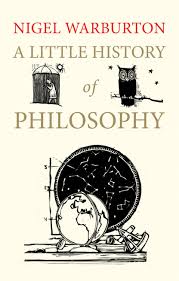
A Little History of Philosophy by Nigel Warburton

Okay so I’ve read a fair amount of philosophy but I’ve never felt like I completely understood it.  And I’d forget it pretty quickly so that’s probably proof I didn’t really grasp the concepts.

This book presents the philosophers and the highlights of their ideas so clearly and in such a well thought-out manner that I’m tickled to death to read it.  It’s probably a bit under my level of understanding on some of them,  but a review never hurt.

Unknown

*******
A Little History of Philosophy
by Nigel Warburton
2011 /  288 pages
read by Kris Dyer  7h 35m
rating:  9
********

Chronological order is the obvious structure for a book like this – and that’s the way almost all authors of philosophy books do their little overviews.   I was familiar with most of the philosophers and their ideas but there were a few whose ideas remained obscure – and probably still do.

The book goes on from Spinoza through Wittgenstein and  Sartre all the way to the ideas of artificial intelligence as well as the really contemporary Peter Singer.  There’s not a whole lot of material on any of them but there aren’t any  difficult original passages to read as there were in the book by Stewart Goetz  and Charles Taliaferro,  A Brief History of the Soul which I read back in September of 2015. I suppose if one or another of the philosophers presented catches your eye you can search out other material.

Warburton writes well,  the ideas are chosen and presented carefully,  and he uses a lot of examples.

I thoroughly enjoyed this one –  if you’re interested in western philosophy from Socrates to today but don’t have much of a background in it I really recommend this.

4 Comments

Colonel Chabert by Honoré de Balzac

I leeerrve 19th century classics -(a lot of them anyway)!   And Balzac is way up there in my favs.   Balzac was a pioneer of literary realism and it shows early on in this odd little novella  – (loc 46 – Kindle)

The stove-pipe crossed the room diagonally to the chimney of a bricked-up fireplace; on the marble chimney-piece were several chunks of bread, triangles of Brie cheese, pork cutlets, glasses, bottles, and the head clerk’s cup of chocolate. The smell of these dainties blended so completely with that of the immoderately overheated stove and the odor peculiar to offices and old papers, that the trail of a fox would not have been perceptible.

colonel.jpeg

*******
Colonel Chabert
Honoré de Balzac
1832 / 80 pages
rating – 9
*******

Don’t just skim by all that stuff – there are character and period revelations there as well as enough sensory detail to draw the reader right smack dab inside the setting.

One day the Maitre Derville,  attorney-at-law gets a strange new client – a man who says his name is Colonel Chabert and that he died in the battle of  Eylau where he supposedly fought alongside Murat.  Now he’s been living as a bottom-feeder of the socio-economic pile for some time and he’s just finally decided to return to Paris to reclaim his old life.

The reason Colonel Chabert went to see Derville is he is the lawyer of his wife – or ex-wife – or widow – whatever.   It gets complicated because Rosine remarried and now has two children,  her fortunes have increased,  she’s quite happy with her life.  But Chabert’s appearance is a threat to all that.

The politics gets pretty heavy here as the story unfolds between the days of Napoleon I through the Restoration to life under Louis XVIII with Louis Philippe almost on stand-by.  It’s not a big deal to know the specifics – only that times have changed and that some people have changed with them and others have not.

And the ending is … well – yikes.

4 Comments

Darknet by Matthew Mather

Disappointing by comparison to Cyberstorm but it’s okay.  I just so enjoyed Cyberstorm I went right ahead and got Darknet by the same author.  Cyberstorm had almost everything plot, characters, writing woven together for some really believably delicious suspense and ideas about contemporary issues as well.  Darknet is missing the some of the great characters and some of the believability – almost as if it belongs in fantasy – not quite. It does have some great discussion of issues, though-  the cloning of corporate entities and their powers in particular.

darknet*******
Darknet
by Matthew Mather
2015 / 371 pages
read by Tom Taylorson
rating:  B-  / speculative fiction
******* 

It starts out fine – the first chapter opens with Sean Womack waiting on a busy street in London.  He’s got one hour to go before something called the  “assassin’s deadline” happens.   The thing is that “they” are after him.  From a public phone he tries to place a call to someone named O’Connell. He leaves a brief message,  but then a bus crashes into his phone booth.

In the next chapter  an ex-con named  Jake O’Connell is working in a very lucrative job at place called Atlas Capital,  a financial brokerage on Long Island.  He  has a family and the life-style to go with his salary.  It would be best if he didn’t do anything out of line – getting caught would end his world.

But the firm  and its employees are apparently in trouble,  being audited as well as being investigated by the SEC on money laundering charges,  stealing pensions from retirees –  something.  They seem to be looking for a fall-guy.    Dan Donovan, the now very rich chairman and founder,  hands Jake a memory key before their meeting ends with the cops at the door.  Jake doesn’t want the key, but  too bad.   he’s got it – the passcodes to locked accounts.   Soon there are lots of deaths.

Jake gets back to Shawn but is it really Shawn Jake talks to and gives info to?  He  thinks it’s Shawn but the reader knows there’s something fishy going on.   And therein lies a chunk of the plot.  Machines have taken over a number of human functions – talking on the phone and filming and murder are a but few.  A good guy doesn’t know who he’s dealing with – is that guy on the phone who he says he is?

Meanwhile,  we’re whisked off to Tokyo where one Doctor Yamamoto is concerned about Atlas Capital and Donovan.   Whatever is happening is international and when Yamamoto dies and then his assistant dies it leaves Jin Huang an American data analyst and consultant to look into the information she’s been collecting.  Her friend saves her and they along with a couple friends form a little team – vulnerable to more deaths.

So Jake is now in trouble with the law because not only is he wanted for securities fraud but also for rape (an employee of Atlas has turned him in rather conveniently for the company.  So he violates his bail and heads on up to Mohawk lands in Canada working with his old friend Dean but the Darknet knows no national boundaries.

I’ve noticed that Mather likes to play with some themes in his novels –  a huge one here is the vulnerability of the internet coupled with the legal nature of corporate entities and accountability.  Another idea is the international scope of computer-based  finance – from Japan to Mexico,  China to Mohawk lands,  London to ?? – and from the billionaires to the peasants wanting paychecks.  It’s all connected.

But as I said at the outset – there are several problems with Darknet.   One is that the characters are not well developed like they were in Cyberstorm.   In Darknet the characters multiply as the narrative moves through the layers of intrigue and end up being too many to keep track of.  The premise of Cyberstorm is completely believable – nothing ever goes over the suspension of disbelief – this is not true with Darknet.   It’s an interesting concept but the development is kind of contorted with too many threads going too many places.

Leave a comment

ZERO K by Don DeLillo

I’m a long time and hard-core fan of Don DeLillo -(as many of you already know).  I remember standing in the narrow aisle of a little indie bookstore back in 1998, reading the entire Prologue to Underworld then brand new on the NY TImes Best Seller List. I was mesmerized,  bought the hard cover and read the whole thing that very week,  completely absorbed and in love with the language and  themes, the images,  the ideas.

ZERO K  is a thoughtful and haunting continuation, a broadening in many ways,  of many of those same ideas.  These are the themes he has pursued since he started writing –  language,  identity,  vague existential paranoia, memory, film, media,  art, the naure of reality, of life and death,  patterns, families,  our connectedness – or dis-connectedness as it may be.    But With Zero K we have the addition (I think) of a couple twists,  the technology grid, capitalism and  the possibility of environmental and political disasters,  etc.   All of these are put into a different context(s)  for Zero K.  with different characters in different situations and possbilities – death or not death and the grey area between.

zeroK
*********
ZERO  K 
by Don DeLillo
Scribner – May 3/ 2016 / 288 pages
Rating – 9.25 / literary fiction

And a huge thank you to Simon & Schuster  for the ARC via NetGalley
*********

Artis Lockhart, the stepmother of  Jeffrey Lockhart,  our 30-something first-person protagonist,  is in the final stages of multiple sclerosis and physically deteriorating with a lot of pain.  Death might be preferable.  So Artis and Ross Lockhart,  Jeffrey’s insanely wealthy father,  have decided she should go to a remote cyrogenics facility where she will be placed in a kind of very deep hibernation until treating her ailment is feasible – it’s a kind of semi-death.  Ross wants son Jeffery to accompany them.  Jeffrey has some problems with this whole idea as well as with his father,  but he goes.

The facility,  known as “the Convergence,”  is funded at least in part by Ross and physically located in the remote desert near Bishkek, the capital of Kyrgyzstan – about as “nowhere” as you can get.  And it’s a  rather bleak and utilitarian place, providing for all basic needs,  but  lacking in human comfort.  Only the mystical character of the Monk seems more  human and rather out of place.   There are guides and employees at the facility as well as other “dormants” who are stored in cryonic  capsules or pods.

The Convergence is managed by a couple of bizarre scientists, the Stenmark twins,  and is  really rather spooky,  but it supposedly provides an environment safe from all sorts of worldly disasters.   Films are shown of the worst of what is going on in the outside world – environmental collapse,  wars,  etc.

After taking care of Artis,  Jeffrey and Ross return to their day-to-day life in contemporary technology-saturated New York  where Jeffrey is an unemployed consultant/analyst and dating a divorced woman named Emma who brings to their relationship a strange adolescent son named Stak –  a strange kid but likable. Ross, on the other hand who is alone,  incredibly lonely – adrift really –  and decides to join Artis because life without her is unbearable. Besides,  he feels he ought to be able to control his own destiny – as usual.    Jeffrey’s  attitude toward his life, and its components is changing.

I won’t say more – I strongly encourage DeLillo fans to read it pronto -and if you’ve not encountered the works of Don DeLillo get started.   This is  DeLillo at his finest –  only Underworld and possibly The Names stand higher.   Although this is a completely original work,  I’m strongly reminded of his prior novel,  Point Omega,   and maybe in some ways,  The Names.

https://en.wikipedia.org/wiki/Alcor_Life_Extension_Foundation

http://www.scmp.com/tech/science-research/article/1859328/cheating-death-elderly-writer-first-known-chinese-test-subject

pro_reader_120

7 Comments

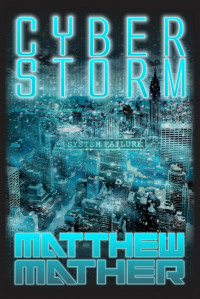
Cyberstorm by Matthew Mather

Aaaaahhhh….  a nice suspense-filled genre novel.   I’ve been reading some fairly intense fiction and nonfiction lately and I’m due to just settle in with a good tale well told.

Set in New York any day now it seems that “something has happened” to the entire electrical and internet grids. Unfortunately,  this happens in the middle of a huge snowstorm,  a recored-breaking blizzard.

cybers
******
Cyberstorm 
by Matthew Mather
2013/ 362 pages
read by Tom Taylorson 11h 18m
rating –  A+  / dystopian sci-fi – tech
*******

In a  rather long opening to the novel  we find Mike and Laurel Mitchell without power or communication along with everyone in their building and oops – New York City.  Actually,  it looks like huge sections of the whole country may be in a similar situation – and in China, too, for that matter.  But the group in the apartment complex have each other to rely on and to be with,  because it’s dangerous out there and getting worse,  in large part because of a record breaking blizzard.

Mike, our first person narrator and a techie-type social-media  entrepreneur,  is a good friend of fellow resident Chuck Mumford who seems a bit paranoid and has been thinking and preparing for something like this.  The two combine resources and make it through Christmas,  but then they run into some serious difficulties.  Chuck’s wife, Susie,  insists on sharing what they have with those who don’t –  not the best idea in New York in the midst of a panic when even basic needs are not being met.  Mather spent some time developing these and other characters – there’s an incredible old Russian couple and a strange young man named Damon Indigo,  others.

The myriad issues the group has as a result of the situation are well thought out,  realistic and terrifying.  But there is an enormous amount of bravery, goodness and ingenuity here, too. The story is not entirely bleak – but it’s not pretty.

Mather has a solid background in technology and he writes nicely as well – (YAY!)  He especially knows exactly how to create tension without resorting to foreshadowing or a broken chronology.  Actually,  any foreshadowing here would diminish the suspense because it would imply that the characters survive.  So the reporting,  although it is past tense,  seems to take place immediately after it happens.

Another element in Mather’s book,  and it’s rather unusual for contemporary dystopian fiction,  the characters discuss quite a few rather interesting ideas from the nature of cyber-crime and survival stuff to global warming.

I’m really impressed – going to have to look into more of Mather’s novels.


Leave a comment

Confucius Mecius Laozi Xhuangzi Xunzi: by Michael Pruett

confucous

Confucius Mecius Laozi Xhuangzi Xunzi: Selected Passages from the Chinese Philosophers
by Michael Pruett and Christine Gross-Loh
2015 / very short – 45 pages?
rating – 9 (?)

This is just exactly what the subtitle says it is and it is a companion book to The Path,  a short book explaining the ideas of the same Chinese philosophers.   It’s free and it’s also very interesting.  In fact it got me more interested in the authors and in reading about the history of ancient China and her philosophers.   We’ll see what kind of time we have.

Leave a comment

The Path: by Michael Puett, Christine Gross-Loh

Suggested on the All-nonfiction list I saw it was on sale at Audible and just took it.  After a couple of intense fictions it seemed time for some nice and more relaxing ideas.

It seems that the author,  Michael Pruett,  a history scholar at Harvard,  has been teaching a course in ancient Chinese philosophy for a couple years with the result that students have been flocking to his courses in astonishing numbers.

path

********
The Path: What Chinese Philosophers Can Teach Us About the Good Life
by Michael Puett, Christine Gross-Loh
2016 / 224 pages
read by Michael Pruett
rating:   8  /  philosophy – self-help
********

The contents – the ideas of  Confucius, Mencius, Mohism,  Laozi,  Zhuangzi, and  Xunzi are put into 21st century context helping the reader to respond more resonantly in his world.

There are multiple ideas here – like an intro course in the Chinese philosophers  including some recently discovered texts.  Pruett doesn’t espouse any of them,  and they are very different in some ways,  he just explains them very briefly.

I suppose Harvard kids have their own reasons for taking the course.  It is a relatively painless way to meet an otherwise difficult requirement.   I suppose it’s enjoyable to think outside the box and I would expect that’s what Pruett wants them to get – the road to achievement in the worlds Harvard students are often very structured around success oriented projects – help out at the local food kitchen because it will look good on the resume.

I hope they don’t use it the way business folks have come to use Buddhism and the concept of mindfulness –  (Read “focus” on your goals for business –   be more successful by using mindfulness –  gads.)   I’m sure some of the students will do exactly that.  They never get out of the box of whatever their goal sets for them.  lol  – Pruett actually addresses this but in a slightly different way –  self-centered vs engagement.

And I have a bad tendency to argue with this kind of self-help stuff –  I want to find examples of where this or that idea is not a good idea –  I take the idea to an extreme – trained spontaneity”  –  train it for your own goals.   So I guess I’m still fighting it – It’s really just about going with the flow and becoming a good person by focusing on what you need/want to be – don’t stress out –  overcome our own perspectives –

All that said,  I think I want to listen to this again -or maybe buy the book itself (Kindle version).   There is a book which goes along with this Audio version but it’s just a compilation of the quotes from the texts examined.

I’ve been reading the free ebook Confucius, Mencius, Laozi, Zhuangzi, Xunzi: Selected Passages which is translated by the authors of The Path and is suggested as a companion read and is found at Amazon.

Interesting links:

http://www.huffingtonpost.com/emanuel-pastreich/interview-with-michael-puett_b_8471666.html

http://www.theatlantic.com/education/archive/2013/10/why-are-hundreds-of-harvard-students-studying-ancient-chinese-philosophy/280356/

http://www.thecrimson.com/column/occupational-therapy/article/2012/11/29/harvard-chinese-puett/

http://www.wsj.com/articles/the-college-of-chinese-wisdom-1459520703

Leave a comment

A Brief History of Seven Killings by Marlon James x2

Another 2nd reading!  This is getting exhausting because these are dense and complex novels I’m rereading.)   But I’ll want to remember better for a discussion and then I’ll get drawn into  the book (“sucked into the book” is the better phrase here) because I didn’t really understand some aspects the first time round – or they’re striking me anew – or it’s like revisiting old friends except in this case it’s really,  really gritty violent.  But I was surprised by how much I’d forgot and I was also impressed by having usually put the highlight in the right places.

historykillings********
A Brief History of Seven Killings
by Marlon James
2014 / 688 pages
Read by a great “cast”  (read and listened)
Rating: 9.5   /  literary crime/historical

*********

A Brief History of Seven Killings is basically an incredibly well written but  heavily fictionalized version of the assassination attempt on the life of Bob Marley  (known as “the Singer” in the book).   That was  in December, 1976,  but the story stretches and expands and develops from just prior to that event in December 1976 to some time in 1991 (or later) when the last of the perpetrators is dealt with.  From page 671:

“Well, at some point you gotta expand on a story. You can’t just give it focus, you gotta give it scope. Shit doesn’t just happen in a void, there’re ripples and consequences and even with all that there’s still a whole fucking world going on, whether you’re doing something or not. Or else it’s just a report of some shit that happened somewhere and you can get that from nightly news.”

So in spreading out his story, James has covered quite a lot.  The narrative is heavily (!)  saturated with the gritty gang-land relationships as well as international drug crime and the politics of the times and place.  It’s also a book of how and when Marley’s peace project failed and how a few of the drug cartels got to the New York markets.   – This is not a book for the faint of heart.

As a sort of prologue,  the first chapter is narrated by the ghost of Sir Arthur George Jennings,  murdered previously, but as a part of the gang-political warfare.  I’m not usually a fan of literary “ghosts” unless they’re done really well – The Turn of the Screw (Henry James) or Beloved (Toni Morrison).    I really enjoyed Jennings’ parts –  good book, good ghost.

The narrative is laid out in five Parts dealing with different time frames.   Within each Part are many sections in which different characters explain their points of view,  usually in a stream of consciousness narrative.   Fortunately there is a character list at the beginning of the Kindle version.

Serious gangland crime and violence permeate the gang-ridden neighborhoods but the leaders are long-time residents and know each other. They have always been tied to the political structure helping to elect their candidates to high positions.     Problems start when it the world gets involved,  the US, others?    It’s all connected to the political scene of Jamaica –  in fact, the warring parties of the political scene drives much of the violence.   The CIA is involved because the communists may be making inroads in Jamaica circa 1976 – along with the drug cartels from South America and the guns from Cuba and more – Who is that Syrian guy?  It’s  a mess.  All this and a reporter from the Rolling Stone magazine  is there.    The scope of the story is revealed rather slowly and the tension builds and builds as people start being killed.  Fortunately,  Nina Burgess manages to create some breathing room for the reader – she has her problems with violence for awhile but her character changes as she lives  through her fears.

The writing is awesome stream of consciousness from inside the heads of so many characters – or sometimes they’re actually talking to someone – different ways of doing it.    But we never hear the interior voice of Singer,  which is a really powerful absence.  Very intense stuff.

Of the characters I think I have to say I enjoyed Nina the most – all her difficulties and the changes she went through while trying to keep her sense of humor and improving her lot.

The violence was hard for me to take in places – the stream of consciousness as the first person is being buried alive,  or shooting someone,  is horrendous.   I don’t usually care for that much graphic detail but if it’s well enough written I can do it.   Blood Meridian is a wonderfully well written book (1 solid 10) and it’s got pretty close to the same level of violence.  The Cartel by Don Winslow is also horrifically violent (Mexican drug cartel fiction) but it also works – for me anyway.

The Guardian:
http://www.theguardian.com/music/2006/jul/16/urban.worldmusic

Prior review:
https://beckylindroos.wordpress.com/082015-2/a-brief-history-of-seven-killings/

Lots more out there – almost all raves.

2 Comments

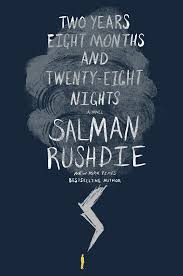
Two Years Eight Months and Twenty-Eight Nights by Salman Rushdie x2

Oh I do like this book  – the first time through I thought it was a roller coaster of a ride and barely made sense of the plot much less all the characters.   I did get a bit of the themes. This time,  having some idea of what was going to go on I clicked into the plot/characters right away and followed all the way through, picking up on more interesting ideas and themes.   I took notes though –>

The ideas are not so innovative in and of themselves,  but the presentation is incredible and magical – fun.  All through that war between the jinns of Peristan and the humans of Earth  there’s a lot of love and more than a few nuggets of ancient wisdom – old as the times of the stories from Scheherazade.

twoyears
************
Two Years Eight Months and Twenty-Eight Nights
by Salman Rushdie
2015 / 304 pages
read by Robert G. Slade 11h 26m
rating:  9.3  / literary fantasy
(read and listened x2)
***************

Somehow,  some way,  a jinnia named Dunia slipped through a crack between Peristan (Fairyland) and the earth.  When she got here she fell in love with a 12th century philosopher named Ibn Rushd (Averroes) – Together they had many babies – all without earlobes.

Many years later – a thousand years – another split in the barrier between the worlds occurred and Dunia rushed on through searching for those babies or their descendants.  Unfortunately,  some other “dark” jinnis slipped through as well and the “time of strangeness” began.  Many of the physical laws governing our world no longer apply – at least to those folks without earlobes.  This creates tension which the “dark” jinns take advantage of.  Ultimately war ensues, but not before a lot of strange things happen making people question their minds and values –

The story is told from the point of view of an unnamed narrator living at least a thousand years from now.  He’s telling an audience this history and inserting his own commentary.

The main theme revolves around reason versus faith (Rushd-Aristotle verses Gharzad), but Rushdie’s ideas of mongrelism and alienation (there is no “pure”)  via  multi-cultural heritage is explored  in various ways,  geography,  names,  religions, languages,  foods,  gardens, etc.   Religion and politics come in for special attention.

Love is an important theme as is anger.

MORE AT –  Two Years Eight Months and Twenty-Eight Nights- notes 


6 Comments

For the Major by Constance Fenimore Woolson

Constance_Fenimore_Woolson-olderFor the Major
by Constance Fenimore Woolson
1982-83 / 84 pages  (novella)
rating  8.5  / classic US

Constance Fenimore Woolson was the great niece of James Fenimore Cooper and excellent author in her own right.  Also a good friend of Henry James.

This is a very short book but full of subtlty and nuance.   Sara Carroll, an intelligent and good looking young, unmarried  woman,  is home to Carroll Farms and finds her father in reduced mental capacities.  Her stepmother,  Madam Carroll does her best to  keep his life smooth and easy.

Sara and her stepmother get along quite well but they are enormous sadness in seeing the Major in a  reduced state.  Madam Carroll holds a “reception” every two weeks and guests are received the following Thursday.  That’s the family social life except for church on Sundays.  Also present is a young boy named Scar – son of Madam and Major Carroll.

Sara comes to be quite useful to her father in many small ways and this makes her happy.  She loves the Major devotedly.

The setting is completely post-Civil War Southern US with an emphasis on manners and morals.  Folks chit-chat about ceramics and gardening and some history and so on, their various interests but they  avoid talk about political events occuring less than 30 years prior.

Sara is considered cold by many folks in the little community of Far Edgerly,  but she’s really just taken up by thoughts of her father.   She’s quite humble and considers Madam Carroll to be almost perfect in caring for the Major.  She really dislikes the receptions anyway,  and then a peculiar stranger shows up at one of them.

Louis Dupont is a really odd duck.  He is supposedly a genius but his dress is  flashy. He seems quite bored with the people of the community and he’s really rather rude.  He stays at the local hotel and attends one of the Carroll’s receptions.  Sara, the preacher, Frederick Owen,   and a couple other people really dislike him but Madame Carroll and most others seem to think quite highly of him.

2 Comments

Did You Ever Have a Family – x2 by Bill Clegg

The Bookies II reading group chose this book for it’s April 16 selection and because I enjoyed it so much (rating 9.25) I volunteered to do the discussion questions.  Well – I read it last September and really don’t remember all that much about it. https://beckylindroos.wordpress.com/092015-2/did-you-ever-have-a-family/

Therefore, a reread wouldn’t hurt although I certainly feel like I remember it –  otoh,  looking through the questions provided by Simon & Schuster  I wasn’t sure I could answer them very well – so –  reread time.   🙂   –  And I am SO SO glad I did.

family

************
Did You Ever Have a Family  –  x2
by Bill Clegg
2015 / 304 pages
rating –  9.5 / contemp fiction
************

And we’ll start with the SETTING:

Wells – a tiny old touristy town not far from Hartford, Connecticut.  The time frame is contemporary with some backstories of up to 35 years.  The town is gossipy and mostly rather close-minded.

A fire has just consumed June Reid’s home on the night before her daughter’s wedding.  Four people die in the fire.

On my first reading I was so concerned with how the fire started I didn’t have time to pay attention to the incredibly literary skill which Bill Clegg brought to this book,  his first novel.   >>> MORE WITH SPOILERS – notes,  character lists, themes,  etc.  

Leave a comment

Will in the World:by Stephen Greenblatt

This is April and the 400th anniversary of the Will Shakespeare’s  death (23 April 1616),  so  a reading of the one of the best recent biography/social histories re his life and times would seem in order – (for the All-nonfiction group).

I know very little about Shakespeare having read only about a half dozen of his plays and perhaps even fewer of his poems. I’m not a fan.  I actually thought nothing was really known about his life – that’s what I remember being told in school – long time ago – and it’s what the conspiracy theorists would have us believe.   But it seems Shakespeare was a real person, an exceptional actor who also wrote exceptionally great plays and sonnets and Greenblatt has him down accoridng to WW Norton:

“Greenblatt knows more about [Shakespeare] than Ben Jonson or the Dark Lady did.”—John Leonard in Harper’s.

So how is the book?    Well –  first off if you’re looking for a traditional biography of Shakespeare you probably ought to look a bit further.   This is not it.   If you’re looking for a biography/ lit analysis based on times and the New HIstoricism you’ve struck gold.   –

will
**************
Will in the World: How Shakespeare Became Shakespeare
by Stephen Greenblatt
2011 / 448 pages
rating:   8 /  biography-history-literary analysis 
**************

The book’s subtitle pretty well states the direction of the narrative –  “How Shakespeare became Shakespeare.”    What did he pick up on with his senses –  what did he see, hear, smell, feel, and touch during those heady days?  How did those elements come together in what he produced?   Shakespeare did not write in a vacuum – so what were his environmental influences?

When Shakespeare moved from his hometown of Stratford-Upon-Avon he was married but still quite young.  There is supporting documentation for this and Greenblatt provides the logic as well because not all documentation is created equal and a good deal of the methods of New Historicism are necessary.  We look to the times and the lives of other persons in similar situations to speculate logically about the life of one man.

England was still in some turmoil from the troubles between Catholic and Protestant rampaging  and politicizing for authority and there was more to come.  But when Shakespeare, a very young but already married man,  gets to the big city

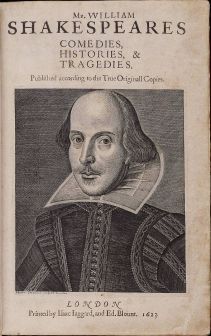
shakesdroe

most likely an authentic depiction of Shakespeare -by Martin Droeshout

Elizabeth is Queen and the country is distinctly Protestant. Shakespeare may have had Protestant or Catholic sympathies,  indications go both ways and explain, at least to an extent according to Greenblatt,  his reluctance to sign his name to much of anything.  Besides,  his father, who had been quite important locally,  was no longer held in such high esteem due to religion,  drinking, debts, etc.   Shakespeare may have thought it wise to keep a low profile.

Shakespeare had been a bright kid and enjoyed plays and acting so when he got to London he fell in with a group of playwrights working  in the new theaters to produce some of the finest plays ever seen.  A new freedom was blowing through the land and Marlowe, Green, Shakespeare and others were taking full advantage.

So in  the late 1580s this young man from a rather provincial village becomes the greatest playwright not of his age alone but of all time. How is an achievement of this magnitude to be explained? How did Shakespeare become Shakespeare?

hilliard

Hillard painting

Stephen Greenblatt brings us down to earth to see, hear, and feel how an acutely sensitive and talented young man, surrounded by the rich tapestry of Elizabethan life, could have become the world’s greatest playwright. A Pulitzer Prize and National Book Award Finalist.
Greenblatt writes nicely – I read his book “Swerve” several years ago and was impressed —

“The Swerve,” like “Will in the World,” brings us Mr. Greenblatt in his more cordial mode. He wears his enormous erudition lightly, so lightly that most readers will forgive him for talking, at times, a bit down to them. This book is well-brewed coffee with plenty of milk and sugar stirred in; it’s a latte, not an espresso.  http://www.nytimes.com/2011/09/28/books/the-swerve-how-the-world-became-modern-by-stephen-greenblatt-review.html

The organization of Will in the World is basically chronological,  but Greenblatt digresses to cover such fellow luminaries as Christopher Marlowe, in a bit of deserved depth and also make more than glancing mention of Robert Greene,  Thomas Nashe,  Thomas WatsonGeorge PeeleFrancis Meres and o thers.

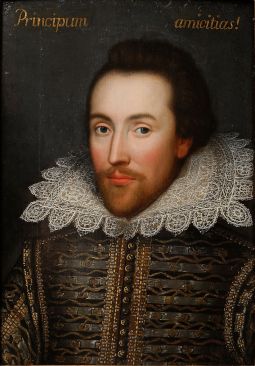
Cobbe of Shakespeare

Cobbe portrait – 1610?

Greenblatt uses documentary evidence as much as possible but there are places where speculation seems to completely take over.   Chapter 8 for instance, has Nashe possibly ghost-writing a pamphlet rant against “upstart crows” and then hastily retracting it in extreme terms.

Why?  Who would have that kind of impression?  Perhaps because someone young and powerful told him to – perhaps the earl of Southampton? And we’re treated to a discussion of the rich and well-connected life of the Earl of Southampton including his love of poetry and need to marry.  And here comes Shakespeare’s sonnets and the reason the poems were written.   (chuckle but possibly).

So the book moves on to Sonnets and Southampton is involved – Greenblatt develops that idea well and it’s very intersting,  but still, quite speculative, imo.  (But what else do we have? – it’s not as though this were revisionist – heh.)

Shakespeare_(oval-cropped)

The Chandos portrait – early 1600s

The description of London in Chapter 5 is just astonishing.   Chapter 8 about wore me out with the Sonnets.  Chapter 1o delves into the tragedies.  And Chapter 11 is quite a romp about James 1 (1603) and witches.

It’s a good book but possibly for someone with more background than I have – or someone who appreicates him more than myself.

The best parts for me were where Greenblatt described England and London of the times,  socially, politically, economically right down to Guy Fawkes,   the history of it.

The ending was wonderful –  the photos are very helpful.

Leave a comment

An Innocent Client by Scott Pratt

What a nice surprise  – I got the book only because it’s a legal thriller and it sounded interesting.   But it turns out I read an earlier book by Pratt,   Justice Redeemed,  back in December.  I only discovered this because the narrative describes a prior case of the same lawyer and I totally recognized it but checked it out to make sure –   yup.  And now this is the first of a series of about 7 books.   Oh,  I am in b’worm heaven!

A preacher is found dead in a hotel room in Johnson CIty, Tennessee.   The really weird thing is that he’s missing his penis.  Coincidentally,  a personless penis is found near under the bridge just a bit later.  Voila – they match.

innocentclient

*************
An Innocent Client
by Scott Pratt
2008/ 360 pages
read by Tim Campbell 7h 54m
rating –  
(#1 in Joe Dillard series) 
*************

Joe Dillard is a good criminal defense lawyer,  but he wants out – no more defending sleaze-balls.   So he and his wife, Caroline, have moved his practice into their home where she now works as his paralegal.

After the preacher is found murdered a stripclub waitress named Angel Christian  is arrested.  The incredible character of Earline  Barlow,  Angel’s mother-figure and the club owner, comes to visit Dillard and pays an enormous sum for her defense.

It’s going to be a high-profile and politically important case.  People have scores to settle and there’s an election to win.  Furthermore,  some folks have heavy emotional backstories to deal with.

Pratt throws in a lot of juicy characters and a few extra stories to establish ambiance.  One thing leads to another all over the place.  But he knows the legal biz and writes some interesting and suspenseful tales.  Recommended if for anyone who enjoys legal mysteries.

Leave a comment

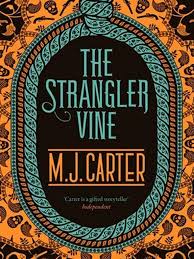
The Strangler Vine by M.J. Carter

Oh wow –  an atmospheric historical mystery of 19th century East India Company in and around Calcutta.   It’s historically accurate (as far as I can tell) and  intelligently written with an intriguing plot line plus interesting characters.  What else could I want? – Also, it’s very nicely  narrated by Alex Wyndham.

strangler

*********
The Strangler Vine 
by M.J. Carter
2014 / 384 pages
read by Alex Wyndham 10h 43m
rating:  A+/ 8.5  (historical literary crime -) 
(Book 1 in the Blake and Avery series)
*********

After a rather gripping prologue depicting the killing of someone by others using a stangling method.  Who has been done by whom?  Stay tuned.

In Chapter 1, Ensign WIlliam Avery, our probably quite reliable 1st person narrator,  really doesn’t want to be where he is in 1837,  assigned to the East India Company’s Calcutta base where he’s going into debt for gambling,  drinking too much and making no headway with the ladies.  He wants to go home to Devon,  England.  Alas – he’s ends up assigned by high command to go find Xavier Mountstart,  a famous British writer who has disappeared into the interior.  Mountstart is known for his scandalous adventure stories and has apparently gone into the wild to do research for his next novel.

Avery’s leader on this expedition is Jeremiah Blake, a seriously eccentric

220px-Strangler_fig_kerala

and angry man who was at some point an officer in the East India Company,  but who, for some reason,  went native and harbors a fair amount of resentment. “Going native” here means dressing like natives,  eating their food, speaking their languages – just taking on their culture as much as possible including disgust for the English imperialists.   Avery does not like the idea of “going native”  one bit and neither do most of the people associated with the East India Company in Calcutta.  Furthermore,  Blake seems not to like Avery at all.

Both Avery and Blake are familiar with Mountstart’s sensationalist writings and the rumors about him – how he’s gone native,  been ambushed by the “thuggee,” married a native,  etc.  But the East India Company wants the man back and that’s the job of Avery and Blake.  Avery is also to keep an eye on Blake – like a little spy.

Avery is told that his good friend Daniel has been found dead – strangled – for what?  Nobody could have much against him.

Group_of_Thugs-1

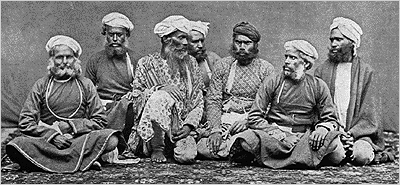
Carter treats us to lush descriptive passages about the journey north,  the rain and mangrove trees,  the other travelers, the small communities.  And there is definitely tension involved as between the animosity between Blake and Avery,  the Thuggees may be out.  Mir Aziz is always helpful.  Fear rules – fear is palpable –  fear of corruption, fear of sedition.  fear of the English, fear of  the Hindu.

Blake is no friendlier and essentially isolates him at first, so Avery has to use his Indian guide,  Mir Aziz,  for information and helpful hints.  Mir Aziz  is friendly but firm, helpful and protective. A distinct asset to the little group.  Avery’s assessment of the natives changes.

And then there are attacks … (shhh…. no spoilers here).

This is not exactly a thriller although from time to time there are thriller type sections.  It’s more of an adventure story –  looking for someone who is missing amongst killer gangs in the spooky forests and caves of India.

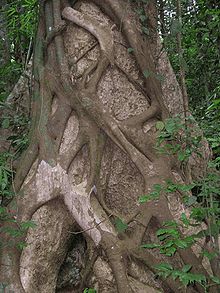
The main theme – metaphor if you will – is that just as the strangler vine chokes it’s victim,  so too the East India Company was choking India for their own profit.  And the Thuggees strangle their victims for Kali.   Lots of things are getting strangled here  – Avery is blinded to some suspicious people and events – more.

A lot of historical research went into this book – Carter’s primary resource was probably –
The Tribes and Castes of the Central Provinces
http://www.hotfreebooks.com/book/The-Tribes-and-Castes-of-the-Central-Provinces-of-India-Volume-IV-of-IV-Kumhar-Yemkala-R-V-Russell–13.html
But here are some more accessible resources:
East India Company in India
Thuggees,  (on NPR)  –  the Indian strangulation cult,
Major William Henry Sleeman,
Thug Feringhea

*************
HOME – 

Leave a comment

In Defense of Bookstores

It’s about North Carolina!

Lelia T's avatarBuried Under Books

The passage of HB2 in North Carolina is causing a great deal of concern in many quarters, rightfully so because there’s a lot that’s wrong with it, but reactions have not always been well thought out, in my opinion. I normally don’t use Buried Under Books as a forum for political issues but this goes beyond politics because bookstores are being treated unfairly when they’ve done nothing I’m aware of to warrant it. If you don’t agree, that’s OK; if you do, please let your local or not-so-local bookstores know you support them in any way you can. Better yet, please encourage any author you know to visit a bookshop in North Carolina.

The following is reprinted from Shelf Awareness; thanks to Kevin’s Corner for helping to spread the word.

Malaprop’s to Authors: Please Don’t Boycott Us

Linda Marie Barrett Malaprop's BookstoreLinda-Marie Barrett, general manager of Malaprop’s Bookstore/Café, Asheville, N.C., is sending this…

View original post 512 more words

2 Comments

The Girl From Home by Adam Mitzner

Oh,  my!  A new Adam Mitzner novel hit the stands (and the downloadables) on Tuesday and I snapped it up yesterday  (Thursday) and was finished last night -yup – one of those midnight oil thingies.   I read and very much enjoyed Mitzner’s two prior novels, A Conflict of Interest (2012) and  Losing Faith (2015).  Worth the wait.  🙂

girlfrom

************
The Girl From Home
by Adam Mitzner –
2016 / 336 pages
read by Jonathan Walker  10h 32m
rating: –  A++  /  crime
************

This twisted tale opens with a prologue which has one Jonathan Caine in jail for murder.  Then Part I,  Chapter 1 goes back to March of that year and how life was then for Jonathan,  married to an incredibly beautiful woman,  living in an upscale Manhattan penthouse with a view of the Statue of Liberaty,  dealing in the money markets with millions of dollars at stake, and owning multiple homes.  Jonathan insists on only having the very best in life and he’s looking forward to getting more.   “He wants what he wants – and he gets it, too.”   That’s Jonathan’s motto.

The next chapter moves ahead to December and to Jonathan’s more immediate problems.  As we track both situations the March episodes quickly progress thorugh the intervening months catch up to the December issues at about half way through.

In May (as the March thread continues) we find  Jonathan back in his  hometown of  East Carlyle, New Jersey and help his aging father – something has obviously happened.   He attends his 25th high school reunion and gets togehter with Jacqueline Lawson Williams,  the prom queen back in high school,  way above Jonathan’s lowly station as one of the class nerds.  Jackie is still beautiful and she’s married but apparently interested.  The reader knows that her interest might be due to a seriously abusive husband. We still don’t quite understand the prologue though.

The reader knows a few other things, too – some backstory about Jonathan’s relationship with his parents,  the nature of the charges against him,  Jackie’s issues.   In the end it may be a story of redemption – or possible redemption – something.

Great book – lots of tension built in large part on the great structure built by  combining dual chronlogies – (March vs  December stories) and split points of view from December on.  Also creating tension is not only who done it –  but for a long time it’s also who gets done and then – because there really seems like no way out for the “good guys”  – what the  heck will happen?

Leave a comment