Worst. President. Ever. by Robert Strauss

The annual Presidential Rankings were released a few days ago (on Feb 22, President’s Day) and I  was intrigued by the complexity of the project.  This is the 3rd year C-Span has hosted this and it’s a pretty stable indicator – done by 90+ historians with the usual suspects in their usual places  – movement up or down from year to year is usually slight.
( see C-span.org https://www.c-span.org/presidentsurvey2017/  )  –  Obama came in at #12 this year and Eisenhower’s rating has inched up over the last three years.
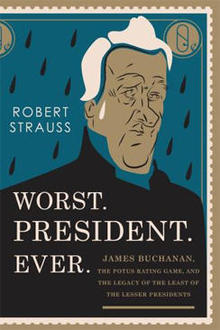
worst-president-ever-cover-lyons-press-244.jpg
*******
Worst.  President.  Ever.:  James Buchanan, the POTUS Rating Game, and the Legacy of the Least of the Lesser Presidents
by Robert Strauss
2016 /  304 pages
read by Tom Perkins 8h 51m
rating: 8 /  presidential biography
*******

Anyway,  I saw the name of President #15,  James Buchanan , at the bottom (#43)  of the lists almost every time in every category.   Only in 3 of the 10 categories analyzed did he move to #42 or #41.

So I asked myself why?  What all did he do that was so bad?   Look at William Harding or  George W. Bush or Franklin Pierce for comparison.   And because I felt like I wanted an answer I went to Amazon and checked out biographies of Buchanan.   I found a few,  nowhere near the number of many presidents and one was available in Audio format. It sounded kind of light and had got decent reviews – not a dry dissertation of dusty details.  I didn’t necessarily want to become bogged down in Buchanan,  so that’s what I got.

Strauss makes no bones about his own political leanings although I can’t find the specifics.  It just comes across.  And yet,  I think he’s fair to Buchanan because he does have some very good things to say about him.  The end effect on my was sympathetic because I think he really was a nice man who had ideas about what he could and could not do which didn’t turn out the way he wanted.   He stood firmly behind Lincoln and the Union.

There is an apparently outstanding biography of Buchanan by a University of Pennsylvania historian,  Philip S. Klein:  https://bestpresidentialbios.com/2014/02/24/review-of-president-james-buchanan-a-biography-by-philip-klein/  – but he may be a bit too easy  on Buchanan.

Strauss says that Buchanan’s whole personality of compromise,  playing to both sides of a dispute,  trying to just stay low and out of trouble,  which when combined with his habitual mind changing,  permeated all the categories.  It affected everything he did.  His strong points were  family,  friends, people in need and administration.

I did know something about Buchanan as President prior to reading Strauss’ book.  He presided in the White House just prior to Lincoln and did absolutely nothing when maybe he could have at least tried in some way to prevent the war  (which cost over 620,000 lives – more than all the wars from the French and Indian to Vietnam put together).   But I wasn’t sure if that, on its own, supported the bottom score in all those categories.   How could he know?   He was hoping for resolution.   So what else did he do –  or fail to do?   Buchanan sounded like a serious blunderer.

He was president at a time of changing alliances including the deaths of the Federalist and Whig political parties.   Buchanan had plenty of experience in government by the time he got to the presidency but maybe that was part of the problem – he didn’t want to make enemies.

There are several interesting things about Buchanan’s life but the presence of Ann Coleman to whom he became engaged and then she died rather mysteriously is high on the list.    There is quite a lot of speculation about this in the Strauss book and elsewhere because Buchanan never married – the only bachelor president.   James Buchanan and Ann Coleman at  Pennsylvania State University.

Another influence was William R King,  Franklin Pierce’s  Vice President,  another bachelor.   King was a slave-holder from a large plantation in  Alabama.  Many sources just skimp on any  mention of Coleman and/or in relation to Buchanan.  Buchanan’s diaries were burned at his death but King apparently kept some and there are sources which refer to King and Buchanan as a couple.   (There have been gay rumors about several presidents.)

The book is not just about the Buchanan biography and presidency – it’s also about Washington DC and the social/political/economic climate of the times.   There are some comparisons to and stories about other presidencies and there’s a brief discussion of presidential ratings in general.

There’s also a fair amount of authorial memoir in here – how he became interested in the subject at the age of 5 and continuing interest, difficulties and travel to study it over the years.  He also describes his daughter’s interest in the subject.  Buchanan was a strange favorite to study.   These parts kind of ramble and digress.

He disliked both free trade and tariffs – he was totally wishy-washy and spineless.  He couldn’t make a choice that would hurt someone.  He tried to take the middle ground in all cases.   And he would “re-think” things after a decision.  Not good in a president during troubled times.

One good thing, especially visible in these days,  is that Buchanan never said anything bad about anyone that researchers have found.  He got angry and despised a few people but he didn’t say so.  “If you can’t say something good about someone …”.    Another good thing is that he took good care of his family,  both wife and children as well as extended.   He was “liked” by just about everyone throughout his life.   He was a very hard worker ever since grade school,  researching cases meticulously,  writing speeches carefully,  etc.

http://millercenter.org/president/biography/buchanan-life-before-the-presidency
Posted in 2023 Fiction | Leave a comment

The Last Days of Night by Graham Moore

The title of this book is so apt and intriguing and the Gilded Age in New York  used to be one of my very favorite settings.   Add a little legal aspect to it and it’s just my cuppa.  The Gilded Age  was a time of post-Civil War expansion with big money to be made and spent in lavish conspicuous consumption by the rich while there was outrageous poverty of the poor.   And then there were the inventions – and the people.  And that’s what this book is about.   Rather than another “how rich can you be” story,  it’s the true-ish tale of some very real historical characters in a time of troubles as well as money.
These are some of  the characters in the book:
https://mrgrahammoore.com/books/the-last-days-of-night/cast-of-characters/

last
*******
The Last Days of Night 
by Graham Moore
2016/384 pages
read by Jonathan McClain  13h 1m
rating:  8.75 / historical fiction 
*******

Our protagonist, Paul Cravath of Nashville Tennessee,  is a young up-and-coming attorney who wants to make his name in the big city of big cities.   To that effect he has got himself hired by George Westinghouse to defend the latter against Thomas Edison‘s charges of  patent infringement.  Big money involved and the folks involved are very smart and less than ethical.

And of course Nikola Tesla is involved because it was he who developed a design for the safe and practical use of  alternating current (AC) of electricity.   Actually,  imo, Tesla is the hero of the book.

The main story is that George Westinghouse invented an incandescent light bulb only to find that Thomas Edison had already patented a bulb – or something like it.  Edison sues  Westinghouse who gets Cravath as an attorney.   There are twists and turns which lead to a complete and satisfying ending.

agnes-huntington-american-comic-opera-soprano-pictured-1894-d9cwpr

There are no really heavy themes as such in this thoroughly well researched novel,  but invention and ambition are emphasized.  The characters are taken from history and wonderfully well “fleshed out,”  especially those of Paul,  Agnes, and Tesla.   The language flows for a 21st century reader,  although there might be a few   anachronisms in there.  The epigraphs at the beginning of each chapter, from 19th – 21st centuries,  add a humorous but meaningful touch. As historical fiction the novel works wonderfully –  it piques my interest so I want to do a bit of my own research on Westinghouse and Edison and Tesla although I did know some before this.

There are many people,  places and events mentioned and alluded to in this novel.  but the story is so strong the setting almost,  but not quite,  passes into background.

Gilded Age in pictures:

https://ephemeralnewyork.wordpress.com/tag/gilded-age-new-york/

Posted in 2023 Fiction | 2 Comments

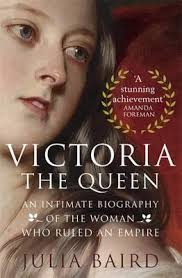
Victoria: The Queen: An Intimate Biography of the Woman Who Ruled an Empire by Julia Baird

Born in May 1819 and living until January 1901,  Victoria, the Queen of England lived a long time and that period would have been a fascinating study with almost anyone in Britain at the center.  The Queen of England was not only in the spotlight herself but she had a front row seat for a vision of the world.

Baird’s compellingly written biography makes Victoria really come alive in all her complexity- warts and all.

victoria

*******
Victoria: The Queen: An Intimate Biography of the Woman Who Ruled an Empire
by Julia Baird
2016 / 752 pages
read by Lucy Rayner 21h 8m
rating: 8.75   / nonfiction – biography
*******

When King George died rather suddenly in 1837,  Victoria  had just turned 18.  So,  as heir presumptive, she took the thrown and proceeded to rule  until her death at the age of 81 in 1901,  a full 63 1/2 years during which a whole multitude of important things happened to her, England, the British Empire, Europe and the world including the excesses of the industrial revolution,  the development of the arts and sciences, knuckle-crunching politics,  revolution and war.  She was one of the early users of anesthesia and her 9 children married royal cousins only to spread hemophilia amongst their ranks.  That’s just the barest of tidbits regarding her life and the times.

This is a truly impressive book,  but you might want to pay attention to the subtitle because this truly is “An Intimate Biography.”   It covers not only the people and issues of the times but it’s primary focus is on  Victoria’s ideas and her private life.  To that effect it is carefully researched and incredibly well organized (think of putting all those quotes into a narrative),    with Victoria’s character and family relationships threaded through the stories of the French difficulties, cholera, child labor,  the Great Exhibition, the Crimean War,  Indian uprisings,  the British Reform Laws,  the Irish Question,  etc.  through women’s issues (a particularly interesting section) and Disraeli and Gladstone and finally,  Winston Churchill,  Joseph Stalin and Franklin D. Roosevelt all knew of her as they grew to manhood – my own grandmother was 8 or 9 years old when  Queen Victoria died – and how long ago that seems.

The focus on family and personal life does not recede after Albert’s death and their children were mostly grown and gone to various places throughout the Empire, to Russia and Prussia, and Denmark with several in various places throughout Germany – only a couple left at home at that point.  Because after his death she still had run-ins with Gladstone and others  and it even seems Victoria had a couple of “best friends” who happened to be male –  John Brown,  a Scot with eyes similar to Albert’s,  and Abdul Karim a Muslim from India who had his own plans. She lived a long full life so it’s a long full book.

Still,  Victoria the woman seems wrapped in mystery  and myth.  She was certainly a strong enough ruler in general,  but she managed to balance a traditional family life along with her work – or the appearance of a traditional family life, anyway,  or the appearance of a strong leader.  And the surprising thing,  to me anyway,  was how active a part Prince Albert actually played in her reign – for as long as he lived, anyway.  And she was completely in accord with this as he was the man of the family.   Whatever,  they were generally well suited and very family oriented.   He was more intelligent while she was more sensitive.

Although she worked hard daily,  Albert also worked hard, harder maybe, at keeping abreast of all that was happening and the arguments for one side or the other on issues of the day.  For all that,  it also seems that while Victoria was a sentimental and dependent woman,  Albert was more distanced,  cognitive and sometimes calculating.   He too,  brilliant and pious as he was,  was also devoted to their children and their lives together.

Victoria never really recovered from Albert’s rather sudden death in 1861 at age 42.   Victoria was also 42 but lived another 40 years alone.  And unbeknownst to the public at large,  after awhile she went back to work although it took her 5 years to open Parliament.

I was fascinated by Victoria’s childhood and thought the book would probably lose its steam somehow.   Not so!  It was even more compelling as I read along.

I was intrigued by the woman of Victoria but that would have been too sweet-sop if it had not been broken by or interwoven with the accounts of world affairs.   These subjects and the issues are presented with enough detail to recognize their complexity but not so much as to overwhelm the reader.  Nicely balance overall.

There are great extras with the print or Kindle version of the book –  maps,  family trees, a list of characters,  a photo section,  notes at the end of each chapter (these are read in the Audible format) and notes at the end of the book.

The narrator is a bit heavy on the British accent  and a gossipy little tone but imo,  that might have actually made it less dry – (yes,  even intimate can get dry).  But I got totally used to the voice – it suited the book after awhile.

victwithfam

Prince Albert, Queen Victoria and their nine children, 1857. Left to right: Alice, Arthur, Albert (Prince Consort), Albert Edward (Prince of Wales), Leopold, Louise, Queen Victoria with Beatrice, Alfred, Victoria and Helena[82]

https://en.wikipedia.org/wiki/Albert,_Prince_Consort

http://digitalcommons.calpoly.edu/cgi/viewcontent.cgi?article=1126&context=forum

Author interview:  http://www.npr.org/2016/11/27/503489407/julia-baird-paints-a-stronger-more-likable-victoria-the-queen

Reviews:
Baird’s site:   http://www.juliabaird.me/books/

Posted in 2023 Fiction | Leave a comment

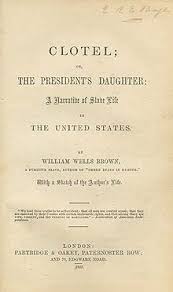
Clotel: or, The President’s Daughter by William Wells Brown

“Clotel: or, The President’s Daughter”  is the first novel published by an African American – it was published in London in 1853 while William Wells Brown, the author,  was still living there following his final escape from slavery,  an education and the purchase of his freedom by a British couple.  The situations in the book, although fictional in themselves, are probably very representative of exactly what slavery in the US was about.  But much of it is propaganda to instill anger into more abolitionists and in that way is similar to 12 Years a Slave by  Solomon Northup which was published the same year and that of Harriet Beecher Stowe’s Uncle Tom’s Cabin which was published only the year prior.

clotel.jpeg

*******
Clotel: or, The President’s Daughter
by William Wells Brown
1853 / 320 pages
read by J.D. Jackson 8h 43m
rating:  10 – / classic with great historical value
(both read and listened)
*******

The book as we read it was not published in the United states until 1969.  Instead Brown rewrote the book to accommodate US sensibilities.   In the original Jefferson is named as the father of two slave girls.  There is no mention of Jefferson in any of his 3 US revisions.  (The historical nature of the idea that Jefferson had any children by any slave was heavily disputed until 1998.)

The book opens with a brief Preface about the nature of slavery  as it was known in the 1850s as well as its history in the US.  Brown also states his reason for writing the book:

If the incidents set forth in the following pages should add anything new to the information already given to the Public through similar publications, and should thereby aid in bringing British influence to bear upon American slavery, the main object for which this work was written will have been accomplished.

It’s not great literature – it has a more journalistic or documentary style.  But Uncle Tom’s Cabin is not great literature either.   I suppose they’re educational for British readers hoping to put pressure on the US.

The plot:
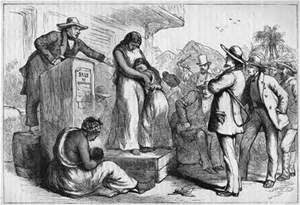
Currer was the mistress of Thomas Jefferson and gave birth to their two light-skinned daughters,  Althesa and Clotel.   She is allowed to work independently,  but she is still a slave.   At Jefferson’s death, all three  clotelauctare sold into slavery.    The slave seller is an opportunity for Wells to describe the situations of  many slaves – beatings,  separations from family,  and preachers and others preaching lies.

Currer is  purchased by a preacher  who refuses to buy the daughters.  So Clotel at age 16, and a truly beautiful one,  goes to Horatio Green,  a rich, white northern man.  They fall in love and marry surreptitiously- it’s not legal which creates a lot of problems when Horatio gets ambitious.

Althesa on the other hand,  passes for white and marries her new owner,  Harry Morton, who loves her dearly but dies,  whereupon she and their daughters are sold into slavery.

These are the main threads of the plot – they go on for several years with other characters and escapes and tragedies.   As Wikipedia quotes one 21st century literary critic:

It is a “scathing, sarcastic, comprehensive critique of slavery in the American South, race prejudice in the American North, and religious hypocrisy in the American notion as a whole.”  https://en.wikipedia.org/wiki/Clotel

What Wells really looks at in the guise of a novel are the themes of slavery and marriage including family break-ups,  the cruelty of the owners,  variations in skin-color and treatment,  the political, legal, social and economic, structure of the Antebellum South in terms of slavery.

“The abolition movement, the economic importance of slave-based agriculture and production, the moral, philosophical and political debates about the “peculiar institution”—is written in a style that is manifestly journalistic and prosaic, not literary.”   http://barleyliterate.blogspot.com/2014/12/book-review-clotel-or-presidents.html

Because the three heroines are all women,  that aspect,  the female slave, has been studied by scholars of history,  literature and women’s studies.

For a more in-depth analysis see
http://wesscholar.wesleyan.edu/cgi/viewcontent.cgi?article=1264&context=etd_hon_theses

Posted in 2023 Fiction | Leave a comment

IQ by Joe Ide

Sometimes a book comes along and I am just not in the mood for it or something.  This is one of those times.   IQ has had plenty of great reviews and it caught my eye several months ago and has been teasing me ever since.   I caved.  –

iqide.jpeg

***********
IQ
by Joe Ide
2016/336 pages
read by Sullivan Jones  9h 8m
rating:  C  / crime
***********

I’m not sure what the problem was – possibly just that I’ve been reading some really great novels lately – including books by and about African Americans.  This one just doesn’t hold up to those.

Here we have a  detective,  Isaiah Quintabe,  aka IQ,  who is a exceptionally bright young black man who helps people in his neighborhood  and area with solving their crimes which could be anything  from  stolen wallets to murder – crimes the cops won’t bother with or that the victims, for reasons of their own, won’t report.

IQ’s older brother Marcus was killed several years prior  and their parents died prior to that.  So IQ is alone except that a younger little con-artist named Juanell Dodson comes along and simply inserts himself into IQ’s life.  The pair find it necessary to get involved in  their own burglaries to supplement their meager income.

Mainly the plot in this book, an obvious 1st-of-series, concerns the attempted murder of a crazy but famous rap singer.  The attempt involves a pit bull, an ex-wife who has been “wronged,”  and various other twisted things.

What bugged me was the rap and gangster atmosphere,  too much sex, swearing, bad-mouthing, bragging about violence, sexism and so on.  Just kind of over-the-top for me in this regard.  That said,  Ide had a television series signed only 6 months after the publication date and it’s proven to be quite popular with some critics.

Posted in 2023 Fiction | Leave a comment

Call It Sleep by Henry Roth

I read this back in 1971 or so and knew it was great literature then,  a time when I didn’t have a clue about what constituted  great literature.   But I guess I knew it when I read it because it’s stuck around and even made Time Magazine’s Best Books of Time list which goes back to 1923.   For a couple or three years there in my very early 20s I was choosing books from that same magazine’s  “Editor’s Choice”  lists and enjoying books like Roth’s Call It Sleep,  The Magus by John Fowles,  and several other really good books,  books which are still on my mental “best reads of my life” list.
sleeproth.jpeg
*******
Call It Sleep
by Henry Roth
1934 – 446 pages 
read by George Guidell  17h 28m
rating – 10 / classic 20th century
(read and listened)
*******

 I wanted to revisit Call It Sleep (I’d already read The Magus 3 times)  to see if it stood the test of time for me – personally.  So  I nominated it for  the Modern Fiction group where it was chosen,  and this time I read with both ears and eyes, (audio and Kindle).

The narrative tells the story of David Schearl, a small frightened immigrant Jewish boy in the early 20th century – maybe 1910-1915.    He and his parents are new immigrants from Austria where life was getting a bit tougher.  His mother,  whom he loves dearly,  tries very hard to be good in every way but she has secrets.  She’s very attached to her son, an only child.

Meanwhile David’s father is a difficult man in many ways typical-tenement-fire-escapes-lower-east-side-new-york-city-aym6fk.jpg(we’d send him to anger management classes today) and has a hard time keeping a job in his trade as a printer and although working as a milkman is somewhat better,  the Lower East Side of New York in those days was a rough place.
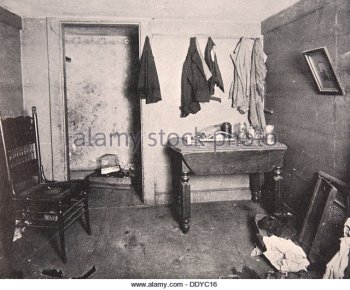
Over the span of a few years David starts going to school and takes Hebrew lessons.  He’s very bright but also very attached to his mother,  probably because of his father’s dangerous attitude and behavior.   The streets are full of what feels like authentically drawn ethnic groups,  Italians, Irish, Hungarians, most of whom are Catholics but his own building seems safe enough.  The story mirrors that of the author in some ways.

He memorizes his address –   749 9th street – in the Lower East Side,  near Alphabet City.

The tale is told primarily from David’s point of view so fear is a a huge theme. David is afraid of almost everything and because he’s very bright he’s curious and thinks about these things quite a lot – some things haunt him.   There’s his father,  the cellar,  hot coals, the neighborhood bullies,  sex and girls,  his mother,  getting lost,  the violence of the streets. But that’s just one theme.

The narrative is amazing in several ways.   The first is that although it’s told by an omniscient narrator,  it’s primarily a child’s point of view related with perfect pitch.  There is a brief section from the Rabbi’s point of view which captures the tone I expect,  and there are a couple of short sections in which David does not appear.  Nothing is revealed about the inner lives of those characters.

tenement-housing-new-york-city-usa-1890s-ddyc16.jpgSecond,  the language Roth uses to convey the sense of the streets in New York at the time runs the gamut from Yiddish to Irish and Italian accents along with the native languages of these people,  mostly kids. This falls in line with the fully realistically presented setting.  This made for great listening but there were some parts toward the end which needed the text to follow the chattering of the crowd overlapping with David’s distressed thoughts.

Third,  the overarching plot is masterfully developed with increasing tension as David gets involved in more and more dangerous adventures,  makes dubious friends,  escapes and continues a couple of major issues like his father’s disturbing rage.

Fourth,  the narrator’s sections are beautifully rendered with interesting and appropriate vocabulary, metaphors and other tropes.  Roth is what I wanted Saul Bellow to be.

And fifth, the themes are woven into the fabric of a compelling tale, tenement-dwellers-new-york-citys-lower-east-side-c-1900-cwaym0.jpgthey’re not spelled out anywhere – they’re shown. Fear, violence, secrets and a lack of understanding – in all languages – which translates into racism and other issues.

Roth was born in 1906 in the Ukraine the only child of Jewish parents.  His father immigrated shortly after Henry was born and he and his mother joined him about a year later.   They first lived in Brownsville in Brooklyn but then moved to the Lower East Side in Manhattan.

Fwiw,  1 penny was worth about 2.60 dollars of 2016 value.  A pair of roller skates which might cost about $4.50 in 1905 which would be about  $117 in 2016.

Reviews, criticism and analysis:

The Other In Henry Roth’s Call It Sleep

http://scholarworks.gvsu.edu/cgi/viewcontent.cgi?article=1042&context=theses

Posted in 2023 Fiction | 2 Comments

The Verdict by Nick Stone

Oh dear another long one!   What is the matter with me?   But it’s a self-select and a legal thriller – my favorite –  so I tried to like it in general,  but … well … see below.

At the age of 30-something,  Terry Flynt,  our first person protagonist,  is an older kind of guy to be a new law clerk and the reason has to do with the same guy he’s now in the position of having to defend against charges of murder.  Terry is very smart with a lot of initiative – he wants to do something more than type and file.

Terry despises his client, Vernon James and would love to see him found guilty and spend his life in prison. A black-skinned finance genius,  Vernon and Terry have a long history and it’s revealed a bit at a time. It ended with serious troubles and a blank spot on Terry’s resume.

verdict.jpeg

*******
The Verdict
by Nick Stone
2015 / 512 pages
read by David Thorpe 21h 20m
rating:  B+  –  legal thriller
*******

In the years since they knew each other Vernon has become rich and glamorous in the field of finance and real estate as well as highly esteemed for his ethical standards – what the public knows of them.  He definitely has secrets and from the Prologue we know he’s a fake.

Now he’s hired the pricey firm where Terry works as a law clerk to defend him.   The lawyers at  the firm,  thinking he’ll fail to get a not-guilty verdict, assign him to the case hoping they’ll be able to fire him afterwards – or at least that’s the impression Terry finally gets because, for all apparent purposes,  it’s certainly not a winnable case and, as one of the actual lawyers there says,  “We don’t lose cases.”

The murder of Evelyn Bates was  brutal and Nick was undeniably with a strange woman in a penthouse suite of an upscale hotel which he left with bruises and marks.  But the reader doesn’t know for sure if Vernon did it or not – Vernon absolutely denies it – but he is such a creep!    Anyway,  it certainly looks bad for him, his story doesn’t hold up and he has a history of – maybe.   He’s in big trouble and it gets much worse.

Terry hates him for more than one reason –  Terry really wants to see his old friend get found guilty,  but on the other hand,  they had been very good friends until that missing piece of Terry’s past.  And there are times when the evidence supports Vernon.    Terry is apparently an alcoholic trying to work some kind of program in getting his new life together and keeping it.

Stone writes well,  the plot is twisty and very original and the characters are nicely individualized and somewhat quirky.   It’s a good book although there are a few unlikely coincidences and less than likely scenarios.   Also,   one part of the ending was kinda-sorta predictable for me at about 2/3rds through.  But that was by no means the whole ending and the tale is still fascinating due to the twists to get there.

The story takes place in the English courts so there are some differences to what one would find in an American crime novel.  Stone does a fine job of explaining (to the point it seems he’s writing with an American audience possibly in mind).  There are also some general references to London and the times.   For instance,  about midway through the novel the wedding of Prince William and Kate Middleton takes place and is described in fair detail.   That was April 29, 2011.

Sad to say one of the big twists involved taking the novel into some really murky waters and gets over-the-top complex due to external events in which Terry becomes involved.   That’s the reason for the lower rating –  without this plot thread the book would have got an A+ from me.

But also,  a couple of words about the abundant courtroom scenes –  they are riveting and brilliantly done.   What the lead attorney does with the evidence is amazing.  And Stone takes the tension to excellent heights in these scenes.  The devil is in the details.   But courtroom scenes alone don’t make for great thrillers,  so there are a few chase scenes involved, too.  They’re fine,  rather unusual, and have a purpose within the story although tangentially because they take the story way outside the murder zone.

One more thing – print versions might be a tad better than the Audio because there are structural and print effects in the written narrative such as lists and email texts.  I enjoyed the audio version because the narration is great but … just saying.

Google books sample:  –   http://tinyurl.com/j2x29rs

Posted in 2023 Fiction | Leave a comment

Bleak House by Charles Dickens

Oh my – Dickens at his best is so good and between this and A Tale of Two Cities he’s at his best.   I read this maybe 15 years ago and knew then I’d have to read it again because there is so much in it.  Before my first reading I’d only read something in high school (Great Expectations? A Tale of Two Cities?) which I didn’t care for and Dombey & Son for a class on the history of  19th century England and I enjoyed that pretty well.  At the age of 50 or so,  Bleak House blew me away.
511uco2rzsl-_sx323_bo1204203200_

*******
Bleak House
by Charles Dickens
1853 /  583 pages
(Penguin Classics ebook) 

read by Sean Barrett, Teresa Gallagher 35h 15m
rating:  10 / classic English  lit (19th century)
(both read and listened)
*******

Over the years I went on to re-read Great Expectations (and enjoy it well enough),  Oliver Twist,  David Copperfield, A Tale of Two Cities, and Hard Times   I’ve read A Tale of Two Cities about 3 or 4 times all told. Love it. (Links to my reviews.)

So to delve back into Bleak House was a kick.  I found I didn’t remember much at all except the court case in general,  some of the ending a bit of the setting and a few of the characters.   The length – 35 hours of listening – took me 4 days but I finished – whew!   (But I was reading the ebook in bed  and that goes much faster.)

I made NOTES up to a point – getting the characters straight in my head because there are so many of them.   At one point the novel turns into a police procedural and a bit of a thriller while at other points it’s a romance and finally it’s a social commentary.

Esther Sommerson is an orphan who finds herself at the home of John Jarndyce, a participant in the legal case of Jarndyce and Jarndyce which has been before Chancery Court for ages.   Also there are Jarndyce’s cousins,  Richard and Ada, who each have a stake in the case.  Over the course of the novel the three children grow up with Ada and Richard falling in love,  Richard getting involved in several things, finally the court case,  and Esther just loving everyone and trying to be helpful.   Ada and Esther are typical of Dickens’ “good” women,  they’re “Angels of the House” types.  also see my NOTES:

Meanwhile, Lady Dedlock rules her husband and society,  Mrs Jellyby tries to reform Africa.  These are NOT examples of a good “little woman”  as Jarndyce comes to call Esther.

Bleak House is finally social commentary – Dickens was really trying to raise awarness and articulate the corruption of the Chancery Court.  He was also pointing out the foulness of the London environment.

I think the book gives history buffs a really good peek at what life was like in those times –

NOTES >>>>>>> (such as they are – no real spoilers because I quit about 1/2 way through): 

Posted in 2023 Fiction | 2 Comments

Time Travel: A History by James Glick

I listened to this book a few weeks ago and knew I wanted to revisit – there is so much in it!    So I bought the Kindle version and read it while listening again.  Indeed – there is an enormous amount of material here.

timetravel

*******
Time Travel 
by James Glick
2016 / 352 pages
read by Rob Shapiro 10h
rating:  8  /literary nonfiction
(read and listened)

*******

The first time through I missed a whole lot because the organization and style are quite different.   I knew the book had some very interesting and intelligently things to say so I gave it a high rating. But It’s actually more like a series of essays on the subject of time,  travel, and time travel with plenty of mini-digressions.   This time I appreciated it more because I knew that – was ready for it.

The boundaries of each essay topic are not well defined and the subject seems to be treated as the author says time actually is – nebulous,  porous and not quite definable.  Quite a lot of the narrative is rather like really creative nonfiction because of the subject matter – how real is time travel? – Also,  fiction and film are discussed quite a lot.

Time travel fiction is different from simple futurist fiction – with time travel the protagonist goes from one time era to another.  With futurist fiction the whole novel takes place in the future.    In literary time travel,  there are lots of ways to get the protagonist to the past or future – caves and closets, sleep and dreams,   books and phone booths,  drugs and even machines – the list goes on.  In science there is no way to get a person or object from

Time travel is now known to be more of a fantasy than a scientific concept and is used far more often in fiction and film (and culture) than in nonfiction and scientific literature.  So Gleick has to treat his subject that way.  A bit of scientific info in each chapter but then going on to what the novelists and film makers did and thought.

And the book is “A History” – it goes back to the idea of reality being different in one “age” or “era”  than in another.   That’s probably due in large part to the impact of the Industrial Revolution on our daily lives – what will life be in the future?  Different – but  for centuries no change at all was really expected.  Then along came that printing press and steam powered looms and so on – today we have “smart homes.”  What’s next?  –  Can we go there? – Only in our imaginations.

The result of this approach is that parts of the narrative are as dry as a physics lecture because they are,  basically,  a physics lecture. But other parts read like fine literature with the flow and ambiguity of a free verse poem.

I enjoyed it more this time – got more out of it.  But I had to read it twice to get there and the promise was far greater than the execution so the rating is a tad lower.

Posted in 2023 Fiction | Leave a comment

Swing Time by Zadie Smith

The relationship between girlfriends and their parents, especially their mothers, has been written about before most recently by Elena Ferrante in her Neapolitan Quartet.  Smith’s volume pales by comparison,  but perhaps that’s not fair.  Sad to say,  it also pales against her own novel,  On Beauty (2005).

That said,  Swing Time is okay -not quite as good as White Teeth.  I’d compare it to NW (2012) but it’s better than  Autograph Man (my opinion only, of course).   

swingtime

*******
Swing Time
by Zadie Smith
2016/  461 pages
read by  Pippa Bennett-Warner 13h 46m
rating: 8   /  literary fiction – contemp
******* 

The story is about two mixed-race girls raised in neighboring estates of London who met at dance class and continued their friendship for years.  Their families are complete opposites with the protagonist’s mother being politically aware college student who is not particularly involved in mothering.   Tracey’s mother has lower class values and wonders why she can’t get disability payments.  Still,  because Tracey is naturally talented,  she enrolls her in dance classes where she excels.  The girls themselves are also quite different with the protagonist seeming to simply follow along as Tracy gets involved in risky trouble-making behavior.  The protagonist does well enough in school and loves Fred Astaire and old music,  Tracey has a harder time with academics and loves the newest pop music.  The protagonist’s mother disapproves of Tracey and her mother.

As time goes on the two grow apart with the 1st person narrator going to college and eventually to work for Aimee,  a music star  (the opening),  while her friend Tracey tries to become a dance star.  The fathers are important although Tracey’s black father is absent while the white father of the narrator battles with her mother.  The girls end up having very different lives but run across each other at various dramatic times through their lives.

Even though the protagonist is a weak little thing, following other women (her mother, Tracey and Aimee) and  reporting on others,   the characters are the best part of the novel. The narrator’s mother is a wonderful addition and she’s pretty complete by the end of the novel.  Tracey’s mother is good but less important and the fathers of the girls are very nicely drawn even in their own little shadowy spaces.

Another important character in the novel is Aimee, a super-star with riches and power and strings and charisma.  Between Aimee and Tracey our heroine never does quite find herself until she dances in Gambia.

The Gambian scenes are almost delicious with their rather exotic characters, Lamin the teacher and Hawa the young woman who loves her place.

Major themes therefore revolve around race,  love, family,  identity, betrayal, the desires of daughters and the expectations of mothers vs the love of fathers,  feminism, rebellion, the perils of stardom and money.  The similarities and differences between Gambia and London.   Music is a motiff – and Smith tried to insert it in weird ways “He stood there in 5th position.”   (sigh)  It wasn’t really that much about music although it was a nice touch.

The story is told in two alternating threads- one relates to the narrator’s life as she grows up in London and develops into a woman.   The other thread shows her activities as that woman,  an employee of a music star, Aimee,  and a visitor to Africa (specifically Gambia but that’s never said – only obvious.)  There’s something of Madonna in this Aimee character –

There is a lot of boring material here – I dozed off, I skimmed,  I had to go back and review,  etc.   It just bogs down in setting the stage during eras of English life I’m not familiar enough with – (although those times aren’t all that different from what was going on here).

There is so much that is like Ferrante’s brilliant The Neapolitan Trilogy I can’t go into it all.

https://www.theguardian.com/books/2016/nov/04/swing-time-by-zadie-smith-review

Posted in 2023 Fiction | 2 Comments

His Bloody Project by Graeme Macrae Burnet

Another 1st person historical fiction – this time taking place in rural Scotland circa 1869 and involving crime.

Young Roderick Macrae is in jail for murder.  The book opens with some statements and then gets to his own statement for about 2/3rds of the book.   Then there are documents and  statements from other sources.  A narrator occasionally interjects some detail but it never feels like an intrusion and it’s always very brief.

project-1.jpeg

*******
His Bloody Project 
by Graeme Macrae Burnet 
2016/ 300 pages
read by Antony Ferguson 10h 22m
rating –  8.5/B     /literary historical fiction (legal crime)
*******

In Roderick’s pages we find out how he,  a generally nice guy with a few troubles,  came to be  in jail for murder.  According to him there was a new local constable,  Lachlan McKenzie,  who misused his powers to seriously threaten ruination of Roderick’s hard and stubborn father. In the first pages Roderick admits  that he did indeed kill him.  (And I won’t go further due to spoilers).  His mother is deceased.

Andrew Sinclaire is the attorney who represents and befriends Roderick – a very interesting character.

Again,  this is really good historical fiction which includes language matching  the era and the nice details about the plot and setting.  The source notes are a very interesting addition. I’m so curious as to how much is taken from some actual cases.

Literarily,  I suppose the language and structure of the book are different enough to acknowledge the novel as being literary.   Few genre mystery fans would be happy with it.  But the literary features never overweigh the tension and plot development – a difficult feat.

Furthermore,  the few references to other literature is slender,  but that’s appropriate because  these are not learned characters and most of them tell their own tales.  Not sure if there’s a theme or not – perhaps the language, structure and history are so well done that it has a literary feel.

http://www.startribune.com/review-his-bloody-project-by-graeme-macrae-burnet/409218455/

Posted in 2023 Fiction | 4 Comments

Rites of Passage by William Golding

Here’s another historical fiction which takes place on board a ship in the 19th century and involves murders.  (Ho-hum)  The North Water took place in the Arctic circa 1859 and includes several murders,   Rites of Passage takes place in the South Seas off of Australia circa 1815 and involves suicides,  and the next book I’ll review,  His Bloody Project,  takes place in Scotland in 1859 and although there are no ships there, the tale involves murders.

rites.jpeg

*******
Rites of Passage
by William Golding
1980/  292 pages (Kindle)
rating:  8  – literary historical fiction 
1st in the trilogy  To the Ends of the Earth
*******

This story is told in the form of a journal  written by Edmund Talbot, a young English gentleman on board a ship to Australia in 1815.  The journal itself becomes an important part of the plot.

Talbot describes the passengers and daily doings of all classes which is a major theme of the book.  There are a few characters who fall outside of the usual class structure,  the minister Colley,  Captain Anderson and possibly Lieutenant Summers.  The major plot theme is the disgrace and ultimate fall of Rev. Colley.

The historical part of the rating is superb – the language and events are all within the range of possibility.  There is not a shred of the anachronistic here – not in the basics or the attitudes or the ideas –

The literary elements are all there with the theme of man’s inhumanity to man (again) as well as class structure being the major themes.  The idea of shame is hugely important. Actually, the way Golding presented the history is literary in itself – very, very well done – It  possibly could have been written in 1815.

Still – even though I recognize its ultimate literary  value – destined to become a classic in a few  years,  I didn’t like it.  I don’t like stories which take place on old ships although as I said in the prior review of The North Waters,  Moby Dick was good.

Wikipedia: https://en.wikipedia.org/wiki/To_the_Ends_of_the_Earth

The Guardian: https://www.theguardian.com/books/booksblog/2009/apr/14/booker-william-golding-rites-passage

Aurora: http://aurora.icaap.org/index.php/aurora/article/view/50/63


Posted in 2023 Fiction | Leave a comment

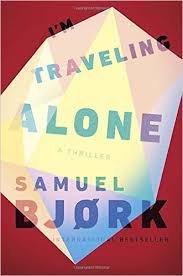
I’m Traveling Alone by Samuel Bjork

Finding another rather dark Scandinavian thriller is pretty fun and the 1st of a series,   too.  It’s good – a lot of the same elements as other Scandinavian thrillers including child endangerment, the horrors of fundamentalist churches and detectives with troubled lives.  But there are also some new ones here – the place of journalism for instance.

i'mtraveling.jpeg

*******
I’m Traveling Alone
by Samuel Bjork  – Norwegian
2013 (2016 English) / 400 pages
read by Laura Paton
rating:   A- / crime 
(#1 in the Munch and Krüger series.
*******

This first in a series almost feels like it’s a couple books into the series as there is a fair amount of talk and background.  Some of the main characters on the Oslo squad have relationships which are obviously in progress but I think that’s because we’re  deliberately dropped into some situations.

The major characters are Oslo police investigators Holger Munch and Mia Krüger – they work with an interesting group including a wonderful young computer nerd/hacker,  Gabrielle Mørk, who is very capable.  Another focus character is Lucas, a young man who works with a strangely pious minister and although there is quite a lot of character development for Lucas,   but the pieces are all connected  isn’t revealed until the end. It’s like who did what –

The story line has to do with little 6-year old girls who are found dead – it’s a serial killer thing which I usually detest but this time was fine – not too gritty and no sex  – the crimes themselves are not detailed.

There’s a certain amount of predictability,  but the eventual twist and then the untangling of it all was well done.

The second book in this series,  The Owl Always Hunts at Night,  is due out in English in June, 2017.

Posted in 2023 Fiction | Leave a comment

Time Travel: A History by James Glick

The idea of time travel is so cool.  I’ve read sci-fi since I was a kid,  age 9 or so.  I know I read  “The Wonderful Flight to the Mushroom Planet” (1954) and the sequels by Eleanor Cameron when we lived in Winona,  so I know I was in the 2nd or 3rd grade.   I loved them and looked for others like that.   In the 5th or 6th grade I found “When Worlds Collide”  by Philip Wylie and Edwin Balmer (1933)  and loved it.   I kept looking and reading although I was mostly mysteries – Nancy Drew and then Agatha Christie.   My husband loved science fiction so from about 1968 I read some he recommended.

timetravel

*******
Time Travel: A History 
by James Glick
2016 / 352 pages
read by Rob Shapiro 10h
rating:  8  /nonfiction
*******

Time travel is something else though – frequently not much science, but there’s a lot of inventive fiction in futurist scenarios and the imagination is set free.

I can’t remember my first time travel book – although it might depend on your definition of time travel. –  Does “Rip Van Winkle” count? How about Poe’s “The Narrative of Arthur Gordon Pym of Nantucket”?    I read those as a kid or YA, but I don’t think they really count.   I’ve never read The Time Machine by H.G. Wells.

I’ve usually  enjoyed the “time travel” books I’ve read,   but I haven’t read that many.   – The Time Traveler’s Wife,  11/22/63, The Doomsday Book,  A Wrinkle in Time, To Say Nothing of the Dog, Kindred,  11/22/63,  and a bunch of others.   I’m most interested in how the authors have their characters take this journey,  but what they find is sometimes pretty curious and well done.

Actually,  I’ve read a couple time travel books just recently –  this past year it was Remembrance of Death (a trilogy) by Liu Cixin (2016 – 2016 in English), The Lost Time Accidents by John Wray (2016) and, of course,  A Christmas Carol by Charles Dickens (1843).    Remembrance of Death is more about space travel than time travel, but there is by necessity some Rip-Van Winkle type time travel in there.

So anyway,   along comes Glick to explain in his very entertaining way the history of time travel both as a concept and as a subject for fiction.   Yay!   The book is really about time,  what it is (and what it’s not),   who invented “time travel” as a concept, and what have authors,  scientists, and philosophers done with the idea over time.   I was familiar with quite a number of the books he referred to although missing several scientists and philosophers.

As to Glick’s question  I’d rather go back in time mainly because I don’t want to see how I die.  That said,  I wouldn’t pass up the opportunity to have a bit of advance knowledge about the stock market, etc.  (Or how our current prez-elect handles it all?)  But to see the Vikings set out for Greenland,  or get a peek at Robespierre – well … fascinating – and   the past sounds safer.

Many authors played with the idea of futurist stories in general prior to H.G. Wells.   That author though was fascinated by radio although he decried the pathetic use to which it was put.   After H.G. Wells the idea of using machines for time travel spread quickly and some scientists and philosophers were also interested.

Time can be loosely defined,  but not very specifically.  It’s highly unlikely (let’s call it impossible) we can ever achieve the reality of time travel because, scientifically,  there is no one cosmic clock – not of God and not of Newton.  This plus a couple of details also means there is no universal “now.”   All that plus the fact that cause and effect definitely seems to be in operation,   to say nothing of entropy.   In the long run,  bottom line,  we each have to appreciate our own “now.”

Still and yet,  it’s fun and freeing to imagine traveling in time.   I know I didn’t get all that’s packed into this book so I may be reading it again within the month.  🙂

Posted in 2023 Fiction | Leave a comment

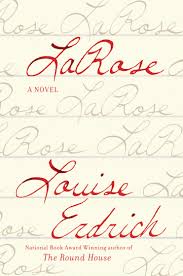
LaRose by Louise Erdrich

I don’t really keep TBR piles for the last few years but I’ve had this on my shelf (in Kindle library) for months since I got it on sale.  I’ve never had time until now.  Erdrich is one of my favorite women authors in part perhaps because she’s Native American and has ties to the northern North Dakota Turtle Mountain reservation.  But she’s also a go-to author because some of her books are simply exquisite reading – (Go for Love Medicine (1984) which I’ve read multiple times but there are other books in that non-chronological series as well as some stand-alones – I wrote a whole post about her books!)

larose
*******
LaRose
by Louise Erdrich
2015 / 384 pages
read by Louise Erdrich
rating –
(both read and listened)
*******

As with Round House (2012) and The Plague of Doves (2008) ,  LaRosetakes place on the reservation mainly in contemporary times.  The primay plot set-up is that while he’s hunting an Ojibwe man named  Landreaux accidentally shoots the young son of his neighbor.    The story then mostly revolves around how Landreaux sends LaRose, his own son, to take the place of Dusty, the shooting victim.  LaRose is  6  years old,  the same age as Dusty and his good friend.

Nobody is really happy with this situation,  not Landreaux certainly,  but neither are Peter and Nora Ravich, Dusty’s parents,  and Dusty’s mother, Emmaline, is devastated.    Maggie,  Dusty’s sister, is okay with it and LaRose’s siblings are supportive of their brother.  LaRose himself is certainly not happy.  It’s a windy story – sides are taken from the top to the bottom of the pecking order.   Is this permanent?  Or is it open to change?  And this is a huge part of the plot.

Meanwhile,  interspersed with the LaRose narrative are other much shorter stories.  One is a tale set in 1839 where a young Native girl is left by her mother at an Ojibwe trading post for Mackinnon, a white trader.   It’s a trade of sorts.   But Mackinnon also leaves the girl, who is about 11 years old and she’s then found by young Wolfred Roberts, another white man at the post.  This story was published in the New Yorker with the title, “The Flower.”  (2015).

Another interwoven story in the contemporary world is that of Father Travis, a conservative priest in a liberal community.  Everyone goes to see Father Travis.

Meanwhile Romeo Puyat is a thief and an alcoholic-addict who craves power has his own tale winding through the book.

The whole narrative is broken into many sections of varying lengths as it winds through all these generational stories taking place from 1836 to 2010.   There are Parts and chapters and even sub-chapters.    The Parts are divided by time frame with the first being called “Two Houses” and taking place in 1999-2000.   Part 2 is called “Take it All”  and backtracks to 1967-1970 for  start of the background story on a couple of the characters.  Part 3 is “Wolfred and LarRose” without dates but the story follows Part 2.    Part 4 is 1000 Kills” 2002-2003 and the final Part is “The Gathering” – also undated.   –   After the first introduction of the main characters the story-lines weave in and out through time frame Parts  to further a storyline or develop a character there.  It’s an intense book and the reader needs to pay attention.

This is very much a “show don’t tell” book.  We see how Landreaux, Nola, LaRoas, Romeo, and many others think and react – there’s not much of a narrator and it works to tell us anything more than what the characters do,  interpreting is up to the reader and it’s fascinating.

Erdrich loves genealogies – in fact that may really be a theme in her books – so many of her characters are related in different ways.  They know each other and their mothers knew each other.   Many of the characters are very well developed.

Many of the themes are the usual for Erdrich,  the historical issues of the Natives,   interwoven genealogies and the difficulties of the fathers are visited upon their descendants,  life on a small reservation or just outside its boundaries historically and today,  families,  and the continuing issues of health problems and addiction.    But love and grief are also huge themes here – and well done.

Lastly,  about Erdrich reading her own stuff for audio-books –  her voice is too soft.  It’s  more suitable for intimate readings in cozy bookshops than for trying to hear on your earbud over the din of the gym or traffic.  And it always sounds “sweet,”  not like the narrative.  Oh well – I think she’s getting better and I’ve got the Kindle version here too.

  • Landreaux  Iron – the man who shot Dusty – LaRose’s natural father – a physical therapist
  • Emmaline Iron – Landreaux’s wife – LaRose’s natural mother –  1/2 sister of Nola- social worker
  • Snow Iron – Landreaux and Emmaline’s daughter
  • Josette Iron – Landreaux and Emmaline’s daughter
  • Larose Iron – Landreaux and Emnaline’s natural son
  • Peter Ravich  –  Dusty’s father – LaRose’s “adopted” father
  • Nola Ravich- Dusty’s mother – LaRose’s “adopted” mother – 1/2 sister of Emmaline
  • Maggie Ravich – Peter and Nola’s daughter
  • Dusty Ravich -Nola’s natural son –  shot by Landreaux – deceased
  • Mrs Peace – Emmaline’s mother – daughter of Bily Peace,  teacher of Landreaux, local  informal historian.
  • Romeo –  old friend of Landreaux
  • Hollis – Romeo’s son
  • Randall – an old friend of Landreaux and Romeo

1839

  • Mink –  Indian woman,   beaten and looking for booze and tobacco
  • Mackinnon – a trader in the area – Mink’s source for her needs
  • Wolfred – another trapper with Mackinnon
  • Larose – age 11  Mink’s daughter –

Brad Morrissey is mentioned towards the end of the book and there is a family clan of Morrisseys in “Love Medicine.”

LA Times:
http://www.latimes.com/books/la-ca-jc-louise-erdrich-20160508-story.html

Christian Science Monitor:
http://www.csmonitor.com/Books/Book-Reviews/2016/0523/LaRose-is-Louise-Erdrich-s-beautiful-new-novel-of-love-atonement-justice


Posted in 2023 Fiction | 7 Comments

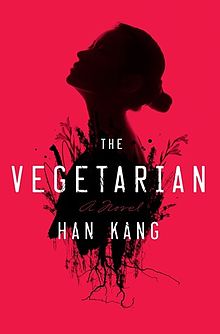
The Vegetarian by Han Kang

Really having a hard time finding something to read right now – A Naked Singularity was so good and the political news right now is so bad – getting a focus on any book is really hard.   But finally I thought this short novel might do the trick.  It won the Man Booker International prize for 2016 and I’ve had it on my wish list since then.

Okay – it took me out of my Trump-trauma,  but although it was totally worth is,  it does get pretty graphic and horrific.

The_veg.jpg

*******
The Vegetarian 
by Han Kang
2007 in South Korea/ 2015 in English – 208 pages
read by Janet Song, Stephen Park  5h 14m
rating – 9  /  contemp fiction
*******

Han Kang wastes no time cutting right to the chase.   The opening chapter  is told by  two people the first of whom is Mr Cheong.  He is the husband of Yeong-hye, a woman  who has decided to be a full vegetarian on account of a dream.   He witnesses his wife change from a non-descript South Korean housewife and a good cook into someone who does not conform to what he expects.

A secondary narrator in Part 1 is  Mr Chang’s wife who describes the dream, some background material, and  her own physical responses.   I think these are her thoughts although some of them are directed toward him.  She’s determined and a bit over-wrought.

Part 2 takes place a couple years later and  is from the point of view of Yeong-hye’s brother-in-law,  her sister’s husband.   He’s an artist who is striving for more artistic freedom and he is fascinated by Yeong-hye.

Part 3 is told with the point of view of In-hye.  Yeong-hye’s elder sister,  and again is some time later.

The story is told using language as slender as Yeong-hye becomes – there is no extra padding,  no adjectives or other flourishes.   The characters also have a flat aspect – they often seem without emotion.  They have enough to make them human,  but they’re definitely distanced and the story has a surrealistic effect all of which puts me in mind of the novels of Haruki Murakami although in many other ways it’s not at Murakami at all.

At first the characters,  except Yeong-hye, seem to be overly concerned with what others think.  They are Koreans and conformity and success mean everything. .   The tension builds around what Yeong-hei will do next and why is she doing these things.  There’s some symbolism or something in there I don’t think I quite understood.

********** SPOILER! ***********
About themes – well – mostly mental illness I suppose and what it is and what it does to families who are determined to conform to social conventions.  Maybe it also deals with what too many  social conventions do to people.    And then there’s some concern with what artists do with the subject of mental illness and to people with that. (What society does to people with mental illnesses!)    Another idea revolves around  whether people should really have the  freedom to do what pleases them even if they are considered mentally ill.

Fwiw,  a Mongolian mark is a blue -grey birthmark.

NY Magazine:  http://nymag.com/scienceofus/2016/12/the-vegetarian-and-the-puzzling-link-between-diet-and-mood.html

The Guardian: https://www.theguardian.com/books/2015/jan/24/the-vegetarian-by-han-kang-review-family-fallout

Words Without Borders: http://www.wordswithoutborders.org/book-review/han-kangs-the-vegetarian

Slate: http://www.slate.com/articles/arts/books/2016/02/han_kang_s_the_vegetarian_reviewed.html

Inuth: http://www.inuth.com/lifestyle/books/the-vegetarian-han-kang-rejects-more-than-meat/

Posted in 2023 Fiction | Leave a comment

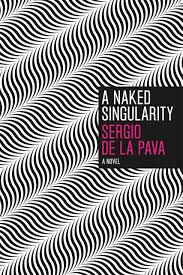
A Naked Singularity by Sergio de la Pava

First off,  and as many have said,  this brilliant debut and originally self-published novel desperately needs an editor.   It’s a smart, funny, big, baggy,  fascinating look at … well … probably everything – genre-wise I’ll call it a very literary legal thriller.

On the most surface level it’s about a young good-guy defense attorney in New York who lets himself get entangled in some dangerous and very illegal activity by  a friend who has never lost a case.   On the level of plot-line it’s a very good legal thriller with court-room procedurals plus plot twists and turns topped of by a fair page-turning action scene.  But you have to get towards the end before that part really kicks in.naked

*******
A Naked Singularity 

by Sergio de la Pava
2010 / 688 pages
read by Luis Moreno 27h 19m
rating:  9.5  /B+  literary legal thriller 
*******

On the “it’s about everything”  underneath the set-up of life in a New York public defenders office are the ideas of winning and losing,  justice,  God,  Ralph Kramden, philosophy,  perfection, and  imperfection  professional boxing, personal values, war, dreams,  race,  capital punishment,  family, love, ears, drugs, money,  and … well …  you get the picture.   It’s about “T”ruth, freedom,  justice – and love.   (How’s that?)   It’s been called a novel of ideas and I certainly agree with that.

This is the kind of novel which results from a young ambitious writer trying to get every idea he has into the one book he figures he’ll ever write – ( I think that’s already been said somewhere.)  – Note – don’t let the boxing sections get you down – they totally tie in later.

Our protagonist,  Casi, is a 24-year old public defender in the Brooklyn judicial system and in the opening chapter we are introduced to a cross-section of his clients who are mostly black and have pathetic lives and drug related crimes.  There is an occasional difference  in the bunch like the Chinese man selling batteries in the park.

As the child of Colombian immigrants Casi thinks about a lot of stuff a lot of the time, but he deals with his assigned law-breakers in very good faith (so we know he’s a good guy).  With his friends, neighbors, family and even himself,  Casi gets into long philosophical discussions – and sometimes the themes of these discussions interweave with the nature of his job or predicament at the time.

Fortunately or not,  de la Pava enjoys a good digression which is the source of most of  the tropes dealing with  sex, crime, drugs, race,  literary figures,  philosophical ideas pertaining to happiness,  free will, the basis of knowledge,  money, and all manner of interesting ideas.

Anyway,  one of Casi’s fellow attorneys,  a rather creepy guy named Dane,  entangles Casi in the philosophical arguments for and against joining up and conducting the perfect crime – a big bad one.   Dane is obsessed with the idea of a perfect crime.  His one major attempt at perfection (in the courtroom) failed,  but now he’s got another plan. So he plans and plans and studies up and researches every aspect he can think of.  It all gets a bit much for Casi who caves,  but it is often very, very funny.

The best part of this book is the humor – omg – it’s laugh out loud funny in places.  The writing itself is a close second or tied.  It’s usually perfect pitch for a young and intellectually inclined lawyer.   Casi thinks a lot and those parts are in stream-of-consciousness style.  On the downside some of these digressive scenes go on too long and it seems as though the author is his biggest fan of the sound of his own voice.

The author wrote this while working as an attorney and after getting a dozens of rejections from publishers decided to self-publish. One of these self-published manuscripts made its way to the desk of an editor at The Quarterly Conversation who wrote a glowing review.   This tweaked the beaks of the University of Chicago press and the following year the press-published book won the PEN award.   It’s slowly built a  following.   It as recommended to me by some friends whose tastes I respect.   They’re right – it’s worth recommending to folks who enjoy Pynchon,  David Foster Wallace,  Don DeLillo and others authors of big wonderful novels.

This is the review which started the buzz:
http://quarterlyconversation.com/a-naked-singularity-by-sergio-de-la-pava

http://press.uchicago.edu/ucp/books/book/chicago/N/bo13106363.html

http://www.wsj.com/articles/SB10001424127887324769704579010771245654870

http://www.slate.com/articles/arts/books/2012/05/sergio_de_la_pava_s_a_naked_singularity_reviewed_.html

https://www.dissentmagazine.org/article/of-loopholes-and-black-holes

https://en.wikipedia.org/wiki/Wilfred_Ben%C3%ADtez

https://en.wikipedia.org/wiki/Roberto_Durán

Posted in 2023 Fiction | 2 Comments