This is the last of the Shetland Island Mystery series which features a Detective Inspector named Jimmy Perez. There is a definite overarching plot which means the books are better read in order of publication. This is what I did with a binge of reading of books 3 through 6.
Wild Fire by Anne Cleeves 2018 / 416 pages Read by Kenny Blythe 10h 44m Rating: A- / mystery #8 in the Shetland Series
The Four Seasons Quartet • Raven Black (2006); Gold Dagger Award • White Nights (2008) • Red Bones (2009) • Blue Lightning (2010)
The Four Elements Quartet • Dead Water (2013) • Thin Air (2014) • Cold Earth (2016) • Wild Fire (2018)
In this final book in the series, Emma Shearer, an off-island based nanny for a local family, is found hanging from a rafter in a barn. Jimmy and his supervising detective Willow Reeves along with his assistant Sandy Wilson (male) do the usual investigating and interviewing to proceed through the case. We also read the interactions of some of the characters/ suspects. Of particular note and interest is an 11-year old boy named Christopher who is autistic and has recently moved to the island with his family. He has problems at school and sometimes plays with matches. Fires figure prominently in the story. Abuse and bullying as well as dysfunctional families are some other themes.
The overarching plot has Jimmy and the now pregnant Willow still not quite committing – Jimmy comes with a lot of baggage (read the prior 7 books first).
Overall I very much enjoyed these books which I would categorize as being somewhere between traditional and cozy mysteries – maybe more traditional than cozy. They are traditional because there is a definite murder and a cast of suspects so it’s a who-done-it with a professional detective and his procedures solving the crime. But there’s a cozy element because of the close attention to setting and the various love stories of some of the main characters. I might try another Cleeves series – we’ll see.
So I read this a second time and in some ways appreciated it much more. I understood better Childs’ lapsing into the poetic, but I got a lot of info this time which I’d missed the first reading. My first reading I gave the book a 9.75, but that’s before letting it settle a bit and rereading it. That rating was due to the first excitement of the book. This time an 8.5 is an okay rating. I found shortcomings.
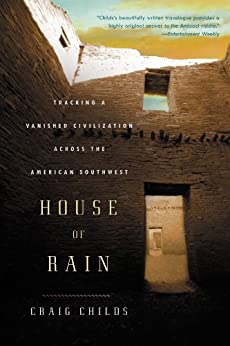
House of Rain: Tracking a Vanished Civilization Across the American Southwest by Craig Childs 2007 / 482 pages read by author – 15h 21m rating: 8 / Native American history – archeology *******
A poetic sample from Part 8 in the book (these poetic parts bothered me the first time):
“The wind hemmed among the pines outside, and José paused, hearing it. The flame in the oil lamp shifted just slightly with the change in pressure. Shadows ducked through the room.”
And the word Childs means is ‘hemmed,’ it’s not a typo, because when he narrates it he says it that way.
Second readings are often quite illuminating for me and they’re usually totally worth the time but with House of Rain not so much. On the plus side I did get a better *feeling* for the Anasazi and their environment.
One thing which bothered me this time was that I had to do so much Googling to get a good perspective of the landscape which is inseparble from its inhabitants. I also found many more photos so i could actually see what some of the dwellings and artifacts looked like. There are lots of great web sites with some background info and excellent photos available. The last section of the book, Part 8, was totally new to me – I don’t think I’ve ever been south of the border between Tijuana and McAllen, Texas.
So I had no idea the area in Northern Mexico was so barren – US interest in Mexico (as a place to expand slavery) certainly ended by the extreme geography. They got to where they did becuase they needed a railroad to get to San Diego. This is a fascinating video documentary of Paquimé area. It’s about 11 minutes: https://www.youtube.com/watch?v=SrcC6xipSK0
And this is important – This reading I sense the tension between finding stuff out and leaving it untouched, unspoiled – Childs usually leaves stuff alone but once in awhile he picks things up and drops them back – his fellow travelers often leave with them. That pretty much climaxes in the last chapters. I suppose it’s a reason for the lack of photos, too. And what there are are tiny – but expandable in the Kindle. https://mybecky.blog/2020/07/26/house-of-rain-by-craig-childs/
This was very good until toward the end when the resolution to one “mystery” seemed to be clear and obvious, but presented another issue. There was a slight lapse in suspense (for me anyway) during that time, but it only lasted a couple relatively short chapters.
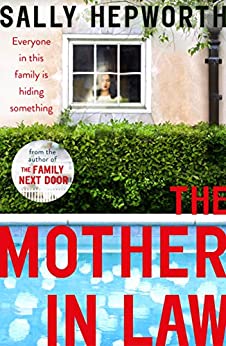
The Mother-in-Law by Sally Hepworth 2020 (352 pages) Read by Barrie Kreinik- 9h 12m Rating: B+ / mystery
The narrative involves alternating first person narratives which also change time frame – past and present – leading up to Diana’s death and then the aftermath. It’s interesting and different reading the point of view of the victim.
The eponymous mother-in-law, Diana, is a formidable woman, quite rich, dominating and opinionated. Her husband seems to be the opposite, easy going and lovable, a very good provider and family man. After Tom dies, Diana is depressed and then she’s dead with a bottle of Latubin next to her and a suicide note in a drawer.
The suspects – their son, Ollie, married a very nice woman named Lucy who has no immediate family living. (So Diana is Lucy’s mother-in-law and the two have a somewhat complicated relationship. Lucy and Ollie have three children and a nice life until there are money troubles. Diana’s daughter Nettie and husband Patrick also have a very nice life, but Nettie’s suffering involves her inability to bear children. This consumes her until her last hope is to get enough money to cover the costs of getting a surrogate.
But Diana was grieving her husband’s death – was this possibly a suicide? As it turns out there are plenty of twists to the plot, the character development of Diana and Lucy, both sympathetic characters in themselves, is excellent. The writing is so-so. The suspense is professionally developed and the ending is satisfactory. great.
Fwiw, Hepworth is an established fiction writer, but this is her 1st mystery and the “relationships” aspect is sometimes overpowers the mystery genre. It’s okay.
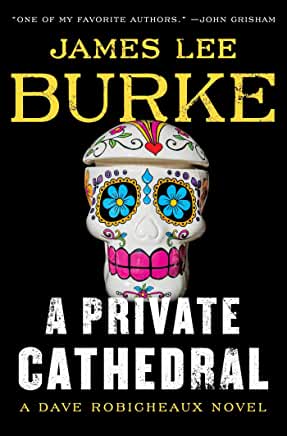
Burke is back with Dave Robicheaux in book # 23 and his usual luscious prose with evil characters set in an incredibly violent and gritty context, a context which includes some occult context. He’s still coming out with great novels, but they’re not up to what the earlier novels were. “In the Electric Mist with Confederate Dead” and “Jolie Blon’s Bounce” were Burke at his height. I’m not sure I like so much occult play in there either but a certain amount of that has almost always a part of the Dave Robicheaux novels. Burke is dealing with the concept of “evil.”
A Private Cathedral by James Lee Burke 8/2020 read by Will Patton 11 h 30m Rating – A- / crime
Dave Robicheaux, the series protagonist, gets older and older. He would be either 81 or 75 in this book depending on the varied ages used within the series. but in the early pages of A Private Cathedral it appears the story takes place prior to 9/11. In that case, he’d be in his 50 or 60s for this tale of vile and horrendously corrupted men. If there is a theme it’s the evil which lives within.
The story is one of rich men, the trafficking of young girls, drugs and rock ’n roll. Clete seems rougher and somewhat bossy while Dave isn’t as sure of himself. Finding Helen back in the picture was fun.
The book was okay, but not quite the A++ I used to almost automatically give Burke’s books. The literary aspect didn’t overcome the grit and violence and the literary language even sounded a wee bit forced or artificial. All that said, I still gave it an A for crime novel – Burke is still the best on the market.
Thicker Than Water by Tyler Schultz 2020 / Audible only read/told by author rating 8/ memoir – (podcast)
This is not a “book” as such, but more of a pod-cast produced and sold by Audible. And what I really hearing about was Tyler Schultz’s side to the story which Wall Street Journal reporter John Carreyrou told in his prize-winning book, “Bad Blood: Secrets and Lies in Silicon Valley.” This one was free to members at Audible and I loved it -most likely becuase I’d read the Carreyou book. See my old review from December, 2018 here it’s a reveiw on this site (It got a rating of 9.5 for True Crime, but it’s not a murder.)
Carreyou’s book dealt with the very early rise and corruption of young (then) Elizabeth Holmes who founded a medical/techie firm called Theranos which was supposed to have a method to test one tiny sample of blood for many many things. She sold this idea and her start-up to a lot of big money and big name powerful people like Henry Kissinger and George Schultz (among many others).
But it was a sham and Tyler shows in exactly what ways because after graduating Stanford, he worked at Theranos and saw it and served as whistle blower, the source for Carreyous book. For this he was put in harms way many times. He and his family (including George Schultz, former government official) had a very difficult time of it for several years.
This is Tyler’s story and to get the most out of it I recommend you read Bad Blood first because that’s the story behind Thicker than Water.
A friend recommended this and I picked it right up because I’ve have fairly serious breathing problems as a result of surgery (and more). The first parts were just exactly what I needed but the third part went a bit further into how the Indian Yogis and those folks can regulate their body temperature by different breathing methods but even that part was interesting and at the end of the book specific methods are described.
Breath: The New Science of a Lost Art By James Nestor z 2020 / 280 pages Read by author Rating 8.25/ nonfiction (health) Read and listened
A friend recommended this and I picked it right up because I’ve have fairly serious breathing problems as a result of surgery (and more). The first parts were just exactly what I needed but the third part went a bit further into how the Indian Yogis and those folks can regulate their body temperature by different breathing methods but even that part was interesting and at the end of the book specific methods are described.
It’s part history, part biology and part memoir as Nestor goes through his own experiments and personal development. Following the Introduction, the Parts include the first on an experiment he did with a Swedish friend, and another one on the basics of better breathing. Then there’s Part 3 which deals with what extreme breathing can do for people, and an Epilogue. Finally there’s the appendix which gives directions for breathing exercises. The Kindle book has links to more some very informative sites with videos from Nestor. The Audible has a different narrator reading a few basic exercises.
The Kindle and Audible narratives are different in minor ways. There are Notes and an Index there but no graphics.
This was a very helpful book, I’ve already started breathing through my nose, breathing more deeply, etc.
I’m trying Firefox for a minute since I have a review ready to go.
The Case for the American People: The United States vs Donald J. Trump by Norman Eisen 7/2020 – Read by Robert Petkoff – 11h 7m Rating – 9 / current events
This is a fine, fine book by Norman Eisen, the former legal council for judiciary in the prosecution of the Trump impeachment process and subsequent Senate trial and who wrote The Last Palace about his time as Ambassador to the Czech Republic. A Case for the American People is his take on the impeachment and eventual acquittal of Trump. https://en.wikipedia.org/wiki/Norm_Eisen
The Washington Post calls it a “tell-all” book and it’s definitely NOT a “balanced” viewpoint by Trump’s opinion – lol. It’s a candid examination of the prosecution’s case and as such it’s a timely review of what all this country went through considering we have an election coming up and it’s fair warning. Eisen goes through the charges and the lies and the coverups.
Eisen presents an excellent glimpse at the goings on behind the scenes with insights into and opinions on the likes of Mueller, Pelosi, Nadler, even Barr and Romney along with some of the witnesses.
And he hits on the more immediate issue of Trump’s handling of the pandemic situation and Trump hasn’t changed a bit – he’s a clear and present danger to the country. (I don’t think Eisen said this but it sure fits – he might have said it!) So yes, it’s an excellent book but if you are a Trump supporter you might find it hard to take. Eisen is not neutral on anything here. If you are not a Trump opponent you’ll find it heartbreaking and optimistic at the same time.
I have to take a leave of absence from my blog because WordPress is apparently not supporting Safari very well. I’m not sure what I’ll do. I can use Firefox once a month probably so you might be getting monthly updates instead of almost daily. Or I might switch everything to Firefox but that would be sad because my iPad doesn’t do Firefox. (I don’t use it for the blog though.)
We’ll have to see what happens. I have so much else going on right now though with my health and my mom’s health and my just moving and so on. Gads
Our History is the Future: Standing Rock Versus the Dakota Access Pipeline, and the Long Tradition of Indigenous Resistance by Nick Estes 2019 / 321 pages read by Bill Andrew Quinn rating: 9 / Native American history and current events-
This book is from a bit more radical viewpoint than I’m used to reading about Native issues, but there’s an important history embedded in our current events and it needs to be told.
The struggle to stop the Dakota Access Pipeline has been the one of the most important political movements of the 21st century but it’s certainly not an issue isolated in time. The roots of the issue go back to the formation of the Standing Rock Reservation when the lands of the Great Sioux Nation taken over, split, sold and finally flooded to create a dam on the Missouri River. This took place over about a century but eventually led to the conflict over an oil pipeline to go too close to the water and areas of sacred land.
The book has a lot of legal action playing out (and illegal action) instead of battles and simple take-overs like in the 19th century and 20th centuries. DAPL and the US government (engineers) apparently ignore the old treaties, takes what they want, and lets the natives sue for what was granted by treaty. That beat, as the title implies, goes on. It’s rather horrifying.
The author, Nick Estes, is a citizen of the Lower Brule Sioux Tribe. He is an assistant professor of American studies at the University of New Mexico. In 2014, he co-founded The Red Nation, an Indigenous resistance organization.
I needed a break from thinking about anything, politics, health, family, etc. This romance-type of story is set in a murder mystery and it sounded perfect. It was actually almost just what I needed but it was really disappointing.
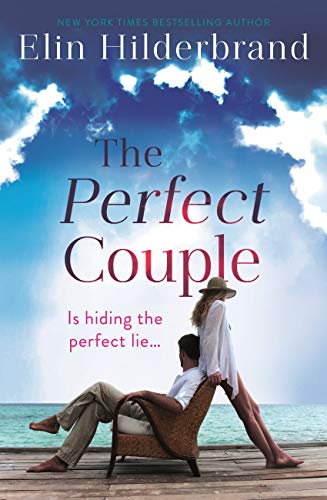
******* The Perfect Couple by Elin Hilderbrand 2018 / read by Erin Bennett 12h 8m rating: – D (romance/crime) *******
Hilderbrand usually writes romance and there is a series associated with this novel which, from what I understand, uses the same characters but without much of an connecting plot to the books. But I haven’t read any others because I’m allergic to romance.
Unfortunately I was hooked by the mystery hype and it’s really much more of a romance – it just happens to have a murder at the core of the plot. What happens is that the maid of honor in the heroine’s wedding is found dead and there are plenty of suspects in this group of very upscale New Yorkers gathered together at a mansion in Nantucket. The police and detectives are involved and do their jobs in forensics and there are interviews. But the romance takes up probably 70% of the tale.
The characters, from 3rd person omniscient points of view, are not terribly well defined. Even the main characters are somewhat stereotyped and the setting is something I’d expect from Danielle Steele. Hilderbrand does, at times, include some interesting insights about personalities and psychologies but these ideas are not developed.
The structure is comprised of two alternating parts. One part is the day before the wedding (when the body is found) and subsequent investigation. The other part deals with weeks and months leading up to death, when motives are established. The dates are clearly noted at the beginning of each chapter.
The language is at about a 5th grade level describing adult content. It’s not graphic in any way but it does get schmaltzy, repetitive and somewhat juvenile.
Finally, except for the ending, the plot’s not bad. It’s generally predictable with only a couple of light minor surprises. And it’s compelling for some reason, maybe the who-done-it part and because the premise is rather unusual. The final denouement is a bit hard to figure out prior to getting there because the threads come together. And then it’s turns back into a romance and is totally disappointing.
I wanted to read this because it deals with American Native history but when I first started I was disappointed that it was so literary in nature, more like literary non-fiction which is fine in its place and I liked it well enough. . But then it got good –
******* House of Rain: Tracking a Vanished Civilization Across the American Southwest by Craig Childs 2007 / 482 pages read by author – 15h 21m rating: 9.75 / history archeology *******
House of Rain: Tracking a Vanished Civilization across the American Southwest finds Childs journeying throughout the Southwest as he tracks down the mystery of the Anasazi Indians. Ancestors to the modern-day Hopi Indians, the Anasazi lived in what is now known as Arizona and Utah but disappeared a thousand years ago despite having built a prosperous civilization. David Pitt, writing in Booklist, commented that the author “relies … on scholarly literature, oral tradition, and … reading between the lines” in his attempt to solve the mystery. The book received favorable reviews. Michelle Mittrach Garcia wrote in Library Journal that the author “vividly weaves his … narrative, imbued with a deep respect for the geography and cultural landscape.” A Kirkus Reviews contributor called House of Rain “an original, eloquent account of an intellectual and archaeological odyssey.”
The book covers Childs’ journeys in that part of the Southwest and his research with natives of several tribes as well as scholars in the field and others. Some of his questions concern where the “Anasazi” came from, why, what they did and how they lived as well as where they went. He investigates the settlements and dwellings of the groups and sits at night in places where the only tracks are those of animals. He explores the area from Colorado and Utah through Arizona and New Mexico to the northern areas of Mexico.
Yes – I was spellbound and in awe. I know I’ll be reading this again. This book is probably for intelligent people who are curious – not for scholars in the field. As Childs says somewhere the book is a mix of scholarly opinions and his own ideas and sensations.
The story is that of the Anasazi, who they were and where they went. It has some surprising conclusions – surprising to me anyway. I am so glad I read it.
I read this back in January and it was okay but it was also a selection in the Booker Prize group for our July read. I knew I hadn’t got much more than an outline of the plot and a brief gloss on the characters. I would not be able to discuss this at all. So I plunged and was happily surprised to find I had both the Kindle and the Audible versions. I was surprised that I’d misremembered the ending.
Drive Your Plow Over the Bones of the Dead By Olga Tokarczuk /trans by Antonia Lloyd Jones 2019 / 275 pages Read by Beata Pazniak 11h 39m Rating – B+ for the Kindle and C- for the Audible / crime
It’s a really odd book written by Olga Tokarczuk 2019’s Nobel winner from Poland. I can’t say to much about it without getting into spoilers. Let me say that it is a very literary murder mystery with an amateur detective and her neighbor doing the main sleuthing. Just to twist things up a bit the neighbor’s son is the police chief and it’s set in a tiny rural community.
Janina Duszejko is an older middle aged widow who lives alone in a rural part of southern Poland – right across the border from the Czech Republic. She studies astrology and translates Blake into Polish with her friend Dizzy. She also watches out for her neighbor’s homes and does some upkeep there. One day she and her neighbor, Oddball, find their neighbor, Big Foot, dead in his home. (These are Janina’s names for those two.)
The title is from “Proverbs of Hell” by William Blake (1757 – 1827). The epigraphs leading each chapter are also from Blake.
It got a rating of 4.5 stars on Amazon and 4 stars on Goodreads and lots of accolades from the critics. I also enjoyed it the second time much more than the first.
This is a second reading of this because most of it went over my head the first time. My focus is not what it was before the virus and my mom’s health difficulties and this book is not something I can rip through.
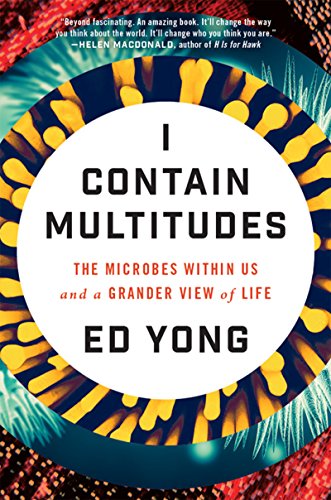
******* I Contain Multitudes: The Microbes Within Us and a Grander View of Life by Ed Yong 2016 / 373 pages read by Charlie Anson 9h 52m rating – A / microbiology *******
I got a whole lot more out of it this time. I knew it was there but my head wasn’t. It’s rather amazing how the human body is not a system unto itself. Microbes get involved and affect us in a large number and variety of ways both for good and ill.
I read this and reread it – I’m really not a science reader – much of it was yucky to me but I got used to it and by the end, where it’s worst, I was almost okay about it. I had the same reaction to Mary Roach’s book about corpses. Stiff.
I had to add this to my Trump library – I think I’ve read 18 books about Trump and his his mess of an administration now, some better than others but all contributing to the satisfaction of my curiosity. This is a good one for the more personal aspects of him and his life.
******* Too Much and Never Enough: How My Family Created the World’s Most Dangerous Man by Mary Trump 2020 / read by author – 7h 5m rating 8 / memoir *******
It turns out to be an interesting and much-hyped portrait of the family life of Donald Trump by his niece Mary Trump. It’s an inside peak at the forces which enabled Trump to become the narcissistic approval-seeking man he is with no real concern for anyone other than himself and that he gets his way.
Mary didn’t know Donald all that well while she was growing up, but she’s a clinical psychologist with a PhD in the field and looks at him and his behavior from an educated point of view. She also has some knowledge of the financial dealings of the Trump family due to Donald’s tax returns.
It seems that Donald Trump is not an intellectual man, but he’s savvy in some way which attracts some people and keeps them giving in to him and what he wants. If they don’t he simply takes it. This began with his need for their approval which apparently originated with his father.
Mary Trump’s father, Freddie, was Donald’s older brother but Freddie could never do well enough for his father to approve of. He failed over and over and ended up dying young, of alcoholism. Donald learned how to get that approval – or he was born with it, something.
Anyway, the book is engaging if not terribly well written and I do wish it were better organized. It feels like a slap-dash effort to get it out on the market while the getting was good (before Trump filed another suit). There are no photos, no family tree, no source notes. It’s good though and the audio version is also pretty good and that’s not always an easy thing for an author to do. How My Family Created the World’s Most Dangerous Man
This is a really amazing book – it’s by someone anonymous who is better off that way because it’s a memoir AND fiction and who in the world could all this have happened to? Anyway, I loved it.
Becoming Duchess Goldblatt by Anonymous read by Gabra Zackman, Lyle Lovett and J. Smith-Cameron – 5h 31m rating – 10 / fictionalized memoir (Read and listened 2 times)
I finished this yesterday and wanted so badly to read it again with the Kindle version that … well, dear reader – I had to do it.
“The only way to be reliably sure that the hero gets the girl at the end of the story is to be both the hero and the girl yourself.” pg 18
This is the story of an unnamed woman who is either losing everything or has lost it already, her husband, her young son, her job – maybe her dreams in addition to a good deal from her early years. But … she hasn’t lost love although that’s definitely starting to leak.
On a hunch and with some advice from a friend, she turns to developing the online persona she’s been playing with. She does this via social media and something clicks and it starts working on her.
Becoming Duchess Goldblatt is a lightly literary book in that there are lots and lots of literary allusions and, sweet for me, I was familiar with almost all of them, Celeste Ng, Lyle Lovett, and several others.
When people say they’re “going to make time for you,” it’s instant time from a mix. Nobody bothers to creating new time from scratch anymore.” pg 165
From Audible: Part memoir and part joyful romp through the fields of imagination, the story behind a beloved pseudonymous Twitter account reveals how a writer deep in grief rebuilt a life worth living.
Becoming Duchess Goldblatt is two stories: that of the reclusive real-life writer who created a fictional character out of loneliness and thin air, and that of the magical Duchess Goldblatt herself, a bright light in the darkness of social media. Fans around the world are drawn to Her Grace’s voice, her wit, her life-affirming love for all humanity, and the fun and friendship of the community that’s sprung up around her.
@DuchessGoldblat (81-year-old literary icon, author of An Axe to Grind) brought people together in her name: in bookstores, museums, concerts, and coffee shops, and along the way, brought real friends home – foremost among them, Lyle Lovett.
It wasn’t until my second reading that I found this book rather interesting because I had to get past a bunch of ick factor to get there. I never (ever) had an interest in a medical career and avoided biology classes – (in my defense I liked physics and astronomy, geology etc.). – Sad to say I got behind in my blurb/reviews so this will have to do.
I Contain Multitudes: The Microbes Within Us and a Grander View of Life by Ed Yong 2016 / 373 pages read by Charlie Anson 9h 52m rating – A / microbiology
Yong’s style is kind of breezy with some attempts at humor. It could be a fun read if I were more interested and not affected by yuk. I did learn quite a lot.
From Audible: Joining the ranks of popular science classics like The Botany of Desire and The Selfish Gene, a groundbreaking, wondrously informative, and vastly entertaining examination of the most significant revolution in biology since Darwin – a “microbe’s-eye view” of the world that reveals a marvelous, radically reconceived picture of life on Earth.
Every animal, whether human, squid, or wasp, is home to millions of bacteria and other microbes. Ed Yong, whose humor is as evident as his erudition, prompts us to look at ourselves and our animal companions in a new light – less as individuals and more as the interconnected, interdependent multitudes we assuredly are.
The microbes in our bodies are part of our immune systems and protect us from disease. In the deep oceans, mysterious creatures without mouths or guts depend on microbes for all their energy. Bacteria provide squid with invisibility cloaks, help beetles to bring down forests, and allow worms to cause diseases that afflict millions of people.
I got way behind in my blurb-writing so I just lifted this one from the Audible site. I did enjoy it though – I love Jimmy Perez and Sandy and the others.
Cold Earth by Ann Cleeves 2017 – English read by Kenny Blyth 10h 12m rating – B+ / crime Shetland Island series # 7
In the dark days of a Shetland winter, torrential rain triggers a landslide that crosses the main road and sweeps down to the sea.
At the burial of his old friend Magnus Tait, Jimmy Perez watches the flood of mud and water smash through a house in its path. Everyone thinks the home is uninhabited, but in the wreckage he finds the body of a dark-haired woman wearing a red silk dress. Perez soon becomes obsessed with tracing her identity and realizes he must find out who she was and how she died.
Cold Earth is the next audiobook in Ann Cleeves’ beloved Shetland series, which is now a major success for the BBC.








 Becky's Books -