Don Winslow has been writing books since 1991 and I’ve been reading them since maybe 2000. He writes a lot and I’ve read a dozen or so but I’ve missed several – this was one I’d missed. He’s also won a lot of awards. During this time he’s also gone through different phases and different series. .
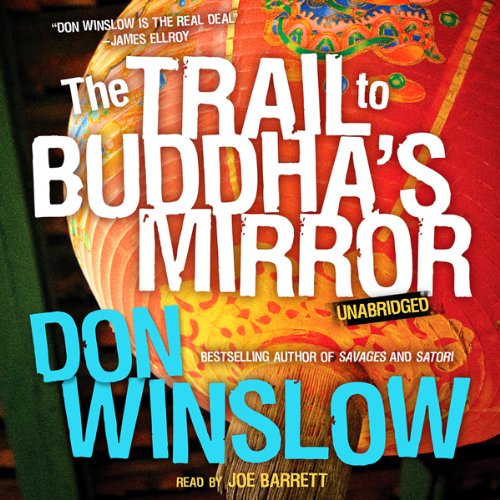
The Trail to Buddha’s Mirror By Don Winslow 2011 Read by Joe Barrett 12h 2m Rating: B+ / crime (#2 in Neal Carey series)
This book is from back in 1992, but it was one I’d missed and on sale with my membership so I grabbed it then and kept it for while before I actually pushed the play button.
Winslow is best known for his more recent Cartel Trilogy which is seriously violent and these are also very violent too, but he was getting his feet wet and there is a good stretch of lightness and humor in them. This is not so true of The Cartel and onward. And there were the surfing books of his middle years -those were fun but they got violent at times.
In this book the series protagonist, Neal Carey, has been contacted by a bank he owes a lot of money to. That’s the scenario which works as the bridge between the books, the overarching story line for the series. They send him to find a scientist who has disappeared with an important and very valuable formula. Carey ends up in Chinatown and then in China as he follows the clues to a secluded lake.
The relevant history of China was interesting and the rest of the book was very good. I’ll likely read more Winslow and I’m looking forward to City on Fire which is coming out in a couple weeks.
I’ve wanted to read this since it came out in 2020 but I’ve put it off because at the same time I was just not interested in Winston Churchill and the blitz. At some point recently I saw it available in the library app and I got it and am giving it a try. I’ve enjoyed everything I’ve read by Larson and that’s been most of what he’s published. That said, I wasn’t so hot on Churchill or WWII military history before I read this and I’m still not. That said, the book is pretty good. Oh well.
The Splendid and the Vile: A Saga of Churchill, Family, and Defiance During the Blitz by Erik Larson 2020 – 608 pages read by John Lee 17h 49m rating: 9 (re-reading) / WWII history
As is apparent from the title, the book tells the tale of Winston Churchill and his courageous leadership between that fateful day in May of 1940, the day Churchill became Prime Minister and Hitler marched into Belgium, and a year later in May 1941, when Franklin D. Roosevelt and the US were finally convinced to step in as allies. That was a dreadful year for the UK because after getting Holland and Belgium, Hitler started in on English cities and this was prior to the US coming in.
Yes, Churchill’s attitude was somewhat “defiant” although he’s usually been called courageous. I suppose in that situation either word will do. He and England were certainly in the wrong place at the right time – or vice versa. What else could he do but continue to tell the country to turn out the lights, hunker down, actively return fire, and try to get help. And he managed to do all that so it’s absolutely to his credit no matter if he did a few underhanded things to get the help. The US has never regretted helping England in WWII. And like a hurricane, Churchill seemed to gather strength, energy and determination which he confidently articulated and conveyed to the British people who soldiered on, cold, homeless and hungry. (Yeah)
The book is also about Churchill’s own family struggles during this time and they had plenty of them. His wife Clementine was as supportive as she could be working in housing and other volunteer efforts. Randolph, Churchill’s eldest son, drank and tried to keep his wife Pamela satisfied, but she found a lover. Mary, the youngest daughter, wanted to get out and do what young people were doing. Meanwhile Winston moved the all between the Prime Minister’s residences and their own while consulting with his advisors and doing whatever was necessary while waiting for the long promised invasion.
A lot of it seemed pretty boring, to me. I knew it wasn’t and it picked up a lot from time to time and then at the end. The problem was me and my lack of interest at that moment. Of course the droning voice of John Lee just didn’t help (but I usually enjoy Lee’s narrations).
One thing is that Erik Larson had access to recently released material and he’s an excellent researcher and writer so parts of the book were new and fascinating. But I missed the footnotes. By the time I got to the end I knew I would read it again and I knew I would do it with the Kindle version in hand. So I plugged along and finished a first reading.
During that time I fell asleep listening to the tape for about 3 hours. I was tempted to just skip it but no … I had been starting to get interested at about the Book 5 mark – midway? – . I picked it up again.
This might not have been a such great book to read in the early days of the pandemic – it showed a prime minister with courage and determination who used the resources at hand and developed more as well as seeking help. If we’d had something like that going for us n 2020 we might not be facing what we are today. And England in 1940-’41 was a nation under extreme pressure, maybe more than we were in 2020. Otherwise, the times were really not much alike as far as I can see. Differences and similarities, I suppose – a good question for a college history exam – heh. For all his foibles and the dirt which has been dug up more recently, Churchill, whatever his shortcomings, seems to have been the right guy at the right time to get the job done.
I’d wanted to read this for so long – since college days it feels like. but it was published a few years after I graduated so I couldn’t have even heard about it there. It must have been mentioned or reviewed in the magazines and newspapers I read. Whatever. Because then, a few months ago, there it was at Audible and apparently had been there for some time. And then it was on sale, so I just had to get it even if it might take some time (unless it’s very interesting) to read. The book caused some change, but the field may have been on the cusp of a changing world. The 1994 release does include some mention in the closing remarks that it’s dated now – and that was almost 30 years ago.
Orientalism By Edward Said 1978 / (1994 update of last pages) Read Peter Ganim 19h 2m (368 p.) Rating: 9 because it’s a classic / history-historiography
It wasn’t a quick read and it wasn’t even very interesting and I think it’s even out of date now but I read it and I’ll likely read it again because I’ve got the gist, it’s an important book for many reasons and I’m sure I missed quite a lot. Yes, it’s definitely dated, academia has changed a lot, but it does show what related ideas used to be and how they got that way – thanks to Western academics of Orientalism.
Before the publishing of the book in 1978, the Orient was treated with a kind of special “mystical contempt” by Western academics. The history was interesting but beyond that the “orient” was seen as being backwards. The people there were Muhammadans, worshipping Muhammad and condemned to hell. And on top of that they had access to a LOT of oil. So they were all lumped together unless some academic was specializing in the history of a specific group. It was colonialism at it’s height. The changes of the 21st century are not covered at all and there have been many.
Before this book was released the “Middle East” was treated as the source of oil and “Mohammedanism.” But Said was a brilliant Palestinian exceptionally well-educated at Princeton and Harvard. His father was American, his mother a Lebanese educator and later an author. His ideas of his homeland and its environs was different from those of his academic peers, he was angry when he realized the pervasiveness of those ideas and wrote Orientalism.
In the last decades of the 20th and first of the 21st centuries things have changed. China’s economic growth, the political troubles in the Middle East, the 9/11 attack in New York City and the wars in Iraq and Afghanistan all contributed to a big change in the way Western academics look at Asia as a whole. The academics of the West now have to take a far more serious, immediate and respectful notice. But “they” are still the “other,” “outsiders,” and historically Islam is an imposter, a fake religion. Europe and Christianity are the real thing, you know – that was the attitude until recently – and maybe even now.
When the book was written, these events had not even happened yet and Said could have known nothing about them. Still, the history is great and it explains a lot about colonialism and other matters. From Dante to the War in Vietnam Said lays out the past and then he brings it up to the Western paranoia of his own times (1976 or so) . For Europe, “the orient” was a place where Western ideas dominated alongside Islam to which the West responded with Islamophobia. Academics were curious about the “snake charmers,” etc. Shell Oil wanted product, and they looked down on the heretical Islam although to them it was backwards and fraudulent.
Yes, the book has so much specific info that I really kind of want to read it again.
Bought on sale – mostly stupid. Too much fluff and too much romance. Eventually there turns out to be a mystery and then some murders and then a thriller type ending. The reason I got it was probably because of Scott Brick.
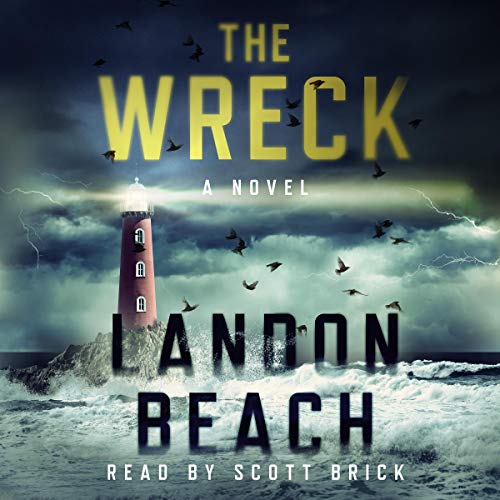
The Wreck by Landon Beach 2020 / Read by Scott Brick 7h 9m Rating – C / crime
Nate Martin, a high school science teacher by trade, is on vacation with his wife at Lake Ontario where he at least partly grew up. While walking on the beach he finds an unusual coin. A bit of research shows it to be a French coin from the 17th century.
Meanwhile, some super-rich have found the area and are busily gentrifying it. One of the new residents gets word about the coin find and wants to see if he can get in on anything worth any money. He sends his lawyer, who has problems of his own, to check.
In all my years of reading I somehow never got around to reading this. So when I noticed I got it and put it on my Wish List. Okay, fine. There it sat for a few years, probably until it went on sale. Then it sat in my To Be Read folder which I had to create after several sales left me with a small bundle of books I had yet to read. And it sat there for a few years.
All Quiet on the Western Front By Erich Maria Remarque Translated by Arthur Wesley Wheen 1929 / 304 pages Read by Frank Muller Rating: 8 / classic war book
Now, having made a commitment of sort (notice the waffling?) I started in.
Yes, it’s a slow, beautifully written (or at least nicely worded) meditation on the existential human tragedy of war and on what it took out of a young man of the early-20th century.
It was authored by Erich Maria Remarque about 10 years after the Great War in which he fought and it went on to quickly became a top seller causing a small stir. Pacifists loved it, but in Nazi Germany the book was banned and burned I don’t know why I even got it except I wanted to be able to say I’d read it I’m usually averse to war books (and movies) although I got over the worst of my aversion when people told me how wonderful several war books (or films) were and so I tried them. It’s probably been years since I read any kind of war book and times have changed.
Here we have a young German, Paul Bäumer, at about age 18 who just joined the military because Germany has gone to war. I’ve read plenty about European and the US before, during and after WWI, and it’s been fiction and nonfiction. I was a history major and kept up as a kind of history buff. I think it’s just interesting to me.
Although the narrative of All Quiet on the Western Front gets pretty graphic: “A blow from a spade cleaves through his face” books which focus on violence get much worse today. Also, much of the language is way out of date so that helps to distance the prose and the story from this reader. He’s tying for beautiful writing about horrible things. Writers today just invent as horrific a story as they can and see if they can write about that. I don’t like that either. Life is too often grim enough without adding to it.
As I said, I think times have changed. This was the first book of what became known as the war genre. There have been lots of similar books since. Of those few I’ve read, this may be closest to a book called “The Things They Carried” by Tim O’Brien. The spirit seems to be that of the few anti-war movies I viewed. The only war book I’ve read which is not anti-war is The Matterhorn but that was taken up by anti-war activists.
Another on-sale book. I buy these sometimes in case I hit a lag for some reason I’d have a good crime mystery to keep me busy. I’ve never read this author before but the Audible blurb made it sound like a good thriller from 2020. It is that.
A Deadly Influence by Mike Omer 2020 / (443 pages) Read by Jesse Vilinsky and Fajer Al-Kaisi Rating: B+ / crime-thriller (1st in a series)
Abby (Abihail) Mullen is a hostage negotiator with the NYPD. One night a very old and distanced friend Eden Fletcher, calls her, hysterical, because Eden’s 7-year old son has been kidnapped. The women were connected at a difficult, tragic time in their pasts. Today they both have difficult private lives but everything has to be put far aside to take care of this immediate problem which leads into all sorts of thrills, chills and side trips.
I read this specifically because August is “Women In Translation” month. I read three other books earlier this year which could have done it and two of them were also by Japanese writers, but I wanted something new. Fwiw, I really enjoyed the others, too, they were:
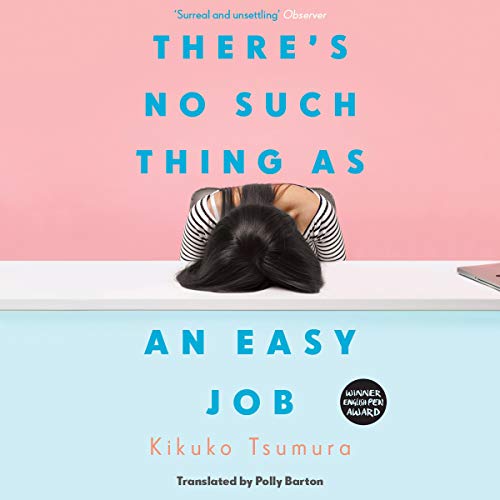
There’s No Such Thing as an Easy Job by Kikuko Tsumato Translated by Polly Barton 2020 – 405 pages Read by Cindy Kay Rating: 8.5 / contemporary fiction
There’s No Such Thing as an Easy Job is the story of a single, 36-year old woman who has left a job due to a nervous breakdown and is now working at temporary jobs. The book follows her through five different temporary jobs, each of which is a few weeks or months long and none of which really fit. When she leaves her original job she’s almost allergic to stress but over time it seems like she takes it on herself. Overall, it’s almost more like a book of connected short stories in which the tension builds gradually.
The jobs she works at include surveillance of a probable smuggler, writing ads to go in a bus service, working at a rice-cracker company, putting up posters for community services, and a ticket-puncher at a museum/park. She comes across some underhandedness, there’s maybe some magic hinted at and then there are some investigations. Strange and surprising things happen at each job and as time passes and she changes – as would be expected.
This is a new book in the Hackberry Family / Holland Family series. I’ve been reading these books for many years but at this point it’s only as they come out. I’m tempted to go back and reread some of them.
Another Kind of Eden by James Lee Burke 2021 / read by Will Patton 6h 19m rating: A / crime (Hackberry / Holland series which aren’t necessarily in chronological order.)
Actually, someone mentioned Neon Rain on the 4-Mystery Addicts list and that got me thinking but within a day I discovered this new Holland Family book by Burke. Oh yes!!!
Back in 1995 or so I discovered In the Electric Mist with Confederate Deadwith Confederate Dead and I’ve been stuck on James Lee Burke ever since. But the first Holland Family book was probably Cinnamon Rose back in 2000 or so. Then I found Lay Down My Sword and Shield which was first published in 1971 (?) but ereleased and I’ve kept up with the Holland stories. I’ve actually only kept up since I got online with Amazon in 1996 – then I could easily get the books I wanted, pronto!
I like the Dave Robicheaux books best, but the Holland books are close except for one thing – more below but maybe also I just got used to Clyde Purcell (Robicheaux’s sidekick) and am more familiar with the the characters of that series.
Anyway! This time we have Aaron Holland Broussard again and now it’s the 1960s. He was featured in The Jealous Kind which was set in Houston of the 1950s. Aaron is the grandson of the elder Hackberry Holland who was in The House of the Rising Sun. From what I gather, between books Aaron went to college and studied writing because he talks about that.
So much for all that. In “Another Kind of Eden” it’s the early 1960s and Aaron Holland Broussard is out of college.(It’s mentioned that his father was from Bayou Teche which happens to wind east of New Iberia which is the general location of the Dave Robicheaux books). Now he’s riding the rails (instead of the range like his great-grandfather Holland) and looking for a novel to write. He’s working rather lamely at various places in Colorado where he finds himself caught up with some “beatniks” and drugs and some ugly trouble and a bit of mysticism as well as love with an artist . There’s a pretty good mystery plot in there, too, btw, fwiw. Heh.
The books all use what is essentially the same theme, good vs gritty evil. And they all have the metaphor drenched prose Burke is known for, the settings change is all.
In the Robicheaux novels the plot is soaked in incredible Biblical type prose with some Arthurian legend thrown in and set in the lush Louisiana Bayou country. For the Holland novels the setting is in the deserts of Texas, Colorado and Mexico. The prose works much better in the setting of Spanish Oaks and sugar cane with a lazy river winding through it – that might just be me, the desert setting also works as a rendition of hell, but that’s a bit stretched.
The Holland family stories are more historical and they’re based on Burke’s family history. These books are basically all stand-alones but the characters are connected in the background.
This book could have been a textbook in one of my graduate courses in Public Administration. It’s well enough written and enjoyable IF you are motivated to read it. For most readers, it’s not a book to cozy up with on a stormy night. It’s pretty much straight forward reporting of the problems we have with decision-making and using good examples to demonstrate. The all-nonfiction reading group chose it for the month of September, 2021 and that’s why I read it.
Noise: A Flaw in Human Judgement by Daniel Kahneman, Oliver Sibony, Cass Sunstein 2020 / 386 pgs Read by Jonathan Todd Ross Rating: 7 / Social Psychology (Both read and listened)
But it got a few good reviews and it sold well because of Kahneman’s name and his own book, “Thinking Fast, Thinking Slow.” He won the Nobel prize in economics (2002) and Michael Lewis wrote a biography (“The Undoing Project,” 2018) of him and his long-term work-mate, Amos Tversky.
I think the major thrust of “Noise” is to answer the question of how to reduce errors in judgement which are due to “noise.” This noise in various forms shows up all manner of activities, medicine, law, business, education, investing and insurance adjusting to name a few.
Why do “experts” disagree? Why do studies disagree and show different outcomes? What are the “noisy” errors? Why do interviewers choose the candidate they do? There are many kinds of judgmental decisions. When extraneous material gets is used or information is used the wrong way or is not consistent, the Kahneman book calls it Noise.
I was actually bored up to Chapter 4 because it was virtually all information I already knew- thank goodness these chapters were short. In Chapter 5 there was new material and the presentation was clear and well organized so I decided to finish it. (The book is a recent release – it includes mention of Covid-19.)
Because I studied this in my college days eons ago (personnel) and I worked with parts of it throughout my career (educational testing) and the reading groups I was involved with. This made it quite relevant to something I’d done. But the forensics, courtroom and medical parts were certainly not boring even if I had never been involved with those fields.
But although much of the information is old, it does need to be repeated because a lot of people don’t believe it and think their gut-level or intuitive judgement is better than mechanical ways. These folks resist change. Or there are workers who demand to be able to make judgement calls in some instances. And then too, sometimes we just have to make judgement calls. Do we need rules or standards to get these things accomplished?
Rules and standards are different things – rules mandate behavior, standards are more like guidelines. That comes at the end and it’s very interesting – I’ve thought some of it, but Kahneman’s book clarified it and put it into words. Like how carefully some things have to be worded.
Meanwhile some behaviors have changed – I’ve not been or heard of a solo job interview in years. They’re all done by panel and use pre-formatted questions. At school we had a dual grading system, similar to what was presented in the book, and that usually worked quite well. The reading groups I belonged to used a “mean” for the averaged ratings, but we could see where some readers generally rated higher than others and I’m sure there was some personal internal inconsistency quite often (“I was in a bad mood.”) .
The thing which made it really like a grad school social science textbook was the reliance on new vocabulary. (Science and social science books seem to do that.) Also, like a textbook, there were little “summary” sections at the end of each chapter. The graphs and tables were helpful as were the appendices.
The book itself is long and it tends to get repetitive and the style changes along the way, but there are three authors, so of coarse these things happen when you actually produce something together. But it’s all good information for folks working in academic or situations which call for evaluative or policy decision making, especially by groups. A lot of these people know what’s written out here – it’s time they put it to fuller use.
What a waste. This is the first book of a series I’ll be skipping.
The Windsor Knot by S.J. Bennett read by Jane Copland 8h 5m Rating: 3 / mystery
The publisher’s summary; “The first book in a highly original and delightfully clever crime series in which Queen Elizabeth II secretly solves crimes while carrying out her royal duties.
It is the early spring of 2016 and Queen Elizabeth is at Windsor Castle in advance of her 90th birthday celebrations. But the preparations are interrupted when a guest is found dead in one of the Castle bedrooms. The scene suggests the young Russian pianist strangled himself, but a badly tied knot leads MI5 to suspect foul play was involved. The Queen leaves the investigation to the professionals—until their suspicions point them in the wrong direction.
Unhappy at the mishandling of the case and concerned for her staff’s morale, the monarch decides to discreetly take matters into her own hands. With help from her Assistant Private Secretary, Rozie Oshodi, a British Nigerian and recent officer in the Royal Horse Artillery, the Queen secretly begins making inquiries. As she carries out her royal duties with her usual aplomb, no one in the Royal Household, the government, or the public knows that the resolute Elizabeth will use her keen eye, quick mind, and steady nerve to bring a murderer to justice.
SJ Bennett captures Queen Elizabeth’s voice with skill, nuance, wit, and genuine charm in this imaginative and engaging mystery that portrays Her Majesty as she’s rarely seen: kind yet worldly, decisive, shrewd, and most importantly a great judge of character. **************
[A] pitch-perfect murder mystery… If The Crown were crossed with Miss Marple…, the result would probably be something like this charming whodunnit.” — Ruth Ware
I’d have liked it better had the Queen not been the major player – or one of two major players rather. She’s still too much alive to fictionalize.
As I said in my first review, this book is so packed with information about Alexander von Humboldt and others of the era that it’s definitely worth a second reading. So I did it – I was sure I’d missed some stuff. And, without getting flowery or excessive, it’s nicely written, too, so I had an enjoyable time.
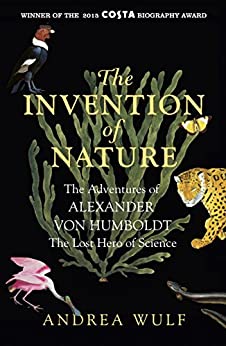
The Invention of Nature: Alexander von Humboldt’s New World x2 by Andrea Wulff 2020 / 396 pages Kindle Read by David Drummond 14h 3m Rating 10/ biog/history/science (Both read and listened)
This is great because between this book and the Melvin Sheldrake’s The Entangled World, I’m finally “getting” the concept of art and science combined, usually in nature writing. But science is usually concerned with measurement while art is more involved with aesthetics. Humboldt did it, Sheldrake did it, Thoreau did it, Haeckel did it and it’s done today.
There are so many convergences in these two books – even the science is related as Humboldt invents, Sheldrake develops. And Sheldrake mentions and gives credit to Humboldt more than once – as well as many others, of course. Wulff, otoh, also includes the art and poetry Humboldt tried to include before the sciences got so specialized. Wulff gets all the way to John Muir in traveling the courses of those who were inspired by Humboldt. (I didn’t even mention Muir in my first review!)
Today hundreds of buildings, streets, rivers, etc are named for Humboldt and yet few people remember who he was or what he did. He was a tremendous figure in the history of earth science – one of the real pioneers.
What a fascinating book! I kept getting confused about what was on the schedule for the All-Nonfiction reading group and although Entangled Life did not make the list, I kept putting it on there. And then with a member straightening me out on that, I saw the book on sale and bought it because I kept thinking it was on the list. The cover was so attractive to me although I wasn’t big on the idea of fungus and biology.
Entangled Life: How Fungi Make Our Worlds, Change Our Minds & Share Our Futures by Mervin Sheldrake 2020 / Read by author 9h 32m Rating: 9.5 / life science – nature (Both read and listened)
Finally I’d talked myself into thinking it was September’s book and decided to start reading it. Omg – it was so good. I mentioned that on the email list, because it was next month’s read you know, and several people corrected me. OMG – Oh well – I finished it up and I’ll read Noise, the next actual selection, next (maybe after a couple of crime novels).
Entangled Life is about everything from plants and algae to truffles and mushrooms to yeasts and lichens and fungi along with all the mycelium which networks in the “wood wide webs.” Psilocybin and other organic psychedelics come up for discussion, too, of course. It turns out all these living organisms share with each other so much it’s sometimes difficult to distinguish the individual boundaries. Much of this is done by symbiosis and ingestion. And our “tree of life” is not quite what we thought it was. (See also The Tangled Tree by David Quamman.)
I was absolutely able to follow the wondrously written narrative, but when I stopped for the evening I’d be mixed up the next day. It’s hard for me to review what all the book contained – suffice it to say there was a lot in this book and it’s somewhat “entangled.” That does NOT take away from the delight in reading it!
At the end and after publication, Sheldrake wets his copy of the book and lets the fungi sprout out (and takes a photo for a new cover). Then he makes mead – or that’s the story anyway. https://www.merlinsheldrake.com/entangled-life (Sheldrake’s copy of the book)
“Entangled Life is a dazzling, vibrant, vision-changing book. Sentence after sentence stopped me short. I ended it wonderstruck at the fungal world and the earth-shaking, hierarchy-breaking implications of Sheldrake’s argument. This is a remarkable work by a remarkable writer, which succeeds in springing life into strangeness again.” — Robert Macfarlane, author of Underland
Yes! Oh what a good book this one is! I should have got the Kindle version along with the wonderfully well written and narrated Audible version to start with, but I didn’t until it was almost too late and I was too deep into the book – like I was on page 200 or so out of 344 pages of narrative. I got it anyway – later or not! And after getting the Kindle version I actually started over because the book is so well-written, informative, and entertaining I wanted to catch the footnotes and source notes and pictures (there are quite a few it turns out) and so on.
Forget the Alamo: The Rise and Fall of an American Myth By Bryan Burrough, Chris Tomlinson, and Jason Stanford 2021 / (416 pages) Read by Fred Sanders 12h 15m Rating: 10 / US history – (Both read and listened )
It’s NOT a funny book in spite of the title and the cover and the introductory material. It’s the work of professional journalists (not historians) and as such, an examination of the truth vs the myth(s) about the Alamo. But it’s also an historio-graphy because the way the tale of the Alamo is told has differed since the days of its inception. And the way it’s told now is different. It depends on many things in the teller’s point of view. No doubt the way it will be told in the future will differ again! Why do the versions differ? What is the truth? Read the book.
It’s probably better for those who aren’t really familiar with Texas history so it was perfect for me.
The three Texas-based authors present an Introduction and then get on with the background to the battle of the Alamo which was fought in 1836 at a lowly Catholic mission in San Antonio, Texas which was then a territory of Mexico. A Settlers from the US slave states had been relocating themselves for several years.
Too bad. Slavery was already against the law there. But the American newcomers held their slaves anyway because farming was more profitable with them and they really needed the money to pay off their debts. Slaves were even auctioned in front of the Spanish mission known as – ta-da – the Alamo.
It’s true enough, basically, that William Barret Travis and James Bowie died at the Alamo (Stephen Austin probably didn’t die on the scene), but that’s become almost all that’s known these days about the “heroes” thanks in part to Disney and John Wayne. Austin, Bowie and Crockett were not heroes at the time and their deaths were … well … read the book.
The Alamo went through the decades of neglect and mercenary purposes then closed on the ideas the white supremacists have brought to the table vs the rights of the Texans lineage of folks other than Anglo-European who also fought in what has become a symbol of “fighting to the death for liberty.” It’s actually been a racist struggle the whole time and both politics and entertainment have been part and parcel of it. It doesn’t seem to end.
But the Alamo has given us so many fascinating “Texas-sized” characters over the almost two centuries since the actual battle, so the book covers a lot of territory in its 400+ pages. And every word is worth it.
What an absolutely incredible book about an incredible man and incredible people who were inspired by him – the beat goes on although scientists themselves interrupted it for awhile.
The Invention of Nature: Alexander von Humboldt’s New World by Andrea Wulff 2020 / 396 pages Kindle Read by David Drummond 14h 3m Rating 9.75 / biography/science (Both read and listened)
I’d barely heard of Alexander von Humboldt before this book – There’s a state university in Northern California which is named for him and it’s in a perfect spot, full of big trees and mountains and the ocean.
This is not a book I would choose on my own but that’s why I stick around some of these reading groups; they introduce me to authors and even genres I wouldn’t otherwise bother with and I’d miss some really great reads. Like this one – which probably deserves a second reading.
If there is one word I would use to describe Alexander von Humboldt the word is indefatigable. He was one of the greatest hands-on scientists the world has ever seen. He explored with open eyes and then told his world what he saw in many books and in his way, he saw the future.
Humboldt’s era was between 1769 – 1859 and he started in Germany then traveled to Spain, took a ship to South America where he explored Venezuela and other northern parts of the continent plus Cuba and Mexico (New Spain). After that he briefly visited the US and then back to Europe, France this time. Later in life he went to Russia and with Cossack guides, got to the far interior all the way to Mongolia and Beluka and over to the Caspian Sea. He tried to focus on the patterns and connections of nature but occasionally got waylaid.
He took measurements and collected samples. He studied botany, zoology, geology, and chemistry, astronomy, agriculture, forestry,
And he met people who inspired him and whom he in turn awed but some people like Goethe, Simon Bolivar, Charles Darwin and Henry David Thoreau were especially close and Wulff pays those special attention.
Fascinating in Chapter 17 how the ideas of evolution evolved over the decades.
This book is a wonderment – it makes me want to read Humboldt’s Personal Narrative or Cosmos but that would be a reach for me to do that.
Humboldt was almost as much a writer as he was a scientist and in trying to connect the parts of the earth waxed poetic. I suppose by our standards it would be an early practitioner of “creative nonfiction.” Searching for the unity of the universe – Thoreau went the same way as Humboldt but Emerson needed a revelation from God. Emerson the Transcendentalists and Kant – a class of ideas of knowledge – not from experience. This was against empiricists. Thoreau was more of an empiricist emulating the scientists in recording details of life like Humboldt. Thoreau wrote essays and “Field Notes.” He read Cosmos
And then in Part 5 there’s George Perkins Marsh the American who is considered the father of environmentalism. By recognizing the irreversible impact of man’s actions on the earth, his writings acted as a precursor to the sustainability concept. And there’s Ernst Haeckel the German zoologist who brought Humboldt’s ideas to Italy, became a convert to Darwin’s ideas of evolution, coined the word “ecology,” and did many more things including scientific concepts in art.
Humboldt State University in California was named for Humboldt but it was started in 1913 although he died in 1859. Humboldt county is a beautiful spot to be named for Humboldt and a college is just exactly what he’d want.
I finally got this – I’ve loved reading Michael Lewis’ books since The Big Short in 2010 and then went back and read a couple priors but also continuing forward. My last book was The Fifth Risk and I felt like Lewis apparently did about Trump’s new administration; Oh-oh, when will he get tested? And then came Coronavirus-19.
The Premonition: A Pandemic Story by Michael Lewis 2021 / read by Adenrele Ojo 11h 26m rating: 9.5 / nonfiction – medicine (both read and listened)
I finally bought this – I’ve loved reading Michael Lewis’ books since The Big Short in 2010 and then went back and read a couple priors but also continuing forward. My last book was The Fifth Risk and I felt like Lewis apparently did about Trump’s new administration; Oh-oh, when will this get tested? And then came Coronavirus-19.
But unlike what seems to be the point in The Fifth Risk, Trump and his picks are not the only incompetents in the building. The private sector has a bunch, the academic world has theirs, and the “deep state” is not immune.
But before I get into that, I have to say that the narrator put me off with her sweet little over-emoting voice. It just doesn’t go with what I’ve listened to in Lewis’ books before and I don’t like that kind of drama unless Scott Brick does it and even his voice gets old. Lewis has always used male narrators and one time he even read his own book
But the characters, the heroes if you will, is where this book shines because Lewis gets up close and personal. First there is Laura Glass, a 14-year old 8th grader whose science fair project on social networking and disease caught the eye of her father who worked at the Sandia National Laboratories in Albuquerque, New Mexico.
Then there is Charity Dean MD, the protagonist if there is one, who goes from a lowly county-level public health director to essentially being the acting director of the California Department of Public Health. She had a different, intense and hands-on approach to her job and an in-depth method of medical diagnosis. She was not scared to use the powers she had.
And there are the research doctors Carter Mecher and Richard Hatchett who wanted and were able to solve problems and each of whom is treated as an individual personality over the course of several years. And there are several others including Joe DeRisi researcher and entrepreneur extraordinaire.
I don’t think Lewis lucked into such a naturally great a cast of characters as he would have you believe. There are two reasons: #1 it’s he who brings out the great stories in his characters, and #2 he’s a great story-teller, his narratives sing with literary devices and life. This is creative nonfiction at its best, or, perhaps literary nonfiction might be the better term.
What did I learn from this read? In addition to learning about the chronology of events and the amazing personalities who drove their own rather insubordinate wave to get the Coronavirus under control, I learned:
FIrst, that communicable diseases are different from other diseases. The Nuvo Coronavirus doesn’t attack its victims via heredity or by way of what they ate, the Coronavirus attacks because of who the victim socialized with. Who got breathed on; who did the breathing? Also, and troubling, Covid-19 is what is known as a differential diagnoses because there are many diseases it could be so it makes accurate detection that much harder. You can’t just figure it out at home.
And second, that the CDC does research and analysis as well as implement regulations. But although it’s not supposed to simply make regulations, enforce them or determine strategy for combating disease, ever since Reagan’s time it has been political in that the director has been a presidential appointee. At that time Reagan’s base got upset about a couple things and the White House decided who was in charge at the Center. The director became a political appointee. This means the White House controls a lot of what goes on, which voices get heard, what is researched and what data is gathered. The head of the CDC is changed whenever presidents change or at their whim. With Trump, at least, it was important that data match policy, so data was changed. This last next-to-last chapter was very enlightening.
Another thing I learned is that during the early days of the pandemic there were subversives using tactics of discrete insubordination. These brave souls would either tell the truth in the face of White House rage or they’d by-pass the White House and use private, academic, or international voices. They’d use whatever they could to get the truth out there.
But just as there were insubordinates in the government there was a lot of mismanagement in the private sector, too. When it came time to provide quick and easy testing some companies were glad to help while others wanted top dollar and it still took a week to 10 days for results. Joe DeRisi simply built his own lab and got grad students from Stanford and Berkeley to assist and did it for free.
And I learned that the “We handed a whole plan for a pandemic over to the Trump administration” which was said by the Obama administration wasn’t quite the whole truth, but neither was “They handed us nothing.” There was some stuff there, but it wasn’t exactly up to date or in a usable form. Jon Barry’s book on the influenza of 1918 was at times, perhaps and in ways, a better guide on strategies.
Personally, about the style, I found the use of the “f-bomb” a bit much but then I considered the circumstances and had to admit I’d have likely been using it too – especially if I were in the shoes of some of these people and 20 years younger.
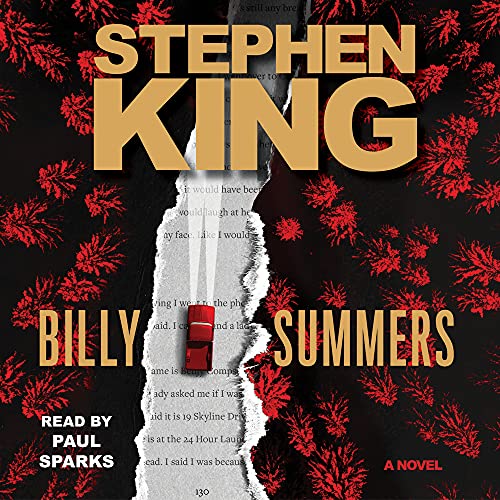
To start with, the character of Billy Summers is immediately sympathetic because as a reader of comic books he’s obviously not as smart as the reader and that’s going to excuse a lot of things. But, without telling anyone, he understands the allusions in some conversations, so he’s certainly not dumb either. What Billy is, is a hired gun, about to retire and now going out on his last job. It’s important to Billy that he only kills “bad people.” Playing dumb is part of his disguise, his cover.
Billy Summers By Stephen King 2021 / (527 pp) Read by Paul Sparks 16h 57m Rating; A / crime
I’ve never cared for Stephen King’s scary books because of the horror stuff, but this book is different. I read The Stand for a reading group and I read two of his later books, 11/22/63 and Under the Dome as they’re not horror. The former is about time travel, the latter is dystopian. I tried other King novels over the years, but for one reason or another I couldn’t ever get through Chapter 1 of them. And I didn’t care for his nonfiction either and could barely get started with them. (I have enjoyed the few movies I’ve seen.)
But I totally appreciated what King did for the US publishing industry and was very pleased when he was awarded the National Book Award for Lifetime Contribution to American Letters – because his work is important and he’s done a lot for American letters.
So about Billy Summers. Yes, as far as I know this is different from his other works. It’s just a contemporary crime novel but the point of view is that of a man who shoots bad men for a living. He’s a hired gun, the guy the mobs go to when they’re willing to pay a lot to get rid of certain people.
But shortly after the novel begins, Billy also becomes a writer putting his life story into words, a memoir. The past includes a horrendous childhood and a brutal stint in the Marines during the Iraq War. The memoir is a substantial alternating thread in the novel – a whole back story.
I do want to say that there’s a good story in Billy Summers and it winds up wonderfully well without having to have a “happy ending.” King packs his stories just as far as my suspension of disbelief will go – no further. So I really wanted to enjoy this book and I did that, but there’s still nothing substantial about it, imo. His novel 11/22/63 was better, imo, but Under the Dome wasn’t quite as good.
The idea of writing a memoir as an alternative plot line gave the novel an original and somewhat literary twist, imo.
King does very well with deep and complex character development and with twisty plots – I think this tends to make his novels long. But his general writing skills stay pretty much at a 7th grade reading level. This may be deliberate because from what I’ve seen on the fiction market, that’s probably what sells best.
I’ll keep my eye out for future novels by King and if they look like something I’d appreciate I’ll try them, but I’ll still skip the horror. I guess I’m kind of open minded in a way, about something most people either love or hate. 🙂
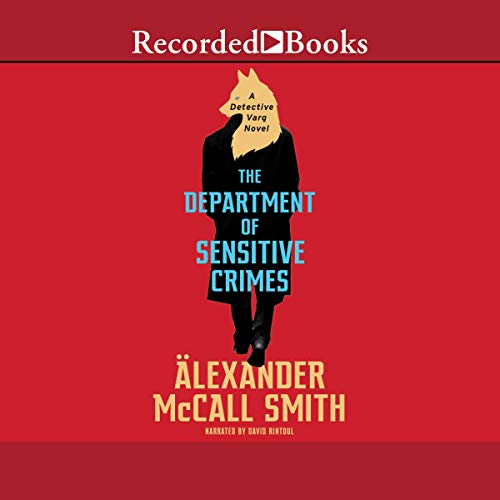
Cozy almost to the point of silly, but Alexander McCall Smith, who writes The Ladies #1 Detective Agency series, is fun for me. It took me some time to get into the mood of the story and the character of Ulf Varg. Varg is a rather mellow detective and can handle things which the Swedish criminal justice system finds tricky – the “sensitive cases.”
The Department of Sensitive Cases by Alexander McCall Smith 2019 Read by David Rintout 7h 15m Rating: B+ / humor
There are similarities to the Detective Agency books, but this series takes place in Sweden instead of Botswana and the protagonist is male. Also, Sensitive Cases is funnier in its own way.
In this sequence of cases, the first book in a new series, there is a girl who invents a boyfriend who then goes missing. And there’s the case of the man who is stabbed in the back of his knee. And there’s the case of the missing girl who has too many very real boyfriends. And there’s the case of the woman with a lover or the lover with a woman …
It’s fun – the main pleasure is the characters who are all quirky and amusing, but some are more lovable than others.










 Becky's Books -