Special  Circumstances ~ by Sheldon Siegel

I’d been eyeing this legal thriller and  so …  when it went on sale … even if I was in the middle of two very good books  …  How to Read the Bible by James L. Kugel and Shyness and Dignity by Dag Solstad …   I had to do it.

After Mike Daley,  our  first person narrator,  left the priesthood he became an attorney and went to work for the San Francisco Public Defender’s office.   He then spent several years working for a corporate law firm and was about to be made a partner.  Unfortunately,  he was fired and on his last day two colleagues were found dead in an office.  Mike’s best friend and co-worker is charged with the murder.

special.jpeg

*******
Special  Circumstances
by Sheldon Siegel
1998 / 576 pages
read by Tim Campbell – 12h 18m
rating:  B-  /  legal crime 
*******

Fortunately,   Mike has already started the set up of  a private firm of his own with his ex-wife,  Rosie Fernandez,  as his temporary partner.

This is a really flat narrative  – no texture at all.  The simplest concepts are explained,  the language is common,  there are no themes,  little to no character development,  and no interesting aspects to the structure.   It’s flat.  And Tim  Campbell’s  reading matches the tone although he tries to elevate it.

There’s a lot of courtroom drama here  – no thriller parts – with witness badgering and only a bit of behind-the-scenes investigation.  Liars abound.   The insurance parts are long and boring.   The one good part was the ending  –  almost redeeming for the book,  but I’ll likely not read another one by this author.

And now back to the two good books I already have going …

Posted in 2023 Fiction | Leave a comment

Fogbound ~ by Joseph T. Klemner

Another sale book –  (I’ve got a few much better novels lined up but … )

This is interesting in some ways but the “thriller” aspect of it seems really tacked on.   It’s a straight legal fiction involving the death penalty and autism with a good twist and a bit of nerves.

fog.jpeg
*******
Fogbound
by Joseph T. Klemner
2003 – 224 pages
read by David de Vries – 8h 21m
rating:  B+
*******

A young black man, Wesley Boyd Davies has been  sentenced to death in the state of Virginia.   His case is based on the horrific death of a little white girl back in 1985.   He’s been incarcerated for about 15 years.   All appeals have been used except for one last possibility.   (“As long as the prisoner is breathing there’s hope.)   A team of Reality Court-TV producers have taken up the case and appealed to an old anti-death penalty retired judge,  August Jorgenson,  to join them.

Here in 2017,  it’s a bit of a stretch to imagine reality TV going so far as the Supreme Court, but that’s a core plot element in Fogbound.  There are other reasons to suspend disbelief,  but it’s worth it.

August is a rather eccentric man who lives with his dog in a lighthouse without a telephone.  He reads and putters and drives his battered old truck around.

The autism of Boyd includes an uncanny ability to draw completely realistic depictions of what he sees or remembers seeing.  He’s almost uncommunicative in all other ways.  Never learned how to read or write – his mother basically looked after him after he dropped out of school until he was arrested.

The story gets going through one of the drawings and August’s poking around at the details of the case although the only thing the Trial-TV people appear to want is for someone to stand in front of the Supreme Court and give a speech.

It’s very interesting material  and for the first half it’s a lot of “tell” not “show.”   In some cases that’s okay –  it works here.  The second half has some thriller aspects.

The chronology of the narrative is completely straightforward occasionally switching between Jorgenson’s research and the production crew.   Jorgenson’s sections are mostly “tell” rather than “show.”   Only the character of August Jorgenson is in any way developed but he’s great –  like when August gets a room in a very small hotel with a black woman proprietor who also feeds him.

Overall it’s a fun read if you enjoy legal dramas.

Posted in 2023 Fiction | Leave a comment

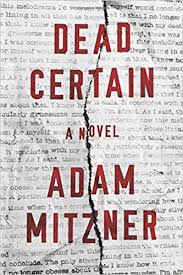
Dead Certain ~ by Adam Mitzner

On sale –  Mitzner has been okay in the past – not great crime or lit but it’s readable.   One thing is that on the surface,  this tale seems really similar to other recent crime novels I’ve read.   Daughter works in her father’s law firm (The Good Daughter),  her sister has gone missing (several I think),  and this sister has written the first half of a novel which apparently gives clues to her murder (Magpie Murders and Silkworm).   It’s a New York setting.   The lawyer daughter is one of the first person protagonists and likes to play in dangerous places (several ).

deadcert.jpeg


*******
Dead Certain
by Adam Mitzner
2017 /  348 pages
read by Erin Bennett – 8h 37m
rating:  B  /  crime – suspense 
*******  

There are several 1st person points of view here,  including Ella Broden,  the main protagonist,   Claire, the fictional heroine in Charlotte novel.  and that of the murderer.

And more than a couple of  plot twists including a guy named  Paul who comes in needing a lawyer because his girlfriend,  Jennifer,  is missing.  He knows he will be the prime suspect.  He’s thinking ahead.  She turns up dead.   And then Charlotte goes missing.

Charlotte just happened to get a book accepted for publication and has said some really bad things in it, a romance and her boyfriend,  on whom she is apparently cheating.  She changes names and calls it fiction.  The book is full of clues as to who could have snatched and murdered her.  This is the main plot.

Charlotte’s main boyfriend,  Zack,  is a Black man and therefore a prime suspect as far as the police are concerned and Zack knows it.  There are other suspects  and it’s Gabriel Velasquez of the police force who really works closely on the case.

The final twist is in the structure – not only are there three completely different points of view,  but they work in slightly different time frames.   In Part 2 a lot of it comes together.

The parts of Charlotte’s romance novel which are included in the book feel awkward and they get confusing with two names for each character but they do provide some information for the Ella and the detectives.  Ella uses it extensively and we get to read along.

One problem  with these other 1st person sections is that they’re  also told from Claire’s   1st person point of view but in the Audible version the voices are the same and the writing is not too different either.   Who is talking?   Is it Claire (Charlotte’s fictional character) or Ella (the lawyer)?   Finally,  Charlotte’s writing is not good writing – the book is a trashy romance about a woman juggling boyfriends but the clues are there.


Posted in 2023 Fiction | Leave a comment

The Scarred Woman ~ by Jussi Adler-Olsen

** Note:   This is number 7 in a series which is really best read in order! **

And it’s good stuff but not a who-done-it because we know who’s doing it – and we know who the victims are.  The problem is how in the world are the detectives going to apprehend this nut case – or – will someone else get her first?    It’s a murder-suspense-thriller of the first order with a couple of real sickos involved,  but the violence is never sexual.

The Scarred Woman opens with a Prologue set on Saturday November 18, 1995.  A young girl named Dorrit is with her parents visiting her grandparents at their large country home.  But Dorrit’s father has left following a fight between himself and Dorrit’s mother.  In the aftermath Dorrit wanders the house and finds her grandfather with his World War II treasures – photos and a gun,  a flag with a cross on it.   He’s proud of them.  But her grandmother is upset by Dorrit’s seeing it.  We know he’s an ex-Nazi,  but Dorrit doesn’t understand at the time.   What Dorrit does realize, however, is that she will always remember what she has seen.  The her mother and father break up.

scarred.jpeg

*******
The Scarred Woman
by Jussi Adler-Olsen
2016/ 472 pages
translated by William Frost
read by Graeme Malcolm 14h 25m
rating:  A /  crime – procedural
(Dept Q series #7) 

*******

Chapter 1 opens in April,  2016.  Denise lives in a rundown apartment/hotel and is nagged at viscously by her mother and grandmother although she’s not really capable of much herself  –  earns money from prostitution.  But Denise viscously spews her anger back the other two, too.

Sadly,  there is a connection between the characters of the Prologue and those in Chapter 1.

Then in Chapter 2  Rose,  a regular character employed by  Dept Q,  enters the picture.   I’ve read all six of the prior Dept Q novels –  it’s the” Department of Lost Causes” run by Detective Carl Mørck of Copenhagen’s Cold Case Division.   Rose, who has some prior mental difficulties,  works with an Arab man named Assad who is brilliant and very funny guy but he has a really mysterious past and home situation.    And there’s Gordon who helps in many ways and is in love with Rose.   The four of them make up the team working out of Dept Q’s police headquarters basement offices.

There is a group of four young women who are being hunted by someone and killing them via hit-and-run.  This resembles a case from years prior which is why Dept Q is involved.  And an old lady has also been found dead – what connects these victims?

There is an over-arching story line continuing throughout the series which involves the private lives of the members of Dept Q.   This is why it’s important to read the series in order.  But the other two threads are equally fascinating –  one thread follows the killer while the other thread follows the victims.    Good stuff,  but it’s no who-done-it.

Yes,  it’s dark – but the lack of sexual crimes helped keep it from going over the edge – for me anyway.

Posted in 2023 Fiction | Leave a comment

Marine One ~ by James W. Huston

After a week or so of heavy lit and an emotionally draining crime story,  I was so in the mood for a straightforward mystery. of the legal variety.    Lo and behold,  a friend sent a review today –  I usually appreciate and agree with his comments so I  did a sample and found it to be intriguing.   Good voice from Joe Barrett (I’ve liked him before) and so …. bought and downloaded.  (Thank you, Audible.)

marine.jpg
*******
Marine One
by James W. Huston
2009 / 336 pages
read by Joe Barrett – 12h 31m
rating:  B+  /   crime (legal )
*******

First line:   “If my radio alarm had gone off, I would have known the president was dead.”  –

It’s said that the journey is more important than the destination but in this case- the ending  fell flat –  the journey was fun though.

Okay –  seems the presidential helicopter, Marine One,  bearing President James Adams (Adams 3) crashed one dark and extremely story night killing him and all crew and passengers.

Our 1st-person hero,  Mike Nolan, is a a trial attorney who also specializes in work for helicopter companies in addition to being a Marine Corps reserve helicopter pilot.   In this case the main company involved is the European company WorldCopter and the helicopter was made in France.   These clients are so on the ball they have Nolan at the scene while the bodies are still there – (even that of the pres).   Rachel,  Nolan’s assistant,  is great – a bit slow, but always willing to do what is necessary and gets results.   Fwiw,  Nolan is happily married and has a bottle of water when he’s bone-tired while the 35-year old Rachel seems to have unwillingly given up her unfortunate love life for work.

Other companies are involved of course – the tires manufacturer,  the engine manufacturer, etc.   This is to say nothing of the There is also the problem of human culpability,  error or even  murder.

Within hours, while Vice President Cunningham is being sworn in as President,   at least one Congressman has already screamed for an investigation and it may be that a noose is being prepared for GlobeCopter at the Justice Department – but they have to look at a number of possibilities including an accident, the weather,  and terrorism –  or the Chuck Collins,  the pilot whose animosity towards Adams is known.

Voice recorders and flight data recorders with animation and simulators added reveal nothing except a sudden unexplained uncontrollability,  but the information stops immediately prior to the actual crash – during a sudden pitch up.    It looked like  Chuck had done what he could do but ….

Nolan has to find the responsible part or party –  whatever – and there are certainly more suspects than GlobeCopter and Chuck.  While the government is investigating and going after GlobalCopter.   But its owner,  Marcel,  who also flies helicopters,  and his associates are trying to point to anything else – human error.   And then a civil suit gets going with one of the vilest attorneys I’ve ever encountered.

Huston is a good writer who knows exactly how to build suspense using dialogue between characters who are on edge and Nolan’s thinking.   And Nolan, our first person protagonist,  is a likable guy with a great sense of humor.   The only thing which kind of irritated was the ending –

Posted in 2023 Fiction | Leave a comment

Do Not Say We Have Nothing ~ by Madeleine Thein

Another 2017 Man Booker short-listed novel.  Yes,  I’m a fan – I read all the short-listers every year  and a few of the long-listers, too.   I probably ought to make a category here.

In Do Not Say We Have Nothing the author has shown us the lives of Chinese musicians  during the era of Mao Zedong.   The story opens with a mother,  her daughter and a new Chinese immigrant in Vancouver discovering their common pasts –  their fathers were very close friends in China during the Cultural Revolution.  The daughter in the opening story has been wanting information on her father, an immigrant from those times,  who returned to China during the Tiananmen Square uprising  of 1989.  He never got back.  The book explores the lives of the three musicians,  Sparrow,  his niece Zhuli and Kia who is a good friend.   There are also well interwoven background stories on the family of  Sparrow and Zhuli – it’s the story of the life and socially tumultuous times of  three generations.
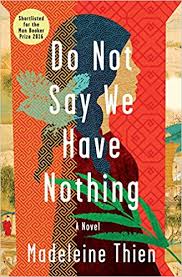
donotsay.jpeg

*******
Do Not Say We Have Nothing
by Madeleine Thein
2017 / 474 pages (Kindle)
read by Angela Lin – 20h 11m
rating 9  –  / contemporary fiction
(both read and listened)
*******

In 1989 or thereabouts,  the 10-year old Marie and her mother live alone in Vancouver since Kai, Marie’s father, Ma’s husband,  Jiang Kai, left to return to China a few months prior,  and then died there, an apparent suicide.

One day a young woman named Ai-Ming comes to stay with them as she is newly immigrated from Red China and her mother asked Marie’s mother for assistance.  Their fathers were close friends and musicians.  Ai’s father’s name was Sparrow and he and Marie’s father had been so close in China that Ma says Ai-Ming is “family.”

Slowly,  over the years they live together Marie and Ai-Ming piece Sparrow’s family history together.  Marie wants to know why her father left them and why he died.    She doesn’t get quite that far for her efforts at this point,  but she does get a lot of information.

Ma has a collection of 32 notebooks which were found in Kai’s belongings.   The “Book of Records”  is a kind of novel which was handed down from one family member to another while being hidden from the authorities.  There are a number of hand-written notes in it as well as other material.  Although it was originally a commercial novel, as it is copied and recopied it  becomes the history of the individuals who held it and read it and wrote more.   There seems to be a kind of code involved.

The main characters of what is really historical fiction are Sparrow (the son of Mother Knife and Ba Lute) ,  Kai (the son of peasants)  and Zhuli (the daughter of Swirl and Wen but Sparrow’s niece).   The three friends were exceptionally talented musicians studying at the Shanghai Conservatory in the 1960s.  Kai is a pianist,  Sparrow a composer and Zhuli a violinist. But,   Kai is a Red Guard,  Zhuli a counter-revolutionary and Sparrow tries to be neutral – to hide.  The history almost overwhelms the plot but it all works together –  these were “interesting times” as Confucius is said to have used in a curse.

“The novel is a meditation and a journey through art and revolution, as well as artistic and revolutionary violence. ”  –   Thein in   http://www.largeheartedboy.com/blog/archive/2017/01/book_notes_made.html

The inner story(ies)  takes place between the 1940s WWII and 1989’s Tiananmen Square difficulties.    There was a lot of history in China between those years, many thousands,  probably millions, of people died or were displaced,  transferred,  or reassigned.  Sparrow’s family shows the results of this.

Sparrow  is the main character in many of  the inner stories,  but each family member has his/her own sections.  This is where the “Book of Records” comes in.   It contains stories which the main characters identify with and add to.

There is an overarching motif or theme in the music which binds the characters Swallow and Kai,  Bach’s Goldberg Variations (specifically, Glenn Gould’s 1955 and 1981 versions) serve as a motif throughout the novel,  but Bach and Shostakovich and Prokofiev are prominent.  Although Mao loved western music,  these composers were banned during the Cultural Revolution.  Nevertheless,  our three musicians found the music liberating and inspiring and it was the music which truly united them.

“In the novel, silence and sound are not binaries; rather they form part of a continuous, complex fabric of life, politics, music and self.”    Thein in: http://www.largeheartedboy.com/blog/archive/2017/01/book_notes_made.html

Meanwhile,  Marie, in Vancouver,  grows up to be a mathematician who sees codes   everywhere.   The book has the feel of a symphony with many instruments working together toward a unified piece.   And there are points in the frame story of Marie and Ai-Ming  vs counterpoints in the inner story of Sparrow and his family.   Also there is the tempo,  the family themes supporting one another, interweaving,   etc.  – Even the structure and metaphors  (“… he felt like an old piano that couldn’t be tuned”)  follow the the idea of music in many ways – down to the last chapter being called,  “Coda.”

Then comes Part Zero which starts with Marie,  the now mathematician daughter of Kai and Ma, visiting China. This comes at about 2/3 of the way through the novel.

Either Thien is a true literary genius or I was in the right mood about half-way through the book!  Part 1 is a bit boring,  distant,  not quite real –  but that’s the way characters in a diary might seem.   When Part 2 starts the characters and story come alive.   Both Part 1 and Part 2  frame stories are first person with Marie being the narrator.  The  interior stories are told in 3rd person,  as though they were a part of the “Book of Records” perhaps – or at least they take off from that point.   Anyway,  the narrative gains a real immediacy from the start of  Part 2 on.

 “When and if we can, we speak (make music, write, engage, commit) and when we cannot, we listen. It was listening, not speaking, that saved me.” 
http://www.largeheartedboy.com/blog/archive/2017/01/book_notes_made.html

I only Googled a bit but from what I gathered the information included in all the history is factual – the Hundred Flowers Campaign for instance,  or the blind musician Ah-Bing and the Military Commander Zhao Ziyang.  –  this is as good as it gets in historical fiction (imo, although Tiananmen Square is not quite yet history,  for Thien (born 1974)  to examine the Cultural Revolution is.

Many photos here as well as the music:
http://donotsaywehavenothing.tumblr.com

(It’s so reminiscent of one of my all-time favorite novels,  The Goldbug Chronicles by Richard Powers  – yet it’s not in any way derivative –  nothing –   –  the only connections are Glenn Gould and music in general – and the beauty of the writing.)

Posted in 2023 Fiction | 2 Comments

History of Wolves ~ by Emily Fridlund

The setting of an old commune in northern Minnesota intrigued me and then the book, a debut novel,  got on the Man Booker Prize Short List and chosen as one of the Booker Prize Reading Group selections.   Okay fine –  (and I read it now instead of waiting for August 2018 as scheduled – heh –  I might read it again then, too).

wolves.jpeg

*******
History of Wolves
by Emily Fridlund
2017 / 288 pages
read by Susan Bennett – 9h 12m
rating:  8.75 ~ A- /  literary suspense 
*******

This novel might be disappointing for readers who enjoy the usual Booker nominees or for readers who are looking for a crime novel set in Minnesota.   It’s not really either one of those although there are both themes and suspense galore.

I’d put it in the same category as Did You Ever Have a Family?  by Bill Clegg which was longlisted in 2015 –  or Eileen by Ottessa Moshfegh of 2016.   The inclusion of actual suspense novels is not recent,  but it’s not that old, either –   and it’s a tricky category.

Anyway,   my reaction –  the book is not nearly as much about the setting as I’d hoped.  Rather it’s about a young girl named Madeline (aka Linda).  Madeline lives with her parents,  very poor aging hippies,  in an abandoned commune where she seems to have abundant love and minimal supervision.  She has few friends at school,  where she’s known as Linda,   but she’s  of the age where she wants to do things on her own and think for herself –   – it’s a “coming-of-age” story in a huge sense.

Madeline babysits Paul,  the 4-year old son of Leon and Patra Gardner, newcomers to the area.  The older Leon is gone for work much of the time while his young wife,  Patra, seems lonely and rather restless.  Madeline and Patra meet in the park and there is a rather disturbing scene between Paul and a little girl who gets hurt.

The small fictional town of Loose River is remote –  a couple hours drive from Duluth and maybe a ways north of Bemiji – I’m familiar with the area.   Madeline shares the school gossip about Lily,  a girl who is possibly having a sexual relationship with a teacher Madeline had a crush on –  but who, it turns out,  had a history from his prior job in California.

The narrative is split into two threads –  the first occurs when the protagonist is 15 years old and follows her as she cares for Paul and goes to Detroit with the family –  etc.

The other thread, set eleven years later and in present day,   appears later in the book when Linda is 26 years old and living in Minneapolis.    The suspense starts building about half way when there’s a spot of foreshadowing telling the reader there will be a trial.

The themes  – at first this book feels as though it’s a typical well done suspense novel,  but the themes eventually take over as though from underneath.   There’s family and love and guilt and belief,  and guilt and thinking.   Can you be guilty or innocent based on your beliefs – or does it have to be based on your actions?   How far do beliefs go to mitigate your actions?   –   How about in court?  How about in your heart?

One or two more things –  First – the narrator is excellent.   Okay –   second this seems like a truly good young people’s novel –  not a Young Adult novel – but a novel which 20-somethings will enjoy.   I tend to be older and want the old Booker Short List to not change from the 1980s or so – and prior.   This is more of a new generation’s literature –  just my o,  folks.

Posted in 2023 Fiction | 1 Comment

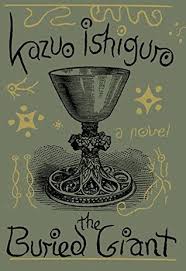
The Buried Giant ~ by Kazuo Ishiguro x 2

I first read this back in August of 2015 and although I enjoyed it to a certain extent,  it was basically disappointing because I thought it didn’t live up to Ishiguro’s prior works.  It seemed way more whimsical and fantastical and perhaps more “message”  driven.  My original review is here: https://beckylindroos.wordpress.com/2015-2/0715-2/the-buried-giant/  and I gave it only a 6 – I enjoyed parts of it.   This time I rated it a lot higher for several reasons including that I probably got some stuff wrong last time.   (My own memory isn’t quite what it used to be.)

buriedgiant


*******
The Buried Giant
by Kazuo Ishiguro
2015 / 318 pages (Kindle)
read by David Horovitch  11h 48m
rating – 8.75 – A  / literary fantasy
*******

Ishiguro is always doing new things and I’ve followed him for 6 of his 8 novels.   They’re a diverse bunch ranging from historical fiction to sci-fi and fantasy but always very literary and always with the same type of theme – memory and/or denial – possibly unreliable characters but not necessarily –

Theme:   So there’s something very familiar about the theme of memory,  but Ishiguro always handles it a bit differently.    With The Buried Giant the theme is “not remembering”  and it’s a communal issue as well as individual one on the part of Ishiguro’s protagonists.   That’s kind of the truth of all  his books – it’s just more direct in The Buried Giant.   And I suppose that’s part of the reason it’s a rather  difficult read.   “Memory is a precious thing,”  says one of the characters in the book.    –  How do you write a story where the characters have limited memory?   –  it gets repetitive in places,  it gets melancholy with a yearning for something not remembered.  This was a flaw the first time,  but it was often a plus on the second reading.

Setting:    Intriguing to the max and well done.    Back in the last couple decades of the 5h century after the Romans had left England to its own devices in fighting off the Saxons and others.  And even though the Britons had King Arthur (Ambrosius Aurelianus?  – a 5th century hero),  the Saxons eventually won the day and settled down amongst the Britons.   The book takes place at some point during this time.  (although the term viking is used at one point and they weren’t anywhere around until maybe the 8th century.)

Ah well –  I could go on but I’m blabbing and it’s fiction – lapse of memory –

Plot:  Something they call a “mist” has covered the memory of the folks in northern area of England where Axl lives in a warren with his wife Beatrice in a small  community in northeastern Briton.

The pair decide they should visit their son who lives some ways away – they don’t remember exactly where or why he left and they’re not sure where he lives. After a community dispute about their candle, the pair sets off.

En route they have a number of adventures including one with an old woman and a boatman at a river –  apparently the river of death.  The woman had wanted to cross with her husband but that’s not allowed except in really very special cases – the love and attachment has to be strong enough.

The couple, devoted to each other,  stays at a Saxon village Beatrice knows of and there they meet a warrior named Wistan who has taken a young boy under his care.   The boy,  Edwin,  has an animal bite which seriously  scares the villagers – also his mother is missing.    Beatrice is in pain and the villagers tell her about a monk named Jonas who lives at a nearby monastery  so the 4-some decides to go pay a visit.

As a little group they travel and come across some Saxon soldiers,  but Sir Gawain from King Arthur’s old knights appears and helps them.

Now there are 5 –  Axl,  Beatrice,  Wistan,  Edwin and Gawain.  The group arrives at the monastery,  but then they split up with Axl and Beatrice going one way and Wistan and Edwin another,  while Gawain and his horse Horace mind their own problems until they meets up with the others.

The ultimate quest is to destroy the great she-dragon,  Querig (whose name comes from question and query and quest and a binding of the Q to the U.)  The dragon is the cause of  missing memory.    (And I won’t go further than that.)

I wanted to love it –  nope –  didn’t happen. The trek through the middle ages has been done before and it’s been done better.    I did like it a lot though.

http://www.historyfiles.co.uk/FeaturesBritain/EnglandMapAD900.htm

http://www.smh.com.au/entertainment/books/kazuo-ishiguros-the-buried-giant-depicts-strange-anglosaxon-britain-20150224-13j5me.html

https://www.fictionunbound.com/blog/ishiguro-buried-giant

https://www.nytimes.com/2015/03/01/books/review/kazuo-ishiguros-the-buried-giant.html (Neal Gaiman)

https://www.newyorker.com/magazine/2015/03/23/the-uses-of-oblivion

http://www.zyzzyva.org/2015/04/07/finding-the-logic-cloaked-in-the-mist-the-buried-giant-by-kazuo-ishiguro/

Posted in 2023 Fiction | 4 Comments

What Are You Looking At? ~ by Will Gompertz

I’ve got a fair background in art history – about 12 graduate units for teachers via the Getty Program and Fresno State University  –  those were wonderful day-long summer classes filling 2 or 3 weeks for 2 separate years.  Plus I taught teachers in a mentor program so this is just so right up my alley.   I always was more oriented toward the history and formal analysis than the production.

whatare.jpeg

*******
What Are You Looking At:  The Surprising, Shocking, and Sometimes Strange Story of 150 Years of Modern Art
by Will Gompertz
2012/  436 pages (Kindle)
rating –  8.5   / Nonfiction – Art history 
*******

Will Gompertz,  the author,  is the art director of BBC and a writer –  used to be the director of Tate Media.  He’s well respected in the field.

The “Preface” explains the author’s inspiration and background and after that we get a formal “Introduction” which opens with a story – like quite a lot of the narrative.   This one deals with   the public’s (taxpayers) not understanding  a sculpture consisting of a rectangle comprised of 120 bricks laid out on the floor at the Tate.   That’s still a problem – how to comprehend and/or evaluate modern art.   Is it good, bad, meaningful, etc?   What is it about?    And answering this question for the layman  is the general point of the book –  to help the reader/viewer adjust himself to the ideas behind the modern and contemporary art he sees in books and museums.

What is art?  At this point,  it seems that’s really just a question of  “Where a piece fits into the modern art story and why .”    If you understand the historical context you’ve got it – just apply that to the works of a specific movement and why those ideas were explored.

From Chapter 1 where Gompertz describes Duchamp’s “Fountain” (1917) –   a urinal as sculpture – and its effect on the art scene,  and Chapter 2 with the difficulties in the French Salon system,  all the way to Chapter 20 where the new “entrepreneurials” of the 21st century have entered the scene,   the book generally outlines the schools and most important artists of the last 150 or so years.

Over time,  the idea behind the work became more important than the piece of work displaying it.   This is important.

The “ideas”  opened several art movements including Dada, Surrealism, Abstract Expressionism, Pop Art and Conceptualism.   Marcel du Champ is unquestionably the most revered and referenced artist among today’s artists from Ai Weiwei to Damien Hirst.

The idea is more important than the medium –  more important than the skill – so this is basically a matter of putting philosophy over technique.   Has it produced dogma in the colleges at the expense of craft?  –  Is du Champ a genius who liberated art as Galileo liberated the intellect?

In the remaining the chapters Gompertz looks at the art world starting from the Impressionists who had the idea that the realism of the immediate outdoors with light were important.  The Impressionists, following ideas hatched during the French Revolution,  were probably the most radical of all artists in the history of art and they were fighting the Salon which was stuck in the art of the 17th century – the art of the Kings – the art of war and religion – the art of the aristocracy.   The Impressionists challenged all that  –  and they won.

I’ll quit the spiel now and let you read the book-  it’s good – for many levels of reader,  interested layman through professional.

Gompertz’s style is chatty and informal – no dryness here,  but at the same time there’s a LOT of information.  Reading one chapter at a time was about as much as I could take.

http://www.npr.org/2012/10/25/163193516/bbc-arts-editor-allays-your-art-fears-in-looking


Posted in 2023 Fiction | 3 Comments

The Gustav Sonata ~ by Rose Tremain

In post-WWII Switzerland two boys meet in kindergarten.  One, Gustav Perle,  is the the only child of a widow,  Emilie Perle,  whose husband was killed during the war “saving the Jews.”  The other,  Anton Zweibel,  is the the only child of a Jewish banker and his wife whose family recently relocated from Bern to Matzlingen, a very small town in Switzerland.   The two boys become fast friends.

gustav.jpeg

*******
The Gustav Sonata
by Rose Tremain
2016 /  256 pages
read by Derek Perkins  8h 33m  
rating:  9  /  contemp fiction 
*******

It turns out that Anton is able to play the piano exceedingly well.  His family also has money for buying the boys ice skating tickets and treats.   The boys are welcome at each others’ homes,    but it’s known that Anton’s family comes from a “different world”  where much nicer things are available.  Nevertheless,  Gustav visits Anton and hears him play the piano.  After a few years go by he goes on vacation with Anton’s family to Davos where the boys invent a very spooky game in an abandoned hospital.   This is probably 1952,  the boys are 10 years old.

Then the story skips back to 1936 or so when Eric Perle and Emilie meet,  fall in love,  have a child,  as well as a lot of trouble.  The Jews are immigrating to Switzerland in large numbers and a cut-off date has been put in place.  But Eric is a good man.  And he and Emilie have troubles, too.  And Gustav is finally born.

And back to 1950s through the end of the century – and the boys,  now men, are still friends.

I love this book –   exquisite.  It’s not a 10 because it’s pretty much like a lot of other books but more nicely done.  There’s a melancholy to it which is pervasive and music-like.

I hate to go into it more than that because of spoilers.  Tremain is a wonderful author.  The characters are complex and lovingly drawn,  the plot is twisty without any kind of crime or contrived plot device.  The language is careful and realistic.

Enjoy.


Posted in 2023 Fiction | Leave a comment

The Soul of an Octopus: ~ by Sy Montgomery

As I’ve said many times – my choice in nonfiction does NOT run to any form of the life sciences.   That said (again),  I do read whatever folks in the All-nonfiction group decide to read and over the years there have been some really pleasant surprises in the biology department.   So  when  The Soul of an Octopus  turned up on the discussion schedule I approached it with a fairly good attitude.   I tried.

I usually listen to audiobooks – and often reading along with them –  and this was available in that format,  but the voice in the sample was too squeaky for my tastes so I went with the Kindle alone.   Good thinking.  The book is,  to me,  odd and pretentious enough without the author squeaking her enthusiastic narrative in my ears.

octopus.jpeg

*******
The Soul of an Octopus: A Surprising Exploration into the Wonder of Consciousness
by Sy Montgomery
2015 / 272 pages
rating  7.5  –  literary science/zoology  
*******

How the heck does this woman with no formal background in the sciences think she’s a close friend of some octopus named Athena?   They bond at first sight.  (omg) and Athena obviously misses her after being apart  a several weeks.   (This sounds like a lot of mush to me.)  They cuddle.

Her educational background is in psychology and literature which actually make a pretty good fit for what she does.  She writes well about animal behavior and emotions,  not about their anatomy or physiology (although that comes into play very lightly).    She is also apparently able to befriend and get close to animals either in confinement or in the wild.  I think no one can teach another person that.

Her point with this book is to convince us readers that animals can not only think and process information (use it for problem solving) but they have feelings such as sad, glad, mad  and afraid.  She wonders what they “think” about and how it feels to be them.

Okay – if we assume that animals have some kind of consciousness (see subtitle – “An Exploration into the Wonder of Consciousness”  and that they have some problem-solving skills (see Are We Smart Enough to Know How Smart Animals Are? by Frans de Waal – a book I really appreciated)  what is this book about?  –   There’s no introduction so Montgomery isn’t specifically saying what she wants to tell us –  no way to tell if she accomplished her goals or not.   “An Exploration…”   okay –  the subtitle says it but …

The best I can do is look at her website:  Sy Montgomery http://symontgomery.com/about-sy/  and there she says:

“We are on the cusp of either destroying this sweet, green Earth—or revolutionizing the way we understand the rest of animate creation,” she says. “It’s an important time to be writing about the connections we share with our fellow creatures. It’s a great time to be alive.” She speaks frequently at schools and museums, libraries and universities.”

She’s just trying as best she can to understand animals and share her findings with the world.   Well – if they have consciousness plus cognitive and emotional content or skills then they don’t have language and can’t tell us –  they can’t say stuff like “I liked the shrimp you gave me yesterday for lunch better.”    We have to guess what they’re thinking and feeling by their actions and behaviors – tiny actions and behaviors sometimes.   Or their smells or appearance.  We have to really get to know them individually –

So back to the story arc –  because there is a certain novel-like “plot” chronology to the book,  Athena dies,  but a couple weeks later a new octopus is introduced to the tank.  This is Olivia and Montgomery has another immediate bonding,  But Olivia is already old, she’s  ready to have eggs and then die (because that’s what happens).  But there is no male octopus to fertilize them.

Meanwhile,   a very young octopus named Kali  is sent to the aquarium.   Montgomery now meets this one (another female)  as she continues  to visit and hang out with the folks and fish at the aquarium in Boston.

Along the way she picks up tidbits of information which she passes along to her readers –  like about how octopuses  (not octopi as Montgomery carefully explains in the first chapter) change color with their moods, about slime and about the lack of social instincts in octopuses.  Also addressed is what octopuses eat, the impact of losing their shell at some point during evolution,  tool use and other matters.

Very important is their ability to recognize people and play and solve problems (to escape).

Then comes a paragraph about a “collective universal consciousness”  which wanders into the Bible with Paul’s letter to the Philippians and the “peace that passeth all understanding.”

Quite a lot of the third chapter is about the other people who work and volunteer at the aquarium.  Sy gets a badge which allows her to visit the aquarium at various hours including when there are no visitors.  With this she also gets access to behind the scenes parts.  She’s called an “Octopus Observer.”

In Chapter 4 her “friend” Olivia from Chapter 2 is now laying eggs.   So that’s where Sy is headed.    She reminds us of evolution back to ??? –   and of octopus adventures with eggs.  (They hang them in long strings in little self-made hideouts.)  But Olivia lives a relatively long time after her eggs are strung and she cares for them lovingly (that’s what is described).  This is very sad.

The info is not in any way presented as cold hard facts,  but rather told in a series of stories heard from others –  anecdotal experiences.  And although I’m having some issues with the some of the material –  Montgomery can be a terrific writer.

She tells us of her great difficulties in scuba diving in the Caribbean where she went with a group to find octopus and other creatures in the wild.  She talks to co-workers.  The new octopus is very small and smart and it also dies when it escapes its barrel.

On the other hand there are long stretches of really boring material here –  how in the world would any writer get this reader interested in how an octopus was shipped from Asia to Boston in a carton,  the arrival of the carton,  the opening of the carton?  – And then Montgomery talks to the new octopus –  “Who are you?”  she asks.

“What drives these animals to make the choices they do? –  Why pick this mate, and not another?  Why choose this route,  this fight, this den, and not that one?  Is this random behavior or conditioned by experience?  Robotic responses to outside cues?  Instinct?  Do animals – or pope – have free will?
“Though the question remains one of the great philosophical debates of history, if free will does exist,  research suggests,  it exists across species.”  –    (pp 190/191 – Kindle)

And in Chapter 7 Montgomery makes the case for animals having choices and making them –   I’m not sure the data reveal what she says it does but it could be.   And she takes it further to say that animals make choices based on emotions.   This is her point in the whole book – she builds the reader up to it.   She gets close to us and to the animals. she studies them and finds this out.  Octopuses have personalities and preferences and can solve problems and I guess that’s a kind of consciousness.

Yes – and it’s a refreshing break from the fear of anthropomorphizing any creature other than humans but I get a wee bit aggravated when it goes too far.

Sy Montgomery recommends these books:
Orion Magazine:   https://orionmagazine.org/article/deep-intellect/

Video of eggs and hatching –  https://digiphile.wordpress.com/2011/06/23/giant-pacific-octopus-hatch-offers-poignant-reminder-of-natures-wonders-video/?utm_source=feedburner&utm_medium=twitter&utm_campaign=Feed%3A+wordpress%2Fdigiphile+%28digiphile%29

Review:   https://www.scienceandnonduality.com/the-soul-of-an-octopus-a-book-review/?gclid=Cj0KCQiA0vnQBRDmARIsAEL0M1kEw2o3YKpZKJZUh6hT1TdIVIcLgRyFS4Fn6-DwYZCOA4CICa5j77saAqHiEALw_wcB

Posted in 2023 Fiction | Leave a comment

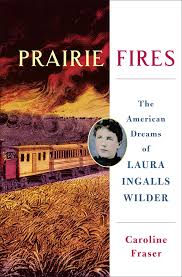
Prairie Fires: ~ by Caroline Fraser 

Amazing book!  I wanted to read slowly to fully savor and digest the material,  but I just couldn’t.  Hour after hour I sat listening via my Mac and reading via the iPad/Kindle.   I broke only to stretch and do something in the kitchen or laundry room.   This is a goodie if you’re at all interested in the Little House on the Prairie series or their author and her daughter (Rose Wilder Lane) as well as the times in the US –  1860s – 1980s and on.

I can only compare it to “Eden’s Outcasts: Louisa and Her Father”  by John Matteson which won the Pulitzer several  years ago,  another really fascinating literary biography I thoroughly enjoyed.


prairie.jpeg

*******
Prairie Fires:  The American Dreams of Laura Ingalls Wilder
by Caroline Fraser 

2017 /  640 pages (Kindle)
read by Christina Moore 21h 26m
rating:   9   /  biography 
(both read and listened)  
*******

As a kid I read all the Little House on the Prairie books and loved them.  They were like a piece of my own history what with my ancestors settling in Iowa and Wisconsin  in the 1840s and then eastern North Dakota in the 1870s.   It never crossed my mind Wilder’s  books were completely true so I was never terribly disillusioned by the rumors I heard later.  And of course I knew from my grandmother that life had been hard when she was a girl growing up on a North Dakota farm in the late 19th/early 20th centuries.

Wilder’s  series has always been officially published as fiction although marketed as “true” with an “open” classification.  –  (think memoir?)      The books are based on Ingall’s memories which she hand- wrote on Big Chief tablets (and the backs of envelopes, etc.)  over a long period of time – starting when Wilder was about 44 years old and earning money writing columns for rural magazines.   She had started the project at some point just to write it down,  but after her daughter became a published author the idea these memories might be published as books was born.  –  And eight books later … Ingalls is an icon.

It seems there’s almost nothing actually invented,  rather Wilder (or Lane) edited a lot of her life OUT of the books.  There’s a significant amount of tragedy missing because her life was on the frontier and it was very difficult.  Too difficult perhaps for children’s books of the day.    Ingall’s childhood was not exactly one of little girls running through the sunflowers and jumping into the arms of the bare-chested Michael Landon.  So the true stories were edited and a couple of them got mixed around as to chronology.
Did that matter when, in 1893,  the Census Bureau had declared the frontier closed?  By the 1930s folks were ready for a little nostalgia.

The surprise is that the books were more fact-based than I’d probably given them credit for,  although they are fiction,  good historical fiction for children.   In fact,  the first third or so of Fraser’s Prairie Fires reads like an adult version of the children’s books with more hard times,  less heroizing,  more history and digressions and less sentimentality.   It’s definitely a biography but I felt like I’d read it before.  lol

See Laura Ingalls Wilder at  https://en.wikipedia.org/wiki/Laura_Ingalls_Wilder  but PRAIRIE FIRES is far more detailed with impressive source notes and literary value.  Fraser did her homework and it shows.

That said,  at the time of publishing (and again in the following re-publishing)  it was pushed as being a “true” story by the publishers and by Rose as well as by Wilder herself.  It “felt” true to her – it just wasn’t the whole story.   It shaped a lot of what we consider to be our US heritage –

The real Laura Ingalls  and Alonzo Wilder married when she was 18 and they eventually had one surviving child,  a daughter named Rose Wilder.
See Rose Wilder Lane at:  https://en.wikipedia.org/wiki/Rose_Wilder_Lane

Part II limns the lives of both Rose and Laura,  with some emphasis on Laura,  after the start of Laura’s career in small town newspaper reporting.  She was still only 44 years old and she learned how to write with her own voice,  her own stories starting to pop into her columns which were fairly popular.

At a certain point in the book Lane becomes a focus almost equal to Wilder.   Fraser has much to say about her from her teen years on through her massive literary and political career on up to her death.  It’s a biography of Lane as much as it is of Wilder.

This was the era of Ida Tarbell and Upton Sinclair and muckraking –  Rose Wilder Lane turned out to be one of the leading proponents, along with Ayn Rand,  of the American libertarian movement which NOW means (the opposite of the progressives but in that day it didn’t really).

Rose was also a kind of Kitty Kelly of the day.   Her “autobiography” of Charlie Chaplin was challenged in court,  but she was defiant.  She also used Herbert Hoover, Henry Ford and Jack London.    Rose had no scruples about her work or selling it.   “Make any promise, no matter how misleading;  take every advantage in selling a commodity, whether a piece of property or a piece of writing.”     Basically she wrote unauthorized  “autobiographies of men she didn’t know.”    (Chapter 7).

In the 21st century it’s possible Rose might have been diagnosed as bi-polar.  If not, I’m sure she was certainly something else,  going on spending sprees and working sprees and entangled with her parents, perhaps to an unhealthy extent.  She blamed herself without insight according to Fraser,  but then wrote chirpy memoirs about her times in Europe or fictionalized stories about Ozark country.

As the tumultuous lives of the women go on,  Fraser interweaves the history of the US.  It seems that after the first couple books  Rose was used the same stories Laura wrote up first.    It was Laura’s material really,  but Rose approached it in a very different way – an adult and a political way.   Laura had her stories and had written professionally as a columnist for small town newspapers,  but Rose had the big city expertise.  It was a collaboration.

In many ways Fraser has kind of cast Rose as the emotionally disturbed one in the relationship and Laura as a more solid soul.

The socio-economic and political history of the US is also a feature of the book.  From the Homestead Act of 1861 to the televised version of the book,   the story of the evolving dynamics of American socio-economic and political life is recounted in relation to Ingalls and Lane and their attitudes.

The book is not without faults – Laura might be too much the heroine with Rose the villain.    Early on Fraser admits Laura might have been a bit sharp-tongued,  stubborn and tight-fisted,  but it’s Rose who seems to get most of the blame for the mother-daughter difficulties.   Similarly, Lane and  Ingalls’ agent, Roger MacBride and Michael Landon are not shown in good light –  but maybe that’s the truth of it.


Posted in 2023 Fiction | Leave a comment

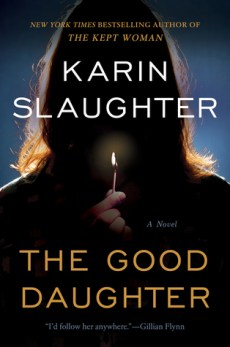
The Good Daughter by Karin Slaughter

Sad,  sad, sad.  Slaughter writes well using some creative devices and she contrives some interesting plots.  The trouble is that some of the material is so graphic and gory it’s ugly –  and  somewhat gratuitous (because it wouldn’t have to be there).  Also,  she has no problem with getting into realistic sex –  or at least sex talk.   Furthermore,  she pads up a good crime story with the gut-wrenching emotional issues of the protagonists.  (It’s trash.)

I read Slaughter’s  book Fallen several years ago and although the storyline and writing were good,  it got a bit too graphically gritty and sexy/romantic for my tastes.  Nevertheless,  when her new one,  The Good Daughter,  was chosen as a discussion read in the 4-MA group I decided to give her another go.    Okay fine –  it’s a good story well told, but unfortunately filled with what I guess is the usual extra crap.

The first part – a very long Prologue – is pretty gritty and there’s some ugly talk,  but it was manageable.   The wife and daughters of a good but despised local defense attorney are ambushed in their own home and mom dies.  There’s more but no spoilers.)    This was in 1989.

gooddaught.jpg


*******
The Good Daughter
by Karin Slaughter
2017 / 528 pages
read by Kathleen Early –  17h 52m
rating: B  /   Crime  (gritty)
*******  

Twenty-eight years later,  in 2017,   Charlotte (Charlie) Quinn,  one of the victims of the attack,  is a married-but-separated defense attorney in Pikeville, the same town she grew up in.  One day she has reason to visit her recent one-night stand where he teaches and gets involved in a school shooting with rabid cops and innocent by-standers.   The school principal and a little girl,  Lucy Alexander,  are killed.

So Mason Huckabee,  the man Charlie went to see was right there on the scene, too.    Old memories and new dangers attack all at once.   And it doesn’t let up. Charlie finds herself interrogated as a witness and her own past interferes with her recent experience.    

To make matters worse, Ben Bernard,  Charlie’s estranged husband,  who another defense attorney,   is pretty shaken when he finds Charlie was at the school and when he understands why she was there he’s  outraged.    There are parts which turn into steamy romance.   Yuk.

Meanwhile,  Rusty Quinn,  Charlie’s widower father,  is still practicing law,  but he’s mostly concerned with television and fame.  He’s not exactly pronto for his daughter’s case.

Then in Part  Samantha (Sam) Quinn re-enters the picture.  Charlie’s sister,  Sam was a part of the first shooting in which their mother died.   So we have to revisit the opening scene from Sam’s point of view.   At this point,  in the current time,  she’s an attorney  and a widow who has stayed away from Pikeville both at her late mother’s advice and also because there is nothing but horrible memories for her there.

But now starts the bit of legal story included.  There isn’t much but there is a flavor sometimes.   How to best protect the rights of young Kelly Wilson who has been arrested for the school shooting?   Kelly is a a very innocent young woman,  barely 18 years old,  and she’s a slow learner with an IQ of about 75.   There are more twists all the way to the end.

The book is too long and emotionally draining.  Slaughter knows all the tricks to keep the suspense up and give breathing room between high points.  Kathleen Early is a great reader for this type of thing.   I think there is just so much intensity packed into the book – and it’s raw stuff.  –  Meanwhile she’s a good writer so …

Posted in 2023 Fiction | Leave a comment

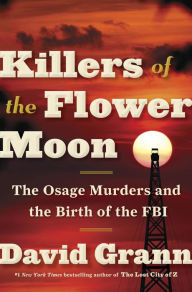
Killers of the Flower Moon ~ by David Grann

I’d been so tempted by this book but for some reason I waited and waited until finally it got nominated for the National Book Award.   Then I waited some more.  Why? Because the narrator was NOT going to be to my liking.  I listened to a sample and read the reviews – nope.   But it stayed on my wish list until I really didn’t know what to read next and I also figured maybe if I got the Kindle book along with the Audible version I could handle it.    Well –  that worked pretty well after I got through the first third of the book.

killers
*******
Killers of the Flower Moon
by David Grann
2017 / 340 pages  (Kindle) 
read by Anne Marie Lee, Will Patton, Danny Campbell  8h 53m
rating: 8.75 /  historical true crime
(read and listened)
*******

This is a very good book.  The audible experience almost ruins it but, as a whole,  not quite.   The thing is that although Anne Marie is a totally poor fit,  –  like a little chirpy bird telling a really grim story – the second narrator is Will Patton.   Oh be still my heart,  yes!  He’s one of my favorites (from James Lee Burke books).   And I wasn’t familiar with Danny Campbell so that was neutral.

I understand the point of the producers trying this book with three narrators.  The book is divided into three major parts  called “Chronicles.”  They are; . “The Marked Woman;”  “The Evidence Man:”   and “The Reporter.”

“The Marked Woman”  focuses on a woman named Mollie Burkhart, a resident of the Osage settlement town of Gray Horse whose family was decimated by the murders of 1924.   Mollie’s sister was one of the first Indians killed in the disaster.   The producer’s idea was that this part of the story would be narrated by a woman’s voice.   Great idea – wrong woman.   This section is really good in the book – it has photos of the family and biographical details about their lives.  But more than 20 other people were killed in this horrific series of murders –  most of them Osage Indians,  newly rich from an oil boom.

I kept going and when I got to “The Evidence Man” (this is from the book) – the voice changed to that of Will Patton.  Oh,  I smiled and smiled.  He reads with a bit more southern drawl than a native Oklahoman and he’s considerably faster than Lee,  but it works – kind of – better anyway.    Patton is also overly dramatic – to my tastes anyway.  This part tells the story of FBI lead agent on the case,  Tom White,  and his investigation of the whole mess under the direction of J. Edgar Hoover and the newly formed FBI.  There are several threads, many names and more than one trial as well as a bit of the aftermath for a few of the individuals as well as the FBI.    This is page-turning.  And the last lines are a foreshadowing cliffhanger.

Chronicle Three, “The Reporter,”   is the 1st person story of Grann’s research and other matters.  He reports on his actual visits to some of the locations and interviews with a few relevant people still living – descendants of the Osage families affected.   He also tries to follow some leads on the several unresolved associated murders and in so doing reveals that there were many more murders than the 24 counted by the officials.  The total was “in the scores if not the hundreds.”    The main motive was to get the headrights from the victims,  often wives and children.  According to one agent,  there was a “culture of killing”  and it went from between 1907 to 1923 and beyond,  maybe into the 1930s.  That period of time was not called the “Reign of Terror” for nothing.  This Part is like a long epilogue but it gets the story up to date and in a way makes the story alive and be relevant.

There are plenty of photos in the book and the source notes are very good –  Grann did a lot of research and uses extensive primary and unpublished sources.

http://www.history.com/news/the-fbis-first-big-case-the-osage-murders

Posted in 2023 Fiction | Leave a comment

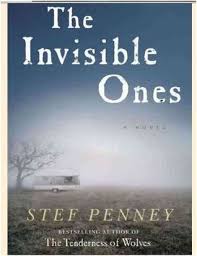
The Invisible Ones by Stef Penney

I read this just because I felt like it –  a book about a private investigator and gypsies just sounded intriguing.  And I was familiar with the author having read  The Tenderness of Wolves years ago,   so I thought I’d give this one a try.

invisib
*******
The Invisible Ones
by Stef Penney
2012 /  432 pages
read by Dan Stephens  – 11h 23m
rating:  A- /  literary crime
*******

The book opens with Ray Lovell in a hospital bed having no idea how he got there.   He knows he’s a private investigator and most other personal information,  but nothing specific whatever about what happened to him to get him in this situation.    He remembers bits about what he was working on.   A man named  Leon Wood had asked him to investigate the disappearance of his daughter Rose who had been missing for seven years.  At the time of her disappearance she’d got married to a man named Ivo Jenko.

The complicating twist is that Leon and Jenko are both from  gypsy (Roma) families and this means that virtually no non-gypsy investigator will be able to get close enough to the case to get any information.  It just so happens that Ray is gypsy although not immediately connected – his father left a traveling group and married a non-gypsy after which he assimilated into English society.   Ray was brought up in a pretty conventional manner.

All this takes place in a few chapters alternating with a secondary  plot line about a gypsy boy named JJ who is living with his mother and family on a patch of land still occupied by “blood.”    JJ speaks to us in 1st person as he tells about how he and his family take care of Ivo’s motherless son,  the 7-year old Christo who has a rather unusual genetic disease.  JJ also wonders about who his father is and which girl at school can help him.

Ray Lovell gets involved with the family while he investigates,  then  bones are found and  JJ gets food poisoning.  It’s a tangle of twists and turns with the ending being a total surprise and it ain’t over until it’s over.

This is  NOT a page-turning crime thriller but there are twists in the plot which cause the reader to bolt upright and speed along for awhile.    Mostly it’s the story of the search for a young gypsy woman but it’s also an exploration of  lives and loves  in a proud,  poverty-stricken,  ingrown family of people culturally different from their neighbors.

The theme of  “otherness” pervades every plot thread.

Dan Stephens does a remarkable job of narrating.

Posted in 2023 Fiction | Leave a comment

The Ex- ~ by Alafair Burke

I’ve been avoiding Alistair Burke because I love the work of her father,  James Lee Burke, so much (most recently read The Jealous Kind / 2016) and I was afraid of comparison assuming she’d come up short.   I was wrong.

Burke is not her father’s writer – she’s her own.  The stories are legal crime (my favorite genre) and there’s no attempt at literary value which James Lee has in abundance.

exbur

*******
The Ex-
by Alafair Burke
2016 / 304 pages
read by Xe Sands
rating: B+ / crime (legal)
*******

Olivia Randall is surprised to hear from Buckley Harris,  the daughter of a long ago ex-fiance telling her that her father,  Jack Harris, is missing.   Buckley  is the daughter of Jack and his wife Molly who was killed in a mass shooting.

After Olivia checks it out she finds Jack is being interrogated about a recent killing –  of the father of the young man who, three years prior,  killed Molly in a mass shooting.   It looks very bad for Jack.   But there are many other people who probably wanted the shooter’s irresponsible father dead –  including his other son and other victims. Besides, there were two other victims along with that father.   And how about if Jack really is guilty – or Charlotte,  a good and very helpful longterm friend,  or Buckley herself?

Jack wants Olivia to represent him because Olivia is certain he could never have done that – it’s just her gut feeling.  Besides,  she still feels guilty about the way they broke up.

The characters are well developed,  the plot has good twists and turns,  Burke writes nicely.  The thing which I didn’t really care for in this one was the narrator and I think it affected my view of the whole.   If I read another one it won’t be narrated by Sands.


Posted in 2023 Fiction | Leave a comment

The Evangelicals ~ by Frances FitzGerald

Once again FitzGerald plums the depths of a fascinating but highly complex subject,  this time  the  Christian Evangelicals of the US.    In using that term, the the author means the “Christian Right” in politics,  but the progressives are also mentioned along with other kinds of  Christian evangelicals.

The basic material covers the individuals of the movement from the time of Jonathan Edwards, before the American Revolution,  to those involved in the Tea Party and the primary elections of 2016 with,  in an epilogue,  the election of  Donald Trump.   Presbyterians, the Methodists, the Baptists and the Pentecostals are the focus with some space given to Catholics and a few independents.   The ideas of the fundamentalists as well as the more mainstream evangelists within those denominations are observed. .
evangel


*******
The Evangelicals: The Struggle to Shape America

by Frances Fitzgerald
2017 / 740 pages
rating:   9.25 /  general nonfiction
******* 

Frances FitzGerald,  whose Fire in the Lake: The Vietnamese and the Americans in Vietnam won the Pulitzer Prize for General Nonfiction and other prizes back in 1979,  does an admirable job of addressing the subject.   The book is thorough,  well organized  and deeply researched,  The writing is clear and reads smoothly.   For the most part it’s a joy to read even if it is long,  although it does seem to get a bit bogged down during the time of the G. W. Bush administration when there were so many names and groups and activities involved.   Other than that it’s a highly engaging and very informative read.    From her own site: http://www.francesfitzgerald.net

The point of the book is basically to provide a framework of understanding how this group developed,  what it’s  about, and how it is split in some ways. Today it includes close to a quarter of the US population –  but it’s changing in composition.

Going by her prior books and her articles for the New Yorker,  Fitzgerald is generally a political liberal, but certainly not anti-Christian or anti-church.  It feels there is some sympathy for the progressive element.  (And I totally get this!)

Again,  what FitzGerald means by “evangelicals” is the political Christian Right.   Most Protestant churches claim to be evangelical in some sense – a huge part of their mission is to spread the gospel – the “good news”  and to make converts.  But some denominations are more evangelical and/or  hold more conservative political views than others.  Furthermore,  some Catholics are quite conservative.   Fitzgerald,  like the mainstream press,  determines the evangelical Christian churches as being the Methodists, Presbyterians, Baptists,  Pentecostals, and some other smaller groups.  She doesn’t address the Black churches either because their whole history has been different.

Within those denominations there have been movements to and away from the “fundamentalism”  we know today –  the inerrancy of the Bible,  dispensationalism, anti-modernism, premillenialism, the ministry of healing and so on.   The denominations and sects of the various churches have had schisms and splits then rejoined and split again based on the beliefs at the time or a powerful leader.

Also there has been movement to and away from the “progressive” stands and attitudes  these churches and their leaders have taken in the past.

The Evangelicals tells that story from the First Great Awakening of pre-Revolutionary  America (1740s)  to the election of Donald Trump (in the Epilogue). .  It’s a long and complex tale with many characters and ideas which are profoundly interwoven in US history but seem to,  once again, have burst on the scene.

One point is that the early evangelicals have changed enormously from their beginnings when they thought of themselves as being revolutionary – against the establishment churches and in the 19th century many of them became “progressive”  when they were working for the betterment of society.  Today they are more of a backlash to the culture wars of the 1960s and 70s.

Fitzgerald keeps what could have been a dry tome fascinatingly readable by avoiding in-depth explanations of the theology and detailed biographies of the major players although plenty of each is provided.  Also the generally chronological structure with appropriate breaks in subject works to keep the narrative flowing.

The first 230 years,  from 1740 or so until 1970 are covered in the first third of the book and make for fascinating history.   Jerry Falwell leads up to the half-way point, Reagan’s first  inauguration,  in the narrative.  After that point there is not so much attention to linear history (although it’s there) as there is to topical issues, like intellectual backup,  and biographies like Pat Robertson.

For what it’s worth – the “Christian Right”  actually began in the very early 1970s – midpoint in the book.

Here in the midsection of the book FitzGerald pretty well covers it all – from the uneducated Latinos in LA to the upscale ivory tower intellectuals like Francis Schaeffer,   from the relatively sedate Billy Graham to the many bombastic small town southern preachers,  from the old school revivals to the Prayer Breakfasts of Reagan and the organizers like Jerry Falwell and finally,  from the big shots we’ve heard about in the media to a lot of people we’ve never heard of bulking up the various agencies and committees and foundations and other formal and informal groups and associations all struggling to get the agenda of the Christian Right,  in its many facets,  into action.

Chapters:
Introduction
1 The Great Awakenings and the Evangelical Empire
2 Evangelicals North and South
3 Liberals and Conservatives in the Post–Civil War North
4 The Fundamentalist-Modernist Conflict
5 The Separatists
6 Billy Graham and Modern Evangelicalism
7 Pentecostals and Southern Baptists
8 Evangelicals in the 1960s
9 The Fundamentalist Uprising in the South
10 Jerry Falwell and the Moral Majority
11 The Political Realignment of the South
12 The Thinkers of the Christian Right
13 Pat Robertson: Politics and Miracles
14 The Christian Coalition and the Republican Party
15 The Christian Right and George W. Bush
16 The New Evangelicals
17 The Transformation of the Christian Right

FitzGerald  was interviewed about  The Evangelicals by Christianity Today .

Fitzgerald:  “Rewriting American History” https://aplangrocksthefreeworld.wikispaces.com/file/view/11.3.14RAH.FitzGerald.pdf

Interview with NPR:   https://www.npr.org/2017/05/02/525452958/why-white-evangelicals-are-splintering-politically

http://www.nybooks.com/articles/2017/04/20/where-evangelicals-came-from/

Posted in 2023 Fiction | 2 Comments