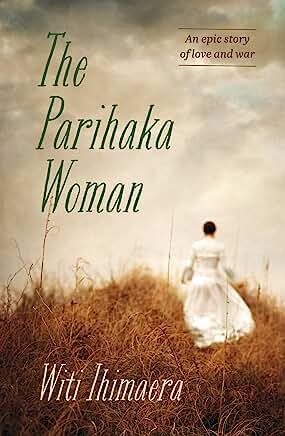
The Parahaka Woman ~ by Witi Ihimaera

This is historical fiction concerning a specific set of events in North Island, New Zealand instigated by the English who began reasonably well for the colonials. But ended up as a tragedy for all concerned. eventually depriving the Maori of most of their land with some of the Europeans trying for genocide. This was between 1840, when the Treaty of Waitangi was signed and 1974 or so when the  (?)  I really knew nothing about that – not any specifics -basically only that not a lot of Maoris were left after it “ended.”  The author is part Maori. There are many New Zealanders who claim partial ancestry from New Zealand.  

The Parihaka Woman ~ 
by Witi Ihimaera 2016
2011 / 404 pages (with 25 pages of Notes) 
Read by: Jim Moriarty, Shavaughn Ruakere: 9h 59m
Rating: 7.5 / historical fiction
(Both listened and read) 
– YA?

I was reading along and at some point I got quite interested in the history.I knew enothing about the Maori wars of New Zealand. There are very good Notes with sources as well as digressions and commentary.  They’re all mixed together but not noted in the narrative itself and not linked in any way.    

As I started looking into the actual history I become more and more interested in that and Googled a bit.  I decided I should maybe start the book over and I did.  But … this is basically a Young Adult plot stuck onto some Maori oriented history with a seriously intrusive narrator who might or might not be fictional.  

 Here’s the history behind the story.  
From: https://tinyurl.com/5cuykjy3

NEW ZEALAND HISTORY
Nga korero a ipurangi o Aotearoa
Invasion of pacifist settlement at Parihaka 5 November 1881

I tried to catch up while reading, but I think it must have been originally written with New Zealanders high school kids in mind.  Although a book may be labeled as historical fiction the reader is often simply let loose in a book having to do his own research wondering what’s true and what’s not. In this book there are pages of notes which Ihimaera describes as “Chapter Notes” but are a mix of Source Notes and content notes and a few digressions and opinions.  I love this!  

 I see that much of Ihimaera’s  historical information was obtained from the works of Dick Scott, NZ historian (1923 – 2020). https://en.wikipedia.org/wiki/Dick_Scott_(historian) 
 The inspiration was historical and the events followed the history, even the plot line itself was possibly modeled on true events – real wives searching for their real husbands without naming specific names.  ?? –   I think they got as close as they could because real names might be unknown by now or “erased” by the invaders.   

Religion is very important to the native Maori and there are many references to their prayers and songs.  

 The narrator was great.  

Posted in books | 1 Comment

Poverty, By America – by Matthew Desmond

This book, Poverty by America, is disappointing comparing it to Desmond’s prior, Evicted.  But the point of Poverty in America is very different.  Where Evicted was about showing the reader how the very poor lived on a daily basis.  The point of Poverty is how the US can end poverty in America. That means it has a wide scope with many entangled issues.  Housing, medical care, hunger, education, crime, and more have to be dealt with not to mention racism and sexism. 

Poverty by America – 
by Matthew Desmond 
3/23/23 / 287 pages 
Read by Dion Graham 5h 40m
Rating: 4 / politics – government 
(Both read and listened) 

What’s missing in Poverty are the personal stories. Evicted examined the circumstances of individuals in an up-close and personal way. The reader got into downtown Milwaukee getting to know the people who were living with the problems of being really poor, being evicted, and therefore being homeless.  Poverty by America simply describes it all and Desmond gets enraged about the enormous problem of poverty in America with very few stories of individuals trying to cope with it.  

Notice the title? “Poverty, By America” – this seems to mean that America has created it, like “Evicted” is by Matthew Desmond.

But after a decade of outrage (and probably 5 or 6 decades of involvement) I’m too old and tired to read something like this. I’m rather numb to reports of the wealth and income gap. I nominated the book for the All-Nonfiction  reading group because of the great response to Evicted.  Maybe this one is directed at Generation Z.  
https://groups.io/g/AllNonfiction

Younger people will likely not be as put off by the polemics as I am.  Desmond is an idealist – I’m not – I’m very literal as well as being a pragmatist and I wonder if these utopian ideals are possible in a world of human beings, warts and all, dealing with limited resources and unlimited demands?  Every day is a new crisis in a “media-oriented, capitalist, democracy.” (I put that in quotes because although it’s mine because none of the words can be terribly well defined.

I knew from prior reading, and Desmond reiterates, that it’s much more fearful to lose something you have than to lose out on a potential gain.  No wonder the elite fight so hard and more recently the middle classes.

I did fine Chapter 1, “Why Haven’t We Made More Progress?”  pretty interesting. The rest of the book simply explored the topics introduced there.  

The main problem, in my opinion, is based on greed and fear of loss.  I think I understood that much at the age of 10 when I started reading the newspaper. (Fyi, that was when Eisenhower was president – lol.) But greed and poverty go back to the Old Testament – it’s not a new problem which came along with capitalism, and it’s not going away if we all go socialist. Dion Graham, the reader, doesn’t help tone down the urgency in the narrative. I got tired out just listening (mostly listening – sometimes rereading a paragraph or two in my Kindle.) 

And it’s human nature to fear the loss of what you have more than to fear not getting what you’re going after. The elite (and middle class) will fight to keep from paying what it will cost to implement what Desmond advocates.  Yes, it’s here in the US,  we’re rich enough to spread the wealth – but we won’t.  There will be some way to make the middle class pay for it and their fear of loss will overwhelm the push from the bottom. It’s happening now.

Because “eliminating poverty” is such a terribly broad topic, there’s virtually no subtlety or nuance in Desmond’s diatribe. I think it’s written for knee-jerk liberals – the ones who simply want to be told what to support so they don’t have to think about it. (The conservatives are no different.)  I’m a liberal at heart, but I try to give some actual thought to the proposed solutions. Our congressmen do NOT think. They hear what the people in their districts want and try to align themselves without actually lying. They try to “represent” the voters.  

The premise of Poverty by America is that ending poverty in America is possible.  
After showing us how poverty is systemic and built into the American way of life, he most positive suggestions Desmond has to offer are 

1. Advertise to the needy so they’ll apply for aid   
2.  Go after tax cheats. 
3  Empower the poor and the working class by collecting taxes owed from the rich,  reviewing minimum wage amounts, empowering labor unions.and use collective bargaining.  Also getting employers to compete with each other re wages and benefits, and finally, make dangerously low wages illegal.  

4. Implement housing assistance in various ways.

5.  Use intervention to help the poor prevent unwanted births.  

I’m sure there were more suggestions, but they’re scattered through the last 1/4 of the book.  

Question – are minimum wage and living wage amounts the same for working folks and welfare recipients?  If living wage for one is considered to be $50,000 a year, is that what folks on welfare should get?  How about that for minimum Social Security?   I have lots of questions.  

 And finally, Desmond praised the US response to Covid – I wonder what his response to the Covid scams is.  

https://www.cnn.com/videos/us/2023/06/17/smr-280b-covid-relief-fraud.cnn

Fwiw, Desmond was awarded a Harvey Fellowship in 2006 and a MacArthur Fellowship in 2015.[2][14] He won the 2017 Pulitzer Prize for General Nonfiction, the 2017 PEN/John Kenneth Galbraith Award, and the 2016 National Book Critics Circle Award for his work about poverty, Evicted: Poverty and Profit in the American City.[15][16] His 2017 Pulitzer Prize citation read, “For a deeply researched exposé that showed how mass evictions after the 2008 economic crash were less a consequence than a cause of poverty.”[17].   And I so very much appreciated Evicted.  
https://mybecky.blog/2018/03/06/evicted-by-matthew-desmond-x2/

Posted in books | Leave a comment

Treacle Walker ~ by Alec Garner

“Treacle Walker is a stunning fusion of myth and folklore and an exploration of the fluidity of time, vivid storytelling that brilliantly illuminates an introspective young mind trying to make sense of everything around him.”
https://wyrdbritain.blogspot.com/2022/04/treacle-walker.html

*****

Treakle Walker
By Alan Garner
2023 / 152 pages 
Rating – 9.85 (to read again)
Booker Prize short list 

*****

‘Ragbone! Ragbone! Any rags! Pots for rags! Donkey stone!’

Joe looked up from his comic and lifted his eye patch. There was a white pony in the yard. It was harnessed to a cart, flat cart, with a wooden chest on it. A man was sitting at a front corner of the cart, holding the reins. His face was creased. He wore a long coat and a floppy high-crowned hat, with hair straggling beneath, and a leather bag was slung from his shoulder across his hip.” 
*******

This book is not my usual kind of read – and I’m pretty eclectic. Weighing in at only 152 pages with 18 chapters each having its own blank breaker pages, it doesn’t take much time to finish. That said Treacle Walker is NOT a light read. It’s about time and physics and the ways of young boys and old story tellers in a place where everything has a name or two.  Except the pony.  

‘What’s up with my eyes?’
‘You have the glamourie,’ said the man. ‘In just the one. And that’s no bad thing, if you have the knowing.’ 
P 45

Glamourie is a Scots word meaning a charmed condition in which everything is invested with magical properties and possibilities.”  Google it – it’s from Alice Starmore’s book of that name. 

In some places this master magic work of wonder reminds me of Winnie the Pooh, but in others it reminds me of a medieval folk tale mixed up with a bit of Lewis Carrol (or maybe a lot of Carroll), or is this James Joyce here, as in Finnegans Wake – nae, mebee cannae be that because it might be Ishiguro as in The Buried Giant. “Garner has always suggested that there is essentially just one story,” the Guardian.

https://www.theguardian.com/books/2021/nov/01/treacle-walker-by-alan-garner-review-the-book-of-a-lifetime

https://thebookerprizes.com/the-booker-library/features/reading-guide-treacle-walker-by-alan-garner

Posted in books | 2 Comments

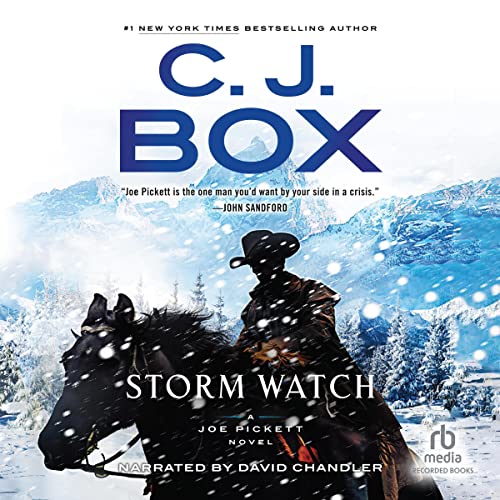
Storm Watch ~ by C.J. Box

Joe Pickett, Wyoming Game Warden extraordinaire, is out in his truck and going about his business when he discovers a dead body hanging in a building full of “sheds” – the antlers of moose which are shed in the fall after mating season.  He discovers this outside a high-tech facility, but why is it so remote? T he body is that of a professor from the University of Wyoming who has gone missing.  

Storm Watch 
by C.J. Box / 2023
Read by David Chandler 9h 4m
Rating A / western crime procedural but … 
#23 in the Joe Pickett series 

I really enjoy listening to David Chandler read the books of CJ Box, but I’ve only read 6. The latest 4 and the first 2 out of a total 23.  They’re available at my library, too, but usually with month-long waits.  Chandler is excellent, his reading skills excel at differentiating the characters and raise the rating by a whole letter grade. I’ve also read all 6 of Box’s Cassie Dewell novels, that’s actually how I got into the Joe Pickett series. 

Yes, the critics are technically right, the book is political in a way, but I guess it was within my limits because it didn’t bother me a bit except I didn’t think it was particularly realistic. A few parts were actually kind of stupid,  but the regular characters and the masterful building of suspense along with the wild and open natural setting of Wyoming are the draw for me.  

Posted in books | Leave a comment

Evans Above ~ by Rhys Bowen

How lovely to be able to kick back and read something to relax with.  Evans Above is the 1st in a 10-book series featuring Evan Evans,  a constable in Wales. This is a kind of cozy series in a way, but with serious procedural elements as a basis. There are also some very funny lines in the dialogue.  


Evans Above
By Rhys Bowen
1997 (original) 
Read by Roger Clark 6h 30m
Rating 9 for the fun
(#1 in Constable Evan Evans series) 

The village of Llanfair, Wales, has a new constable. Evan Evans has quit city life for the slower pace of the country-side. But there’s action here, too. It seems the body of an unidentified man was recently found at the base of a nearby cliff. He was apparently fell or was pushed.

Shortly after that discovery, the dead body of a London policeman was found not too far away, also at the bottom of a cliff. Are these deaths related somehow? And an 8-year old girl from a nearby town has also apparently been murdered. Scary times.

Sergeant Watts seems rather dim and thinks the two newly discovered bodies were not murders, but just coincidence. Evans isn’t so sure about that. And there’s more, just to keep law enforcement busy and on their toes. Mrs Powell-Jones is terribly upset about the prize-winning tomatoes in her garden which has been vandalized by … well … she knows who it was! On top of that (blah-blah) but Mrs Powell-Jones is a pest and there’s a LOT of sometimes unscrupulous competition for the prizes at the local fair. 

And a child molester as well as other prisoners have been granted early release so they’re on the loose, but all this got lost in the news as that was full of Thatcher and Hussein and a train robbery.  

The story is mostly procedural, with minimal romantic interest and some light dry humor.  Good!  

In March of this year I got book #4, Evans and Elle, in the series when it was on sale. I’m a bit pickier about cozies but I totally love some and because I very much enjoyed #4, I put #1 on my Wish List. Then,  a couple weeks ago another sale came along and this time I went on a little shopping spree getting books already on my Wish List which acts as a kind of “TBR pile” (To Be Read). But now (since this last sale) I’ve got a real “TBR file” I’m working on. There are 8 books in there, all lined up on my Mac screen.(And there are 150 books on my Wish List – that number goes up and down, it’s down now.) 

I had physical TBR piles before Audible and Kindle came along and I started really using them. Even with Prime it still took 2 days to get my books. Before that it might have taken 5 days to ship, but with 5 books in an order, the shipping was free so I saved up my list and when it got to 3 I always stuck in a couple more. Of course my TBR shelf expanded to 2 and 3 levels – lol. It took months and months to get rid of that, maybe a couple or three years (because I was reading my new purchases at the same time. 

So after the  immediate gratification of Kindle and Audible books my habit became to read as I bought and to buy as I read. No real TBR pile!  I’d read one book then go buy another one because whole stores were available pronto!  I read my old TBR pile down from about 200 books to I think 60? And when I left California I just left them there because I wasn’t going to have much room here in ND – the house was already full (it had been my mom’s and my grandma’s and her sister’s before me).

So I’ve been interested in reading Rhys Bowen for years because some of the covers of the “Royal Spyness” books look so enticing. The sales finally dragged me in (lol). That’s what happened with the now ended, Needlecraft series by Monica Ferris. I started at # 8 because I was wanting a Christmas book and I was so surprisingly amused I got hooked.  Ah me…

Posted in books | Leave a comment

Odd John ~ by Olaf Stapleton

This is a 1st person novel but the 1st person is usually much more of an observer than an actual participating character. Still, there are times he’s certainly involved. This narrator is unnamed and somewhat older than the eponymous Odd John who is the actual protagonist.  Odd John is born two months later than his due date, he’s tiny and kind of mangled looking.  He doesn’t walk until he’s 6 years old but he’s mastered mathematics during that time.  After that he puts his mind to whatever he needs to do and he’s able to do it.  


Odd John 
by Olaf Stapledon
Read by Nigel Carrington 8h 1m
Original in 1935
Rating – B+ / classic sci-fi

I don’t know what was the matter with me and this book.  A friend recommended it and it really sounded promising. Actually, it was good concept, but something dragged I guess. Other episodes were over the top.  I’m not sure. Many parts were great and held my interest nicely..  

This is a 1st person novel but that character is usually much more of an observer than an actual participating character. Still, there are times he’s certainly involved. This narrator is unnamed (?) and somewhat older than the eponymous Odd John who is the actual protagonist.  Odd John is born two months later than his due date, he’s tiny and kind of mangled looking.  He doesn’t walk until he’s 6 years old, but by that time he’s mastered mathematics. After that he puts his mind to whatever he needs to do and he’s able to do it.  

Odd John grows up but he’s definitely different from his “peers,” a mutant of some sort.  He’s lonely but he finds others like himself in different parts of the world and they set up their own community. Jon’s main problem is a spiritual one but maybe that was my problem, it never seems to get much traction.   

It’s an interesting idea but all written out I’m not too sure what to think of it.  

Posted in books | Leave a comment

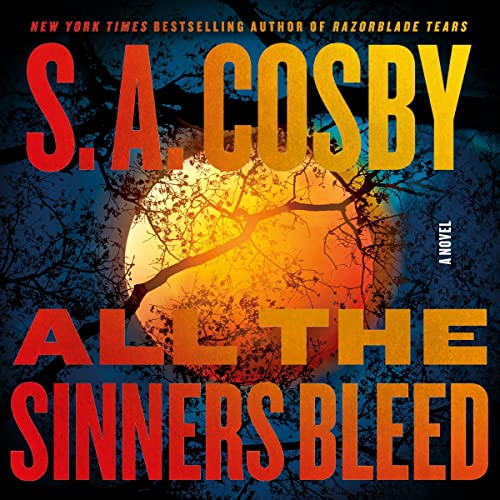
All the Sinners Bleed

In rural Charon County, Virginia, Titus Crown, the area’s first black  sheriff,  goes to see about a shooting at the  high school.  This is current day so the idea of a school shooting panics everyone. Titus is a home grown boy returned from college and some years with the FBI. He knows how to do things right but with a lot more resources. He commands respect from most but the usual racist hate-baiters are certainly around. So far his job as sheriff has been common every-day duties of law-enforcement everywhere, arrest drunks and stop traffic violations, quiet domestic violence and provide security at various celebrations.  


All the Sinners Bleed 
by S.A. Cosby 
2023 
Read by Adam Lazarre-White 13h 5m
Rating: A  /crime thriller 

But when a white history teacher is shot by a young black man who then goes outside and gets shot by one of the newly arrived police officers it opens a whole new can of terror. Investigating turns up a very disturbing video and a grave site is found containing seven very youngvictims, their small black bodies brutalized by the torture which led to their deaths. 

The graphic nature of the brutality in this book got to me.  So that’s your fair warning. It’s not for the faint of heart, but I did finish. Also, I knocked the rating down a peg due to the violence.  That’s not to say it’s not well written, it surely is. I just took off the “+” I’d usually give a book like this.  

Posted in books | 1 Comment

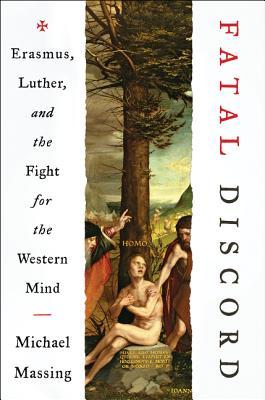
Fatal Discord ~ by Michael Massing

This book consists of the brilliant and beautifully written biographies of Martin Luther and Erasmus as well as the world they lived in. It’s long but engrossing. It’s also dense and I had to take breaks  sometimes for air and other times for reading other material.  I must have started this about a month ago.   

Fatal Discord: Erasmus, Luther,
and the Fight for the Western Mind  
by Michael Massing 
2018 – 992 pages
Read by Tom Parks, 34h 52m
Rating: 10 /  history and ideas of Christianity

Yup -this is about Desiderius Erasmus and Martin Luther, but the story goes back to Aristotle, Thomas Aquinas and St Augustine among others.  Erasmus and Luther were very different men with very different ideas. They were both concerned with the direction the Catholic Church had taken and what it was doing, but where Luther was vocal in his opposition, demanding it change to the point of excommunication for his efforts,  Erasmus continued to work more quietly toward reform from the inside. They were allies at first but that came apart and they became hostile toward each other and the ideas.  

Michael Massing is an award-winning journalist of economics and Executive Editor of the Columbia Journalism Review. His story is a case of “What’s a nice Jewish boy like you writing a book like this?”
https://www.tabletmag.com/sections/arts-letters/articles/martin-luther-and-me
(The link goes to a super article about Massing, Martin
Luther and the Jews. It’s in Tablet magazine .) 

I was born and raised Lutheran – very Lutheran, “Faith of Our Fathers” and “Rock of Ages” Lutheran.  We were taught a wee bit of what is in this book  at church activities, but Martin Luther is tough to teach children and young people. Yes, he said rude things and told bawdy jokes and in his later years he was ugly in his anti-semitism. But there was a lot more to him than that and he was venerated in his lifetime. We used (and memorized) the Small Lutheran Catechism in mandatory Confirmation classes.  In his later years my dad was a part-time minister and his father wrote religious tracts about Transubstantiation, among other things. (Me? Today I believe there is a God but I don’t know about going much further, religion-wise.)

On the other hand, I learned very little about Erasmus but what little I got in school fascinated me. He never broke from the church, but had his own ideas and was hugely beneficial to the Catholic Reformation. He lived at the same time as Luther but was a bit older and not inclined to work in the parishes. 

Prior to reading Fatal Discord I’d read several books about the Reformation and to me it seemed the various events happened years and years apart but from this book it got well under way in short order in large part due to the printing press which allowed educated and powerful people to read and get stirred up.   

So the book was very, very interesting to me – not a thriller, but almost a page-turner. Massing covers a lot of material in a nicely organized and coherent way. These two theologians, as well as many others, thoroughly lambasted each other and the Church about ideas which had been around for almost 1500 years  

Now looking mostly at the events of Germany and other Northern locations, that’s not quite so although the Wars of Reformation went on for well over a century. . Luther posted his 95 Theses at Wittenberg on October 31, 1517.  Due to the newly available printing press they were disseminated quickly and the Reformation was up and going leading many to martyrdom for their beliefs. 

Luther, an Augustinian monk by firm choice, was at the center of the conflict between various “Protestant” (for protest) sects and the Catholic Church because the sects sprang up very quickly and argued and warred against each other feeling their very lives and immortal souls to be hanging in the balance. The Catholic church persecuted and prosecuted them and sometimes burned them at the stake. Many of the local authorities (not all) set upon them starting with the tragic Peasant’s War. Luther was frequently ill and sometimes in hiding. After being excommunicated he married (an ex-nun) and became quite important in Protestant circles. He translated the Bible into German more than one time and it’s still used in Germany today. He was absolutely adamant that his interpretation of the Bible, particularly Jesus Christ and the New Testament, was correct  

Erasmus, a Catholic priest by circumstance but of the humanist tradition. tried to reform the Church from the inside through his scholarly writings and other exchanges. He had admirers and detractors.  Erasmus valued the simpler, humbler things about the New Testament and  the teachings of Jesus. 

But although these two held the same views of the corrupt and powerful Catholic Church, they were at opposite ends of what Christianity should look like in 16th century Europe.  How did the two come to their conclusions? How did they spread their ideas?  

The book winds up with some excellent “Aftermath” chapters on Erasmus and Luther which take us to the 21st century.  Tom Parks does a splendid job with the narration.  

Posted in books | 1 Comment

The Psychology of Stupidity by Jean-François Marmion X2

Well I read it again in large part because I had a feeling there was more to it than I was getting (the usual reason for me reading a book twice).  I was right.   I think the first time the book hit a cognitive bias of my own.  The word “stupid” was used way too much for my tastes.  The second reading I’d mostly got over my shock and disgust at the word and was able to focus on what the essays were digging into.  A lot of it was pretty funny.  

The Psychology of Stupidity – 
Edited Jean-François Marmion
2018 in Europe (where it was a best seller) 
Translation by Liesl Schillinger /2020
Read by several performers
Rating: 5 / essays -psychology
(Listened and read)  

The word “stupid” is very commonly used to describe or label a wide variety of people, places, things, actions, thoughts, and the list is endless.   But Marmion and the other essayists  also get into “bullshit,“ “idiot” and a few other select adjectives and appellations.  The word is so common in our society today that it’s used by almost everybody to describe almost anything the least bit annoying.  (“What a stupid movie,” “That stupid woman!” “That dinner was stupid,.” “What a stupid thing to say,” “That jerk is too stupid for words.” 

The use of the term is a plague on the planet and everyone has to deal with it no matter what language or profession although  Marmion admits “That notion does not belong to the social sciences” and I’ll agree (unless one practitioner calls the paper of another practitioner “stupid.”) 

The book covers a lot of different kinds of stupid or synonyms and words which are closely related.  There’s idiot, gullibility, slowness, imbecile, loon, moron. and more. The book also covers asshole, bullshit, folly, and hogwash, before he gets down to the ways our lives are affected by these things and how that works.  

He starts with Cognitives Bias which sets up for errors due to prediction based on our own internal skewed thinking.  And he goes on with Narcissistic Personality Disorder and how it shows up in people and the world.  

Thinking Fast and Slow by Kahneman is referred to often and Marmion even holds an interview with the Nobel Prize winning author which is delightfully right on.  

Because the book is a series of many short essays and conversations there is a disorganized feel to it but I enjoyed it. The best thing I can say for the book in general is that yes, this nonsense bothers everyone (except very rude people who don’t care what the rest of us have to put up with.  

Posted in books | Leave a comment

The Psychology of Stupidity – ed Jean-François, Marmion

This is such a fun and enlightening book. Oh my goodness. I kind of wanted to read it straight through in one sitting or one day but I got tired and didn’t want to miss a word. That said I got almost half way, 4+ hours, the first day.  And I’m sure I’ll be reading it again when it comes up for discussion in the All-Nonfiction group.  It was nominated by a member who lives or lived in Europe where it was a huge best seller but the US sells few translated works (6%?).  I think some editor must have quietly appreciated this one. Yay!!!  

The Psychology of Stupidity – 
Edited Jean-François Marmion
2018 in Europe (where it was a big hit) 
Translation by Liesl Schillinger /2020
Read by Hillary HuberAllyson RyanMark Deakins
Rating – 8.5 / essays -psychology
Listened and read)  

On the downside you might find the narrative to be rather choppy but imo, that’s because the bulk of it consists of essays and  “conversations.” by/with various people in the fields of  present day psychology, writers, etc.  Mostly the essays are by Marmion who also conducts the “conversations.”   There were several I thought were particularly meaty, but a few which were weak.  

For Marmion, the definition of “Stupid” is either a person who is awkward, egotistical, and rude. The non-personal definition of “stupid” is basically bullshit or unkept promises. From pg XII:  

“Tremble before the vastness of this curse: if you try to reform a moron, not only will you fail, you will also strengthen him and encourage imitators. Before, there was only one moron: now there are two. Fighting against stupidity only makes it stronger. The more you attack an ogre, the more souls he devours.”  P. xii    

The bulk of the book outlines and describes various kinds or elements of stupidity in a number of different ways. Sometimes hilarious, sometimes quite “close to the bone.”

Trump is mentioned as being a good example of “stupid” in several ways and that was okay but I wouldn’t have wanted more of it in these difficult times.

Daniel Kahneman is one of the contributors and he’s excellent, as always.  In this case, the essays “Thinking Fast and Slow: A Conversation” (talking to Marmion) and “A Beautiful Friendship” an essay by Marmion based on Kahnemn’s book of the same name. (I’ve read other books by Kahneman but not the famous one.). Kahneman won the Nobel prize in Economics for the thinking behind a psychology book and he gave credit to his partner and co-author, Amos Tversky who died shortly before the award was granted.  Many of the essays follow the thinking of Kahneman and Tversky. Sad to say, the book has not been well received in the US.  

I’m going to be reading this again to be in sync with the reading group but I”ll leave it for a few days. I often have to read science books and really good literary fiction twice to get the meat or the heart of them. I love doing this.

Posted in books | Leave a comment

Power, Sex, Suicide: ~ Nick Lane x2

This was my 2nd reading of PSS because it was very good (even though I understand it needs updating but how can a book written 18 years ago be “updated” when so much has changed since then?)  I know I didn’t get it all but it was quite interesting as well as nicely written. The second reading of science books is almost always clearer for me.  It still takes comparatively heavy mental work on my part, though.  

Power, Sex, Suicide:
Mitochondria and the Meaning of Life 
By Nick Lane
2005 – 524 pages
Read by Nigel Patterson – 15h 54m
Rating:  9.8:  life science 
(Both read and listened) 

Lane is giving the reader a fairly thorough (I think) rundown on Mitochondria,  what they are, what they do, and why they do it. As the title suggests, they’re important to the power, sex and suicide of cells.  And as it so happens, mitochondria are the result of a once-in-a-cosmos event (seriously – a singularity) to created the “powerhouse of the cell.”  He tells us on page 9 that “The acquisition of mitochondria was the pivotal moment in the history of life.”

And I thoroughly enjoy the style Lane uses – he regularly anthropomorphizes the cell or its parts so that we read “The dream of every living cell is to become two cells… ” (p 470)  This makes the whole book much less dry and in fact, an actual pleasure to read. I think it was Lane’s style, tone and organization which had me read this book twice!   

And even for all that I doubt I could summarize it.  Let’s just say that one lowly bacteria of a certain type found anther one of a different type and absorbed it creating a powerhouse of cellular energy with two-party reproduction, but ages and dies as well.  That lowly bacteria now had a nucleus and other organelles including the mitochondria which could only be passed on via the female.  😁

Posted in books | 1 Comment

Booth ~ by Karen Joy Fowler

The title of Karen Joy Fowler’s latest novel is almost self-explanatory.  Generally, it’s a family saga wrapped in 19th century US social, political and economic history from 1822 to 1865 and beyond. John Wilkes Booth became the most famous member of the Booth family after he shot Abraham Lincoln while the the president was with his wife watching a play at Ford’s Theater in Washington DC.  This was only a few days after Robert E. Lee and the Confederacy had surrendered at Appomattox, Virginia. The dates were April 9th for the surrender and April 13 of 1865 for the shooting.     

Booth
By Karen Joy Fowler
2022 / 
Read by January LaVoy 13h 44m
Rating 9 / historical fiction – (US John Wilkes Booth)


Junius Booth and Mary Ann Holmes immigrated to Maryland from London in June 1822. There they had 10 children of which 6, 4 boys and 2 girls survived.  The males were talented Shakespearian actors who by diligence and hard work became prominent members of the American theater community. The females would likely have been great actors, too, but convention and family pride forbade that. And several of the bunch, including father, had serious drinking and other problems. They specialized in Shakespearian plays but sometimes performed other material. The family was quite well known in both the US and England.

Fowler uses abundant, available, and usually reliable historical resources to explore the characters and the times as well as how the family was affected by large political and economic events and how they were affected by and interacted with each other. 

Fowler says she did not want to make John Wilkes the centerpiece of her book – he’s famous enough for his vile deed.  But she wanted the focus to be on those he loved and who loved him.  What kind of family is someone like this from and what does this do to them afterwards?  His dad died in 1852, when John Wilkes was only 14 so the narrative consists of the voices of Mary Ann (the mother), and their children,  Junius Jr,  Rosalie, Edwin, Asia, John Wilkes, Joseph.   

John Wilkes had a lot of problems, but so did mother and siblings. They were all kind of infamous in US history for the assassination of Abraham Lincoln on April 14 of 1864, only 9 days after the South had surrendered in the Civil War.  The next morning John Wilkes died in a nearby boarding house where he’d been taken.  

John is not a major character.  Lincoln has more page space than John Wilkes.  The life of John Wilkes was difficult what with growing up in a very large theater family.   https://en.wikipedia.org/wiki/Booth_family

Posted in books | 3 Comments

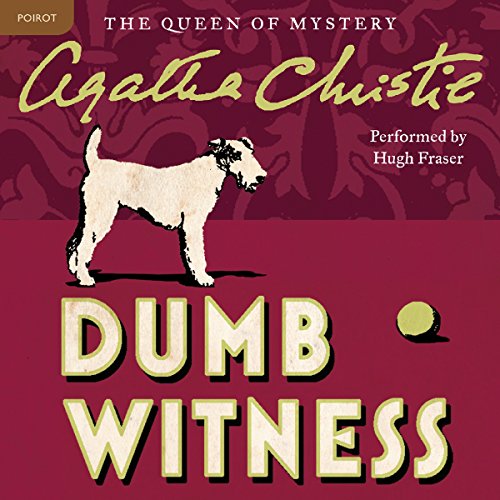
Dumb Witness ~ by Agatha Christie

And this is how I forget to post about the  books I read.   I write something up but then I get on with the next thing before I post. OR –  I am too sleepy and just go to bed (that’s what I did last night).  And in the morning I get interested in other things. Like I need to go to the bank this morning. LOL!


Dumb Witness 
by Agatha Christie 
1937 
Read by: Hugh Fraser,  2012, 7h 19m 
(Hercule Poirot series #16) 

I’d been meaning to revisit my old favorite Agatha Christie with Hercule Poirot for ages and then this showed up in my sale list.

I’m so pleased to report that I totally enjoyed it, The ending was a bit convoluted and I must add I’d forgotten about the light humor in the Christie mysteries. I don’t think I quite got to them all but there were only a few left I hadn’t got to. I read what was supposed to be her book back in 1975 but looking at lists online I see it turned out to be her last Poirot book. LOL – I’ll have to see about reading some more.

The book opens with Mrs Emily Arundell’s death and her having a very new will.  Her relations had been staying with her shortly before her death and her companion, Willamina Lawson, seemed to know more than she let on.  

Arundell had a weekend gathering of family at her large older home (called the Little Green House) in the country where she lived with a couple of servants and a companion, Mrs Lawson plus Bob, her dog.  Later that evening she trips over what is thought to be the dog’s ball at the head of the stairs.  She lives but writes a letter. . 

Chapter 5 gets to Poirot receiving a letter from Mrs Arundell on whom an attempt at murder has been made – or so she rather confusedly alleges.  The thing is that by the time Poirot actually gets the letter Mrs Ehrender has died of another cause.  He and Hastings (his “secretary”),  set out to investigate. 

And it gets tangled in characters, each with their own story but all with motive. (A yes, I remember…) You might need to make a little character list for this – I did. Yes, I try to figure it out but I’m rarely successful with Christie’s books.

Posted in books | Leave a comment

Helter Skelter ~ by Vincent Burliest

If you didn’t guess this already, I’m a True Crime fan (not a buff) and finally reading Helter Skelter in spite my natural disinclination to read sensationalist hyper-popularized material.  I’m very interested in the procedural aspect and the trials.  I think I’ve pretty well got the gist of how the “Family” lived from Member of the Family by Dianne Lake (2017) which I just recently finished.  

Helter Skelter: The True Story of The Manson Murders 
By Vincent Bugliosi 
1974 – 598 pages 
Read by Scott Brick  (2011) 26h 29m
Rating – 9.5 / true crime – memoir
(Both read and listened) 

Helter Skelter by Vincent Bugliosi is a classic in the True Crime genre. It’s up there with the best of them, but had I ever read it?  Nooooooo.  (See below for my list of the Bests – while reading I got curious and made a list of the best I’ve read.)  Fwiw, Bugliosi did a lot of the investigating for the prosecution’s case or he assigned it.  And Curt Gentry was a “partner writer” here with his name on the cover. Bugliosi, the author, was the prosecution’s lead District Attorney.  

This book was first published in 1974, a full 3 years after the trials ended, but it’s thorough and even in 2017, almost 50 years later, generally considered the best book on the subject. Since Manson’s death another wave of books has come on the market and we’ll see if any are really good. I’m sure sure they are, and they’ll include more epilogue-type material, but it would be very hard to do what Bugliosi did in Helter Skelter.  

 At age 83, Manson had been suffering from colon cancer for about a year prior to his death in a Bakersfield hospital on November 11 of 2017. He had spent almost 50 years behind bars and was considered incarcerated at the time. Susan Atkins died while serving time in a California women’s facility in 2009. She had spent 40 years behind bars. Leslie Van Houten and Patricia Krenwinkel have now been in prison for over 50 years. And Tex Watson who was tried and found guilty a bit later but has served just as long and is still there at age 77.  These 5 members of the family are regularly denied parole.

Linda Kasabian and Dianne Lock were involved but given immunity in exchange for testimony, Linda died in 2023 and Dianne, only 14 at the time, pretty successfully got through it all and tried to go on with her life. She actually published a memoir in 2017.  (Member of the Family by Dianne Lake)  https://mybecky.blog/2023/05/20/member-of-the-family-by-dianne-lake/

But it’s been well over 50 years since the murders and trials (and terror in LA) took place and there have been dozens of books as well as movies and news reports and so on about all aspects of the Tate-La Bianca murders, the Manson family, the trials and finally the paroles and deaths well as tangential topics. I think it’s no coincidence that Helter Skelter was re-released October 24, 2017 with Charles Manson on his deathbed to pass away only 3 weeks later. There is both an Epilogue and an Afterwards in this edition.  

The first 150 pages of Helter Skelter, a 598 page Kindle edition, are an overview of what all happened and who was involved until November 18, 1969 when Bugliosi got the news that he was assigned to the case. The central murders occurred on August 8 (Tate) and 9 (La Bianca) , 1969 but they weren’t put together as one case by detectives until mid-October of 1969,  The suspects (at the time) were arrested in October

The pre-trial events and the trial (there was only one formal trial for all 4 defendants but it took from June 15 until November 19 of 1970  and it was bizarre and dangerous at times.) The jury was sequested in the Ambassador Hotel for 8.5 months. 

 It’s nicely written and a page-turning account from Bugliosi’s point of view and it covers a LOT of ground, especially about the three girls who were arrested and tried with Manson,  Van Houghton,  It seems as though Bugliosi is very hard on the Los Angeles Police Department (LAPD) and more appreciative of the smaller Los Angeles County Sheriff’s Department (LASD).  

Helter Skelter is excellent but there’s a much more recent book which claims there was some underhandedness on the part of the detectives which Bugliosi did not report and he’s sketchy on other things.  I can understand more than a couple people or groups who might have reason to write their own book with a different bias. The book “Chaos” by Tom O’Neill is said to present more than a few alternatives to many aspects which were apparently discounted by all. I might just read it before too long. 

This one though is chock fulll of details – names, places, conversations, hunts for good witness,  arrests, reports, etc.  

This is a good article on the psychology of the girls who followed Manson: https://www.vox.com/culture/2019/8/8/20757917/manson-girls-explained

https://www.famous-trials.com/manson/246-chronology

CNN Chronology

The narrator, Scott Brick, is great on procedurals and creating massive tension. 

Again    great metaphors –  “Like the shock waves from an earthquake, news of the murders spread.” (LA’s earthquakes makes a delicious metaphor)  – page 18 (Kindle)

************

AND!!!!   My own list of 10 best True Crime Books 

1.  In Cold Blood by Truman Capote
2. The Executioner’s Song by Norman Mailer
3.  Columbine, by Dave Cullen
4. Helter Skelter by Vincent Bugliosi 
5.  I’ll Be Gone in the Dark, by Michelle McNamara
6. Midnight in the Garden of Good and Evil, by John Berendt
7. Killers of the Flower Moon, by David Grann
8 The Devil in the White City, by Erik Larson
9. American Predator by Maureen Callahan, Amy Landon, et al.
10 Say Nothing by Patrick Radden Keefe}
11 (for good measure),  Bad Blood by John Carreyou, A
And Honorable mention to the books of Ann Rule and Jack Olsen  

Posted in books | 1 Comment

Member of the Family ~ by Dianne Lake

I don’t usually enjoy books narrated by the author unless they’ve been professionally trained in some way. This book is an exception because the voice of Dianne Lake makes the feel of the story even more authentic and it is True Crime told in the first person by someone who lived it.  Lake was the youngest member of the infamous Manson family and although she was with her parents until age 14 ,  after that she wandered, landing in a black van with Charlie Manson and his girls,   She wasn’t a participant in the Tate-La Bianca murders or any others and because she cooperated with the police the charges against her were dropped.  She had to be a major witness though, as was Linda Kasabian who was with Manson for a shorter time.      

Member of the Family:  
My Story of Charles Manson, 
Life Inside His Cult, and the Darkness that Ended the Sixties
By Dianne Lake – 2017 
Read by the author 12h 11m 
Rating: 8.75 / memoir – crime 

The narrative is nice but Lane gives hearty thanks to her “partner” buddy” (which I take to be a kind of ghost writer) as well as to her therapists. (Excellent point – I suspect she needed/needs a lot!

The writing –  I almost never mention specific metaphors, but there’s one here which certainly deserves mention;  Fitting in with the group of girls in the “family” was  “,,,like a raindrop joining a puddle, that’s how at home I felt.” 

There’s a nice but common sense story arc and the character descriptions are well done, even the point of view which is intentionally all her own, has the perfect pitch. The narrator (Lake herself) sounds inexperienced and like the real author would feel.  It took awhile but I got used to it and it worked wonderfully well.

And it’s not a happy book at all. Dianne is alone and on her own at the age of 14. Her parents have essentially abandoned her to her own devices. So Manson and his girls, living a bus in the area,  provided a circle of love for her. They knew she was way too.young to be with them,  but she needed them  Her parents actually didn’t want her around anymore – at this age. The Hog Farm couldn’t keep her because of the legal liability.  Dianna Lake was on her own in LA and in some ways lucky to have had any new family take her in. But this one turned out to be treacherous.

She fortunately was not expected to be part of the executions. She was understood by Charlie and the other, to be too young for that. She did partake of all the sex, drugs and rock ‘n roll as well as being traded to older men for favors, cooking and housework as well as caring for the babies Again, she was 14 and believed the note her parents had signed gave her the legal right to be on her own. (It didn’t.).

She ended up in her own trouble, though and paid dearly. The book is great – I got a background knowledge without the details. I got life in the family without the horror. Dianne found out of course, and she ended up as an extremely important witness which was very scary in itself. Dianne was lonely for a home – she yearned to be wanted and loved. Charles Manson was a multifaceted con artist who knew how to be what lonely girls wanted. Disgusting.

In its own way this book prepared me for reading Helter Skelter and maybe other books about these events. I needed a refresher because although I was 20-22 at the time and lived in California, I only paid attention to what was on the news. I really didn’t want to read about Manson et al because it was soooo violent and heavily sensationalized. (In my view, Charles Manson and company were NOT hippies they were vicious scumbags and criminal crazies with no right to being associated with the peaceful hippies I knew and loved.)

Posted in books | 1 Comment

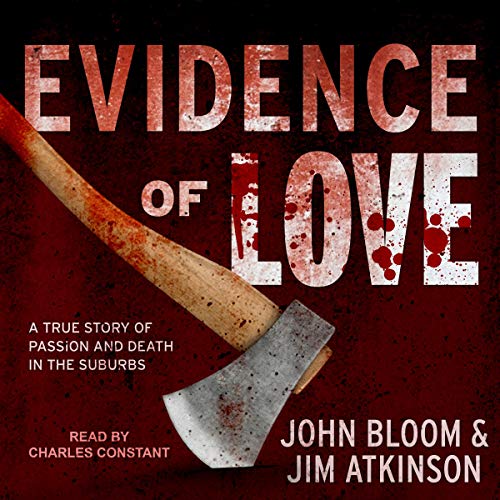
Evidence of Love ~ by John Bloom & Jim Atkinson

It’s hard to put my finger on why but this book just doesn’t live up to what I expect from a true crime book.  It’s still pretty good – nicely written by Bloom and Atkinson.  Again, it’s an older book but it must be pretty good because it’s been made into film one place or anther and it’s still being published.  The Audible version was produced in 2019.

Evidence of Love: A True Story
of Passion and Death in the Suburbs
by Jim Bloom and  John Atkinson
1988 
Read by Charles Constant, 12h 32m 
Rating B+. /  True Crime

As far as I can recall,  I’d never heard anything about either the case or the books/movies before I saw it on Audible.  I suppose it goes to show that these kinds of books don’t get “dated” the way some others do. There are still True Crime books written about happenings in Victorian England or the Wild US West and whenever some big bad bizarre crime (especially murder) is being investigated and tried there’s bound to be an journalist probing and a book deal somewhere. 

Each true crime book is a bit different in its own way – each crime is different, the people and motives are different.  Some are family feuds or difficult members. Some are serial killers. Some are police procedurals. Most are a combination with one or another thing emphasized.  

This one is a smallish town or suburb and a local church community near Dallas with some general unhappiness for the busy wives and after awhile there’s some adultery going on in spite of the Marriage Encounter which the wives recommend to each other.  Bad feelings are aroused and then someone is found dead, very brutally murdered. The media makes a great sensation of it. 

This all happened before the days of cell phones and 24/7 news coverage but there is nation-wide reporting anyway and the courtroom is packed every day.   

The thing about this is the trial is very quirky. It’s different because of prejudices and egos and fears and some psychological elements are all involved. 

So it’s a good book but I think it could have been better. Maybe two authors writing it jointly was a problem.  ??? 

Posted in books | Leave a comment

Bitter Blood ~ by Jerry Bledsoe

Oh such a fine True Crime book!  First published in 1988 so it’s an older tome, but it’s a classic, imo.  I’ve been reading True Crime off and on since the 1980s, but at that time I was kind of stuck on Ann Rule and a few others, so I think I missed Bledsoe. Ann Rule was great and Bledsoe is quite similar. The research, including excellent interviews, is amazing.  It hit #1 on The NY Times Best Seller list in 1988.  

Bitter Blood:  A True Story
of Southern Family Pride, Madness and Murder
1988  

by Jerry Bledsoe
Read by Kevin Stillwell, 20h 8m 
Rating;  A+ / True Crime Classic 

Delores Lynch was a widow in 1985, living comfortably in a lovely home in Prospect, Kentucky, near her grown but single daughter, Janie. Delores attended church with friends and kept busy with community actives. Although she could be difficult, she was generally tolerated by all. Tom, her son, was living in Arizona with his new wife, Kathy, but his ex-wife, the mother of his two boys, Susie Sharp has just moved back from Albuquerque to Reidsville, North Carolina, where her large and prominent family lived.

There is a lot of Sharp/Newsom/Lynch family history here, because this is a complex case. Fortunately, there’s an excellent family tree which simplifies things. There are cousins and in-laws who don’t show up on it, but it worked well as a reference for me. (How was Susie related to Fritz? etc.)  

Bledsoe writes with great attention to detail which rarely interferes with tension and sometimes, surprisingly, works to enhance it. It definitely adds to the realism which is necessary in True Crime.  There’s one scene which involves a multi-car pile-up and many things happen simultaneously . The skillful writing is amazing.  

I listened to this and although other readers had some complaints about the narrator I have no complaints.  Kevin Stillwell did a superb job with his slight but deliberate country lilt adding to the setting of rural Kentucky and North Carolina. 

True Crime books are rarely (if ever) thrillers of any sort.  What readers of this genre want are factual realism and background information.  

Although this is my first, Bledsoe has written quite a few books and it seems his subject matter and his “style,” are quite a lot like Ann Rule’s with its focus on family dynamics.  

https://en.wikipedia.org/wiki/Bitter_Blood
an overall report

https://the-line-up.com/bitter-blood-murders-excerpt
including the family tree

Posted in books | 1 Comment