I’m going to get this series up to date this year. I started it back in 2014 or so, and dropped it because having read about 8 of them I was used to John Bancroft’s beautifully rendered novels. So I felt I owed it to Bancroft to read his pseudonym, but the style didn’t transfer to the mystery genre very well, not imo.
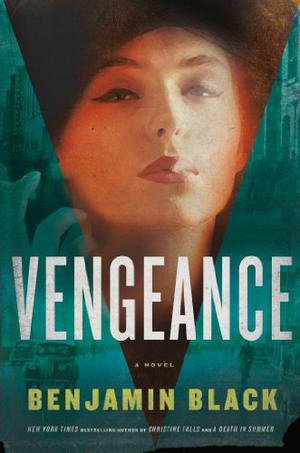
Vengeance by Benjamin Black Read by John Keating 9h 50m Rating: (#5 in Quirke series)
Time went by and a few years later I read others, both Bancroft and Black. (See below for the chronology of the books.) It was reading Snow a couple years ago which introduced a character named Sgt St. James Stafford and his partner Quirke, I got hooked with that one.
Earlier this year I finally read Quirk #4, A Death in April, which was really quite good. And I read some other Bancroft novels, The Black-Eyed Blonde, and Mrs Osmond. He was okay.
The series takes place in 1950s Dublin where the Catholics and Protestants live peacefully, for the most part, side by side, but don’t really mesh. And because it’s the 1950s, there’s a lot of cigarette smoking and so on.
Anyway, Victor Delahaye apparently shoots himself while out sailing with the son of his business partner. The police are called and Quirk conducts the post-mortem. Then not too long afterwards Jack Clancy, the business partner, drowns as the result of a boat leak. It gets tangled with two families overly involved with each other due to their business. These novels aren’t thrillers – they’re mysteries. So kick back and enjoy.
*****************
Benjamin Black’s Quirke Mysteries in Chronological Order
Christine Falls 2007 The Silver Swan 2008 Elegy for April 2010 A Death in Summer 2012 Vengeance 2012 Holy Orders 2013 Snow written as John Banville 2020 (with Detective Inspector St. John Strafford) April in Spain written as John Banville 2021 The Lock-Up written as John Banville 2023
I gave this book every chance I could. I saw it available at the library and I’d seen it around. But I am really glad I didn’t waste a credit on it, but I did waste some time. I think it took me a several hours to figure that this book was too annoying to bother with. Before that I kept falling asleep.
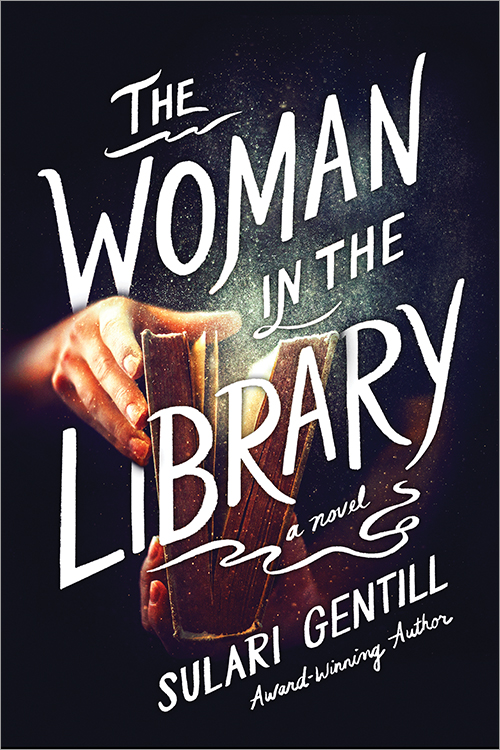
The Woman In the Library By: Sulari Gentill read by: Katherine Littrell 8h 58m Rating; DNF – (did not finish)
It might even be a YA book. The characters all seem to be college students or college wanna-bes while they act like juniors in high school. IT plays with metafiction in that one or more of the young people is apparently a writer -and starting something with the kids at her table.
Publisher’s summary The ornate reading room at the Boston Public Library is quiet—until the tranquility is shattered by a woman’s terrified scream. Security guards take charge immediately, instructing everyone inside to stay put until the threat is identified and contained. While they wait for the all-clear, four strangers, who’d happened to sit at the same table, pass the time in conversation, and friendships are struck. Each has his or her own reasons for being in the reading room that morning—it just happens that one is a murderer.
I’d had my eye on this ever since it won the Pulitzer Award for History in 2022. I was a history major and I kind of know US history and some European history, but that’s about it. Sad to say, my background in the Americas outside of the United States is quite limited.
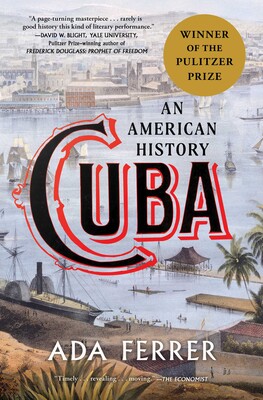
Cuba: An American History by Ada Ferrer 2022 /566 pages read by Alma Cuervo 23h 13m rating 9.5 / history Americas (read and listened)
Decades ago, the author, Ada Ferrer, immigrated from Cuba as a baby with her mother. Years later she took it on herself to get the education, do the research and write an excellent and well thought out history called “Cuba: An American History” to get the appropriate geographical context. She’s not writing to commend the US as our school books do, but neither is she an American critic. I think she tries to focus on the middle although in some places that gets rather hairy.
The one downside for me: in th Prologue, Ferrer rants on the old idea of how Columbus didn’t “discover” America because the Natives were already here. Okay, got it. I learned that in 6th grade (about the time Ferrar was born) and was told that we remember him because after his explorations no one forgot. I taught that to my Kindergarteners and I retired a long time ago so it shouldn’t be a huge surprise to anyone at this point.
Giving credit to Columbus for the discovery of America places him right smack in the middle of the continents. There isn’t one person discovering North America, another person getting to South America first, and Central America as a separate find (however accidental it was).
And she makes a couple excellent points, one being to show the relationship, however uneven, between the two countries over time. This would include the colonial period, the US War of Independence, the slave trade, the Civil War, Manifest Destiny and the Spanish American War followed by decades of both neighborly and colonial doings right up until Castro took over and all cordial relations were stopped in 1961 and again in 1963 for Cold War struggles.
Then for the next several decades we lived next to each other without so much as a cigar to trade legally and Cuba’s immigrants sometimes had to get from there to Florida in home-made boats.
Then she gets into the formal history of Cuba which gets pretty darned bloody at times as it sat off our southern coast owned and operated by Spain via her slaves and lackeys while being attacked by Britain and the climate.
After that comes the new politics between the not-quite born US, Spain, and France who all wanted Cuba, but how to get it? The ambassadors or kings or whatever didn’t even all speak the same language. But Spain supported the colonies which gave the US access to Havana and the Spanish money – this was a huge benefit – but Spain was a bit worried, what if …
Cuba’s history under Spanish rule from that point was based on sugar, coffee, and slaves but France started freeing her slaves in the New World (Haiti) and the ideas of freedom and independence flourished but Spain was determined and used France’s troubles as their own opportunity. And Cuba imported more slaves from Africa and made more money for the plantation owners – lots of money
As time went on matters got twisty and corrupt and still often bloody with wanna-be national conquests, a US drooling over colonialism for herself, a Constitution, and internal dictators (in violation of their new Constitution) plus labor unrest with some racism included.
They have many heroes and heroes turned villains and new heroes arising, to say nothing of sham elections and student organizations and worker protests. Around that time US gangsters visited and migrated and vacationed en mass, so there’s a chapter on that era. And then comes Castro out of the mountains but much better educated than I’d understood – he was portrayed as a kind of hoodlum turned Communist in US media.
The chapters after Castro makes his appearance are eye-opening and nei t what with the CIA, the Russians, the propaganda, the attempt at a 10-million ton sugar harvest and so on. Raul Castro and
In fact, it’s pretty serious (but fascinating) history in the first half or so with the understanding that although Ferrer does have a bit of a liberal bias, it’s certainly not overwhelming. There are excellent sections strewn throughout this first half. But at chapter 22 it turns to generally excellent – this is when Fidel Castro is introduced and becomes an integral part of Cuba’s history. This is when the story gets riveting – or it did for me.
And we get the height of the Cold War with the Bay of Pigs (never have I read such a detail-oriented and carefully written account) after which came the Cuban Missile Crisis and then the years of waiting for the next shoe to drop. \
Castro really did try to engineer a full revolution with new people to match new conditions with new rules always with the idea that education was the answer. He catapulted Cuba on to the world stage. But still, as soon as they could, many Cubans were opting for Miami, (not Ecuador, and once there turned to extreme anti-Castro sentiments.
Castro really did dominate Cuba for decades and his presence will be there for a long time to come. This is a brilliant book in case you missed it.
The first Saturday of the month means Six Degrees of Separation day. This meme is hosted by Kate at BooksAreMyFavouriteandBest. The idea is she gives a starting title, then associates six other books with it- and invites her readers to do the same. The starting book is Anna Funder’s Wifedom, which I haven’t read, and only heard of thanks to Janine at The Resident Judge and Lisa at AnzLit.com . I know that it’s about George Orwell’s wife and I’m just going to go from there to:
THE PARIS WIFE because Hemingway (not Orwell this time) lived in Paris hotels for awhile and based some of his writings there. And that leads to (I’ll only add photos to the books I’ve read):
I HOTEL by Karen Yamashita, a WONDERFUl book, about a community of immigrant residents at a somewhat run-down San Francisco hotel which could lead to many California immigrant stories but in this one a husband/wife couple are Russian revolutionaries, (I Hotel is short for International Hotel which was a kind of sad landmark until it was torn down.) https://en.wikipedia.org/wiki/International_Hotel_(San_Francisco)
A GENTLEMAN IN MOSCOWby Amor Towles which is about a man confined by the courts to the Metropol Hotel in Moscow just after the Bolshevik Revolution.
This leads to many books but I’ll pick
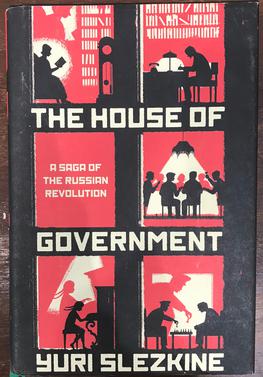
HOUSE OF GOVERNMENTby Yuri Slezkine which features an elaborate and upscale apartment complex for highly placed Russian comrades. This is nonfiction so…
we’ll follow it to a Russian novel;
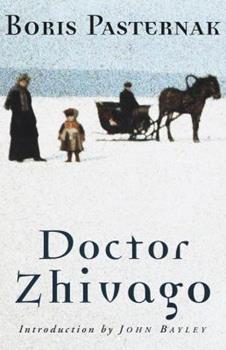
DOCTOR ZHIVAGObyBoris Pasternak which I’ve read 3 times and loathe the movie: (My last review was done prior to 2014)
but the book leads to:
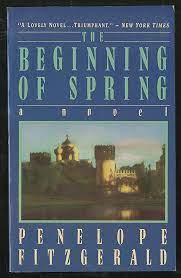
THE BEGINNING OF SPRINGby Penelope Fitzgerald which deals with Russia prior to the Bolsheviks, and where the English wife of a print-shop owner gets swept up in the romance of it all.
So then, of course, comes that classic MRS PALFREY AT THE CLAREMONT by ElizabethTaylor which has an aging and very lonely English widow living in a London residential hotel waiting for someone to visit. (reviewed in 2013)
Yup – I did notice that 3 (three!) of these books are set in or near Moscow.
Well, that was kind of fun – remembering these books was the best of it.
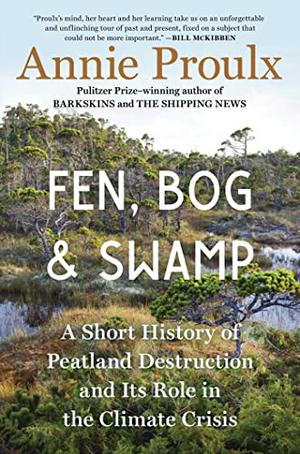
I’ve read a couple novels by Proulx, Shipping News (1993 – Pulitzer Prize), Bearskins (2016)), but this is the first nonfiction I’ve read by her It’s a series of science essays more than anything else and I like that so long as the author doesn’t go overboard on the poetic. (She doesn’t – it’s very nicely written.) This book keeps the science on the fairly light side, but there’s a good helping of it.
Fen, Bog and Swamp: A Short History of Peatland Destruction and its Role in the Climate Crisis by Annie Proulx 2022 Read by Gabra Jackman 5h 6m Rating: 9 / non-fiction-science
Before getting into the substance of her topic, Proulx takes the time to define the three categories of wetland she is exploring. Reading that kind of set the mood for me because I wasn’t quite sure what the difference is. Then comes an “author’s note” of sorts, ‘Why fens, bogs and swamps?” Followed by a couple pages of the requisite definitions, “FEN,” “BOG,” “SWAMP.”
from the book: FEN – a fen is a peat forming wetland that is at least partly fed by waters that have contact with mineral soils such as rivers and streams flowing in from higher ground. Such minerotrophic waters.
BOG or bogland – a wetland that accumulates peat as a deposit of dead plant materials – often mosses, typically sphagnum moss. It is one of the four main types of wetlands. Other names for bogs include mire, mosses, quagmire, and muskeg; alkaline mires are called fens.
SWAMP – a minerotrophic peat-making wetland dominated by trees and shrubs. Its waters tend to be shallower than fens or bogs.
The first actual chapter is entitled “Discursive Thoughts on Wetlands.” It’s a personal statement (a vent really) in which Proulx looks at the past, for better or worse, what we’re doing in many places, to the present situation, She also shines a few lights in unexpected places throughout the world. I appreciated that.
Finally we head on into the real issue of the book – “A Short History of Peatland Destruction and its Role in the Climate Crisis.” Yes! And the climate crisis has become one of my favorite subjects to read about. I’m not a scientist by any stretch, but I am certainly concerned as I observe our struggling planet and I learn as I go.
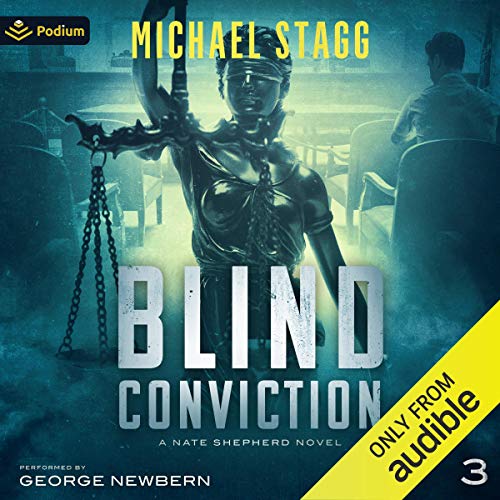
I had no idea what to pick up to read next, but this had sounded very good when I put it on ye olde wish list at Audible and I’d very much enjoyed Stagg’s prior two novels in this series so … Yes it’s a thriller (suspense and chase scenes) as well as being a mystery (a who-done-it, how-done, etc) with some procedural (cop-shop details) stuff as well as courtroom action.
Blind Conviction by Michael Stagg Read by George Newbern 10h 6m Rating: A+ / legal thriller (#3 in Neal Shepherd Legal series)
This is a fairly fast-paced legal thriller set in a small Ohio town not too far from the Michigan border, the protagonist is Neal Shepherd, a likable defense attorney for whom the series is named. Neal is a youngish widower who lives in a small Michigan town while working in Ohio. Helping him in his one-man office is Olive an office assistant who is also employed at a local gym called the Brick House. Shepherd’s other assistant is Danny who does investigations.
In his new case Neal Shepherd is defending Archie Mack for the attempted murder of Neal’s future sister-in-law, Abby Ackerman. The Macks are an old local family with considerable acreage divided into three equal parts, the center parcel for the parents and a piece on each side for their boys, Archie and Hamish.
It was Abby, Hamish Mack’s fiancé, who was left very badly beaten and at the foot of a steep stairway near a river while a music festival played behind them. Although the police arrested Archie, Abby and Archie both deny it was him and they have no idea who the villain was. There are an abundance of clues pointing to Archie and Hamish is especially angry.
There’s nothing fancy here, but it’s a darned good ride and I even laughed out loud at a couple lines.
When I am full of really good nonfiction or literary fiction I take a break by reading comfort books, mysteries of lots of kinds. I enjoy procedurals, old fashioned who-done-its, thrillers, cozies, and true crime. I love getting my teeth into a series. I won’t read romances if I can help it. I usually read 1/3 crime books, 1/3 nonfiction and 1/3 literary fiction. So here we are at #5 in the Joe Pickett series by C.J. Box.
Out of Range by C.J. Box 2016/ Read by David Chandler 11 h 9m Rating: A / thriller (5th in Joe Pickett series)
Joe Pickett is working as a game warden for Wyoming and quietly taking care of family business when he gets word that his old friend Will Jensen is dead by his own hand. Joe is asked to cover for him temporarily as warden in the Jackson district. It gets pretty wild with lots of plot threads and interesting characters.
David Chandler does a wonderful job of narrating the whole series so far (to # 22).
Excellent! I do so enjoy Sarah Bakewell and now I’ve read three of her five books. She brings a good measure of fun to her books along with delightful anecdotes. I so very much appreciated this book.
Humanly Possible: Seven Hundred Years of Humanist Freethinking, Inquiry and Hope by Sarah Bakewell 2023 / 454 pages Read by Antonia Beamish 14h 27m Rating; 10 / Philosophy (Both read and listened)
This book is more history than philosophy, but there’s considerable philosophy in it, too. It might make an excellent text for a class on the intellectual history of Europe from the Renaissance to the 20th century for non-philosophy majors. And I suppose it’s as much philosophy as Jena 1800 by Peter Neubaum (the Romanticists) or The Time of the Magicians (by Wolfram Eilenberger) or even Magnificent Rebels (by Andrea Wulf) and Fatal Discord (by Michael Massing) all of which I read this year.
Bakewell starts the tale with the birth of Petrarch in 1304 in Arezzo, Italy. This was about 1000 years after the sack of Rome (1410) and 700 years prior to today’s time (loosely). Petrarch studied the letters of Cicero and and others and then wrote his own letters for posterity.
Then she moves through the Italian peninsula as it was in those days, decades, centuries, including the Christians and pagans and not least of all Michelangelo’s Vitruvian. Of course there were the Papal encyclicals to be translated, but the treatment of syphilis had become important making the translation of Greek texts invaluable – unless someone accused the translator of error. So then they did their own cutting research on very old corpses or criminals of the day. And some artists (Michelangelo +) followed suit to make sure their own work was correct. The historians of Rome like Levy and Tacitus, were highly sought after as were the Christian texts – and they all had to be translated.
This was the dawning of the Renaissance which spread all over Europe and many scholars were thirsty for new knowledge as well as uncovering what remained of the old material, locked away in monasteries and barns. So between Agricola (1450s in Northern Europe) and Erasmus on his travels (1500s), Montaigne (from birth, 1550s) and others picked it up and wrote diaries and letters, traveled some and more, then spread humanism via others, especially to Thomas More in England. These men influenced the Protestant Reformation in that humanism encouraged both independent thinking as well as reading the Bible in a native languages.
From Dante to E.M. Forster thinkers of these ages spoke of progress, of enlightenment, of reason, Bakewell covers so much material in so few pages it’s almost breath taking and I would have to go back and reread paragraphs or pages to really get it more completely.
I may read this again because there are so many details and it’s so beautifully written.
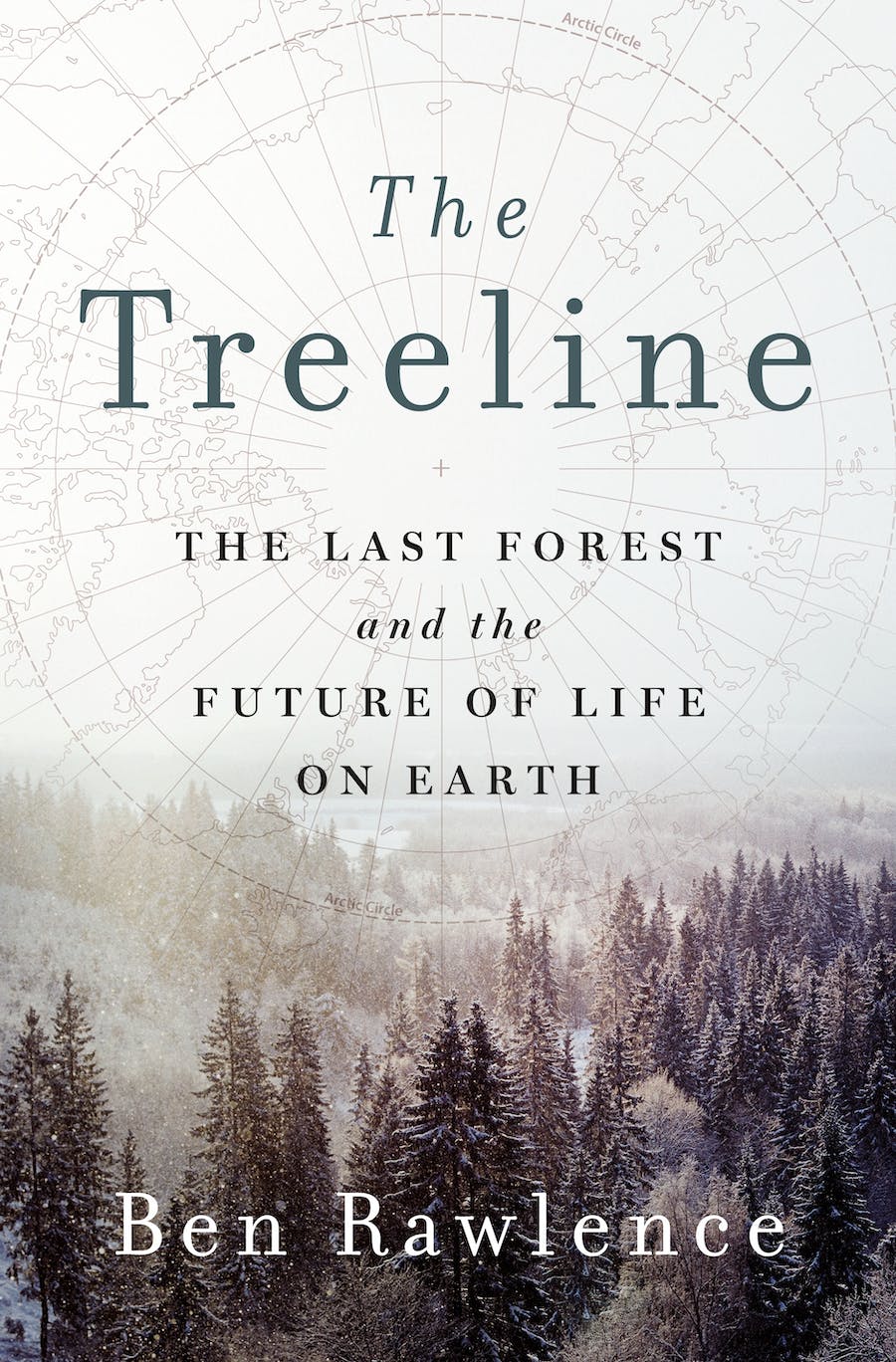
This book sounded interesting and I’d had it on my Wish List at Audible for a couple months for when I got bored with crime novels and bought it. The first chapter was kind of a slog but then when Rawlence started talking about the Samis (Chapter 2) I got involved and then hooked. My own ancestry might include a Sami or two since I come from Norwegian and Finnish ancestry; But that was just for starters. This is an amazing book, part travelogue part climate warming and what it’s doing to the northernmost forests. (It’s not pretty.)
The Treeline: The Last Forest and the Future of Life on Earth By Ben Rawlence Read by Jamie Parker 11h 59m Fab 15, 1921 Rating: 9,5 / climate-biology / travelogue
“The arctic tree line is the northernmost latitude in the Northern Hemisphere where trees can grow; farther north, it is too cold all year round to sustain trees.[21] Extremely low temperatures, especially when prolonged, can freeze the internal sap of trees, killing them.” (Actual trees- not shrubs.)
It seems that with global warming the trees are growing further and further north the old tree line is north of where it was a few decades ago. It’s not cold enough far enough south to maintain the balance we have known for millennia There are a lot of lives at stake and how will the trees do. That’s the subject of Ben Rawlence’s most recent book.
There’s quite a lot of scientific information here but it’s also a travelogue as he goes around the world checking out life on the 60th latitude, a bit more and less. How is life changing for the people who live in those regions? And it’s part poetry – his love for the earth and the places he visits stands right out.
‘The treeline is out of control’: how the climate crisis is turning the Arctic green. theguardian.com
Due to climate change, the treeline is extending beyond the 65º or so latitude and up toward the 70º +. It affects all life up there.
Northern Scotland, where there were once magnificent forests, is now peat bogs and solo pines, excellent sources of carbon. Shown; Solo pine trees and peat bogs,
He then travels to a place just west of Finnmark in upper Norway where the latitude is 69º. There he meets the members of a small Sami tribe and discusses global warming and other changes in their lives. The Sami are scattered throughout the northernmost parts of Norway, Sweden. Finland, and Russia with more being located in Norway and are the only indigenous people remaining in Western Europe.
The Sámi identity, their oneness with nature, dies with the habitat that sustains it. They are feeling the brunt of climate change now, but in the long run it will be the people in hotter places or in coastal cities who will be in more serious trouble from floods and heatwaves. The Arctic is projected to come under increasing pressure from refugees as people flee crop failure and extreme temperatures further south.4 The Sámi will probably be able to adapt where they are.
“You are not on the top. Nature is on top. And if you are working against the top, it will come and attack you. And that is what is happening.”
You take what you need from the earth, never a surplus, and you leave the rest because you are not alone. This is the Sami concept of self-sufficiency called birgejupmi. It is the exact opposite of the modern idea of sustainability which is based on the maximum surplus that can be extracted without destroying nature’s capacity to sustain the resource.”
Climate change may not be as gradual as many of us have been taught. It may be abrupt and catch many people way off guard. I tend to agree because how can you prepare for the unexpected or unknown? There has been extreme warming in the Arctic, “The sleeping bear (Russia) is awakening.”
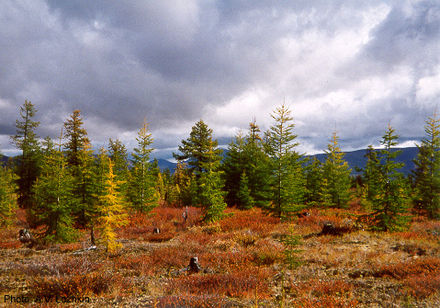
In Chapter 3, The Sleeping Bear, Rowlence travels to the Russian boreal, the enormous taiga, of Russia which is forested with larch trees. Stretching from where Norway meets Russia in the west to the Bering Strait and the international dateline next to Alaska, This is the greatest forest in the world, including the Amazon. Here the problem is not deforestation so much as it is in retreat by either fire or replacement species while the permafrost is melting.
The reindeer herders are turning more and more to fishing which also brings good money. It’s very cold but overall much warmer than it has been. They don’t use the the “baloch,” now – the old tent frame on skis transportable behind reindeer. They haven’t migrated for several years. Times are changing – they also don’t search for wood like they used to, There is no reason for much of what they used to do and coal and is easier but Alexis, age 72, has no use for schools or vodka and markets and smartphones. There are signs that the times are changing – “birds, bugs, birds, butterflies and bubbles under the ice.”
Rawlence gets as far north as Syndassko – above 73º latitude (and you can only go to 90º). This is a place where things have been done mostly the same way for generations and few people are in touch with the outside world at all. Born in 1952, Dzhasta is the last of the old times – even before the Soviets got there. The forest was more sheltered, there was firewood and lichen. When the Soviets expanded they were looking for workers for production – not land. Shaman were esteemed and spirits were everywhere – then all that went with the Soviets. It’s now the “Iced Culture of the Nganasan” – a relic preserved in the permafrost/“ https://en.wikipedia.org/wiki/Shamanism_in_Siberia
***** Larix gmelinii – the toughest trees of all the taiga and therefore the world. The only species that has evolved to survive this far north. *****
Some people are suspicious because you can’t tell if it’s warming or not so they believe that it’s a hoax perpetrated by Moscow to save gas and But there are new species of birds and fish. “Greta [Thunberg], she’s just a puppet, she’s being coached, right?” P 128 And Rawlence doesn’t feel so safe. There are many possible futures.
This is just 50 miles across the Bering Strait from Alaska.
The Frontier – Fairbanks Alaska 64º 50’ 37’ N
Two keystone species not in Siberia – spruce and beavers and those change the directions of evolution. Russia is not Siberia.
And so it goes around the world with no really good news at the end. We’re on count-down now. The stage is set for at least 2º warmer and that means death to a lot of species as well as people. Scientists are working at saving the most valuable of the northlands now. God speed.
This one was on sale and it just seemed to appeal to me. I like lighter books to read between denser non-fiction. (But the reverse is also true.)
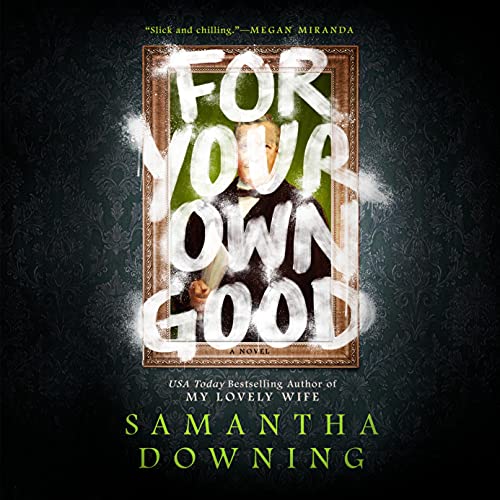
For Your Own Good by Samantha Downing 2023 Read by David Pittu 10h 37m Rating; A: mystery suspense
Fun, although a tad far-fetched and a bit dark. That’s what keeps it from being dumb -or actually it’s hilarious in some places. The setting is an upscale private high school named Belmont somewhere in New England. It’s not a boarding school, the kids are all from town where the residents are all pretty wealthy. Stamford Connecticut maybe.
Anyway, Teddy is a tough teacher of English at this school where most of the kids are under a lot of pressure to get into prestigious colleges. Teddy’s wife is no longer in the picture. Teddy has a lot of anger and resentments against these rich kids. I believe there’s anther we
But there’s trouble at the school after a teacher is dies by poison. Then it happens again. And similarly, yet again. The police are called, then the FBI. It gets tangled.
The only thing was it seemed to drag toward the end.
I read this back in January of 2021 so that’s about 2 years and 8 months ago! I keep a blog to remind myself of what I’ve read. That’s not as easy as it used to be as I’m 75 years old and read about 150 books a year making my memory of True Intent about 330 books ago –
True Intent by Michael Stagg x2 2019 read by George Newborn 9h 34m Rating – A/ legal drama (2nd in Nate Shepherd series)
But thanks to your question I got interested but still, I couldn’t remember. Checking my blog I saw I’d given the book an A, but I had also just finished the Stagg’s 1st book in the series, LETHAL DEFENSE (Dec 30 2020) and also given it an A. (My ratings sometimes go up to A+++ for the special ones that just rock. James Lee Burke).
SPOILERS!!!! MAJOR SPOILERS!!! ALERT!!!!
Anyway – with that as an explanation – I had to go back and reread TRUE INTENT. I did have a general idea of what happened, but I was between books and had the time. Fortunately, I thoroughly enjoyed the rearead. 🙂
Your question; What did Nick decide to do? He stayed home. He didn’t go with Liselle or even bring her to his own house because Jeremy(?) turns out to be a male friend who picks her up in nearby parking lot when she’s released from jail.
Imo, Stagg made the ending deliberately unclear to the point of being open-ended. I don’t think she murdered the guy because there were some real questions about things (the toothbrushes) so really, I think she did know about the blood pressure meds and the St. John’s Wort. She should have known if he told everyone, and if she knew about the metoprolol (I do, too.) mixed with St John’s Wort she could have set it up but …. Why???? So I don’t think so.
I do think she was less than honest, though, but so was his daughter although I’ll bet they believed she did it.
And then at the very end is the metaphor of the trees which I thought also seemed unclear but …
Duchess .;; I hope you see this. I tried to respond to you under your question but WordPress won’t let me do it.
I thought I’d read Jeffery Deaver before but I must have been mistaken. This book started out great but after about 1/2 way point it just kind of went rambling through more twists The Never Game
The Never Game by Jeffrey Deaver 2019/ Read by Kaleo Griffith Rating – B+/ mystery-thriller (#1 in Colter Shaw series)
First we’re introduced to the protagonist, Colter Shaw, who describes himself as a “missing person finder.” He supports himself by collecting the rewards offered for finding missing persons of various sorts but he’s not a bounty hunter. His new assignment is finding a 19-year old woman who went missing after a fight with her now distraught father.
Because this is the first of a 4-book series (to date) Deaver spends time developing Colter’s character. Watching this reward-motivated missing person hunter go about his business is fascinating. He totally thinks things out and goes by the percentages. His father was a political science professor and his mother, who still lives in the Sierras is a retired psychologist. They had turned survivalist who were semi-off-the-grid with guns and Shaw remembers fascinating bits and pieces of his childhood especially advice from his father. He went to college but after trying it out finds he does’t want to work in an office. He’s been doing this for 10 years now, ,living in a nicer RV and staying in the Sierra Nevadas when he can.
Much of the plot is kind of standard thriller with emphasis on procedurals for a guy doing non-procedural work. Then it takes a turn for the techie with some serious gaming as the set-up. I’ll likely read more.
With no great speed, I’ve been reading this Quirk series in order. They’re by John Bancroft using the name of Benjamin Black. I read quite a number of Bancroft’s books about 15-20 years ago and have been reading Quirk since 2008 or so when the first book, Christine Falls, was released.
A DEATH IN SUMMER by Benjamin Black / 2011 read by: John Keating, 8h 47m Rating: A – 8 / lit mystery / hist fict ( # 4 in the Quirke series)
This is an excellent addition to Benjamin Black’s (John Bancroft) Quirk series, but it’s not for the young crowd who seem to enjoy thrillers. The books take place (and are steeped in) the late 1950s, around the city of Dublin. Memories of WWII are dimmer now, but the new era has not quite taken hold. The Catholic Church and the established elite are quite powerful. Because of his old family connections Quirk is accepted even if he is Protestant. He is a consultant pathologist at Holy Family hospital with David Sinclair as his assistant. The slang, old-style telephones and frequent smoking give the era substance and there seems to be deference paid to authority in different ways.
The heir to a newspaper fortune, Richard Jewel aka Diamond Dick, is found on his bedroom floor with his head blown to bits.There is no note or anything like that, but his shotgun is close at hand. Quirke is called in and brings David Sinclair, his assistant.
Surprisingly, in the opinion of Quirke, Sullivan and others in the department, Jewel’s death was NOT a suicide as others seem eager to suggest. But who in the world ….?
So now it’s a murder investigation and the list of possible suspects is quite long. seeing as Jewel had many enemies. Zoning in, his wife Francoise and sister, Dannie, are distinct possibilities, hard as that is for Quirke to believe because he and Sullivan are very attracted to the ladies while Phoebe, Quirke’s twenty-something daughter is also attracted to Sullivan. (This is NOT a romance in the way usual romance stories go.)
In the prior book of the series Quirke just met his daughter, Phoebe, and he’s not quite sure what to think because she seems to have “troubles.” (I look forward to Phoebe being a regular character.) Quirk obviously cares for her so when he sees that Sullivan is attracted to Phoebe, Quirk encourages them.
There are twists and turns during the investigation and I didn’t really figure out who done it although the name drifted through my mind.
This is the second novel in the volume “The Jailhouse Lawyer” which I said I’d get to a week or so ago. So I got to it but didn’t finish until the wee hours of August 1.
Power of Attorney By James. Patterson and Nancy Allen 2021 / Read by Megan Tusing 7h 47m Rating: B+ / mystery – crime
The premise here is interesting – a cognitively challenged youngish woman has run away from the farm where she lived with her older cousins since she was 10 years old. That was when her mother died. Amber was sleeping in a shed when she woke to find the farmhouse with her cousins in it engulfed in flames. She was caught and charged with arson and murder because it was thought she had set the fire and was hiding.
Meanwhile, Leah Randall, an attorney from Chicago, is visiting her parents in their small Arkansas town. She’s there to check on her father, an old respected lawyer, who now has dementia and whose practice is in a mess. While she’s there her mother offers Leah’s services in a case which turns out to be the one described above.
It’s a tough case and it’s a tough read. There’s a lot of gritty talk and violence. This is what I think of when I think of James Patterson writing. I did read a book he wrote solo a long time ago and it was a bit much – too gritty for me. Only when he got with Maxine Praeto did I enjoy him. (And I’ve changed some, too but then, so has pop literature.)
The plot here is great. And now I feel like getting a good clean maybe cozy murder mystery. LOL!
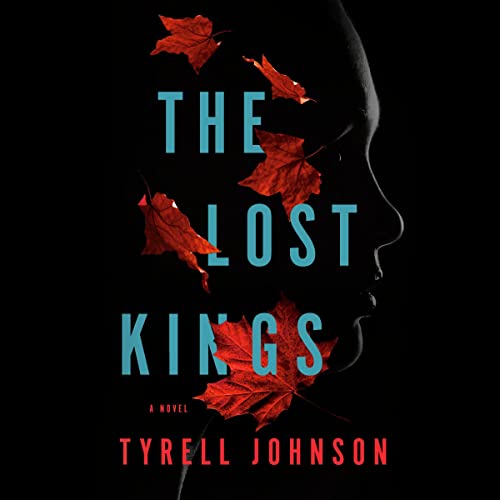
Recommended by a friend whose taste is, quite often, similar to mine. Also, as itt turns out, this was the “Best Crime Novel of the Year” for 2022 according to the judgement of the New York Times
The Lost Kings by Tyrell Johnson 2022/ Read by Saskia Maarleveld 9h 23m Rating: 7/ A+ – lit suspense-crime
A pair of twins, Jeanne and Jami King, become inseparable after their mother is killed in a terrible car wreck but after a brief stay with an aunt, they have only their alcoholic vet father for parenting.
Maddox is a good friend who lives nearby and the three of them go for long walks on the very nearby Washington state beaches They don’t go to school until they want to and then they have to. Jamie’s relationship with his father has some issues while Jeanne is the apple of Daddy’s eye. Daddy has a woman conflict as well and it is she who is found killed.
The story, told entirely by Jeanne, unfolds in two strands, one in the “Now” when Jeanne lives in Oxford, England where she works in a restaurant, takes classes and sees her therapist. She tells the therapist the gist of her past because there are parts she hides from both the therapist and even herself sometimes. The other thread is what happened between the death of her mother and the end of the story. These chapters are called “Then” and “Now” – (I like that keeps things straight.) –
One day “Then” and “Now” meet when Maddox, now an investigative reporter, walks into the restaurant where Jeanne works. Mom left her children plenty of money and Dad has his vets payments. Still, as the very bright and articulate Jeanne told her therapist, she has to do something and waitressing is fine. Her problem now is that it seems Jamie and her father both vanished at some point in the past so Jeannie has many questions she wants to ask Jamie and her dad and probably Maddox as well. Then Jeannie was finding Maddox terribly attractive.
Through the alternating chapters of THEN and NOW, the suspense is masterfully drawn. (It didn’t get an Edgar Award for nothing!). It’s not quite so much a “Who Done It?” as it is a “What’s Going ON?” and then a body turns up so it turns into a.”What Happened?” and, finally, a “Who Done It?”
A kind of theme – “The absurd acts of love.”
Johnson doesn’t “build” the suspense so much as kind of whispers little ideas to the reader who builds it between the aha moments, Johnson is usually just subtle enough and I love it. Then maybe at the 2/3rds mark the suspense turns into tension because some real action starts – never to the point of thriller but very darned close. And the ending is quite a tangle of twists in itself.
The narrator, Saskia Maarleveld, does a superb job, especially on character differentiation.
This is a P.S. more than anything to say that the above comments are not my final thoughts. I was none too happy with the idea of rereading this book even if I did give it a 9.5 and felt obligated to – for consisstency or some fool thing,
Learning from the Germans: Race and the Memory of Evil by Susan Nieman Read by Christa Lewis – 20h 6m Rating – 9.5 – philosophy – history (Both read and listened)
And then I read the last few pages of the Epilogue and omg YES!!!! I find that Neiman does include a modicum of nuance and subtlety in her thinking. It’s still only a modicum because I found it insufficient in quantity except in the Epilogue (“In Place of Conclusions”). Here she addresses naiveté and the lack of insight on the part of many. Now I actually look forward to a re-read.
Learning From the Germans was selected by the All-Nonfiction Reading Group https://groups.io/g/AllNonfiction for our August read. If it weren’t for that group I’d miss a LOT of great books!!!
The author comes from an academic place of Philosophy especially the Enlightenment. She also writes about history and current issues and that sounds just like she’s right up my alley.
Learning from the Germans: Race and the Memory of Evil by Susan Nieman Read by Christa Lewis – 20h 6m Rating: 9.5 philosophy – history (Both read and listened)
The book is divided into 3 Parts of 3 chapters each totaling 384 pages of text and another 7 pages of End Notes plus a few more pages of extra-textual bringing the total to 418 pages The Parts are 1. German Lessons; 2. Southern Discomfort, and 3. Setting Things Straight. The basic theme is that we (all of us) can learn from the Germans and fix or perhaps alleviate our race issues which seem to be based in history. Neiman says we might be at least able to IF we start addressing them head on and accept responsibility for our mistakes. Germany had to do this and did it, or is doing it. Maybe we can.
Neiman has roots in both places in that she’s a Jewish woman who was raised in Atlanta, Georgia and has spent time all over the South, as well as in different parts of Germany. Working on this book, that’s what she writes about.
Part 1 deals with Germany and its difficult 20th century history. Part 2 goes into the history of Southern attitudes especially in Mississippi but elsewhere as well, toward race and slavery from the 19th century on, focusing on post-Civil War history. These Parts go up through co. Part 3 dealing with both geographies, but looking particularly at possible solutions for the US. Can we do what the Germans seem to have done (although it’s certainly not over)? Monuments are given a fair amount of space here but there is some on that in the last chapter as well.
She uses a certain word, “Vergangenheitsaufarbeitung” which essentially means “working-off-the-past” and that’s the approach she advocates. But just how do we “work off” the past. How has Germany been doing it? ?
The text is told from a 1st person point of view with Neiman reporting on what she sees in her travels and whom she interviews or has informative conversations with. Then she adds her own thoughts. There are some excellent interviews in Mississippi and a few in Germany as well. A lot of this was absolutely fascinating to me and Neiman writes so beautifully. The philosophy she sticks into the narrative is wonderful and never over my head.
Sad to say I got bored in a few places. Maybe I was trying to gulp down too much info in too little time. But I really can’t get too far into her solutions because I’m not quite as leftist as she is – she sounds utopian to me and I’m so very pragmatic. I did read it though.










 Becky's Books -