A Country Doctor by Sarah Orne Jewett

What’s a poor orphaned girl,  raised from birth by her grandmother in a country home and then by a guardian named Doctor Leslie,  to do?   Nan Prince dearly wants to be a doctor and although that’s  not likely in 1885 or so,  she doesn’t seem to know it.  The good Doctor  Leslie has always encouraged her,  she did well in school,  she made a commitment and she found a college.

The twist is that our heroine’s deceased father’s sister enters the picture and Miss Prince has her own ideas of what young ladies ought to set their caps on.   George Gerry seems ideal – at least to Miss Prince.

country

*********
A Country Doctor
by Sarah Orne Jewett
1884 /  304 pages
read by Kate Reading  7h 58m
rating:  8  /  US classic
(read and listened)

*finished 5/28 or so)
*********

There’s more to this book than that – Jewett is a fascinating author and there are several chapters specifically related to feminist and Christian issues – Chapter 9 needs a reread as  does Chapter 13.

Among the themes Jewett touches on are the role of women in society as well as how a woman can achieve both family and career if they are so called.    “… all people, regardless of sex, receive individual vocational calls”

NOTES >>>>> 

Leave a comment

The Portable Veblen

Hugely funny, insightful, and rather sweet tale of advanced medical technology, San Francisco Bay area (from Paso Robles to Humboldt Couny) socio-economics, love, Thorsten Veblen, Norwegian, and squirrels.

Veblen
*********
The Portable Veblen 
by Elizabeth McKenzie
2016/ 448 pages
Rating:  8  (for the fun) / contemporary fiction
*********
Veblen Amundson-Hovda and Paul (last name?) are engaged to be married, but they have some problems to work out. First, she is a lowly temp worker, a secretary, who works free lance at translations from Norwegian while he is a brilliant medical researcher.  Next, she is a great protector of squirrels and other wildlife, while his studies use animals in research testing.  Also of serious concern, both families are hugely dysfunctional. Veblen is the only child of a hypochondriacal mother and a man who is hospitalized for psychiatric reasons.  Paul’s older brother has some kind of physical and mental disorder while his parents are aging hippies with the associated reliance on pot and other chemicals.
Veblen lives in old Palo Alto where she managed to rent a tiny run-down house on Tasso Street  and stay within her budget. Her mother and stepfather live somewhere in the Santa Cruz mountains, while her father resides at a mental hospital in Paso Robles.
Paul lives in an upscale apartment in Mountain View (but moves in with Veblen in Palo Alto) and his work is associated with Stanford in Palo Alto and the Veteran’s Administration in Menlo Park. His parents still live where he grew up in Garberville, near Arcata, a very small old hippy-type town in Northern California.
Paul and Veblen tentatively plan to get married at the Atherton estate of Paul’s new “supervisor,” Cloris Hutmatcher. (Atherton includes one of the top 2 most expensive zip code in the US. It also has a large number of very old homes.)
Both Paul and Veblen struggle with their families.  Veblen’s mother is hugely demanding for her hypochondriacal ailments – her issues must always come first.  Paul’s parents devote their complete ex-hippie lives and pot-head attention to his older brother who has serious special needs.  Paul develops the attitudes of a conservative medical researcher buying completely into the consumer culture while Veblen seems to care more for the squirrels on her property than herself.

This is a really feel-good novel but the reader has to be open to some strange and dysfunctional  relationships.   I loved it.

Leave a comment

Moving Day by Jonathan Stone

After 40 years and 3 children, the 72-year old Stanley Peke and his wife Rose are moving out of the big house on Westchester and headed out to California to be closer to the family.   The moving people load up their previously  packed things and drive away.   All is well.  Unfortunately the next day the real moving company shows up and Peke realizes he’s been scammed.

moving

*******
Moving Day
by Jonathan Stone
2014 / 284 pages
read by Christopher Lane 9h 24m
rating: A+ / literary  thriller
(both read and listened) 

*******

Peke is not a poor man and what he owns is valuable,  antique furniture and artwork worthy of museum collections.   And it held many memories as well,  for his wife as well as himself and their children.  But Pete has other memories – memories of life on another continent and memories of escape and immigrant status in the US.  So Peke wants more than the insurance money – he wants to find the crooks.

Meanwhile,  a white truck is driving out of town, onto the highways and straight for Harrisburg where the truck is painted and set up for a haul to Montana.  The driver,  Nick,  is a bit different from your average con-artist. He was raised under similar circumstances,  but he’s smart – really smart – scary smarty.  He calls himself a street-tough fag and has piles of antique catalogues and subscriptions so he knows what he gets when his highly complex but low tech jobs work out right.

But Peke is also quite smart and has ideas of his own, not necessarily so low tech and the hunt/chase is on.

There’s more to this story than the plot – woven into the narrative there are themes of what it means to be free (when you have not been),  to own something (when you’ve had nothing),  to have a past (which you try to forget).  What it means to be a survivor and  to keep secrets.   Are material possessions only about material possessions?  The meaning of America to immigrants?  How much is a life worth?  Fate?  There seem to be too many themes hit on a bit too hard,  but still,  in the end,  it works somehow in large part because the themes get woven together.

From page 25:
The uniformed men. The empty house. It has happened to him before. As bizarre, as unpredictable, as unaccountable as what has just occurred is, it has happened before. On another continent. In another life. He has tried to cut off the association, tried to bury it in the thick dirt and deep distance of the past. But it rises, powerful and insuppressible. An event poised fragilely between memory and actuality. Between the mind’s eye and the witness’s uncomprehending gaze.

The uniformed men. The empty house. It has happened to him before.”

Later on the story takes some odd twists,  feels too complex and gets a bit gory, but it really comes perfectly together at the end.

Stone definitely knows how to build the suspense through intense character development and nicely subtle foreshadowing of action.  I am really glad I both read and listened to this one as there is a surprising depth to it I might have totally missed in the Audio alone.  And yet Audio is my favorite way to read crime novels.

There are  some nicely written descriptions of the great west and what tries to pass for Americana these days.  Also moments of quiet tenderness as well as moments of great dry humor.  The internal workings of the minds of Holocaust survivors is interesting but sometimes it get a bit too much,  prolonging action.  As I said earlier,  at times it feels too complex and then it gets a bit gory, but it really comes perfectly together at the end.  I’ll be reading more by Stone.

Leave a comment

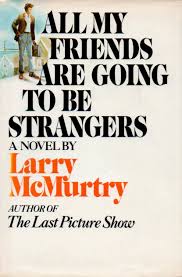
All My Friends Are Going To Be Strangers by Larry McMurtry

This is one of McMurtry’s earlier and lesser novels and it shows. His really good ones came later, Terms of Endearment, 1975; Lonesome Dove, 1985;  The Berrybender Chronicles, 2002;   Sacajawea’s Nickname (nonfiction), 2001).  I loved Lonesome Dove and it stood up quite well when I reread it in the early 2000’s some time.  The Berrybender Chronicles are definite favorites,  and I’ve read a lot more. This one?  – Meh.  But that may be due in part to the changing times -it feels dated.  It feels very 1970s with all the  sex, drugs and San Francisco – it’s not anywhere near good enough to be classic stuff  on its own –  McMurtry’s name from his greats will carry it.

allmyfriends

*******
All My Friends Are Going To Be Strangers
by Larry McMurtry
1972 / 304 pages
read by  John Randolph Jones 8h 39m
rating – 6: 20th century  fiction
*******

I’ve read quite a few of McMurtry’s novels starting with The Last Picture Show  (1966) and a few of its sequels,  Lonesome Dove (I read no sequels) the entire  Berrybender series and several stand-alones.   I even read one of his nonfictions,  Sacajawea’s Nickname (excellent).   A reader never knows quite what to expect from McMurtry,  but he is very good with a western setting.

But this is neither a “Western” in the normal sense of the genre, nor historical.  Part of it takes place in Texas circa 1970. San Francisco of the same era is another setting and the hippie-sex-artist scene is included on a general level.  It’s almost history now – the stuff of classics.

Our hero,  Danny Deck,  is a Texas-based budding writer with his first novel very recently accepted for publication.  He gets involved Sally,  a woman who is sexually involved with an acquaintance.  Sally wants desperately to get out of the relationship so Danny takes her,  marries her and they move to San Francisco.  What Sally really wants to do is get pregnant and the minute she is she ignores Danny and wants out of the marriage.

Danny is desolate but his novel is being published and then he meets Jill,  a wonderful woman although she’s depressed and still in love with a prior man. They split and Danny moves back to Texas.

I might have enjoyed this book had I read it in 1975,  but in 2016 it really feels a bit dated.  The style is interesting though – really detached.  “Cool?”  and it gets quite vulgar towards the end. It’s got some really funny scenes.

For what it’s worth,  McMurtry was raised in Texas and I’m sure he saw San Francisco for a bit in the days prior to writing All My Friends Are Going To Be Strangers.  For many years he’s lived and owned a bookstore near where he was raised.

Very insterestng piece about McMurtry’s own later depression: https://www.nytimes.com/books/97/12/07/home/article2.html

And a review from the NY Times:
http://www.nytimes.com/2012/08/19/us/larry-mcmurtry-keeping-his-last-hometown-bookshop-alive.html

Leave a comment

Arcadia by Lauren Groff – review

Thoroughly enjoyable novel – beautiful, different and so sweetly told.   It’s the story of a boy/man, Bit Stone,  who was the first child born to a loving couple who lived in a commune in northern New York State circa 1968.   Arcadia is as much the story of a commune as it is of anything – the biography of an ideal.  But the story line, the characters and their  lives,  is excellent –  the character of Bit is an astonishing accomplishment.

arcadia
*******

Arcadia 
by Lauren Groff
2012 / 298 pages
read by Andrew Garman –  11h 8m
rating:  9 
**********

Hannah and Abe Stone join up with a group called the Free People and travel around in upstate New York in their van.  Then one of the members is given a piece of land with a large but decrepit mansion on it.  They  decide to fix it up and call it Arcadia.  Their Little Bit is born in a van at some point during this time and grows up there – stays for a full 15 or 16 years, – it’s his home,  the only one he’s ever known.  Somewhat less than half the book is about Bit’s life afterwards.

Communal life is hard but not without rewards.  Abe and Hannah are idealistic and totally loving parents. Their little  Bit is a tiny child and very quiet, also smart and sensitive. He sees, hears, tastes, smells, feels and thinks far more than he speaks. The community works hard but always struggles with the extreme cold and hunger of serious poverty.  And as the group struggles it also grows taking in “trippies,”  “runaways,” and whomever shows up.

The years go by and Bit is 8 years old in 1974 – the year after Nixon said “I am not a crook,” the year of the oil embargo.   National events are mentioned so we can follow the years.

This book really has the feel of authenticity – I was around then  – 20 years old in 1968,  very interested in communal living and some of my friends did it and we visited.  But I didn’t ever feel like subjecting myself or my children to that kind of rather dirty (usually) existence.  I agreed with it though,  and supported, sympathized, encouraged, those who tried to forge out utopian (as close as possible)   cooperative communities,  living the ideals they believed.

This book is maybe not for everyone, but it may be going on my Top 10 of the year and because of it I’ll now have to read Groth’s latest one,  Fates and Furies which has got so much positive attention.

>>>>NOTES>>>> 

Leave a comment

Give Us the Ballot: by Ari Berman

Be warned – Give Us the Ballot is a powerful book,  but it’s not exactly an unbiased approach to the history of the Voting Rights Act.   This doesn’t bother me because there are a lot of  books out there by conservatives to counter the argument and or the situations.    Ari Berman, political correspondent for The Nation,  tells the story of the Voting RIghts Act of 1965 (like 50 years ago!),  the violent events leading up to its passage and its effects,  the counterrevolution of neo-conservatism of Reagan, Bush and on through 2015,  one year or so after the Supreme Court voted down the whole formula which was established in 1965 –

give us

********
Give Us the Ballot: The Modern Struggle for Voting Rights in America
by Ari Berman
2015/362 pages
read by Tom Zingarelli 12h 4m
rating:  10 –  politics 
(read and listened) 
********

This is a compelling and lively tale of civil rights marches, political battles and resistance at all levels and over a significant amount of time all pertaining to the Voting Rights Bill of 1965,  it’s most important section (section 5) is a killer.      But it’s a book which requires thought and effort as the pieces come together – ideas like how Affirmative Action got involved in basic Civil Rights and how the various presidential administrations and neo-conservatives opposed anything about the Voting Rights Act beyond “let them vote,”  (if they can).     In other words, the Conservatives seem to say,   “Stop worrying about actual representation and/or  voter ID”  (which is like the new “poll tax.)

Berman also writes about the resistance – the “Counterrevolution”  every single step of the way from whether or not blacks in the south could even register to vote through  how districts could be gerry-mandered to maintain the white majority status quo and how race-based voter suppression can be attained (maintained) by a number of methods.   The conservatives have used ferocious physical tactics as well as state legislative action,  the Department of  Justice,  the Supreme Court and, finally,  time  to push their agenda.   This is in large part because the Reagan appointees to the courts (including the Supreme Court)  made a huge impact even unto 2015.

The organization is not strictly chronological although that’s the basic outline for it.   And the book is heavy on detail and specifics,  so the organization is not terribly “tight.”   It works though because the chapter headings tell the reader what that section is basically covering.  And I’m not sure how else the scope and depth could been covered.

There has been so much violence and shenanigans,  so much legislation and so many people and court rulings and DOJ findings that some of the names, dates, places and ideas come up over and over.   However,  odd as it seems,   the same people were often involved on both sides.   Still,  even with all that, there’s surprisingly little actual repetition  – except that the same types of things keep happening over and over with new twists until … the whole thing is a mess –  not at all what the Voting Rights Act had in mind.

So the history is what’s probably important here – how the use of the Voting Rights Act of 1965 has changed the problems and the tactics, if not the underlying rationale, of those opposed.  And even though times have changed and there has been some improvement –  the possibility of falling back to post-Reconstruction days is too close for comfort – Berman tries to end on a positive note,   but in the view of recent developments which the VRB could have prevented at one time,   but now can’t, the real outlook is not rosy at all.

NOTES:   https://beckylindroos.wordpress.com/052016-2/give-us-the-ballot-by-ari-berman/

http://www.rollingstone.com/politics/news/the-fight-for-american-voting-rights-inside-ari-bermans-new-book-20150729


Leave a comment

Waiting for Sunrise by William Boyd

I enjoyed the last book I read by Boyd,  An Ice Cream War (1982),  but there’s something off with this one.  I’m not quite sure what it is.  The novel is labeled as a “spy” novel but that thread doesn’t really get started until relatively late in the game,  although when it does it lives up to the genre in its own way.

waiting4s
*******
Waiting for Sunrise
by William Boyd
2012 / 284 pages
read by Robert Ian MacKenzie 13h 7m
rating – 7 / literary  historical fiction
*******

Starting out in Vienna circa 1913,  our hero, the young and handsome professional stage actor, Lysnder Rief, is working with Dr. Bensimon to alleviate his sexual problem.   He meets some folks in the waiting room and this some of them are not quite what they seem to be.   So he has some adventures and gets into some troubles and this gets him … well .. it’s a lot of funny business twisted into what turns out to be a spy novel.  There is something about the story which actually reminds me of Michael Freyn’s Skios.

Hetty Bull, an aspiring sculptor whom he met in the waiting room,  invites him to a party after which she says she wants to sculpt him – and she does.  And yes he can. Life is pretty nice and he stays on  But then Lysander lands in jail  because of Hetty.  But all is well,  the British Embassy  assists him in escaping.  (Yeah?)

The first section has a lot of sex,  but there’s never anything really graphic by the standards of  the 21st century.  The tone is rather flat, like a case study or rather distanced character.  Our hero,  Lysander is an actor by trade and forever analyzing everything.   It works for me.

World War I breaks out and Lysander, now back in London,  joins up.   Considering he speaks several languages he’s really quite valuable so he’s then put to work as a spy – recruited by the same British Embassy guys who helped him earlier. (heh)   His first job is to find the key to a secret code which is vital to Britain’s security and held by a possible traitor.  There’s a fair amount of danger and a lot of questioning about who is telling the truth and who is working with whom and who is an enemy.  Our hero  manages to escape again albeit with a few bullet wounds, and it would seem that being even a second-rate actor in his prior life  is very helpful.   He wakes up in a British hospital.

Now he starts lying – lying and lying  – feeling that the less he tells anyone the better.  Actually,  most of the other characters are lying quite a lot.  There’s a basic theme here – from “Who is being honest?” to “What is reality?” And then of course,  what is it actors and spies have in common?

Boyd writes nicely with a generous sprinkling of appropriate metaphors some of which are quite interesting and original,  humorous at times.  The descriptions of people and places are delicious,  but the action itself is fast-paced,  the plot is good and twisty and the humor is plentiful.   I did have to keep reminding myself that this was published in 2012 because in some ways  it really feels like it was written in the 1950s – maybe that’s just the whole British spy genre thing.

Anyway,  I was bored for parts of it,  had a hard time sticking with it and  finishing,  although when I really paid attention I knew it was quite good – it never did grab me though.  (One problem might have been the voice of the narrator – blah.)

“The Spy Who Came in from the Couch” – http://www.nytimes.com/2012/05/06/books/review/waiting-for-sunrise-by-william-boyd.html

http://www.independent.co.uk/arts-entertainment/books/reviews/waiting-for-sunrise-by-william-boyd-6298411.html

Leave a comment

Quartet in Autumn by Barbara Pym

Another reread – this time of an old favorite author,  Barbara Pym,  who has a whole interesting life and her books are delightful and there’s even a fan club of sorts -The Barbara Pym society.

quartet


*************
Quartet in Autumn
by Barbara Pym
1977  /186 pages
rating:  8.75    / 20th century (classic)
*************

The setting of Pym’s near-classic  work is 1970s London and the story revolves around 4 employees in their own department of an unnamed company – maybe insurance?    The issue is that the four are apparently getting on in years, somewhat loners by nature,  and ready for retirement,  yet they are all essentially alone in the world.

They each have their own ways and are rather set in them –  they never visit each other outside of the office and for instance,  they don’t share lunches and  although they all use the library, they go individually and for their own purposes.   These are not “typical” people,  they’re loners by nature and as a result they “fall through the cracks” (as a couple of them mention during the course of the novel.)

Change is a huge theme here.  Changes in society including within the church and the church’s place in society,  race and language,  as well as in their individual situations and even their own bodies.  Yes,  life has changed quite a lot since these four,  who are now at or close to retirement age, were young,  before WWI.  And life and society keep changing – the mail girl is young and black!

The “Quartet:”

Edwin Braithwaite, a widower with a daughter in Beckenham,  checks the clerical directory at the library. He is far more attached to his local parish and the church calendar its activities govern his life.

Norman, always a bachelor, has his solitary ways,  visiting the museum or the library (to see mummified crocodiles. )  when he can or the husband of his late sister on special occasions.   He lives alone in his “bedsitter” and is apparently very frugal. No particular religious connection.

“Miss” Marcia Ivory,  never married,  lives in a rather large house, alone since her old cat as well as her mother died. She occasionally uses the library to dispose of unlikely trash. Now the social service worker seems to think she needs looking in on.  Marcia recently had an operation which “removed” something – a mastectomy?   She does have some rather peculiar habits (hoarding and bird-like eating) and tends to be reclusive although she certainly pays attention to  her operating doctor. No particular religious connection – Protestant.  – Marsha is actually rather disappointed when a man gets up after a fall and she enjoys seeing the effects of an auto wreck.

“Miss” Letty Crowe , who also has never married,  has set her retirement date although that’s rather subtle.  She’s  never married .  She uses the library to check out novels.   At the book’s opening, Letty lives in a rooming house which has a new owner,  an African minister whose religion is more raucous than what she is used to. She has a widowed friend who lives in the country.   She really needs to move.   No particular religious connection.

(SEE NOTES for more on the individual characters)

These are four delicious characters for a reader willing to work a bit to distinguish the subtle variations in each of the scenarios presented.

Although only one of the four  is actively attached to a church,  religion/church seems to play a fairly large role in the novel as a whole – in the background three of these people don’t really want,  and likely will not be,  getting assistance from the church.  Furthermore, except for Edwin only Norman might find it acceptable – because it could possibly save him some money or provide a safety net.

Their mortality haunts them as they read articles in the newspaper or see incidents in their lives.  Norman especially is concerned about “falling through the net of the welfare state,”  being found “dead by starvation,”  or even being unable to open a can of food.  He buys fresh and doesn’t stockpile like Marsha.

(SEE NOTES for more specific plot points –  spoilers there though)

3 Comments

The Tsar of Love and Techno by Anthony Marra

Amazing book, way better than its title!  Think Marra’s prior novel,  A Constellation of Vital Phenomena and mix it up with Cloud Atlas (David Mitchell) and you’re close.   This is the story of a small, outrageously polluted, town in northernmost Siberia, Kirvosk, and some of the people who lived and died there from 1937 on.  Some of them died in the days of censorship and paranoia under Stalin,  others died when they were sent to the Chechen wars of 1995 and 2000.  Still others died in the meantime or later.   It’s also a story of love, forgiveness, courage, cowardliness, dreams, criminality and did I say love?  That’s okay,  I’ll say it again.
tsar

*************
The Tsar of Love and Techno 
by Anthony Marra
2015/ 352 pages
Read by:  Mark Bramhall,  Beata Pozniak, Rustam Kasymov  – 10h 46m
r
ating:   9.5 / contemporary literary fiction
(read and listened)
*************

The parts about Chechnya and the theme of love in times of serious horrors are reminiscent of Marra’s prior work.  The structure is from Mitchell.

The front cover is perfect. That’s a cassette tape in the center with the word “Stories” written on it.  When a cassette tape is full of  various things, usually different musical pieces,  which a user has put on there it’s called a mixtape.   The structure of The Tsar of Love and Techno is like a mixtape in that it starts with the pieces on Side A.  then there is an Intermission or a bridge – (the time when we take it out maybe?)  – a separation and coming together piece  – and then comes Side B which has more pieces.  – Marra has used the terms Side A and Side B instead of the common “Part I” and “Part II”   But it works brilliantly because a very important part of the story is the creation of a mixtape by one of the characters.

I’d definitely give the book a subtitle of “: A Novel”  rather than “Stories”  although it’s not until later on in the book,  maybe after the “Intermission,” the stories (chapters?)  are only loosely connected.   I read fairly carefully and was able to put most of it together,  but this is one of those books which cries out for a second reading.

The book opens with a 1st person censor/artist in Leningrad erasing the photos of those people who are considered “enemies” of the Stalinist regime – enemies of “the people.”   Their photos are taken out of group shots and individually.   That’s 1937.

Then it switches to the community of Kirovsk, in the very northernmost tip of Siberia where the grandchildren of the old labor camp community and it’s in second person focusing on the granddaughter of a famous but censored ballerina.

For summaries and photos see NOTES:   https://beckylindroos.wordpress.com/052016-2/the-tsar-of-love-and-techno-by-anthony-marra/

The tone is gently ironic overall,   and sometimes it’s  just plain funny, but still,  there’s always a very grim underlying reality of Stalin’s regime, the war in Chechnya, the fall of Communism and its aftermath,  the pollution of the north.   And, as in A Constellation of Vital Phenomena, it’s also full of love amongst the horrors – or the memory of horrors and current horrors,  and how the horrors haunt the lives of the main characters. And how they love anyway.

Leave a comment

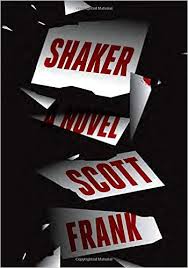
Shaker by Scott Frank

Not overwhelmed here – there’s a good story and Frank has spent plenty of time on the characters and plot twists but it sometimes seems that the backstories on the major characters slow the main story down quite a lot – a tad too much maybe.  But it all comes together because by the time the story winds up you really have the scoop on everyone and almost don’t know who to root for.

shaker

********
Shaker 
by Scott Frank
2015 / 353 pages
read by Dion Graham – 10h 29m
rating:  B+  / crime
********


The story opens during a major earthquake with serious aftershocks  hitting the Los Angeles area.  Roy Cooper, a hitman for some operation,  has just flown in from New York to take care of a piece of business – kill a man who is interfering in some way with his employer’s doings.  He gets there,  does the job in a very professional manner and then, due in part to the earthquake,  can’t find the car on his way out of the apartment complex.   Instead he runs into a little group of very young gangster types.  These are the 14-year olds – the ones who are out to kill for the thrill.    And the jogger Roy saw just moments before is now down on the ground with a gun to his head.  The gangsters shoot the jogger and after Roy slaps the Science, the leader.  So Science escapes but it’s with Roy’s special gun.

As it turns out the jogger victim is a highly respected special assistant to the mayor and the gun snatched by Science is an antique.  Roy the hitman lands in the hospital and he’s seen as the hero by a media frenzy which includes video extensive footage.   This doesn’t look good to Roy’s employers back in Brooklyn and it seems that although his mother didn’t want him,  now everybody does.

There are lots of characters,  but most of them are bit players to the majors.    Detective Kelly McGuire,  a drunk and outspoken critic of the department,  is taken off her disciplinary desk duty to chase down McGuire and the gangsters.  Half Latina she knows the neighborhoods and the bigger players.  And there’s Albert Burdin, the Canadian boss,  and Science the up-and-coming hit man.   Roy has to get some scores settled and get out of LA.

Interspersed with the story of Roy and his pursuers is the tale of Roy’s formative years,  his little family,  his incarceration at the age of 11,  the group at the Farm – he learns a lot over his lifetime.

But Frank is also trying to cover the entrapment of the ghetto – some of the younger kids show promise but there’s no way to make anything of it and so a cycle continues to breed poverty and guns.

Leave a comment

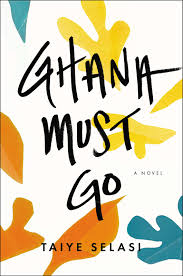
Ghana Must Go by Taiye Selasi

Kweku Sai, who was an immigrant to the US from Ghana in the late 1970s became a brilliant surgeon,  but he later left his wife and four children in Boston to return to Africa.  As the book opens Kweku lies alone in his garden, dying.  Meanwhile Amma, his second wife sleeps upstairs inside their house.   We follow Kweku’s dying memories for a few chapters and then switch to the whereabouts, the thoughts and activities of the four children and his first wife,  Fola.   This is a story of immigration,  of families and homes (the actual houses really) of memories and death plus more,  forgiveness and ambition and failure and love.  Quite a task for a debut novel – ambitious as others have said.

ghana

*****
Ghana Must Go
by Taiye Selasi
2014 /  336 pages
read by Adjoa Andoh
rating:  7   contemp fiction – Ghana/Nigeria/US
*****

In the US Kweku  was married for perhaps 20 years to Folasadé (Fola),  herself an immigrant to the US from Nigeria and he dearly loved her, as she did him,  but he always felt he had to live up to some kind of expectations of success.  The couple had four children pretty quickly and life was going along nicely when  Kweku was suddenly and unfairly fired from his prestigious job at Johns Hopkins Medical in Boston.   He was unable to tell his wife and family,  so in horrendous shame,  he just left the family without a goodbye and went back home to Ghana where he lived until he died in a home of his own design,  another 16 or so years.

So the obvious questions and thrust of the novel is why did he leave,  what happened to the rest of the family as well as to Kweku after he left,  and how can they get back together at all now that they’re rich and famous,  living their own lives in different parts of the world?     That’s the book.

Fola, the mother (the wife Kweku left with to raise the children) was unable to finish law school as she planned,  but she raised 4 fairly successful children,  in the conventional sense of the term “success.”    Olu, the eldest, becomes an accomplished doctor in Boston.  A pair of twins, Kehinde a boy and Taiwo, a girl,  turn into a important artist in London and a successful lawyer with piano talents in Virginia respectively.   The youngest child is Sadie,  a dancer at heart, is also studying to be a lawyer at Yale.   They all have emotional difficulties, some more intense than others.   They are all somewhat emotional – crying easily and thinking they feel one another’s pain.  But they rarely communicate.

The narrative alternates for awhile between the dying Kweku’s memories and the points of view of the children, now grown,  what they remember and then what they do.  then they switch over to the children only .   Thankfully it’s all third person.   But it’s so complex I had to start over when I’d got about 1/3 of the way through the book.

 “Dewdrops on grass blades like diamonds flung freely from the pouch of some sprite-god who’d just happened by, stepping lightly and lithely through Kweku Sai’s garden just moments before Kweku appeared there himself.” – Chapter 1 – Audio

Methinks Selasi stretched a tad too far with her concept and tried to compensate by overworking the narrative,  throwing too many metaphors stretching a description in all sorts of directions,  and overdoing the structural cleverness – or awkwardness if you prefer – with backstories inside of backstories engaging too many characters.   Both of these are intrusive of anything happening – but that seems to take second place to Selasi’s lists of descriptors.   Too bad because it really could have been a good tale.  As other reviewers have said,  it’s ambitious.

3 Comments

Secondhand Time by Svetlana Alexievich

I just finished Chernobyl by the Nobel-winning Svetlana Alexievich in March and along comes Secondhand Time, a Random House release distributed by/ Netgalley, by the same author – due out May 10.   I jumped at it.  In the words of the Nobel Committee,  Alexievich’s writings are:

 “a new kind of literary genre,” describing her work as “a history of emotions—a history of the soul.” and  “For her polyphonic writings, a monument to suffering and courage in our time.”

Alexievich, a noted Russian journalist – Ukraine – the USSR –  has written several books concerned with recent events,  notably in English,   “The Womanly Face of War” and “Voices From Chernobyl.”    In this her most recent book,  she covers the human reaction to the transition from Russian Communism to the current situation using the people’s own voices to communicate the reality, the memory.   Her interviews probably took place between 2002 and 2012.  Reading this book is not like reading a Wikipedia entry or  another history – this is the situation from the eyes and with the words of the people who lived through it – more like reading “Hard Times” by Studs Terkle (1970) or parts of “Ravensbruck”  by Sarah Helm.    (I added the graphics because although I’m sure Alexievich intended the words to speak for themselves,  as an American I don’t have the visuals to go with them.)

secondhand
*******
Secondhand Time:  The Last of the Soviets
by Svetlana Alexievich
2013 / 496 pages – 2016 in English
rating:  8  / nonfiction – journalism – (Russian recent history) 
**********

pro_reader_120“On the eve of the 1917 Revolution, Alexander Grin wrote, “And the future seems to have stopped standing in its proper place.” Now, a hundred years later, the future is, once again, not where it ought to be. Our time comes to us secondhand. ”   (in “Remarks from an Accomplice”)

In late December of 1991,  the Union of Soviet Socialist Republics,  already recently reduced by the exit of several satellite countries,  finally and after a failed coup,   dissolved itself  and life as the Russian people had known it for several generations was ended.  Just like that – with a “big bang” which plunged the country into “shock therapy.”

Capitalism was suddenly their way of life and for awhile chaos reigned and a few people made a lot of money while most others were suddenly destitute.  Background knowledge would be helpful but it’s not really necessary if the reader familiarizes himself and uses  the chronology in the front section.

Part I of the book concerns itself with the events of 1991 themselves,  some history and the immediate aftermath.

Americans and the capitalist West do not understand how attached many of the  the Russian people were to Communism,  to the ideals of Stalin and Lenin.   The people of Russia had never known “freedom” or “democracy,”   so the attitudes of many were along the lines of “Freedom? What will they  (we) do with it?”  Or they were scared to death or they were overjoyed,  some took up guns,  some hid, some stood in front of the tanks while others went on down the street for ice cream.  Many gathered outside the White House (their parliament building)  to protest the downfall of the only system

tanks

Tanks in Red Square,  August 1991 – attempted coup,  the serious Communists were trying to take back the power.

they’d ever known.  There was apparently a lot of Communist Party card burning.   But others dreamed of the money – it just goes on.

But there were others who did support the fight for freedom – just not capitalism – and felt they were cheated, lied to .   There were those who supported all manner of things during that time but it would seem that doesn’t matter now – what transpired has been a failure and many look back on the old days with some nostalgia,  wishing things had turned out differently.   Others look back and remember the gulags for WWII prisoners of war,  the arrests, the horrors of life under Stalin – some were Jewish.

In October 1991 Yeltsin, the newly elected president of the Russian Soviet Federative Socialist Republic, (RSFSR),  had  announced that Russia would proceed with radical market-oriented reform along the lines of Poland’s “big bang”, also known as “shock therapy.”  –   ( https://en.wikipedia.org/wiki/History_of_Russia_(1991–present) and loc 735.)

Although Gorbachev’s policies of perestroika and glasnost,  were originally  aimed at getting the Soviets out of their economic troubles,  eventually, along with the war in Afghanistan and the Chernobyl incident,  they brought on the downfall of the entire Soviet Union.

Alexievich interviewed hundreds of people for this book which took several years to compile and edit to give a comprehensible organization to the whole.  It worked.  Some of the interview results are interwoven while others are left to stand alone,   but the result is powerful.

watching.jpg

The vast majority of the people of Russia loved their Motherland dearly, it’s heroes even  including Stalin, and when the Soviet system died so did their dreams and the reality their parents and so many others had fought and died for.   For others the change was necessary  – and the reality their sons and brothers and friends had died for.  It appears to have been a crazy time for everyone and some grudges, hatred even,  had been held a long time.  It was a time of parties and suicides – celebrations and hiding,  tears and exultation.

The subjects are mostly those who remember the Soviet Union from adulthood and  include regular industrial workers,  Soviet district committee members,  doctors, students,   teachers.   Some remember the old victories, the times they celebrated – WWII,  the first man in space,  the Cuban revolution,  and going back to the long history of Mother Russia,  the Revolution and people’s lives wrapped up and interwoven in that history.  But there are some really young people interviewed,  students and a  deceased 14-year old (as told by his mother and friends),  who don’t remember the times prior to 1991.  And one who old Communist who was 87 years old at the time of the interview and kept his Party card in his Bible –  along with a 77-year old veteran of WWII.

Of rather special interest is the section on Sergey Akhromeyev,  a Chief of the Armed Forces  of the Soviet Union and advisor to Gorbachev – the last President of the Soviet Union.  Included here is an interview with a man who remains known only as “N” because of his high place in the old Soviet system.

Also included are newspaper accounts and criminal reports and a series of interviews regarding the suicides which is rather odd because of a kind of Kitchen Chorus going on – Greek chorus style.

There is a section for the Civil War in Georgia and the immigrants to Russia or folks returning to their homeland – dislocations- returning from Afghanistan to find Moscow in shambles. .

The people interviewed aren’t always clear about what time frame they’re referring to in their monologues,  so the Chronology in the front is very helpful.
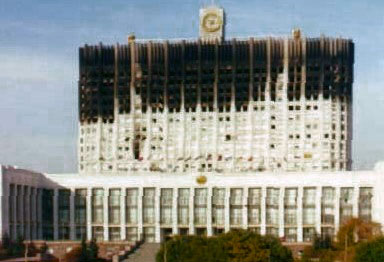
White_House-3

Also quite good are the notes which are included at the end of each chapter.

Then comes Part Two – “The Charms of Emptiness.”  and is more about what Russia was like when Alexievich was putting the manuscript together,  20 years down the road from 1991.  This is the time when the wars in Chechnya started,  the attempted take-over from Yeltsin,  the coming of Putin and more demonstrations,  more desire for revolution – again,  even knowing the results will not be what they want.

The refugees were another issue – no home for them and their memories are sweet, their realities grim. Many went to the US.

Suddenly there was no money – the barter system prevailed,  people were even paid in what they produced,  canned goods or plastics – whatever.  The value of the money had gone to zero including what people thought they had in their mattresses or the banks.   Capitalism was underway because they had to sell things to get money to buy things – that or barter.

Many of the young people want money and the things it can buy – they don’t have the moral fiber their parents and grandparents did.  They don’t value Marx, Lenin, Stalin or socialism – but others do,  some are finding a revival of interest but others leave for the US – and then a few return.   They often view the ideas of their parents and grandparents as silly romantic nonsense.

There is continued racist violence even today,  especially against Muslims and there are 2 millions of migrant workers in Moscow (according to one entry).   And we get a sort of briefing on the migrants and a bit of their historical experience.

The suicidal waitress with the drug addition has a gruesome tale to tell.  The lovers without love or money – she leaves – he lands in prison.

The author’s experience is briefly told – I think it must be better for her as her work does get published and noticed.  She was a 43-year old from Belarus in 1991,  was exiled for brief periods but lives there today.

Overall this is quite an informative book, magnificently powerful presented and Alexievich did well in her articulation of many of  the results of and the diverse human reactions  to  the 1991 collapse of the USSR.  That said,  it’s too long and sometimes repetitive.

Svetlana Alexievich Quotes With Pictures:
http://www.rugusavay.com/svetlana-alexievich-quotes-with-pictures/

Svetlana Alexievich – home page:
http://www.alexievich.info/biogr_EN.html

Overview of Secondhand Time: 
http://www.dursthoff.de/book.php?m=3&aid=40&bid=69

4 Comments

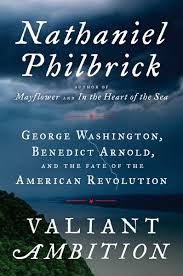
Valiant Ambition by Nathaniel Philbrick

What do we remember about Benedict Arnold’s place in the American Revolution?  George Washington was the good guy and Benedict Arnold the bad one,  right?   But why – what drove Arnold to treason,  how did he commit it,  was he guilty and what happened later?     I certainly remember next to nothing about the specifics, if I ever knew.

valiant


**********
Valiant Ambition: George Washington, Benedict Arnold and the Fate of the American Revolution
by Nathaniel Philbrick
2016 / 443 pages
rating:  9 
**  And a huge thank you to Penguin Group at Viking  for the ARC via NetGalley **
**********

Digging beneath the surface of the military actions and personalities of the struggle for independence,  Nathaniel Philbrick has come up with some very interesting conclusions – not necessarily aligned with the ones we read in our grade school history texts –   along with all sorts of extenuating circumstances and tons of fascinating extras even for the fairly well versed.

The first half was familiar territory for me but Philbrick writes nicely and it was a good review of the times between the time Admiral William Howe and his brother General Richard Howe sailed into American waters just south of New York,  through Washington on the Delaware and at Trenton,  the battles around New York and near the Hudson (Saratoga, etc.) winding up coming towards,  but not including,  the last battles in the South.

The way it’s covered seems spotty or choppy at first glance,  but the focus is on the personalities as well as the battle proficiency of George Washington and Benedict Arnold plus Horatio Gates,  John Andre and a few others.   This is the information which is indispensable to fully appreciate the completely  absorbing latter half of the book.  And it’s so fascinating I read and reread,  took notes and completely enjoyed the ride.

Apparently there were some in the US military and population  who wanted independence from Britain  not only out of a love of freedom,  but also out of personal ambition,  for money,  property and personal advantage.  – (Is this a big surprise in 2016?)

Arnold did NOT simply one day up and join the enemy –  it took quite a lot for him to finally go to those lengths –  plus the love of a Loyalist woman – and his love of money.  He was incredibly brave and served his country well until he thought perhaps they weren’t very appreciative of all it had cost him.

Washington was not always thought to be the decisive and inspiring leader we’ve grown up learning about.  At the time there were plenty who thought he was doing a rather poor job of it and pushed their own personal ambitions.    The Congress in Philadelphia, such as it was, sometimes seemed more interested in their own little plots and schemes than in providing for the military.  Philbrick gets into the specifics of these things which contributed heavily to a war of Independence that we almost didn’t win.  But for all that – we do know the ending.

Highly recommended for those interested and with a bit of background in the American Revolution as a whole.

Leave a comment

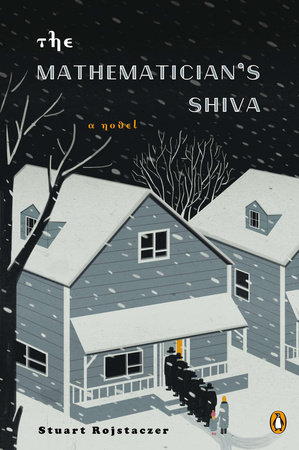
The Mathematician’s Shiva by Stuart Rojstaczer

This is yet another reread – I first read (and listened to) The Mathematician’s Funeral back in February just because I found it on Audible and it looked good,  kind of fun.  But from the narrative it was apparent there were little diagrams included in the text and I wanted to see those – so I also got the ebook.  Wow!  Delightful!  And I knew a group which would likely really enjoy the book so I nominated it even though I almost never nominate books I’ve already read.  But it was just so enjoyable, fun.

shiva2

***********
The Mathematician’s Shiva
by Stuart Rojstaczer
2014 / 370 pages
read by  Angela Brazil, Stephen R. Thorne  10h 38m
rating –  8.5 (lots of fun included in rating)
**********

And it was selected so I’m rereading it – to make sure I can contribute to the discusison without having to rely on my memory of 40 – 50  books ago.  

Eleven years after the fact,  Sasha Karnokovich is remembering his mother’s funeral and shiva.
Rachela Karnokovich,  who had been living in Madison Wisconsin for many years,  was a world-renowned mathematician and although Sasha would have liked to have kept her funeral and shiva  private,  the mathematician friends arrived in droves.  They came to pay honor to her memory,  but also to see if they couldn’t find her work on the Navier-Stokes problem which they had all been working on for years,  trying to come up with the solution.  These chapters are sometimes heartwarming,  sometimes a bit silly,  sometimes a bit sad.

But there was so much more to Rachela than her mathematical mind,  more than being a sister, a wife and a mother.  She was an individual with her own life – that’s what the memoir shows us.

Interspersed with the chapters from 1st person Sasha are chapters comprised of excerpts of Rachela’s memoirs.  These chapters mostly take place in Stalinist Russia,  in the work camps and later at the university.  Some of her work was plagiarized and the culprit won an award for it.   Her childhood made an indelible imprint on her whole life. The writing here is of a different tone and gives a depth and texture to the whole novel.  I kind of missed that the first time.

I suppose in some ways this second reading wasn’t quite as compelling as the first,  but it was still great fun,  like visiting old friends.  And there were a few new aspects as well as those remembered.

Leave a comment

Ravensbruck: Life and Death in Hitler’s Concentration Camp for Women by Sarah Helm

In the Prologue (Kindle locations 292-294) Helm states her premise perfectly:

I understood now what this book should be: a biography of Ravensbrück beginning at the beginning and ending at the end, piecing the broken story back together again as best I could. The book would try to throw light on the Nazis’ crimes against women, showing, at the same time, how an understanding of what happened at the camp for women can illuminate the wider Nazi story.

ravens

********
Ravensbruck: Life and Death in Hitler’s Concentration Camp for Women
by Sarah Helm  – (Knopf Doubleday) 
2014/ 788 pages  (hard cover) 
rating – 10 –   non-fiction history 

********

I say  perfectly because she does just exactly that – details as much as possible the life, from beginning to end,  of  the only  Nazi concentration camp specifically for women – Ravensbruck.

The narrative is chronological for the most part and a mix of dry and riveting – makes for  slow reading at first but picks up considerably in Part 2 ( out of 6).    I was more impressed by the descriptions of what was happening at the policy level than with life in the barrack although it is the life in the barracks part that makes this book different and really stand out.

It’s just that there’s so much brutality and pain and it’s quite a slog at times,  but absolutely necessary for the impact to be made.  There’s  loyalty and sacrifice and love amongst the prisoners as well as some treachery.  These were real women, not characters in a novel,  and they were

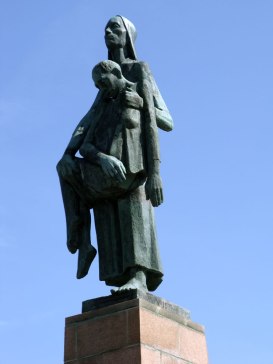
ravenstatue

Ravensbrúck statue

completely dehumanized and then treated like sick cattle or criminals.  There were Jews,  gentiles married to Jews,  prostitutes,  Marxists and Jehovah’s Witnesses along with gypsies and other “worthless mouths.”    I felt I owed it to them to listen – they told their tales in notes smuggled through and then in diaries and letters and finally in court documents. A few were even interviewed by the author.

I was surprised at the number of Jehovah’s
Witnesses assigned there and their brave determination not to bow in any way to Hitler or his war.   I knew some Jehovah’s Witnesses were rounded up although I never really knew why or how many –  I thought it was just a few but nope – there were several thousand.  Anyone who opposed Hitler in any way, including being handicapped by birth,  Jewish,  gypsy,  Marxist,  or a foreigner was vulnerable to the camps.  The  majority of women at Ravensbruck  were not  Jewish,  but were there for opposing Hitler in some way including being of the criminal element, prostitution and being “asocial” (lazy ).

Actually,  almost as many non-Jewish people died in the German camps as Jews: http://www.huffingtonpost.com/2015/01/27/holocaust-non-jewish-victims_n_6555604.html  This book seems to cover the variety and Helm seems to emphasize the nationalities of those interred – it’s quite interesting.

The heroines are one focus here – Elsa Krug,    Olga Benario, Helena Korewina,  Doris Maase, Hanna Sturm,  Kathe Rentmeister,  Krysia Czyz (!),   Yevgenia Klem, Zdenka Nedvedova, Maria Klyugman,  Zoya Savel’eva, Sylvia Salvesen,   Yevgenia Lazarevna, Valentina Makarova, and many, many other women did amazing things in order to survive or help their co-prisoners. They got messages to each other and to the outside,  they sabotaged the work effort,  brought extra food for some,  the doctor prisoners tried to help,  they comforted each other,  one told stories,  some sang.   The Russian women from Stalingrad were exceptional.

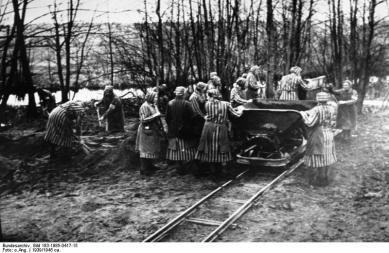
Ravensbrück, Konzentrationslager

prisoners of Ravensbruck

The other prisoners,  those with just a name,  are another focus – they were all victims,  even the guards who were often co-opted prisoners.

And there were specially evil people,  Himmler and some of his SS folks,  like Hoss, Karl Gebhardt, Percival Triete,  Fritz Suhren,  and others.   The truly sadistic Ludwig Ramdohr is singled out for special attention – hated even by many in the SS for his spies and mission to end corruption.

Sad to say yes,  some prisoners did succumb and turn informant – probably quite a few considering the torture.

At Ravensbruck the camp’s job increasingly became simply to provide for the German war effort – uniforms and arms.  The output was demanding – when the starved slave labor couldn’t keep up they were killed.   “As long as prisoners were fit for work they were to be kept alive.”  (loc 6397)

It would seem that there was no agreement among the general population to see it as  Hitler saw it –  to agree with what he was doing (if they knew).  They simply had to hush up about opposing him.  Without Hitler there would still have been a war,  but without Hitler there would never have been a Holocaust in part because the real 2nd in command creeps – Himmler,  Eichmann, Goring,  Goebbels would never have risen to such prominence – imo.

Of note –  a couple Nazi collaborating factories are mentioned notably  Siemens but there were many more.

The Red Cross of Germany apparently refused to do anything about the conditions in the camps.  They wouldn’t even tell the world – which they were mandated to do  – and they definitely did know what was going on.

The messages of Krysia Czyz via her family finally got connected to a Polish cell in Sweden who telegraphed a message to London.  Still,  no one did anything –  not the Red Cross, not the Vatican – word would get out but would not spread.

Toward the end there were 22 countries represented at Ravensbruck – as well as a very large number of yellow stars (Jews) – some protected because they were not from Germany.

The book is a biography of Ravensbruck and it’s long and it wears a person out just reading it.  The scope is from the inception to the how things are today –  the structure is used to focus on the women themselves and their lives within the camps and then out examine how this fit with Nazi strategy as a whole.   I would get quite tired of reading the horrors of the camp – sickened is perhaps a better word – and then it would change to what was happening in the world at large.   Virtually everything not personal and given more than a one-time mention  can be online but it’s the combination added to the personal issues unfolding at Ravensbruk which provides the impact.

US – awareness project – Washington Post 4/12/2016
https://www.washingtonpost.com/local/social-issues/what-did-americans-know-as-the-holocaust-unfolded-quite-a-lot-it-turns-out/2016/04/12/ff4f0ec2-fcec-11e5-9140-e61d062438bb_story.html

QUOTES:
The sole aim of Hitler’s concentration camps in the early days was to crush all internal German opposition; only once this had been done would other objectives be pursued.

Helm, Sarah (2015-03-31). Ravensbruck: Life and Death in Hitler’s Concentration Camp for Women (Kindle Locations 467-468). Knopf Doubleday Publishing Group. Kindle Edition.

By 1936 not only was the political opposition entirely eliminated, but humanitarian bodies and the German churches were all toeing the line.

(Kindle Locations 531-532)

In 1936 500 German housewives carrying bibles and wearing neat white headscarves arrived at Moringen. The women, Jehovah’s Witnesses, had protested when their husbands were called up for the army. Hitler was the Antichrist, they said; God was the ruler on earth, not the Führer. Their husbands, and other male Jehovah’s Witnesses, were taken to Hitler’s newest camp, Buchenwald, where they suffered twenty-five lashes of a leather whip.

(Kindle Locations 571-574)

What the ICRC  (Red Cross) was trying to do: preserving ‘neutrality’ was so much more important. There may well have been those on the Committee who feared too that sending the parcels would offend Ernst Grawitz, head of the German Red Cross.

(Kindle Locations 8400-8401)

Reviews:
http://www.nytimes.com/2015/04/12/books/review/ravensbruck-by-sarah-helm.html

http://nicolewbrown.blogspot.com/2016/01/ravensbruck-life-and-death-in-hitlers.html

Interviews:
http://www3.ub.lu.se/ravensbruck/interview420.pdf

World Death Camps CNN – world/nazi-death-camps/  (2015)

4 Comments

The Heart of the Matter by Graham Greene

I would never have chosen this book because I’m not crazy about Greene and his anxiety about Catholic righteousness.  Oh well – this one is supposed to be pretty good and it was re-released in 2011, a good sign.

Major Henry Scobie is a police commissioner working somewhere in West Africa circa WWII.  He likes it there,  likes his job,  and loves his wife, Louise.  He should be  a happy man,  right?  Wrong – Louise is not happy at all – she feels she has no friends and wants to go to South Africa.  Scobie feels it’s his responsibility to make her happy.   The only child of the couple died a few years prior and Scobie feels a lot of guilt as well as self-pity.

heartofgreene


*******
The Heart of the Matter
by Graham Greene
1948 /  288 pages
read by Michael Kitchen 10h 6m
rating:  8 / classic  – an extra point for being a classic  
*******

Why Sierra Leon  or the Ivory Coast or wherever?  It’s not for the scenery or the population because there’s almost nothing about that sort of thing – just enough to know it’s a distant land with a hugely varied population.  More likely the novel is set there to give a slight distancing to the whole situation and more sympathy for the protagonist . He’s a police officer,  alone in a war zone distant from home.   Scobie’s first transgression, against his job,  involves a clemency,  a mercy to a deserving suspect.

But he has embarked on a slippery slope – his wife gets to leave with the help of an ill advised loan.  Then he meets a devastated young widow who needs him  and well –  he’s just trying to help –   poor, sad man.

Also,  Africa gives the protagonist access to illicit funds, smuggled diamonds,  a man from another culture with different values who will “understand” and help –  I suppose with some thought this could mostly have been achieved in  London – only the distancing would be missing.   Because of that distancing we’re better able to understand that Scobie is a very good man who is in a strange and lonely place where he feels unappreciated at work and unloved by his wife. Furthermore he has none of the resources he would have in London – old friends,  family, activities.  He becomes sympathetic in a way he would not have been in the city.

Major Scobie is a good Catholic man – he wants always to do the right thing which he interprets as being in the good graces of the Church.   He doesn’t lie, steal, cheat, commit adultery or any number of other things.    He’s very proud of his “goodness”  and sticks to it.  He goes to mass  and has a very legalistic view of religion.  But!  he does little things like tearing up letters from suspicious persons when he finds they’re innocuous  –  this is against regulations and Scobie tries to follow the laws and regulations of the government and the injunctions of the Church.

Scobie’s depressed wife Louise really, really wants to go to South Africa.  So Scobie has to find the money and he accepts a loan from this disreputable man who deals in illicit diamonds.  Then he does something else akin to lying.  Then he … well .. yes. He errs in many ways and struggles with his choices – or lack of them.  And then he starts really feeling sorry for himself and wonders if everyone feels pity for him –  that pretty well tears at his pride.  Scobie is a very proud man – hasn’t thought he needed forgiveness because has committed no sins – until now – and he can’t face himself,  face those he’s hurt,  face his God.   It’s depressing –

Pity seems to be Scobie’s whole concept of love –  he feels sorry for his wife,  sorry for the man with the letter,  sorry for the young widow –  he mostly feels sorry for himself.

“The character of Scobie was intended to show that pity can be the expression of an almost monstrous pride.”  Greene in the  Introduction to the novel. 

Greene writes very nicely with  interesting metaphors and believable characters in psychological torment.  Still, I’m really rather bored with his issues of existential despair played out against the backdrop of Church regulations and commandments.   He’s searching for a meaningful life and for love but can’t let go of the need for Church approval.   Where is one to find meaning? –

I’ve now read three of Graham’s books saying the same thing in different shells –   The Power and the Glory (Mexico 1930s,   pub 1940),  The End of the Affair (1951 – London Blitz of 1940  – pub 1951) – and this one (Africa WWII – pub 1948).   –   Some poor man trying to be a good Catholic is trying to align his human passions (lust) with the  Church and/or state in addition to other women,  etc.    The protagonist struggles with this and always feels guilty and overwhelmed with disgust and self-pity because of  illicit love – but he can’t stop himself from loving – which is what he really thinks the rules are requiring.  –  What kind of a God would condemn a man for loving?    –

I think this message probably had a lot more impact in 1950,  when it was perceived as being truly realistic considering the higher moral standards the Church had at the time, higher than they are now after the 2nd Vatican of 1965.    I doubt men and women these days worry too much about Church condemnation as a result of adultery – they  tend to feel guilty for breaking the trust of their partner – for hurting the other party.   They were angry that divorced folks are not able to take communion (until very recently).   The Church has become a bit obsolete for most folks as a result of archaic prohibitions on birth control,  divorce,  etc.

Fwiw,  these three books pretty much follow Graham’s own life – he was stationed in Sierra Leon,  was a womanizer,  converted to Catholicism for his second wife and then later reverted to some kind of agnostic/atheism,  etc  as he left her for yet another woman.

And as a kind of aside – I also read Travels with My Aunt which was hilarious but it was first published in 1969 and I read it in the early 1970s so it was timely.

1948 review in New York Times

A more recent and positive review:
LA Review of Books – 2012:

William Boyd on Greene – (church and morality)

A Psychoanalytic  Reading  (PDF – University of Arad, Romania)

2 Comments

Disclaimer by Reneé Knight

I’m not sure what kind of genre or category this book fits into –  general psychological suspense although it doesn’t really matter except for my rating and there,  because of the “all for the sake of the tension,” element,   it’s more of a genre book than literary.   The suspense  is based on an old secret of Catherine Ravencroft which apparently someone else knows because 20 years after the fact she receives a book which details the whole series of events in novel form.  – It would seem that only the names have been changed to protect  –  ? –  the guilty?

disclaimer
******
Disclaimer 
by Reneé Knight
2015 / 352 pages (Harper) 
read by Michael Pennington and Laura Paton – 8h 25m
rating:   B-  / psychological suspense 
********

So of course the narrative switches to the 1st person narrative of Stephen Brigstock,  the co-author (I guess would be the word) of the book although it was really the work of his wife prior to her death 8 years prior.   He tells us how he came to find the manuscript,  reproduce it,  get it printed and deliver it.  Brigstock wants revenge

The structure of the book is comprised of alternating sections with Catherine,  her husband and Brigstock, getting their own voices as well as  alternating between 2013 and two years prior which catches up to spring and summer,  2013, although there are a few chapters which take place in Spain about 20 years prior.

Who is reliable?  Only Brigstock is 1st person,  but the other 3rd person narrators are intimate enough we get pretty well inside their heads – they may not be reliable in what they report to others or to themselves.

A really interesting part of this book is that there is “a book within the book” – yes,  the contents of the book which has upset Catherine so badly is revealed in some of the alternating sections.  Without that the book would have been far less interesting another case of unreliable narrators battling it out ala Gone Girl ( Gillian Flynn).   But  with the extra version of events,  that of the book,  the tension multiplies.

Virtually no chuckles here,  but about half way through Brigstock describes what he sees in a coffee shop:   “… youngsters: drinks on the table, cigarettes standing by, faces ready to break into laughter. All normal. It could have been a scene from any decade, except they weren’t speaking. There was no conversation. They weren’t even looking at each other. Their eyes were down, on their phones, like a bunch of old ladies checking their bingo cards.”   LOL!

Also, a bit irritating are the graphic sex scenes (to me) –  and the emotional manipulation is over the top which results in the reader’s sympathies switching from one character to another,  back and forth – it’s pretty exhausting – annoying after awhile.

NY Times review by Janet Maslin:

Leave a comment