Nature’s Temples ~ by Joan Maloof

“When we try to pick out anything by itself,” John Muir wrote in My First Summer in the Sierra, “we find it hitched to everything else in the Universe.” The truth of this often-quoted line will be evidenced over and over again in these pages. Although each chapter has a specific topic, you will soon see that they are all, indeed, hitched together.”
p. ix

Nature’s Temples:
A Natural History of Old Growth Forests  
by Joan Maloof
Kindle 2016,  216 pages 
Rating 8.5 / forest conservation 

The Preface tells us that the use of typical forest management preserving all forest’s biodiversity is still not possible. And the evidence has been compiled here by Joan Maloof.   –
https://www.joanmaloof.com/ (There’s a lot at that site.) 

Actually, the reason for the book is to present the evidence which takes in the whole world and not just the East Coast of the US, which has less evidence, nor the West Coast with its abundance of evidence.  So the book has a (slightly) global perspective while maintaining a bit of an emphasis on the US East Coast. 

As a more negative observation – I think maybe Maloof gets a wee bit over-enthusiastic about diversity for its own sake.  

Maloof has done a wonderful job with the organization of so much material and her writing is strong, very clear and easy to read.  It still took me about 50 pages, 25%, to get hooked, but then I suddenly knew where she was going and that I was on board.  The last third was really quite enjoyable. 

What she’s doing is showing how old-growth forests are, in virtually all respects, superior to newer ones, both virgin and middle-aged. They have more species and more diversity within species, they have older and larger flora and fauna. They’re even more beautiful as well as having many more stellar attributes.

Acknowledgements are right there and there are links to findable (if not individualized) Source notes and there aren’t that many. It’s all rather nicely done within the limits of the technology and cost.

Posted in books | 1 Comment

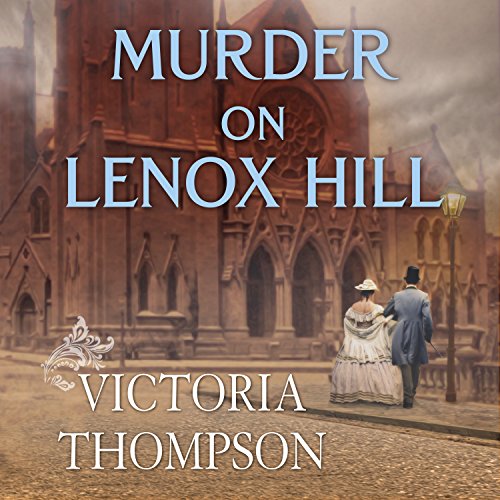
Murder on Lenox Hill ~ by Victoria Thompson

Yup – the series goes on with more emphasis on the plots than the overarching elements keeping the series together.  I really rather like that. Here we have a young girl, maybe 14?, who is very slow, what in the 19th century was sometimes  even medically called an  “imbecile.” Sarah finds out the girl is pregnant and the question arises, how in the world did she get that way? She doesn’t go to school, doesn’t go out except with her mother, her father adores her, and she remembers nothing about any male hurting her in any way.  Sarah and ______ both investigate.  


Murder on Lenox Hill 
by Victoria Thompson
2005 
Read by Callie Beaulieu 7h 35m
Rating – A / historical crime 
(# 7 in Gaslight #7) 

And the history in these books is fascinating but it develops,  accrues slowly from Teddy Roosevelt in New York and the developments in medicine, to Freud’s new ideas, and the days of Gilded Age alongside horrendous poverty and 

 A couple of problems this time – the narrative got draggy once in the middle and then again in winding up the ending.  I suppose the ending was okay because I’ve came to love the characters.  that was only one time and for a few pages.  The other thing is the narrator isn’t able to differentiate between voices – not even male and female voices. 

And it’s odd for me to read along in a fast-paced crime novel, a real who-done-it, without being able to think – fingerprints, DNA, even telephone – none of them was even an option. This time the solution had to come from interviews, available physical clues, and the little grey cells. 

Posted in books | Leave a comment

Enough by Casey Hutchinson

This book was on my wish list for a few months after it’s release until I got to thinking it might be dated. Then a friend whose taste I trust recommended it. Oh yeah? Okay – it was back on and within a day or two playing on my iPad.  

Enough by Casey Hutchinson
2023
Read by author 11h 36m
Rating:  9.5 / memoir 

This is as much Hutchinson’s personal story as it is the one we all saw play out on our screens during the outstanding sessions of the Jan 6 Congressional Committee hearings.   

During the early chapters up to “High School,”  I realized there were probably a LOT of people identifying with Cassidy. To a point, I certainly did.  In fact, it occurs to me the identification factor is part of why so many people read memoirs.  I wasn’t expecting so much about her childhood difficulties, but it gave me (anyway) insight as to where this very courageous young woman was coming from when she took the stand in front of the world that day. I had wondered some about that. 

Hutchinson is a good reader, a bit fast in places, maybe. It usually works out okay for an author to read her own memoir because it tends to add a certain reality and we overlook a few less than professional elements; this book is is no different.  I appreciate that it’s Cassidy Hutchinson who is reading her own book in her own voice. I had watched almost in awe as she testified before the January 6, Committee.  

It was Hutchinson who went to work for Mark Meadows, the Presidents’s Chief of Staff, at the age of 25. She had more background than I expected. She was apparently competent or I should say that her memoir certainly presents her that way.  

Interesting that Trump-team regarded bi-partisan activity as not what the Trump-Team was after – they wanted Trump wins on big programs and policies.

This is just myopinion and preference, she seems a bit pushy with people to me – but my whole style is quite different and hers certainly worked for her! I certainly see where Washington is a place of mutual backscratching with a stab in the back when useful.  There were so many names – many known to me but a number certainly not and checking online they weren’t generally well-known.  But they all seem to be glad-handing away.  

The Covid crisis was almost as humorous as it was interesting. These folks are minglers and they weren’t interested in “best practices” as far as Covid was concerned.  But Cassidy certainly worries a lot.  And she works hard. 

Posted in books | 2 Comments

Murder on Marble Row ~ by Victoria Thompson

These are very, very good historical cozy mysteries and there are 26 of them so far!  I’ve only read 6, but I’m not going to hurry through them.   I know I’ll need a change of pace from time to time.

The plots are twisty driven by strong main characters plus the reader gets immersed in the fascinating (to me) historical setting of Gilded Age New York.  It’s more than a setting because it’s dynamic so parts of it affect the characters and how they live.  A few of the prominent historical characters even become speaking characters in this fiction.   (But the history never overwhelms the plot – a plus.) 

Murder on Marble Row
by Victoria Thompson 
2004 
Read by Callie Beaulieu 8h 12m
Rating:  A+  / historical mystery series – cozy 
(#6 in Gaslight Murders series) 

From the author’s website: 
When an explosion kills wealthy industrialist Gregory Van Dyke, Police Commissioner Teddy Roosevelt presumes that anarchists are responsible and personally asks Detective Sergeant Frank Malloy to track them down. Malloy is up to the challenge—but he faces a different kind of challenge when he encounters Sarah Brandt paying a condolence call on the Van Dykes. Faced with the impossibility of ever expressing his true feelings for Sarah, Frank had vowed never to see or work with her again.

For her part, Sarah is glad to be working with Malloy once again in his hunt for a dangerous killer—though they clash over his conviction that the murder was politically motivated. Frank would like to dismiss her concerns, but whether he likes it or not, he needs Sarah’s help because as she knows—and he is about to discover—the marble facades of Fifth Avenue hide as many dark and twisted secrets as any tenement on the Lower East Side.

On the downside, the narrative seemed to drag toward the very end, but other than that this is the best in the series so far and I’ll keep reading them for awhile anyway.

Posted in books | Leave a comment

Covered with Night ~ by Nicole Eustace

 I’ve read quite a number of Pulitzer Prize winners in History over the last couple decades and they almost always get a top rating from me.  This year I read both of last year’s winners (2022).  First there was Cuba; An American History by Ada Ferrer back in March or so, and then awhile later I saw a second winner had been announced – “Covered with Night: A Story of Murder and Indigenous Justice in Early America” by Nicole Eustace.  (Yes, there were two winners in 2022!)  So I had to read that. I was impressed by both and have made a resolution to keep up with this Pulitzer reading. 


Covered with Night
A Story of Murder and Indigenous Justice in Early America
by: Nicole Eustace 2021 
Read by: Laural Merlington   14h 33m
Rating: 10! /  history-true crime / 
(Both read and listened) 
https://www.pulitzer.org/winners/nicole-eustace  (2022) 

  The word Murder is used in the subtitle of Eustace’s book and I fear that might be misleading.  The phrase “Covered with Night,” is the actual title which is rather ambiguous and catchy, but it’s taken from the text and is in there because it’s an important phrase in understanding the Native point of view of the whole thing. And that phrase is used within the text more than once to assure reader comprehension of its importance.  

It’s the subtitle of the volume which is telling: “A Story of Murder and Indigenous Justice in Early America,” because that’s more precisely what the book is about.  What is “indigenous justice?”  Eustace’s wonder of a book delves well into that. What is “white Colonial justice”?  And the book goes there. Nicole Eustace has written a thoughtful and important academic history with all the source work, depth and nuance that entails.  (I want to go read her prior works!) 

This is in all likelihood a Dewey Decimal # 974: “General history of North America Northeastern United States.”  It’s not “true crime” either, (not in the contemporary sense of the term) either although it’s listed some places as that.

For those who don’t know (most all of the readers I’d expect) this is NOT a mystery particularly, and it never really was except that perhaps what happened between American Natives and the Pennsylvania colony 300 years ago was never as fully revealed as it is here – and then it was hidden and/or buried under a LOT of other material. But maybe the idea of “indigenous  justice” is the mystery – (it was to me!) What in the world?

This is the story of how two English fur traders, one Quaker and one Anglican, became outraged during an informal little trade meeting and killed a respected local Seneca hunter. This all happened near Philadelphia, Pennsylvania in 1722 where William Penn, the Quaker governor and proprietor, had died only a few years prior.  And this is the story of the local Natives, the Haudenosaunee community of tribes and alliances, and their ways of dealing with tragedy and loss, trade and inter-community living in many ways and instances.  

The somewhat scholarlywork is very well sourced and written in good literary form. It’s the tale of a murder which occurred in February, 1722 in  Philadelphia and the Colony of Pennsylvania, when two fur traders bludgeoned a Seneca hunter and left him for dead.  Which he did although no one could find the body for awhile.  But there had been witnesses and the accused spent time in jail.  But!!! 

 Seneca justice was completely different from what the English understood and were bringing to their colonies – whether it be Anglican or Quaker.  In this case there was never much doubt about who did what to whom and why.  In a fit of rage the English trader smacked the Seneca  fur trapper with the butt of his gun,  the trapper fought back very briefly and then the trader’s partner landed a hard one and the first trader finished the job.  Oh-oh. The traders skedaddled.  

What happened next and next and next is what follows and who all these people were, trying to fashion justice to their own interests, liking, faiths, whatever.  There is a LOT of background here – Eustace casts her net wide and her catch is astounding – quite satisfying and a feeling I could go on reading about Seneca for many more days.

Posted in books | Leave a comment

The Internal Enemy ~ by Alan Taylor

In school and in later independent reading I never learned much about the War of 1812 which was fought by the US against the United Kingdom (and allies) to re-determine the boundaries and fishing rights and trade agreements. The UK promised the Blacks freedom from slavery and the US was allied with the Natives for trade agreements and hunting rights. Slaves were always an issue but not one the Colonies wanted to deal with for reals.   The Loyalists, pro-British colonists, usually moved back to Britain or maybe to Florida or Canada. There’s virtually nothing in the book about them.


The Internal Enemy: Slavery and War in Virginia, 1772-1832. 
By Alan Taylor
2014 / 624 pages
Read by Alan Taylor 15h 27m 
Rating; 9.5  / US history

https://www.pulitzer.org/winners/alan-taylor-0

By 1812 about 30 years had passed since the Treaty of Paris ended the American Revolution. The UK was annoyed and wanted to embarrass, defeat and get revenge on the Yankees, especially Virginia.  Many enslaved Blacks wanted to join the British side to gain their freedom (as kind of promised) or to plunder the holdings of the slave-owners who were mostly in the South. The French, Natives and Americans were just mainly trying to save their own skins and get the best trading deals they could, although some of the Brits were genuinely concerned for the slaves.  

The War of 1812 was a gap in my studies of US history, although I knew some of the details (like Francis Scott Key’s song). I got the book on sale at Amazon and/or Audible maybe 6 months ago. Seeing it there on my shelf started to bug me so I got both the Kindle and the Audible versions and listened as I read. I get totally immersed in the material when I do that.

And a few years ago, in 2020, at the height of the pandemic, I finally got to read Rhys Isaac’s The Transformation of Virginia which won the Pulitzer in History back in its own year, 1983.  Isaac’s book, is about Virginia’s colonial experience starting in about 1740 and going only 50 years, to 1790. That’s the time period  usually referred  as The Great Awakening and is really the basis for the bulk of Isaac’s book. Tha time of Virginia’s huge transformation (see title) from old-world English hierarchies to new world’s independent and self-made-progeny. 

It wasn’t until the War of 1812 that the United States was changing enough to remove the English and those “stable” old, Anglican/Tory and political ways from the scene.  The diocese (Anglican) system still functioned, but there were fewer bishops for the new Congregationalists and other functionaries, bureaucratic departments.) And the Tories had left for friendlier places.

What would happen is that a few local families and ministers would hold a revival and some of them would start up a church and that was that – no need for a lot of pomp and circumstance, symbolic ritual or ancient rites. The growth was organic and in keeping with the environment.  (See The Transformation of Virginia.)

The Paris Peace Treaty of 1783 (ending the Revolution) hadn’t got it all right and also things relaxed and then a few years after that, the US charged the Brits with selling runaway slaves! The plantations were awash with gossip and fears of slave revolts. The Brits would promise the slaves one thing and the French something else.  The English took many of them to Nova Scotia, but there were little British enclaves (military, Black and other) off the coasts of Virginia, South Carolina, Georgia and/or Florida.  Some runaways were taken to Jamaica or Barbados.  Some wanted to return home to their plantations because that’s where their families (wives, husbands, children etc) were. Many owners wanted their slaves back.

The Internal Enemy seems to focus mostly on slavery, but it does follow a chronological ordering of the events after the actual War of 1812 fighting..  Neither the War of Independence nor the War of 1812 touched much on the question of slavery, although it seemed to in a couple of cases.  Slavery was permitted throughout the colonies until after the Civil War.  

 I’ve not given this book one whit of what it’s due. It’s a brilliant book.  Fwiw, Taylor specializes in the time between the Revolution and probably the Missouri Compomise.

Posted in books | Leave a comment

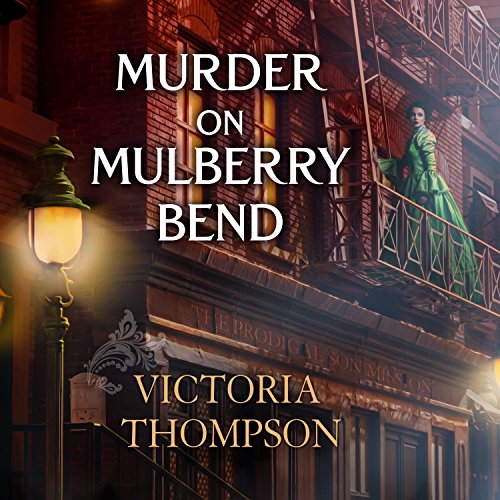
Murder on Mulberry Bend (#5) ~ by Victoria Thompson

I was wrong – in my review of Murder on Washington Square (Gaslight Mysteries #4) I said that Sara’s late husband was a police officer.  It appears that was in error –  he was a doctor according to Sarah in Gaslight Mysteries #6.  Read on. 


Murder on Mulberry Bend 
by Victoria Thompson 
Read by Callie Beaulieu -8h 39m
Rating: B+ / historical mystery 
#5 in Gaslight Mysteries 

Back in #4 Sarah met another widower, Richard Dennis, an old friend of her family, whom she dates very casually.  Dennis’ wife was killed 5 years prior by a disease passed on to her by the immigrants housed at the Mission where she volunteered. This thread picks right up again in book 5 where there are new problems at the Mission now a shelter for girls and young women in trouble of various kinds. One morning a young woman is found dead in a nearby park and Sarah and Mulvaney trace her home to the Mission. This twists into a nicely plotted historical thriller.  

Posted in books | Leave a comment

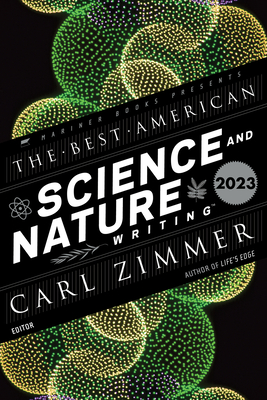
The Best American Science and Nature Writing 2023

The 20 writings in each edition of The Best American Science and Nature Writing 2023 might not all be cutting edge science reporting, but somehow that’s a part of the appeal. The stories included in this annual anthology were first published in 2023 and selected for their writer’s skill and the science which is explained. There have been 36 editions published by Harper Collins, Good science writing means that the information is true (it’s nonfiction) and it’s very nicely and clearly written stuff. Sometimes one of he authors will get poetic or even comic. ,


Best Science and Nature Writing 2023
Edited by Carl Zimmer 
Narrated by many individuals
Rating: 9.5 / nonfiction anthologya

(both read and listened / 2+x)

The 20 writings in each edition of The Best Science and Nature Writing might not all be cutting edge science reporting, but somehow that’s   a part of the appeal. The stories included in this annual anthology were first published in 2023 and selected for their writer’s skill and the science which is explained. There have been 36 editions published by Harper Collins, Good science writing means that the information is true (it’s nonfiction) and is clearly written. Sometimes some of it gets poetic or satirical but those times are not too often.  

I read the first of these science anthologies just 2 or 3 years ago and was really rather enchanted.  Then last year I read the second and I was disappointed, truly.  But I signed up for the 2023 edition way ahead of time. And it’s here.  So I read it. This year it’s a mixed bag – most of the articles involved life sciences,  but some were more specifically about climate change or medicine in particular and a few are based on physics as we know it – or not.  Some of the stories are heart-warming, others are heart-pounding (climate warming), . .Some are very scientific, others are less in-depth science -wise.  But they’re all wonderfully well-written and that’s essentially what the collection is about.  I really appreciate science and nature writing ssesfor general (non-specialty) readers.  

In the Forward Jaime Green writes about being general editor for many years and how she has approached that. Also, she’s written quite a number of books, articles and opinion pieces during that time.  Her husband, Josh Green is the governor of Hawai’i as well as being a medical and academic doctor of medicine.  Hawai’i had outstanding stats on Covid-19 – fwiw. 

Then there’s Carl Zimmer, the actual edition editor of “The Best Science and Nature Writing 2023.”  His own writing includes over a dozen books with several award-winners, plus magazine articles, and more prizes.  His newest book is She Has Her Mother’s Laugh and that sounds like something I should go read – lol. Zimmer brings current events into the picture without getting political (imo).  He’s aware – he has an agenda but he doesn’t push it.  

The Editor in 2023 was Carl Zimmer, and he’s so good.  https://en.wikipedia.org/wiki/Carl_Zimmer

 So what articles made “the best of..?? The articles I had time to reread? In the list below I put a short descriptive sentence, more than just a category as well as an asterisks “rating” the story overall, with *** being highest (and there are several of those).

* An Invisible Epidemic  
By Elizabeth Svoboda
The pandemic is over but the healing has to go on.    

** The Myopia Generation –  
By Sarah Zhang 
Myopia is a genetic issue – right?  Wrong.  

** A Deepening Crisis Forces Physicists to Rethink Structure of Nature’s Laws
By Natalie Wolchover 
Physics –  why doesn’t it seem to work now? We thought physics was natural! Oops- along came the tiniest of particles – 

*The Coming Collapse
By Douglas Fox 
The collapse of the western ice shelf in Antarctica/ 

*My Metamorphosis
By Sabrina Imbler
Transformations of insects to insects and humans to insects (LOL)

*** The Bird and the Flame 
By Sarah Gilman 
Fires in California Redwoods – 

A subject closet to my heart – trees, the forests, especially California forests – and what fire does to the birds – the birds around Redwood Meadow in the Santa Cruz mountains Murrelets, Ravens, Jays,  

*  Dislodged 
by Josh McColough
Mostly about trees living in the same place for ages – or not.  The author and his daughter are stranded in the forested mountains driving home, but it’s okay. McColough mentions the Butterfly Hill woman who lived for 738 days in an old-growth tree on the West Coast to protest cutting.  Trees communicate with and nourish each other via underground fungi. This is the Jedediah Smith Redwoods in Del Norte County, California (I’ve been there) and the author is taken back to the call of a thrush he remembers. This is rather poetic.

** Bright Flight
By Vanessa Gregory
Congaree National Park, Sourh Carolina. –  Raphael Sarfati  photographs fireflies and their synchronized flying. Vanessa Gregory writes about it.
Photuris (photos and physics, chemistry and more).  

** Brain Wave
By Ferris Jabr
Dennis DeGrey was 53 years old when he slipped on wet pavement and broke his neck, nearly decapitating himself, becoming totally and permanently disabled.  This essay is about DeGrey’s struggles to learn to use his brain to actively participate in the world via neural interfacing – thinking to create patterns to mentally produce words. Amazing!

* The Provincetown Breakthrough
By Mary McKenna 
How Covid-19 hit the tourist center of Provincetown, Massachusetts but the residents paid attention and they were careful so when Covid returned with the Delta variant the town did what they had to do and didn’t let it leave – they controlled it and kept it under control.  

** True Grit 
by J.B. MacKinnon
How did the cows do when Hurricane Dorian, 2019, rolled into their part of Texas?   Fun story.

** Another Green World
By Jessica Camille Aguirre 
Kai Staats  and his attempts at building a sealed human habitat like we might need for space travel.  It hasn’t worked so far. .  

* In El Salvador and Beyond, an Unsolved Kidney Disease Mystery 
By Fletcher Reveley
Kidney disease and failure was decimating the field workers of Central El Salvador. Then came parts of Sri Lanka, Egypt and India.  And there were links with insecticides but how much?  Very complicated and somewhat political. 

** The Climate Underground 
by Emily Benson 
Looking for the ancient,  prehistoric climate of earth via stalactites, a good sampling of which are found near Yellowstone. –  

* The Butterfly Effect
By Maggie Koerth
The small brown butterflies of the great plains are disappearing. 

* The Coming Collapse 
By Douglas Fox
Beneath the western shelf of the antarctic 

* The Metamorphosis
By Sabrina Imbler
Change – in insects and in humans 

***. Shadows, Tokens, Spring 
By Ben Mauk

Marmots all across the American plains and the Eurasian Steppes with long histories in both. The Tarbagan is now an endangered type of rodent, but has created havoc by spreading itaaee to humans.  

* An Ark for Amphibians 
By Isabel Whitocmb
Yellow frogs just looking to survive in special safe places in California – these safe-“houses” are called refugia 

* Don’t Look Down
By Lois Parshley
Alaska has a problem. It’s sinking.  Apparently “Permafrost” means permanent as long as there’s ice.  When it warms there’s melting and, well, melting turns ice into water.  Sometimes there’s material other than H2O involved.  Sometimes ice is preventing  something else from falling or tipping or breaking. There are over 100,000 people living on permafrost. What’s next?  

** American Motherhood 
By Annie Lowery
When does birth interfere with life?


Posted in books | Leave a comment

Murder on Washington Square ~ by Victoria Thompson

I started this series several years ago and got through the first 3 books  of the series, but although  none were “Wow” quality, I certainly enjoyed them.  Over time, Gaslight Mystery Series slipped by the wayside  but I would check every once in awhile.  LOL –   Somehow they always struck me as being a bit sweet or fluff or ???.   

Murder on Washington Square 
By Victoria Thompson
Read by  Callie Beaulieu 9h 2m 
Rating:  A / historical mystery 
#4 in Gaslight Mystery Series 

The series is basically a detective mystery story which takes place in the very early 1900s New York City. Teddy Roosevelt is a police commissioner in New York and is trying to cut the corruption which apparently ran rampant.  

The history is done with a lightish touch, but it’s correct and definitely establishes an atmosphere of 1900s New York with all its poverty, crime, and corruption, along with a bit of the conspicuous consumption of the Gilded Age. This is certainly not Ragtime (E.L. Doctorow, 1975) which is set in just about the same time and place and is definitely literary in that ideas are given priority over historical accuracy. Unlike Doctorow’s novels, Thompson’s books are very “realistic” and as true to life as can be documented – this is true of most true-to-genre historical fiction as well as procedural crime books, historical or contemporary, but NOT ALL!!  And Thompson’s books easily stay within the bounds of documented historical sources.

In a mystery “series” the character development has to be good – as good as the history in a historical fiction mystery.  Sarah Brandt is the protagonist in this series. She’s a widow who worked as a midwife before the death of her husband and takes it up again after a bit of grieving.  Her upper class family of origin didn’t approve of her marrying a lowly police officer, but a few years have passed now and in one of the early books of the series they reconcile. But Sarah continues to help women deliver their babies and sometimes there are girls in trouble of various kinds.

Doing this work brings her to a friendship with officer Frank Mallory, also a widower but with a small handicapped son. Frank lives with his mother who helps with the boy. The series as a whole follows Sarah and Frank as they solve various crimes and fall in love. It’s not overdone and seems realistic for the era. (Queen Victoria was alive until 1901.)

In this book though, Nelson, the young adult sone of Sarah’s neighbors, comes to her with a problem –  he’s been seeing a young woman named Anna, and now she’s told him she’s pregnant. Nelson is a bit smitten and very responsible so he wants to do the right thing and marry her. Oddly, considering the times, Anna refuses. So  Nelson wants Sarah to examine Anna to make sure things are alright, but Anna refuses that, too.

The next day or so Anna’s bloody body is found under the Hanging Tree in Washington Square and Nelson is arrested for murder.  

Sarah is a bit suspicious about all this (Nelson was trying to marry her!!!) so she asks her police detective friend, Frank Malloy, to look into things with her which has its own twists and turns. 

Then come the local gossips, the yellow journalism with their overly-aggressive reporters and voracious readers, the corrupt police department, the scandalous jails and the rest of it – the days of Teddy Roosevelt work as Police Commissioner in NYC.  It’s real without the research overwhelming the story, but it’s fun to look it up.  There are victims twisted into victimizers and purported victimizers who are actually the victims.  It gets twisted – it gets fun. 

Posted in books | Leave a comment

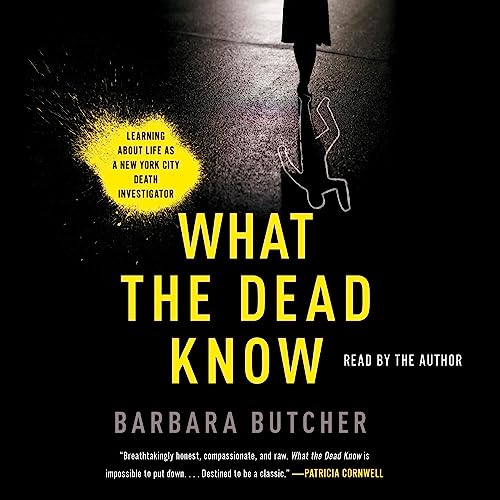
What the Dead Know ~ by Barbara Butcher x2!

The first time through this book was so compelling I just wanted to lose myself in it and skip the jigsaw puzzle or whatever was in front of me to actually “do” with my fingers. This is like crocheting while listening to the radio; it’s  not a biggie until the book/radio gets so good I just can’t keep your stitch count and listen at the same time.  LOL!   

What the Dead Know:
Learning About Life as a New York City 
Death Investigator 
by Barbara Butcher; 2023 (288 p)
Read by author- 9h 47m = 
Rating: 9.5: true crime – memoir 


The 9.5 rating I gave it on my first reading meant I thoroughly enjoyed it and it suggested a second reading might be in order and result in a rating of 10.  So when I got that second reading finished, a few months later the book still did not quite get a 10 BUT!!! For this go-round I purchased the Kindle version, to go with the audio and it was definitely worth it. (I think the reason for the 10 was that it definitely touched my heart and Butcher was so authentic. 

That said, when I first started this re-read I was somewhat taken aback by how much blood and gore and guts and vile acts leading to death there were in the first few chapters.  I’m pretty accustomed to graphic violence in some of what I read, but I really do NOT appreciate gratuitous violence – for its own sake or for the bucks.   

Barbara Butcher, the author and narrator of What the Dead Know, tells the story of her life from her assignment to the Office of New York Medical Examiner. This is  after a stint in rehab for alcohol addiction, some job counselling and a bit of training.  She already had a degree to be a physician’s assistant. And her father had been a police officer in New York so the assignment was a natural. When she started work she discovered she was very, very motivated by wanting to solve puzzles and crimes.  (Something had to replace the booze.)  And so she stayed with AA and stayed with the job for the next couple decades, but had problems with lesbian lovers and became devoted and eventually consumed by a seriously emotionally draining job.  

Alcoholics don’t do well with their emotions, but a medical examiner in NYC has to deal with that, it’s what this job is all about. So she stuffed them, sublimated them, and/or denied them. She sometimes acted them out, she prayed, she went to meetings and she didn’t drink. 

  Then came 9/11 and buddies were killed. Then came a promotion and more stress.  It’s an excellent take on an American career – a NYC career really – because even Broadway is involved in the telling.

This book is about way, way more than cops-on-the-beat-in-NYC see when they specialize in the dead.  The book is also about how that cop handles the tremendous emotional burden which comes with the job.  And when that cop is prone to alcohol abuse you never can tell.  It seemed to me that 9/11 was a kind of turning point for Butcher.    

 Clarity is important in the writing here and authentic laguage is appreciated. New York cops have their own lingo. There’s a change of pace when she goes to her AA functions.  And she has a few home-life problems. 

This is not “In Cold Blood” by Truman Capote, nor it is “I’ll Be Gone in the Dark by Michelle McNamara – those are really in the Literary True Crime genre and there are others to one degree or another. It’s an old genre going back several hundred years and with a jump-start since the availability of printed material – 1550? – or maybe earlier in China. 

There are all sorts of True Crime stories out there from horrors perpetrated by humanity’s insane with their focus on the crimes themselves to crimes of historical importance like Jack the Ripper where detection and forensics plays a huge part.  This was the time of Scotland Yard’s detectives using more scientific methods.   Eugène-François Vidocq, a criminal turned police informant during the French Revolution probably the father of detection.  Wilkie Collins and Sherlock Holmes came right after.  

beginnings using detectives like scientists in their own ways.   Eugène-François Vidocq,

I had some doubts until in Chapter 3, my enjoyment picked up dramatically due to the humor, a very important part of many crime books, true crime and nonfiction.  And the pace and tension stayed right up there. This is NOT a mystery.  It’s the story of a woman’s life from being a drunk to AA to finding herself employed in the medical examiner’s office in New York City.  Person-ally, I’m usually allergic to detailed descriptions of body parts and this woman was a medical examiner so that usually comes with the job. 

I’m not a big fan of authors reading their own books, but with this one, except for the sample, I didn’t even take much note except that she was obviously not a professional reader/actor. Then, at about  20%, I realized she was the perfect narrator for her memoir; her voice made it even more “true” crime.  And it’s fascinating, and it feels honest and sincere. Butcher is a good writer but admits to having some help from friends.   

Forensics has always interested me because of the tie-in to the whole legal system from cop-shop and 1st responders to death row and examining the trajectory of blood splatters, the DNA of hair samples and the arrangement of body parts. It’s often very much like a puzzle to be solved.  And Butcher deals with everything from natural deaths due to old age or heart attacks to a vicious double serial killers and what all they do. 

Posted in books | Leave a comment

The Heaven and Earth Grocery Store ~ by James Mcbride 

I was so disappointed with The Heaven and Earth Grocery Store. It’s the author who, a few years ago, wrote The Good Lord Bird and Deacon King Kong (both of  which I read and very much enjoyed) The Heaven and Earth Grocery Store was supposedly pretty good, according to the reviews and a couple friends,  but when I went to read it I just got too tired to follow all the characters and kept going back to sleep. I may have been a bit sick.  

The Heaven and Earth Grocery Store 
by James Mcbride 
2023 / 
Read by Dominic Hoffman `12h 21m
Rating – 7.5? 
/ gen fiction

The Plot:   In 1972, a skeleton was found at the bottom of a well in a neighborhood in Pottstown, Pennsylvania.  There are a few clues about whose skeleton it  is so the police start questioning an older Jewish man named Malachi who resides in a neighborhood synagogue.

So then the story flips back in time to the 1920s and 1930s when the neighborhood was somewhat different and in the 1920s and ’30s it was called Chicken Hill and was very much alive with Blacks and Jews with a smattering of Whites. An orphaned black boy is found and turns out to be blind as well.  He’s kept by two Black adult friends until the Jewish couple who happen to be business owners promise to keep him away from Doc Roberts, the KKK guy who is in some kind of a tangle with the entrepreneurs.  It seemed to me there were  lots of these relationships to keep track of and I just got tired.  

The website http://www.chickenhillnc.com/gallery.htm#:~:text=Chicken Hill%2C situated just west,a group of local businessmen is a great start on this.  

I’m rating this on the basis of the word smithery and the ambiance. McBride is a talented guy giving the theme of love where you are a bit of lightness.It seems like it should be an absolutely wonderful book – ????  

Posted in books | Leave a comment

The Wife and the Widow ~ by Christian White

This was recommended by a friend whose taste I respect.  That said, it started slow and that coupled with my being sick I kept falling asleep.  I couldn’t keep track of what I’d read.  I got to about chapter 8 and had to start back at chapter 6 then I got to chapter 19? But had to start back at chapter 11 because I was drifting for so much of it.  It took 3 days and I still had about 3 hours to go.  But I have to say, finishing the book, it’s a darned good book. 

The Wife and the Widow 
by Christian White 2020
Read by Caz Prescott 7h 10m
Rating: A/ suspense fiction 

Amazon says:  Set against the backdrop of an eerie island town in the dead of winter, The Wife and the Widow is an unsettling thriller told from two perspectives: Kate, a widow whose grief is compounded by what she learns about her dead husband’s secret life; and Abby, an island local whose world is turned upside when she’s forced to confront the evidence of her husband’s guilt. But nothing on this island is quite as it seems, and only when these women come together can they discover the whole story about the men in their lives.

At first I thought this was not a good match for me at all and I could have gathered that from the publisher-provided blurb (above). There is no mention of murder or a mystery. It is a family thriller and yes after awhile there is a murder and then there are more“crimes, but it all takes awhile. Imo, the pervasive feeling in this novel is sadness or maybe it’s fear. And there’s some anger, but there’s less of that. I think the “thriller” aspect mentioned in the blurb comes mostly from the narrator’s reading 

But what I got felt quite different.  Kate’s husband, a palliative care physician, doesn’t show up at the airport and she finds out he’s been gone for two weeks – just calling her from somewhere. Abby’s husband is right there on the island servicing the customers who want decks and saunas etc.  Kate is told her husband may have some form of “spiritual distress” after a special patient died. 

And the tale unfolds from there with two families tangled and almost completely destroyed.  The twists get tighter and the tension grows throughout the book – advice? Read to the last page.  
Posted in books | 4 Comments

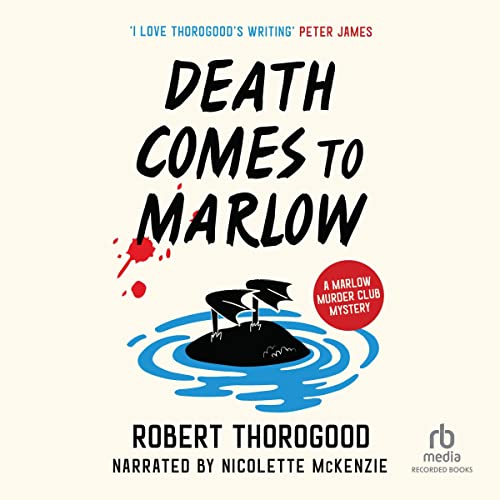
Death Comes to Marlow ~ by Robert Thorogood

This is such a fun series and there’ll be another one coming out in June.  Oh yay!   Judith Potts is an elderly lady 80 years old and as inquisitive as she probably ever was.  She lives alone on the banks of the Thames as it meanders through London. The estate was inherited from an aunt along with all its furnishings.  She creates crossword puzzles for a local newspaper or two.   But people in her neighborhood seem to get murdered.  At least that’s the case in both this book and the first book in the series.  

Death Comes to Marlow 
by Robert Thorogood 
2023 UK
Read by Nicolette McKenzie 9h 28m
Rating: A (and very funny) 
The Marlow Murder Club, Book 2

Judith has a great little bunch of friends.  There’s Suzie who definitely has her own opinions, and Becks who is married to a vicar and is very sympathetic and sweet but occasionally also quite surprising.  The police officer who gets assigned to them is Tanika, but she worries about the ladies and is harassed by her boss, the police chief.   

In this episode Sir Peter Bailey is found dead the day prior to his wedding when a large closet falls on him in a locked room. The room key is in found in his pocket.  We have the usual nasty suspects, a son, an ex-wife, a young fiancee, disgruntled employees,  and a few others. There’s a Will to be considered.  Ach – good stuff.  

Posted in books | Leave a comment

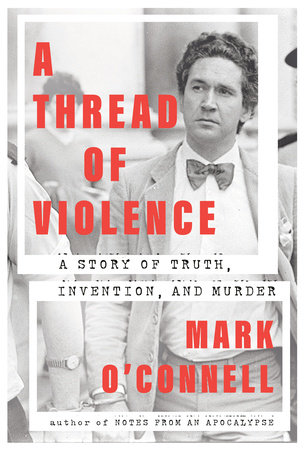
A Thread of Violence ~ by Mark O’Connell

At times while reading this book it was hard to believe it was non-fiction. Yes, okay I agre it is nonfiction, but it’s very literary nonfiction and I don’t mean “creative” nonfiction where the author uses uses enough literary devices so that it “reads like a novel” while including a reasonable number of sources. (I am NOT devaluing either creative or literary nonfiction, sometimes it’s the best of two worlds.)

A Thread of Violence:   
A Story of Truth, Invention, and Murder
by Mark O’Connell, 06-27-23
read by the author, 7 hrs and 25 mins
Rating: 9.5 / literary/true crime 

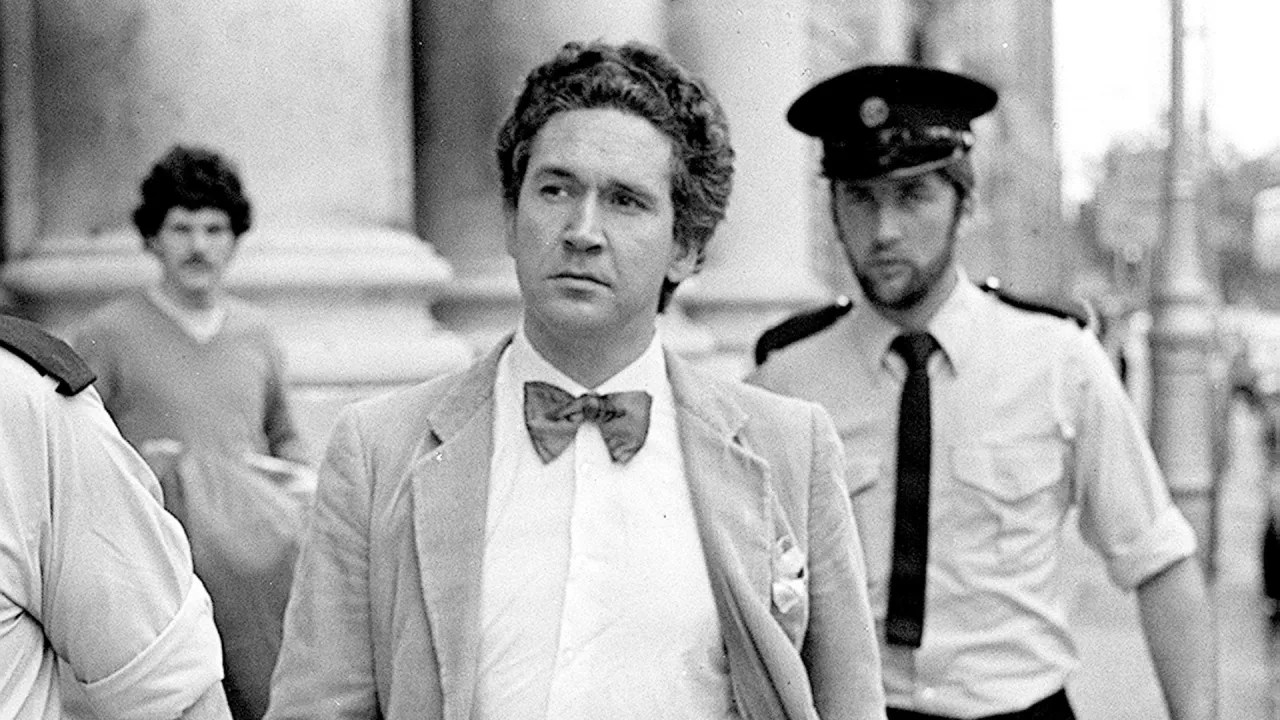
In Wikipedia the story of Malcolm Macarthur is included under the article “GUBU” where the first line of information states, “The acronym standing for grotesque, unbelievable, bizarre and unprecedented” referring to a strange series of incidents in Ireland in the summer of 1982 which culminated in a double-murderer, Malcolm MacArthur, being apprehended in the home of then-Attorney General, Patrick Connolly. https://en.wikipedia.org/wiki/GUBU

Until I opened this book I’d not heard a thing about any of it, not that I remember, anyway. The main events all occurred more than 40 years ago. And in 2012 the culprit, Malcolm Macarthur, was quietly released from prison after 30 years of incarceration. Since then he has lived quietly in Dublin, mostly walking and frequenting the bookstores.

And that’s where Mark O’Connell, the author of A Thread of Violence, found him in 2020 after O’Connell had pretty much decided to write a book about this strange man and his crimes. Macarthur’s name had come up when O’Connor was focused on John Banville for his PhD in Literature. Banville’s novel, The Book of Evidence (1998) , and its main character, Freddie Montgomery, were based on Macarthur and McArthur knew this and occasionally talked about it. . I read Banville’s book in 2002 or so and I still read Banville’s books today. Anyone knowledgeable about Banville’s work will attest to the beautifully crafted, immaculate styling of his multiple award-winning oeuvre. .

But A Thread of Violence uses many elements of literary fiction. The theme of social class is very important here – but in what way – It seemed to me that Macarthur considered himself of an upper status which didn’t have to work for their livelihood. Also memory and reality vs perception intertwine throughout. Those and other ideas are the more thoughtful, maybe philosophical or aesthetic themes. There might be themes related to psychological impulses like insanity or denial and hidden motives.There is a small hint that the “thread” in the title might be a genetic thread.

Dublin, Ireland is the setting by happenstance and O’Connor doesn’t let that slide. It’s apparent with the language and social structure and the change the times have brought, even without the social difficulties being spelled out. James Joyce is mentioned more than once and Banville is from Dublin. 

As to the plot and structure, first there are the years between 1945 and 1982 when Malcolm Macarthur is born and  grows up as the only child of somewhat dysfunctional, but upper class parents (“landed gentry”) who live on inherited funds with an nid3 estate in central Ireland. Times are not great for the family though, they are down to three servants and Malcolm, very bright but definitely a loner, has to go to the government (public) high school. He seems to have had no ambition particularly, although he enjoyed reading and learning about nature. His parents’ expectations didn’t seem to include adult employment for him, but people in the aristocracy don’t usually considers that. His parents marriages is not a happy one, so while Malcolm was still young they divorced.  

In 1982, when Macarthur was 37 years old he killed a man and a woman in cold blood and in separate incidents. He’s found guilty and is sentenced to life in prison but in 2012, after 30 years, Macarthur is quietly released.

This is when Mark O’Connell decides to locate Macarthur and see where that leads. He’d like an interview at least, although he’s hoping for a book. He’s been working on his PhD in Literature, focusing on John Banville whose novel, The Book of Evidence (1998), was based on the Malcolm Macarthur case. They met and with Macarthur being very lonely and O’Connell being very inquisitive it works well. It works well except – that Connell never gets a complete answer on some of his more profound questions. 

The writers I started reading in the early 1990s, Ann Rule, Joe McGuinness, James Bledsoe, Gregg Olsen, and there were others who were top-notch but the ones mentioned set the standard for what, after while, became a kind of formula with variations as to whether the books be police procedurals or family problems – or both.. Now there aer historical true crime books and books when are written as they unfold. 

Posted in books | Leave a comment

Becky’s Best Reads of 2023

Okay, here they are – my highest rated books of 2023.  A wee bit late maybe but I don’t do this until after the fat lady sings on 12/31/__ so I can make sure I’ve got everything.  

 I rate the books I read on two different scales. The scale is for the “non-literary” books and includes contemporary general fiction in mystery, thriller, legal crime, sci-fi and sometimes historical sub-genres. These ratings go from A-F with A++  being best. These are generally plot-based novels where realism and tension-building are vital although they’re rarely “formulaic.” With many there’s also a good deal of character development so these are frequently used in series. 

My second way of rating books is on a scale of 1-10 (10 being highest). That’s used for all reading material,  except the genre fiction listed above. This would include literary fiction (with themes and non-standard structure etc),  general and creative nonfiction, history, science, philosophy, economics, memoirs, travelogues, true crime, etc.

A few books get both ratings like literary mysteries, for instance The Name of the Rose by Umberto Eco or The Woman in White by Wilkie Collins –  some sci-fi books, too –  Ursula LeGuinn’s novels.  

So … on with it…  (links are to my posts within this blog)

FICTION 
(rating1-10) ]

A New Name: Septology VI – VII 
by Jon FosseTranslated from Norwegian by Damion Searls
2019 / 208 pages 
Read by Kyle Snyder 7h 17m
Rating 10 / literary fiction 
Book 3 of the Septology Series 
(Both read and listened) 
https://mybecky.blog/2023/04/22/a-new-name-septology-vi-vii-by-jon-fosse/

Whale
by Cheon Myeong-kwan
translator Chi-Yong Kim 
2023 / 
read by Cindy Kay 11h 34m
Rating; 9.5 / Korean lit fiction
https://mybecky.blog/2023/11/27/whale-by-cheon-myeong-kwan/

Time Shelter By Georgi Godspodnov
Translator; Angela Rodee (Bulgaria)
2022 / 304 pp 
Read by Jeff Harding: 10h 19m
Rating: 9.5/ literary fiction –   
(Both read and listened) 
https://mybecky.blog/2023/11/08/time-shelter-by-georgi-godspodnov/

The War of the Poor
by Eric Vuillard 
2021 / 75 pages (!) 
Kindle version 
Rating: 9.25 / historical fiction
Mark Polizzotti (Translator)
https://mybecky.blog/2023/01/08/the-war-of-the-poor-by-eric-vuillard/

This Other Eden 
by Paul Harding 
Jan 2023 (202 pages) 
Read by Edoardo Ballerini 6h 8m
Rating: 9.5   /historical fiction 
https://mybecky.blog/2023/10/25/this-other-eden-by-paul-harding/
(both read and listened)


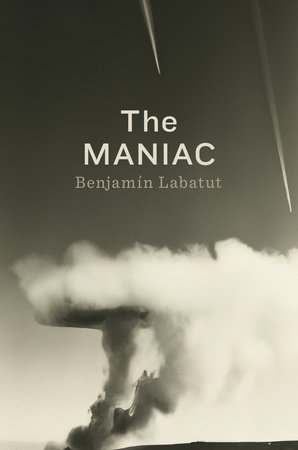
The Maniac
by Benjamin Labatut 
September, 2023 – 368 pp 
Read by Gergo Danka, Eva Magyar, 8h 51m
Rating – 9.5 / 21st Century fiction 
(both read and listened)
https://mybecky.blog/2023/10/16/the-maniac-by-benjamin-labatut/


Treacle Walker
By Alan Garner
2023 / 152 pages 
read by Robert Powell 1h 48m
Rating – 9.5 (to read again) 
Booker Prize short list 
(both read and listened)
https://mybecky.blog/2023/06/20/treacle-walker-by-alec-garner/

The Dictionary of Lost Words
by Pip Williams
2021/ 
Read by Pippa Bennett-Warner 11h 11m
Rating:  9.0 / great historical fiction
https://mybecky.blog/2023/05/02/the-dictionary-of-lost-words-by-pip-williams/

Demon Copperhead 
by Barbare Kingsolver
2022  (896 pages)
Reaed by Charlie Thurston 21h 3m
Rating: 9.5 / contemporary fiction
https://mybecky.blog/2023/02/22/demon-copperhead-by-barbare-kingsolver/

Utopia
By Sir Thomas More
1516 
Read by James Adams 4h 10m
Classic – fictionalized philosophy
Rating: 9.5 / Classic! (fiction/ideas/)
(Both read and listened – re-reading now.) 
https://mybecky.blog/2024/01/01/utopia-by-sir-thomas-more/

NON-FICTION (Ratings 1-10)

Silent Spring
by: Rachel Carson 
1962/ 150 pgs Kindle)
Read by Kaiulani Lee – 10 hrs and 36 mins
Rating – 10: classic environmental science
(Both read and listened) 
https://mybecky.blog/2023/04/14/silent-spring-by-rachel-carson/


Fatal Discord: Erasmus, Luther
and the Fight for the Western Mind  
by Michael Massing 
2018 – 992 pages
Read by Tom Parks, 34h 52m
Rating: 10 / the history and developing ideas of Christianity
(both read and listened)
https://mybecky.blog/2023/06/15/fatal-discord-by-michael-massing/

Indigenous Continent: The Epic Contest for North America 
by Pekka Hamalainen
2020 /586 pages hardcover
Read by Kaipo Schwab 18h 44m
Rating; 10 / world history 
(both read and listened)
https://mybecky.blog/2023/04/06/indigenous-continent-by-pekka-hamalainen/

Power, Sex, Suicide
Mitochondria and the Meaning of Life 
By Nick Lane
2005 – 524 pages
Read by Nigel Patterson – 15h 54m
Rating:  9.8:  life science 
(Both read and listened) 
https://mybecky.blog/2023/05/28/power-sex-suicide-nick-lane/

The Wager: A Tale of Shipwreck, Mutiny and Murder
By David Grann; April, 2023
Read by Dion Graham / David Grann
Rating 9.25 / literary history – suspense  
(Both read and listened)
https://mybecky.blog/2023/09/22/the-wager-by-david-gann/

Cuba: An American History 
by Ada Ferrer
2022 /566 pages
read by Alma Cuervo 23h 13m
rating 9.5 / history Americas
(read and listened)
https://mybecky.blog/2023/09/05/cuba-by-ada-ferrer/

Humanly Possible:
Seven Hundred Years of Humanist Freethinking, 
Inquiry and Hope
by Sarah Bakewell 
Rating 9.5 – philosophy
2023 / 454 pages
(both read and listened)
https://mybecky.blog/2023/08/26/humanly-possible-by-sarah-bakewell/


Fire Weather: A True Story From a Hotter World
by John Vaillant 
2023 / 
Read by Alan Carlson 14h 18m
Rating: 9 / science-environment-climate change
https://mybecky.blog/2023/07/20/fire-weather-by-john-vaillant-fire-weather/

(both read and listened)

Come Back In September: A Literary Education 
On West Sixty-Seventh Street, Manhattan
By Darryl Pinckney: 2022
Rating: 9.5 / memoir 
https://mybecky.blog/2023/03/26/come-back-in-september-by-david-pinckney/
Read in Kindle format only

CRIME FICTION
(Ratings A-F)

All the Sinners Bleed
by S.A. Cosby 
2023 
Read by Adam Lazarre-White 13h 5m
Rating: A+  /crime thriller 
https://mybecky.blog/2023/06/15/all-the-sinners-bleed/

The Running Grave 
by Robert Galbraith
2023
Read by Robert Glenister – 34 hours 14m
Rating; A+ / thriller 
(# 7 in the Cormoran Strike series) 
https://mybecky.blog/2023/10/21/the-running-grave-by-robert-galbraith/

Birnam Wood
by Eleanor Catton
2023  
Read by Saskia Maarleveld 12h 47m
Rating:  A+ /mystery-thriller 

A Better Man
 by Louise Penny 
2018 / 
Read by Robert Bathurst  
Rating: A+ / mystery-crime-thriller 
(#15 Three Pines/Gamache series)
https://mybecky.blog/2023/07/02/a-better-man-by-louise-penny/

City of Dreams
By Don Winslow 
2023  
Read by Ari Fliakos 8h 8m
Rating A+ / crime-thriller 
(#2 in City on Fire trilogy) 
https://mybecky.blog/2023/04/19/city-of-dreams-by-don-winslow/

The Last Party 
By Clare Mackintosh 
2022 – (432 pp)
Read by Chloe Davies: 
A+ / procedural crime
D.C, Morgan series 
https://mybecky.blog/2023/12/31/the-last-party-by-claire-mackintosh/

TRUE CRIME (1-10)


Helter Skelter: The True Story of The Manson Murders 
By Vincent Bugliosi 
1974 – 598 pages 
Read by Scott Brick  (2011) 26h 29m
Rating – 9.5 / Classic true crime – memoir
(Both read and listened) 
https://mybecky.blog/2023/05/23/helter-skelter-by-vincent-burliest/

Bitter Blood:  A True Story 
of Southern Family Pride, Madness and Murder
1988  
by Jerry Bledsoe
Read by Kevin Stillwell, 20h 8m 
Rating;  9 / True Crime – semi- classic 
https://mybecky.blog/2023/05/11/bitter-blood-by-jerry-bledsoe/

American Predator: 
The Hunt for the Most Meticulous
Serial Killer of the 21st century 
By Maureen Callhian
2019 (299 pages) 
Rating: 9.5 / True Crime
https://mybecky.blog/2023/01/08/american-predator-by-maureen-callahan/

Posted in books | 5 Comments

6 Degrees of Separation –

Starting with Sue’s post https://whisperinggums.com/2024/01/06/six-degrees-of-separation-from-tomorrow-and-tomorrow-and-tomorrow-to/#like-76533 and seeing the versions of other bloggers,

“Now, the usual: Have you read Tomorrow and Tomorrow and Tomorrow” by Gabriel Zevin. And, regardless, what would you link to?

I haven’t read Tomorrow and Tomorrow and Tomorrow by Gabrielle Zevin, but from “Goodreads” and Sue, I understand it concerns  “two friends–often in love, but never lovers–come together as creative partners in the world of video game design.”  So with that, I’ll go to …

 Ready Player One by Ernest Cline! 
I often enjoy good sci-fi, future fiction and/or dystopian fiction and I’ll have to link Tomorrow and Tomorrow and Tomorrow with  this totally fun bookwhich was made into a pretty good movie (from what I hear/read).

 It’s set somewhere in Oklahoma around the year 2045 where almost everyone lives in old trailers piled on top of each other. Very dystopian. The protagonist is a seriously bright but incredibly poor and orphaned teenager who is a regular denizen of certain sectors of the internet. The internet is provided free of charge to all citizens. In his online community there is a young woman who is also tremendously talented and quite brave and becomes his partner in solving the puzzle. The creator of Meta, a mega-rich recluse, set up the game and their whole internet universe. The kids’ job is to use the clues and find the treasure located somewhere in that universe. There is a huge prize for being the first to find the very well hidden treasure so there are many other people and groups going after it Some of them are deadly serious.. This is a thriller and maybe it’s more for young adults.. 

Next comes Prophet Song by Paul Lynch.

This brilliant and completely dystopian tale won the coveted Booker Prize this past year. It’s actually set in  
a slightly future world (maybe by tomorrow) in Gaza or Ukraine but Lynch was inspired by Syria). Ireland has come under the rule of a murderous dictatorial group. Rebel forces oppose the regime and they are hunted and killed on sight. Meanwhile, some families and individuals are trying to get out of the area and they or others are “disappeared.”   

Warning: This is intense.

And Prophet Song brings me to Nineteen Eighty-Four by George Orwell.  

Here’s a dystopian future no one should miss. Back almost half a century ago, we were all concerned about what kind of information the television sets we were all getting were sending out and to whom, because “Big Brother is Watching.”  And Big Brother doesn’t play games. That was in 1949,I believe.  Poor Winston Smith writes what they call “Newspeak,” a possibly new concept at the time. We know it as “fake news” which seems to be omnipresent today. Paranoia grips Winston at work where he “cleans up” the old archival material so it matches the policies of the current totalitarian regime Home is not much better because his personal television can see him in his apartment – except for one small space where he reads. This is a classic folks and so is my next one: 

Silent Spring by Rachel Carson was published about 10 years after Nineteen Eighty-Four. Now it’s for reals, kids – the harbinger of what’s coming soon to a neighborhood, to a world, near you. Carson was the first bonafide scientist to let the public know what was happening to our Earth. This was the pollution, air, water and land, as a result of washing machine detergent, biocides (bug sprays) developed for WWII.  I had heard of this book since I was in high school, probably 9th grade, when my science teacher was just blown away by it. I didn’t read it then but the title and author stuck with me and I got it in 2023. It’s still spot on and beautifully written – I recommend it to all. 
https://mybecky.blog/2023/04/14/silent-spring-by-rachel-carson/


Deconstructing a bit now, I veered off to the opposite of dystopia and came up with my current read, read,  Utopia by Thomas More. This book is the reason we even have the word “Utopia” in our vocabularies. It’s a latin word meaning “no place”  and “dystopia” used much later by John Stuart Mill, means “a place of great suffering or injustice”  per the Oxford Dictionary https://www.etymonline.com/word/dystopia  

And following authors worried about the future, we go back in time to around 1516 when Sir Thomas More, who had apparently been thinking about the world as he and his fellows citizens knew it. He thought about how big it was and what all was being discovered, and where it would all possibly lead. He was very optimistic - either that or disingenuous, satirical.  He wrote a little book which he entitled Utopia. That book doesn’t exactly describe what we in the 21st century would call a Utopia, but now, some 500 years later, it’s a classic. 

I’m giving the book a good reading this week.  🙂   (Sounds like I’m cleaning something – ugh!).  

Finally, because I can’t help myself, we have the dystopia to beat all dystopian fiction with a war between Good and Evil thrown in. Yup – it’s Tolkien’s The Lord of the Rings, a 3+ volume tale of how Frodo, Sam, Merry and Pippin set out to defeat that “lord” and destroy his ring. .The “Lord” in the title refers to Sauron the maker of chaos and troubles.

And that’s it my book-buds, from Tomorrow and Tomorrow and Tomorrow through a five versions of tomorrow and then all the way back to the darkish, very early Middle Ages of Middle Earth.   

Posted in books | 2 Comments

The Kingdom, the Power, and the Glory ~ by Tim Alberta

This audio book had actually been in my TBR “pile” since it came out just prior to that Christmas fortnight when I went on a binge of mostly cozy, Christmasy mysteries.  Now I have Sir Thomas More’s Utopia going for its 2nd reading which is much slower (usually) and picked up The Kingdom, the Power.  I got a couple chapters  into it and decided to go looking for reviews to see what was coming.  Right away I found quotes from the book which piqued my interest. 

The Kingdom, the Power, and the Glory
in an Age of Extremism
by Tim Alberta
2023/
read by author
Rating: 9.5 / politics and government
(both read and listened)

White Christians have perverted the faith and the party they say they stand for. Political mudslinging offers a “dopamine rush.” Exaggerating threats and calling the other side evil means that whatever you do, no matter how outrageous or cruel or contrary to Scripture, can be defended as righteous.

I ended up with both the Audible and the Kindle versions because after I got started I really wanted to read as I listened (or listen as I read) because this is a kind of intensive study of the evangelical community of churches today and how they got this way

Alberta was not only brought up in an evangelical church, Presbyterian, his dad was the pastor. And I get the distinct impression Tim is still very much Christian, but he’s NOT in the same pew as many of the right wing evangelicals he interviews and spotlights for this book. I read some of his articles in Atlantic and maybe elsewhere and I was impressed. 

Audible categorizes the book as being on “politics and government” and I’ll go with that, maybe adding “Christianity” as a related category. Every chapter has a brief Bible verse as an epigraph which adds a very nice touch. 

The Kingdom, the Power, and the Glory is told from the vantage point of memoir, but with substantive characters lending focus to the major points- “White Christians have perverted the faith and the party they say they stand for.”  

My personal opinions seem sooooo similar – instead of being a minister in a Presbyterian Church, my father was employed by the Republican Party of Minnesota – but he certainly was a committed Lutheran from birth to, in retirement, being a substitute minister in various small local congregations.  My mom was also a totally committed evangelical Christian of the  Lutheran denomination.

Alberta introduces his readers to others. mostly ministers or those working in the field, who are in a similar situation with Christianity and its role in American life today. So the book is a collection of mini-biographies and interviews of highly placed evangelicals in the US. He follows a few through some years and reveals and how they’re dealing with the differences in thinking focused on Trump, race, sexual ethics (or lack of) in churches and Christian schools “White supremacy and white nationalism are NOT Christian values.”

But it seemed as though when evangelical clergy preached love, tolerance and faith their congregations left to go with preachers who said what they want to hear, ie FOX news reports, and “own the libs” and so on: It’s become about fighting for freedom, not for love and tolerance. 

Alberta was not only brought up in an evangelical Presbyterian church, he has written on religion for Atlantic for many years. I’ve read several of his articles and find him to be quite knowledgeable – and I too am concerned with Christianity in the US – where has it been and where is it going?    

Audible categorizes the book as being on “politics and government” and I’ll go with that, but I could add “Christianity” as a kind of third subject.  It’s told as a kind of memoir but with substantive characters lending focus to the major point – White Christians have perverted the faith and the party they say they stand for.  

Alberta introduces us to other evangelicals who are in a similar situations with Christianity and its role in American life today. To me, and I identify with this group a lot due to my parents. So the characters Alberta is involved with are not cardboard stereotypes or angry old men. They strike me as very real people struggling with the gap between what Christianity appears to teach from the Bible and what their leaders want for the country. 

Posted in books | 2 Comments