Missing, Presumed ~ by Susie Steiner

I just chose this book because it was the type of book I read for fun,  it was on sale and it seemed to have a lot of good reviews.   Oh well –  you can’t win them all.    I think it was because I really didn’t like the protagonist and although this doesn’t usually bother me there really isn’t anything else to recommend the book –  it’s a fairly common plot line of females being stalked and raped but the twist is that the lead detective (or heroine?) makes herself available for this sort of activity on a regular basis.    (yuk)

missingp.jpeg

*******
Missing,  Presumed
by Susie Steiner
2016 / 369 pages
read by Juanita McMahon – 12h 57m
rating –  A / crime-mystery
*******

Manon Bradshaw, a Detective Sergeant for the city of Cambridge (England) is a bit of a strange one.  Nearing the age of  40, she’s unmarried and looking,  looking hard through one-night stands and very brief flings she meets in various places.

One night,  after entertaining another disappointing man in her bed,  she is notified by the department there is a missing person.    That wouldn’t be earth-shattering except that the person is Edith Hind, the 24-year old daughter of Sir Ian Hind, doctor to royals,  and his wife Miriam.   Edith is a PhD candidate at Cambridge, but with a bit of an unknown side to her life.

When Manon arrives at the scene,  she finds Edith’s apartment in complete disarray with the door open, her coat left behind and broken glass and blood all around.  But with the Hinds, hope cannot be abandoned. So for four days the police search for Edith as a missing person.  Then a body is found in the river –  but it’s not Edith although it certainly is ominous.  So the search continues,  with the acknowledgement it’s a probable homicide.

Manon then starts interviewing the parents, the boyfriend Ryan,  and the best friend  Helena,  from a different aspect.   And everyone seems to have secrets.   Also,  Steiner uses more than this one point of view –  Miriam’s,  Ellen’s,  Ryan’s although except for that of an occasional 1st person perspective from Manon,   these are from 3rd person.

Then Manon meets Alan Bradley,  a systems analyst and a person to be interviewed.  Okay fine.  Everything she always wanted but … ? –  another suspect from a reader’s point of  view.

And there are a few more characters and complicated twists but all to keep it interesting and fun.

This is almost more of a psychological suspense novel than it is a police procedural – but the “who done it” aspect keeps it firmly in the realm of mystery.

From  NPR:   http://www.npr.org/2016/07/02/482983159/missing-presumed-brings-the-police-procedural-to-life

Posted in 2023 Fiction | Leave a comment

House of 8 Orchids ~ by James Thayer

Opening with a great Prologue –  it’s 1912 and two young boys,  the sons of the American council,  are  snatched in a move distinctly out of  Fagan’s bag of tricks,  off a street in Chungqing,  China never to see their parents again and actually,   according to the narrator,  never to really “escape.”   House of 8 Orchids is a kind of spy-thriller I chose myself because of a friend’s recommendation and then it went on sale.   It did sound good – I enjoy books which take place in settings outside the US.  Also,  it’s historical fiction of WWII era inland China.

orchids.jpg

*******
House of 8 Orchids
by James Thayer
2016 /  281 pages
read by Will Damron – 10h 21m
rating –  A   /  crime-spy 
*******

Chungqing,  China is an old city,  the capital of the Qin Dynasty  (builders of the Great Wall) in about 200 BC.  More importantly  Chungqing was the center of the Ming Dynasty in the 14th – 17th centuries.

In the 21st century it’s known as a very corrupt city,  but there has been a recent crackdown.

The Qing dynasty, officially the Great Qing   also called the Qing Empire by itself or the Manchu dynasty by foreigners, was the last imperial dynasty of China, established in 1636 and ruling China from 1644 to 1912. It was preceded by the Ming dynasty and succeeded by the Republic of China. The Qing multi-cultural empire lasted almost three centuries and formed the territorial base for the modern Chinese state.”

When the main story opens in 1937 Chungqing is recenty under the rule of Chiang Kai-shek’s Republic although he has gone.  This is also three weeks after Nanking fell to the Japanese in WWII.

John Wade is now 30 years old and his brother about 27.  They have lived under the protection of Eunuch Chong and his gang at the House of 8 Orchids for 25 years.  This is the only life the boys have ever known.  Because of his prodigious skill in art,  William has been trained as a forger while John,  our 1st person narrator,  is more of an actual gangster with complete loyalty to Eunuch Chong.  Eunuch Chong demands complete obedience and loyalty.

Eunuch Chong keeps a group of boys called the “rough boys” whose job it is to steal and fight for him.  The boys there are mostly stolen from the streets.  They steal and fight other gangs.   John brings one of them back but that’s horribly dangerous.

Madam Tuon is another powerful force in the House of 8 Orchids.  Her fingernails leave scars on backs.

While John takes care of business,  William forges great art works for sale by the Eunuch.    He meets a woman he wants to paint which he is allowed to do once in awhile.

One day after seeing the movie star Tsingtao Lily in a role in a movie,  the gang captures her with intent to sell – for quite a profit.   But William succumbs to her advances and the two of  them try an escape.   John has to choose which loyalty he honors,  Eunuch Chong or William and the chase is on.

It’s a pretty interesting chase with an American doctor,  a couple of junker boats and American vessels and assorted characters,  fishermen and monks and knife-makers and naval commanders,  etc.  who are either working for Eunuch Chong or, occasionally,  help John.

One interesting thing is the strength of the women.   From Tsingtao Lily to Madam Tuan to Doctor Elizabeth Hanley,  the Chinese helper girl and a couple of townswomen were all individually developed and vital.   The men got a bit blurred but the women didn’t.   The dog is also a huge and interesting character.

Posted in 2023 Fiction | Leave a comment

The Shadow Land ~ by Elizabeth Kostova

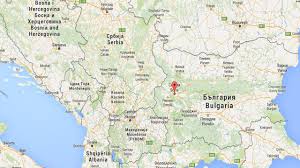
Alexandra Boyd, a young American woman,  arrives in Sofia, Bulgaria to work as a teacher.   On her first day, after a brief friendly encounter with a family outside the wrong hotel,  she finds that the satchel belonging to the family was left in her taxi.  Inside is an ornately carved wooden box, an urn,  containing the ashes of a loved one.   And there is  a label attached indicating the ashes are those of  one Stoyan Lazarov.

Unknown.jpeg


*******
The Shadow Land
by Elizabeth Kostova
2017 / 496 pages
read by Bernie Kreinik 18h 36m
rating  7   /  contemp fiction 
*******

Alexandra’s older brother Jack was an important influence in Alexandra’s young life,  growing up on a farm in North Carolina with teacher parents and then in town.  He was a trouble maker,  but always fun and loving.  And he died suddenly and Alexandra feels partly to blame although his death was several years prior.

So we have two plot threads –   1. The ashes have to be returned of course,   but how?    And 2. Jack has been missing from a family hike for years – probably dead,  but that’s not totally clear.   These chapters alternate until we realize that Alexandra is in Bulgaria in part,  deep in her heart,  to remember Jack because she’s still grieving and has been in serious emotional pain for years.

After a rather brief but scary visit to the police she and her smart and English speaking taxi driver,  Bobby,  now a kind of interested and very helpful friend,  head to a monastery outside of Sofia.   This would be the logical place for an urn of ashes to be delivered.  but there has been no word of the family they seek.  While at the monastery they get locked into a room – possibly deliberately.  The tension mounts.

Bobby is very mysterious in his willingness to drive images-1.jpegAlexandra around  looking for the Lazarov family who lost their urn.   He has problems with the police department and it turns out his “real” job is being an activist for environmental causes and other political issues.  He acts kind of like a detective and Alexandra is a bit suspicious on several levels.

Alexandra takes photos and asks questions –  in one sense this is almost a travelogue.   In fact ,  the NPR review says it is a “strange odessy through Bulgaria.”

Bobby and Alexandra visit the small village where the police chief directed them but the family isn’t home – a conversation with the neighbors only makes things more mysterious.

Bobby,  who is gay (so there is no romance)  and Alexandra travel around visiting other family members in their search for the rightful owner of the urn.  Being cremated was unusual for Stoyan’s generation, but apparently he died two years prior.   The friendship between Bobby and Alexandra grows and is quite enjoyable.

Part 2 of the book starts in May, 1940 at Sofia Central Station –
https://en.wikipedia.org/wiki/Bulgaria#Third_Bulgarian_state   (more recent history of Bulgaria)

Now the other plot thread:  Stoyan Lazarov,  the man whose ashes are in the urn,  is a violinist,  who has just returned to Sofia from Vienna after many years away.  At this point the Germans have taken Austria in WWII.   He plays exquisitely and meets Vera whom we know from Part 1 will become Stoyan’s wife.

Back to 2015 (?) –   Someone wants to stop Bobby and Alexandra for some reason – the police?     They visit with Irina Georgievna,  Vera’s sister  who  provides a lot of background on Bulgaria and its history as well as tells a couple folktales,  apparently what Kostova was studying when she met her Bulgarian husband.    (This makes me want to write something similar about Finland.)

A diary belonging to Stoyan is found at the bottom of the urn,  but some pages are missing.  Vivaldi is not mentioned in what they found.  The search continues.

I was a bit irritated at first by the change in story from that of Alexandra in present times to that of Stoyan in the 1940s on.   The change grew on me and before long I fully appreciated both threads –  I just wasn’t prepared for Bulgarian labor camps.  I also appreciated the author’s note.


Posted in 2023 Fiction | 2 Comments

Eleanor Oliphant Is Completely Fine ~ by Gail Honeyman

So I go from a fairly heavy and angst-filled satire (St. Germain’s Horseman) to a medium-weight family saga (Pachinko)  to now,  a really light-hearted book.   Or is it? –  there seems to be a dark side there with Eleanor’s past.  How did she get this way because she’s very peculiar.  Reading this  due to a recommendation by a couple of people,  not a group read – who said it was a “fun” book.   Well …

Eleanor Oliphant is a thirty-year old young woman with an unusual background and with some (!)  social problems.  She lives in Glasgow,  England and works as a clerk at a graphic arts company.  With a mother who is apparently mad and locked up somewhere,  Eleanor was raised in a series of foster homes until she got out of school and found a job and an apartment.   Now,  several years later,  she still has a social worker who visits,  but she’s basically friendless and way out of tune with her cultural milieu.    She’s spends her time avoiding social situations,  drinking vodka and in weekly phone chats with her mother.

oliphant.jpg


*******
Eleanor Oliphant Is Completely Fine
by Gail Honeyman
2017/ 336 pages
read by Cathleen McCarron 11h 1m
rating:  7.75 / general fiction
*******

Eleanor goes to a rock concert, only because she won an office raffle,  where she is attracted to Johnnie Lomond,  one of the musicians,  and designs to meet him some way.

One day she meets her co-worker,  the lonely single IT guy,  Raymond Gibbons,  when they are leaving work at the same time and they see an old man fall down and stay down.   They join forces to help Sammy keeping him company and calling the paramedics who take him to the hospital.  Once in the hospital the pair of workers go to visit.  Sammy has grown children and they invite him to a Christmas party.

Thus begins Eleanor’s initiation into a kind of social life where she feels she’s required to undertake a make-over.  That’s tricky.   And trying to socialize with Raymond and the others is sometimes laugh-out-loud funny –  I don’t know if it’s believable or not- so far it’s fun.  There’s a very light romance involved but it’s interesting.

An overarching tension is how Eleanor got this way – what happened in her childhood?  What and where is her mother?  What has she been doing all these years and why – we get a bare outline until toward the end where the suspense builds and her past becomes more clear.

It’s a good story well told  –  not great lit but not fluff – enjoyable.   (Actually,  it kept me up until midnight last night.)

Posted in 2023 Fiction | 3 Comments

Pachinko ~ by Min Jin Lee

Oh good –  I needed something lighter weight and this is turning out to be that.  Plus it concerns Korean cultural with a bit of history thrown in-   I’ve long been interested in Korea, both North and South,   and it’s history and changes.

This book starts in Part 1,  1910 to 1933,  and going to Part 3,  1962 to 1989,  covering more than three generations of a Korean family.   I’m glad I got hooked into the setting and the characters before I saw that the plot was rather typical although with its own little twists – life is like a pachinko game?.  (A literary prize-winner this is not,  but that’s fine with me right now.)

pahcinko.jpg


*******
Pachinko
by Min Jin Lee
2017 / 490 pages
read by Allison Hiroto – 18h 16m)
rating –  8.25
(read and listened)
*******

Book 1 deals with how a lower middle class family in what is now South Korea gets together with the only son having a serious physical disability marrying a very poor woman and they have a single surviving daughter,  Sunja.    This is about 1910.  The husband dies so mother and daughter find it necessary to run a boarding house for fishermen.

A very young woman named Sunja  is the subject of the rest of the Book 1 where she gets pregnant by her wealthy but married lover.   Her story continues off and on through the entire book  during which time she finds herself a Korean living in Japan for whatever that entails (no spoilers…)  But although she’s plain and unassuming,   Sunja is a marvelously strong woman in many ways and this is actually the story of her family.

The plot twists concern money and propriety far more than sex/romance or “action” although there is some of the former,  never anywhere near enough to make the book into a romance.  There is a certain amount of history involved but not all that much.   The family saga relationships  are developed nicely throughout and finally climaxes.

As the book goes on time also moves –  Book 2 includes World War II and its aftermath and the effects on the Korean community.   There is a lot of setting and socio-cultural and historical information which is fascinating,  especially starting at about half way when Kim Il Sung takes over in North Korea and the world opens up to Sunja and her children.

I suppose the major theme is the question of what is moral behavior and what is not.  The Christian family has high standards but are torn about what is proper.

Book 3 opens in 1968 and continues to the very late 1980s with the children and grandchildren of Sunya.

Themes include historical and serious Japanese discrimination against Koreans and the oppression of  women,  the presence of con men and mafia types and Christianity (NOT a religious book!) .    The women are naturally oppressed almost without knowing it and the social requirements are stiff on men,  too.   (Expectations of honorable women are very very high for Koreans but also for the Japanese. )

It’s a really good book for just enjoying.  It’s well enough written with excellent character development,  nice little plot twists,  nothing too romantic or violent,  and generally engrossing.

And see Sue Terry’s marvelous review at:
https://whisperinggums.com/2017/08/31/min-jin-lee-pachinko-bookreview/

http://www.npr.org/2017/02/06/513304628/pachinko-is-a-family-saga-of-exile-discrimination-and-japanese-pinball

Posted in 2023 Fiction | 5 Comments

Lab Girl ~  by Hope Jahren

I didn’t think I’d be all that interested in this book but once I started it I was fascinated – at least in parts.     It’s not the science of  The Hidden Life of Trees (Peter Wohlleben – 2016),  but it’s similar  in some ways –  Jahren and Wohlleben are in the same general field of  forest/botony,  but the books are much different –  Jahren’s is definitely a memoir,  Wohllenben’s is more of a layman’s science book.

Lab Girl.jpeg

*******
Lab Girl 
by Hope Jahren
2016 / 279 pages (Kindle) 
rating  8.5  /  memoir – science 
*******

The book describes Jahren’s childhood in a small town in Minnesota and young womanhood as she is set on becoming a scientist like her father and discovers she has a real talent.  She is top of her class,  graduates with honors and allowed to set up her own labs at universities in three different places in the country.   Along with her on her journey to success comes the intrepid and extremely loyal lab assistant and long term friend,   Bill.   These two are a very fun pair to read about, hard-working,  determined and very funny.   To me it felt like their adventures constitute the main story of the book.

Jahren is generally hurting for funds and treated less than professionally by her male peers.   These aspects of being a woman scientist are emphasized.  Nevertheless,  she loves her work and with indefatigable energy and good spirits she,  with the always reliable Bill,  manages what she has and what she finds and wins.

Part 2,  Chapter 4-   On Axel Heiberg Island she and Bill,  along with other scientists,  look at the fossils of ancient forests and Bill dances –  beautiful chapter.

The literary elements are superb – structurally the science parts are chronologically ordered with the seeds and roots taking early positions and juxtaposed with the early life of Jahren.   And so it goes through middle age and illness and producing seeds.   Even the narrative has a few things to say about the comparison –  snow is on the ground for 9 months in Minnesota?  –  Not quite –  but something is gestating.   And the young Jahren memorized parts of Dickens and wove those ideas and quotes into her memoir.

Overall it’s a good book –  very nicely put together and written.


Posted in 2023 Fiction | Leave a comment

Since I Fell ~ by Dennis Lehane

Oh I was ready for a good juicy page-turning crime novel and it looks like the choice of the 4-Mystery Addicts group is just the thing.   I read one book by Lehane,  Mystic River,   years ago and enjoyed it,  but missed everything he wrote since.   The tension does not let up from the Prologue to the last sentences so I just took the day off from life and listened.

sincewe

*******
Since We Fell
by Dennis Lehane
2017 / 432 pages
read by Julia Whelan – 12h 2m
rating  B+ / crime
*******

In the Prologue we know Rachel at some point shoots her husband but …  that tells us almost nothing.   I forgot about it.   The mother’s influence was more important in the Prologue.

Part I:  – up to 2012 or so (the Haiti earthquake)   Rachel Childs,  now a television reporter,  was raised by her brilliant but somewhat demented single mother,  Elizabeth Childs who held a PhD in psychology and was also a popular author.  When her mother died Rachel wanted to find her father,  the name of whom Elizabeth never divulged –  the man Elizabeth had “expunged” from their lives.

She finds her mother’s ex-husband  who had served as her father,  but that was a false lead.  Elizabeth had apparently been seriously nuts,  maybe evil.   She continues to look for her father and finds him but he’s dead.    Brian is in this chapter but as a minor player – a temporary boyfriend –  she marries Sebastian goes to Haiti and elsewhere  for her job and has some really traumatic experiences.

So far we have two unrelated episodes – her mother’s influence and finding her father plus her professional life ending in a breakdown and later a divorce.

Lehane is a master of suspense and twisted plots and it shows.  The story starts again.   Brian Delacroix shows up again and again  – kind of creepy,  almost stalking Rachel but says he loves her.  Rachel goes for men who are safe,  or so she thinks,  but Brian is not a safe guy – or is Rachel also paranoid?


Posted in 2023 Fiction | 2 Comments

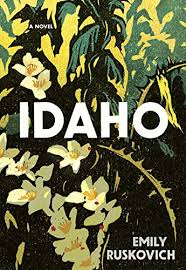
Idaho ~ by Emily Ruskovich 

In the very northern reaches of Idaho,  a hundred miles or so from the Canadian border,  Ann and Wade  Mitchell are married even with his ex-wife  Jenny who is in prison for the murder of one of the daughters she had with Wade.   What Ann  wants to do is reconstruct the tragedy,  but Wade is now losing his memory due to dementia.  Ann has to get busy.

The girl was named May and she was 6 years old.   The other daughter was named June,  she was 9 years old.  On the terrible day May was killed June ran away somewhere – never to be found.   She’d be 16 now.

Ann,  the protagonist in Book 1, is not totally sympathetic – there seems to be some tension in her presence,  like she knows more than she’s letting on – or doesn’t know she knows it – like an unreliable narrator except she’s not the narrator,  only a character in a 3rd person narrative.   And quite often Ann is imagining scenes including what might have happened –
idaho.jpeg


*******

Idaho
by Emily Ruskovich 
2017 / 309 pages (Kindle) 
read by Justine Eyre – 10h 35m
rating –  8 / B-   literary fiction – suspense
*******

Then comes Book 2 which is mostly Jenny’s section and occurs 4 years after Book 1.   The point of view this time continue to change with a bit from a woman named  Elizabeth,   Jenny’s cellmate and bits from Eliot a boyfriend of the very young June.   Jenny has been in prison for about 12 years in 2008 but the story has segments which take place in 2025.

The tale is told in bits and pieces with non-linear structure – it makes somewhat careful reading necessary.  Even within the chapter and section the story flows back and forth in and out of the past as Ann tries to dig out the truth.  That’s Book 1.

I thought I could just listen to it, but nope –  the chronology changes frequently and I have to look and see what time frame I’m reading in. In fact, the chronology is so mixed that it’s hard even with the print book – the memories of 2006 go back to 1995 and elsewhere and so on – memories and ambiguous opening lines,  etc.

And there is also an alternating  point of view  – In Book 1 there are brief passages or paragraphs where  the thoughts of June,  the elder daughter of Wade and Jenny,  seem to break in but it might be Ann again thinking of what June might think.   In Book 2 the voice of Jenny who is in jail who is in jail is added.

And then there’s the writing itself;  it’s a bit stylish and although not overdone, it does require a bit more focus than I’m use for listening.  It’s a very sensory novel – the sights, sounds,  smells, tastes and textures are hugely emphasized because they are part of the themes –  how memory works through the senses.  .

Book 2 follows Jenny and Elizabeth her cellmate who was imprisoned for murder and is a very dangerous person – keeping a sense of impending violence up.  And we continue to follows Jenny with May in 1995 while Ann keeps up the search for June and for knowledge of what really happened.

At times the suspense is almost palpable,  to the credit of the author for whom this is a debut novel.   But at other times the pace turns to a crawl due to the lengthy descriptions of feelings and memories.

The premise,  a search for a child gone missing after the death of her sister at the hands of their mother who has now been in jail for many years is intriguing.   This is especially true when,  years later,  the stepmother, Ann,  Wade’s second wife,  is doing the search while Wade,  the child’s father,  is fighting the loss of memory,  an inherited trait.   A couple of violent scenes where the father treats his second wife like a dog gives a shadow of violence to the whole.

What is memory and do we remember feelings without texture?   What happens to people with dementia or early memory loss?  What do we do with new memories under great stress – violence – trauma.

And then there are “feelings”  what they are and how they change.  So of course these two things combine to be feelings about memories or memories of feelings –  remembered feelings if you don’t have the exact memory.   Is this like a rock in the sand and someone removes the rock but the depression is still there?   And what happens with changes? –

Themes –   this poor book is just over-laden with them – or motifs.   Love,  loss,  grief, redemption all played out against memory as it concerns the living,  the dead and everything in between.   Another theme is emotional feelings and how they are affected by time and all sorts of changes.   Apparently Jenny killed her child on the memory of a feeling.  ???     And then there are ideas about music and photographs and being trapped as well as the issues of life and death.   I think the many descriptions of the natural landscape and its wildlife both flora and fauna of northern Idaho is also a theme – possibly freedom – possibly something else.

Creating with memories –  a collage and a song and more memories –  memories of memories.    Reading creates memories as well –  making meaning out of memories and feelings and changes.   Most of the narrative is in the form of internal dialogues,  Ann or Jenny or someone thinking – but not 1st person.

But for all the work on feelings,  the characters,  Ann,  Jenny, Wade,  never come “alive,”  they were never real to me.  There was no sympathy there – just little dolls being moved around by an author.   (There is a sizable section about dolls in the story –  about playacting stories – it felt a bit autobiographical.)

I think that’s the problem – or part of it –  there’s too much Ruskovich here and too much literary plumage –  the structure develops high suspense while the multi-layered themes overwhelm the plot and characters.  –

The narrator is not helpful –  she reads as though the book was by Tana French or Stephen King and her voice was a bit screechy and whiny.  The singing was atrocious although it suited the book.

Overall I think by the end of the book I was a bit aggravated by the over-the-top,  too much of everything approach to what might have been a pretty good novel.   When authors do this it often means the book needs to be read twice but I’m just not up to it and have too much else on my plate.

The book is marketed as suspense –  um – it’s NOT a page-turner.  It’s as though there were two novels here –  one novel deals with the material aspect of the  lives of Ann,  Wade,  Jenny,  June and May and the tension builds.   The other novel deals with all the conflicted and echoing emotions of the same people or people who love them.

Posted in 2023 Fiction | Leave a comment

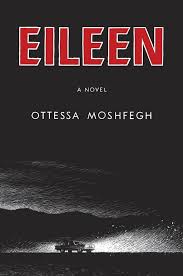
Eileen ~ by Ottessa Moshfegh

I had to reread this for some reason –  (so call my a martyr).   I actually enjoyed it quite a lot more the second time having got over my disgust and annoyance with Eileen-the-younger.   It’s really not necessary for me to “like” or even to “relate” to a character in a book and a second reading often opens up interesting avenues of thought.

eileen

*******
Eileen 
by Ottessa Moshfegh
2016 / 272 pages
read by Aylssa Bresnahan – 8h 46m
rating – 9  /A-   –   literary suspense 
*******

HUGE SPOILERS!!!!

First,   there was the actual narrator of the book and  I really liked Eileen-the-elder. It felt as though she looked back on her younger self with both pity and loathing – maybe a wee bit of compassion.  That’s how I understood her on the second reading.    The filth of the younger Eileen (as described by the elder) is so intense that it made for some tough reading on the first round and I think the reader is supposed to be disgusted by her.   But perhaps Eileen-the-elder is exaggerating in order to work the contrast between then and now? –

And now I’m rethinking the reliability of Eileen-the-elder.   In the first reading she was  ignorable  – in the second she really stood out for me.  But my first ideas on the second read was that she was being completely honest – who wouldn’t be after 50 years?

Of course it’s more fun to read a book in which I “like” the protagonist than one in which I don’t,  but in the long run it doesn’t matter.   I’m not sure what it means to “like” the protagonist –  I don’t think I actually “like” that many –  most of them are simply “okay.”   (Ali Smith’s book “Autumn” has a major character/protagonist named Elisabeth Demand whom I “liked.”   I read that back in April.)
I think Eileen of 1964 loathes herself and emphasizes all her dislikable aspects – to herself and others – she kind of nurtures her yukkieness in order to turn people off thus preventing any rejection.  (gads)    She’s probably also reacting to her father,  her mother and her sister in that she was always the “bad” one,  so she has to be worse than they were/are.
Eileen is intelligent,  hard working and loyal and she would probably make a great friend if she cleaned up a bit and took the risk.  Rebecca came on really strong for her own reasons,  and just broke through that self-imposed wall of Eileen’s.
On the first reading I loathed Eileen – on the second reading I had quite a lot of compassion for her.  (I still wouldn’t want to be her friend though – in her young days.)    I don’t think I was either shocked or awed except maybe shocked a little bit that someone would write this.
“Normal” is a wide range and covers a lot of territory.  I think in most respects Eileen is within the “normal”  range but certainly to the left of center – out there in the 15% parts of a bell curve maybe – but not the 2% parts.    Most people would see her as being “odd” or “weird” if they paid attention but she goes to work every day and  mostly is just dirty and doesn’t take care of herself a lick and has rather loathsome thoughts.


Eileen is seeing her reflection in a store window:
“I looked ridiculous in my huge gray coat, alone and stunned in the headlights of a passing car like a dumb and frightened deer.”  (p. 57).

Eileen of 2014 is remembering how she got ready to go visit Rebecca at her home,  happy,  excited:    –
“I remember going and getting the map of X-ville from the car and galloping like a clumsy deer back inside through the glistening mounds of snow. I was full of energy.”   (pp. 192-193)

** The deer is memorable –  this whole episode with the deer has a very deep meaning to her in 2014**
** She goes on to say she kept the map for years – a map of her childhood – of her old life. **

Eileen in 2014 reminiscing:   “I wish I could feel again the brief peace I found on that northbound highway. My mind was empty, eyes wide with wonder at the passing forests and snow-filled pastures. The sunlight blared through the trees, and at a particular swerve in the road, it blinded me. When I could see again, there was a deer standing a few yards ahead, blocking my way. I slowed, watching the animal frozen there, staring back at me head-on, as though I’d kept it waiting. I pulled over and rolled the car window back up.”   (p. 259)

And …
“I said good-bye to the Dodge as I walked toward the deer, frozen still, breath steaming from its nostrils and hanging in the air between us like so many ghosts. I raised my hand as though to greet it. It just stood there, big black eyes fixed on mine, startled but kind, face tinged with frost, antlers floating above its head like a crown. I remember that, how I crumbled before that animal, its body quaking and heavy and huge. Tears finally filled my eyes. I opened my mouth to speak to it, but it trotted off down the embankment and into the woods. That was it. I cried. I smeared my tears around to rub the blood off my face and kept walking, my footsteps crisp and certain in the frozen snow.”  (p. 260)

I am more and more impressed with this book the longer and harder I pay attention.   I am so glad I got the ebook to go with my listening because the first time round I barely knew what I was paying attention to what with all the gross physical stuff and the suspense.

First,    I really liked Eileen-the-elder and it felt as though she looked back on her younger self with both pity and loathing – maybe a wee bit of compassion.  That’s how I understood her on the second reading.    The filth of the younger Eileen (as described by the elder) was so intense that it was pretty hard to read and I think the reader is supposed to be disgusted by her.   Perhaps part of that is a bit of exaggeration by the older Eileen in order to work the contrast between then and now? –

** And now I’m rethinking the reliability of Eileen-the-elder. **

Of course it’s more fun to read a book in which I “like” the protagonist than one in which I don’t,  but in the long run it doesn’t matter.   I’m not sure what it means to “like” the protagonist –  I don’t think I actually “like” that many –  most of them are simply “okay.”   (Ali Smith’s book “Autumn” has a major character/protagonist named Elisabeth Demand whom I “liked.”   I read that back in April.)
I think Eileen of 1964 loathes herself and emphasizes all her dislikable aspects – to herself and others – she kind of nurtures her yukkieness in order to turn people off thus preventing any rejection.  (gads)    She’s probably also reacting to her father,  her mother and her sister in that she was always the “bad” one,  so she has to be worse than they were/are.
Eileen is intelligent,  hard working and loyal and she would probably make a great friend if she cleaned herself up and took the risk.  Rebecca came on really strong for her own reasons,  and just broke through that self-imposed wall of Eileen’s.
On the first reading I loathed Eileen – on the second reading I had quite a lot of compassion for her.  (I still wouldn’t want to be her friend though – in her young days.)    I don’t think I was either shocked or awed except maybe shocked a little bit that someone would write this.
I think the concept of “normal” is quite a wide range and covers a lot of territory.  I think in most respects Eileen is within the “normal”  range but certainly to the left of center – out there in the 15% parts of a bell curve maybe – but not the 2% parts.    Most people would see her as being “odd” or “weird” if they paid attention but she goes to work every day and  mostly is just dirty and doesn’t take care of herself a lick and has rather loathsome thoughts.
Posted in 2023 Fiction | Leave a comment

Anything is Possible  by Elizabeth Strout

This is a remarkable interweaving of the stories underlying My Name is Lucy Barton  –  What all went on in that hometown of Lucy’s  – to the people Lucy and her mother gossip about? –  These are those stories, each almost a standalone but interwoven as stories in a small town are,  and My Name is Lucy Barton comes even more meaningful if you get the gist of the relationships between the characters.  NPR’s Helen McAlprin calls it a “novel-in-stories.”

anything.jpg
*******
Anything is Possible 
by Elizabeth Strout
2017/255 pages
rating – 9.25 / contemporary fiction
*******

Welcome to Amgash,  Illinois,  the small rural home town of Lucy Barton,  the protagonist of “My Name is Lucy Barton.” She’s now an acclaimed author from New York City and has written a memoir.  It’s selling pretty well in town,  but the memoir is not Strout’s tale.  What she tells us is the stories of the other people involved,  the sisters and brother,  the cousins,  the neighbor and his wife,  the Pretty Nicely Girls,  and many others.

These folks gossip a lot,  they do whatever they can to make themselves feel better about who they are and their place in society.  But they also have secrets which are mostly about sex but also concern love and abuse and money and so on.  Some of them can simply not express their feelings – of love,  of loneliness,  of rage.  Other characters go on and on.  They’re so deeply human!

Strout writes beautifully,  spinning her words into webs of understanding with themes which are revealed at all levels of society from the rich and famous to the poorest and most desolate,  young and old,  male and female.

Posted in 2023 Fiction | 5 Comments

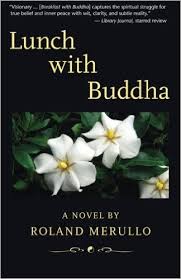
Lunch with Buddha ~ by Roland Merullo

I read Breakfast with Buddha a few months ago and was kind of enchanted so when Dinner with Buddha (3rd volume) was on sale I had to get Lunch with Buddha, too. Lunch with Buddha doesn’t have quite the same glow and it feels a bit contrived,  but it’s also a follow-up venture into  journeys,  external and internal  – of life and the road – with Americana and Buddhist ideas,   food, love and family as well as the spiritual issues of life and death.   I enjoyed it and am looking forward to Dinner with Buddha.

lunch
******
Lunch with Buddha
by Roland Merullo
2012 /  392 pages
read by Sean Runnette – 10h 21m
rating –  8 (for enjoyment) /  contemp fiction
*******

Otto and Rinpoche head back to the western part of North Dakota and then Seattle and back to North Dakota.  Rinpoche is now married to Otto’s sister,  Cecelia and they have a child called Shelsa.
And Otto’s wife has died but his children,  Natasha and Anthony,  young adults really,  accompany the group to the retreat Cecelia and Rinpoche have established there.

The talk turns to life and death and choices,  to Jeanne,  Otto’s late wife,  and to the possibility of Shelsa being the new Dalai Lama.

It’s quite interesting and informative in its own way but I think Merullo is developing his own thinking as far as Buddhism goes.


Posted in 2023 Fiction | Leave a comment

Strangers in their Own Land ~ by Arlie Russell Hochschild

I’ve had this book sitting around for a few months and now that maybe I’ll give it a try although I’ve read other material quite similar –  White Trash by Nancy Isenberg  and Hillbilly Elegy by J.D. Vance, Hillbilly Elegy by J.D. Vance,   both good books – this one  is not quite the same but it’s worthwhile.

Why do people who are directly harmed by government policies on issues like climate change,  water and air pollution, and industrial waste while helped by programs such as food stamps and medicaid,  regularly vote Republican and generally against their own best interests.  Meanwhile they’re opposed to affirmative action and almost all government regulations.
strangers

*******
Strangers in their Own Land: Anger and Mourning on the American Right
by Arlie Russell Hochschild
2016 / 368 pages
read by Suzanne Toren 11h 17m
rating – 8.5  /  contemp sociology-politics 
*******

I’m disappointed I suppose but …  with the premise that a Berkeley sociologist is going to study and explain – to the point of “deep stories” and “empathy” –  the personal politics of people from southern Louisiana well –    In my opinion,  this is not an unbiased study and Hochschild goes to lengths in the narrative as well as in the appendices,  to show how the subjects of her study are misinformed, wrong and possibly not too bright in that they don’t put things together the way she does.

Hochschild says she “likes” her subjects,  they just disagree on politics.  She’s says she’s trying to understand from a point of empathy and from “deep stories.”   But I think her own “deep story” shows, too.

She does do quite well with her research and getting the general gist of what her subjects believe,  but she never does get to empathy which is to actually “share” the feelings of another person.

The book purports to be an attempt at “empathy,”  but instead of showing how and why the overwhelmingly Republican and  tea-party people believe as they do,  Hochschild seems bent on showing how they’re backward.   The attitude is seen in the assumptions –  for instance that to use the Bible as your ultimate value is less than intelligent.   Or using a quote from then-president Barack Obama as validation of a fact about the environment.

Hochschild presents the ideas of the people she’s curious about – ie oil brings jobs – and then demolishes those ideas with what she says are facts.   They are facts,  but she neglects to mention that 15% of all jobs in Louisiana is quite a lot more than any other industry.   And anything that affects those numbers is going to be seen as a threat whether it’s regulations or taxes.   And if it’s your job – your personal job is threatened.

Not all bad –  I finished –  and there are places the author seems to “get it.”   The metaphor about the “long line” where the people, mostly middle age white men,  are standing patiently waiting the American Dream and seeing the government helps people behind you (blacks and immigrants and women and even animals/environment).  And they get ahead of you or at least stand in your way.   And in the minds of these people,   it’s not fair.

“You are patiently standing in a long line” for something you call the American dream. You are white, Christian, of modest means, and getting along in years. You are male. There are people of color behind you, and “in principle you wish them well.” But you’ve waited long, worked hard, “and the line is barely moving.”

Then “Look! You see people cutting in line ahead of you!” Who are these interlopers? “Some are black,” others “immigrants, refugees.” They get affirmative action, sympathy and welfare — “checks for the listless and idle.”  The government wants you to feel sorry for them.

 Sometimesi the problem is definition –  like the definition of racist.   For the folks in Louisiana racist means you still say “nigger.”    If you don’t say that word,  you’re not a racist.  Hocbschild’s  definition has to do with place in the socio-economic scale and maintaining a certain distance from the blacks who are on the lowest rung.

Many people in the US do feel like “strangers in their own land” and probably have since prayer was banned in schools.  They feel like they and their needs have been cast aside by Washington.  They feel their main need is good jobs and that when the provision of that goes against the environment the jobs should win.   There are various belief systems going on in this part of  the country but Hochschild only reports them from the point of view of a secular liberal protecting the environment  –  basically discounting their ideas with her own arguments or showing other ideas which are very general.

  Hochschild can’t quite shed herself of her academic Berkeley background – the ideas show up.   Guns,  drinking laws, abortion, race –  the issues  all come into play and much of what these Louisiana people think and believe goes against Hochschild’s very solidly held ideas.  It all looks like a paradox to her and she’s not up to figuring out their basic assumptions so she can’t help herself – there’s no other way for her to talk about some of this stuff .

The narrator,  Suzanne Toren, seems to have picked up on the biased undertone and emphasized it.

It’s possible to see through the authorial skewing though.  Follow the money.  Money for the big businesses – (oil) and money for the jobs.   How many jobs in oil is only half the question –  the oil money comes from outside the community in the form of jobs.  That money goes from the worker to the landlord and the grocery store and the restaurant and other local entrepreneurs who add more jobs. But it also goes outside the community to corporate headquarters and shareholders and suppliers.  It’s connected.

Finally she gets to trickier issues –  resent the environmental problems or resent the federal government for fixing them.


Posted in 2023 Fiction | Leave a comment

Two Days Gone ~ by Randall Silvis

I rated this an A- as a crime novel but only a 6.5  as a literary endeavor.  I like to think I understand what Silvis was trying to do but that it just didn’t quite cut it although it was almost.

twodays.jpg

*******
Two Days Gone
by Randall Silvis
2017 / 400 pages
read by Graham Winton – 11h 1m
rating:  –   A – 6 /  literary crime
******* 

The premise is that the wife and children of a professor novelist have been murdered and the novelist,  Thomas Huston,  is on the run.  It seems that the novelist has gotten more than a little involved in the research for his new book and as Ryan DeMarco investigates the grizzly murder,  he finds conflicting evidence as to Huston’s’ guilt.  Meanwhile,  in an occasional chapter scattered throughout,  the point of view of Huston is addressed.

It’s a good book but  a couple of aspects seem forced.  First,  the allusions and references are outright literary,  while  the language and tropes are perfect for a crime novel.   That can be done but I think it’s difficult.   Also, the plot at first seems like it is stretching itself into some more serious literary ideas  what with how DeMarco and Huston (both literary people)  think about what’s going on.   A manuscript of Huston’s work in progress is found and DeMarco’s analysis of Huston’s character development for that in relation to the events and plot and real possible suspects is touched on as it might be evidence of the state of the Huston’s mind.  Poe’s Annabel Lee is a motif.

All that stops at some point and the forced bad-guy stuff starts.  It never seems quite natural.  I’ve read a lot of crime novels and this goes beyond my comfort zone in terms of language and actions – or described actions.  This part is towards the end.

It’s okay – overall some nice escapist fare – I’ll read a second if it ever comes out.

Posted in 2023 Fiction | Leave a comment

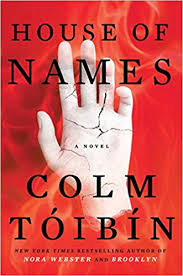
House of Names ~ Colm Toibin

I’ve read 7 of the 11 novels by Toibin –  they tend to be concerned with family struggles,  particularly the ones gays or women might face.  This is not really different from that.   The difference is that this is a kind of spin on the original Agamemnon, Clytemnestra and Oristes and the voices of others are included – there is more about Orestes and his journey to deal with the situation.

names.jpeg

*******
House of Names
Colm Toibin
2017 / 288 pages
read by Juliet Stevenson, Charlie Anson,Pippa Nixon / 8h 46m
rating –  8.5
*******

Toibin is a wonderfully creative author and talented wordsmith.  This is certainly not my favorite kind of literature but in the hands of Toibin it comes alive.

The story of Agamemnon after the fall of Troy and according to Euripides is generally followed but there are several significant changes – additions mostly but also filling out the characters of Clytemnestra and her children.  Agamemnon is left pretty featureless.

It’s bloody and full of motives and craziness.  Orestes is a bit confused about several things including his own sexuality.

One of Toibin’s additions,  the old woman at the seashore,  is a brilliant add – it fits today’s novels – it wouldn’t have worked for the original.

Posted in 2023 Fiction | 2 Comments

On Tyranny ~ by Timothy Snyder

I need some kind of highest praise word here,  “ remarkable and extraordinary aren’t quite enough. “Important” is in the ball park but “vital”  is better.  One reviewer said, “Reading this book is imperative. You may not get another chance.”

This is a clear, timely, and very concise explanation of what tyranny is and how it could easily come to pass in the US at this point in time. Snyder is a historian from Yale with a specialty in German Nazism as well as Stalinist Russia.  He knows what he’s talking about.  This is a warning to all of us!  .
ontyranny

*******
On Tyranny: Twenty Lessons from the Twentieth Century

by Timothy Snyder
2017 / 130 pages
rating:   10
*******

What Snyder is talking about is how tyranny comes into existence and how best to resist it.  “Who, how, when, where, why. That  is why the book is “vital.”  “imperative.”

The “Twenty Lessons” are very short essays on 20th century history and how it applies to the world (the US)  today,  specifically  with our current president.  What happened that Hitler and Stalin should become the tyrants they were –  that they accrued such power, took so much freedom, and ended so many lives?  Can it happen here?  You betcha.  Actually it looks  inevitable unless we and the young people stand up and refuse.

Some of the “lessons” are only a few paragraphs long, others go on for several pages. It’s like an introduction,  an overview, a summary, and a guide. Do not obey in advance

  1. Defend institutions
  2. Beware the one-party state
  3. Take responsibility for the face of the worls
  4. Remember professional ethics
  5. Be wary of paramilitaries
  6. Be reflective if you must be armed
  7. Stand out
  8. Be kind to our language
  9. Believe in truth
  10. Investigate
  11. Make eye contact and small talk
  12. Practice corporeal politics
  13. Establish a private life
  14. Contribute to good causes
  15. Learn from peers in other countries
  16. Listen for dangerous words
  17. Be calm when the unthinkable arrives
  18. Be a patriot
  19. Be as courageous as you can
  20. Epilogue

Believe.

Salon:
http://www.salon.com/2017/05/01/historian-timothy-snyder-its-pretty-much-inevitable-that-trump-will-try-to-stage-a-coup-and-overthrow-democracy/

Democracy Now: https://www.democracynow.org/2017/5/30/on_tyranny_yale_historian_timothy_snyder

Posted in 2023 Fiction | Leave a comment

Moonglow ~ by Michael Chabon

This is a very good book but not quite as good as either of my Chabon favorites,  Kavalier and Clay or The Yiddish Policeman’s Union.   This may be third favorite – (lol)  –

Overall the novel feels like two separate stories –  the first and maybe a kind of framing device (large frame!) ,  is the story of a very smart and tough (in many ways) old Jewish man who is dying as told by his grandson (Michael Chabon).   The other story,  scattered throughout the first half and then nestled in,  is the focus story of grandpa’s adventures in Nazi-land with the V2 rocket and Wernher von Braun.   The two stories come together at some point after the war but the tale is not told in chronological order.  (The war part is an obvious homage to Thomas Pynchon’s Gravity’s Rainbow.)  I really didn’t care much for the war part (as usual) although I got through it.  The rest was great.

Chabon writes very,  very nicely using an intelligent vocabulary in creatively structured sentences and without a bit of cliche.  Drop dead funny in places.

moong.jpeg

*******
Moonglow
by Michael Chabon
2017 / 430 pages
read by George Newburn 14h 46m
rating 8.25  –  contemporary fiction
(read and listened)
*******

The frame story is told like a memoir told by one “Michael Chabon.”  It tells of  Michale’s mother’s father growing up, finding his vocation, going to war and marrying Grandma who brought along her daughter – Michael’s mother.   Now  Michael is a grown man and Grandpa is dying at his mother’s house.  During their chat sessions Grandpa asks Michael to write his story down in a way that makes sense.  It almost does – but there might be some magical realism involved.  Michael is a kid for much of the story.

The structure is not linear but rather like remembered segments which are rifled through by the teller/rememberer.   It works for some reason but I’d be hard pressed to figure out why.   I think it must be the charming and delightfully inventive characters.

From Michiko Kakutani in the NY Times:  (pay wall)
“Although “Moonglow” grows overly discursive at times, it is never less than compelling when it sticks to the tale of Mike’s grandparents — these damaged survivors of World War II who bequeath to their family a legacy of endurance, and an understanding of the magic powers of storytelling to provide both solace and transcendence”.

Posted in 2023 Fiction | 2 Comments

The Road to Lichfield ~by Penelope Lively

Other reviewers have called this book quiet,  but I would rather just call it boring. That said,  it’s an old Booker Prize short-lister (1977)  and I read and almost always enjoy Booker Prize material with the Booker Prize reading group.    In this novel,  the elderly and widowed father of Anne Lenton,  a middle-aged  married woman with children,  is dying in a nursing home.  So she leaves her husband and children in Berkshire to go to the not-too-distant Lichfield,   where he resides intending to help him straighten out his affairs.  While there she meets her father’s very nice but sad and lonely married neighbor and yes,  within a short time they become lovers.

lichfield
*******
The Road to Lichfield
by Penelope Lively
1977 / 209 pages  (Kindle)
Rating:   6.5 
*******

While sorting through her father’s affairs  a banker tells her that for many years moderate-sized checks have been sent to one Betty Barron who lives in another town.   Anne is curious and investigates.

Meanwhile,  in her own home town,  Anne is cajoled into helping preserve a very old house called Splatt’s Cottage.    Well,  Anne is a history teacher and values history so she gets involved there, too.

The characters seemed a bit flat and predictable to me – and their names are Anne,  Don,  David,  Paul,  Betty,  Mary, etc.  Only Graham Stanton, a film producer and Anne’s chubby brother,  has an interesting name – or maybe that was a very common name in the UK in the 1970s.    And maybe the story is about normal humans and “universal themes, ”  so to speak.

There is one shining part in the book  – the 80-year old James Stanton has some kind dementia and drifts from our shared reality into his own world.  These passages are beautifully rendered and endearing.

Otherwise the writing was clear but lackluster –  actually,  the writing was kind of ponderous for the type of book I thought it was supposed to be.  Maybe with a British accent the rhythm would have taken hold.    The setting did nothing for me but I suppose it was written for people who knew the area.    The theme of history and skeletons in old closets was a bit interesting –  be careful before you go digging around in artifacts and documents of the past.

Posted in 2023 Fiction | Leave a comment