The Maniac by Benjamin Labatut

This is the same Benjamin Labatut who wrote the utterly amazing “When We Cease To Understand The World” a couple years ago. And now I just lucked into this second book.  https://mybecky.blog/2022/06/19/when-we-cease-to-understand-the-world-by-benjamin-labatut
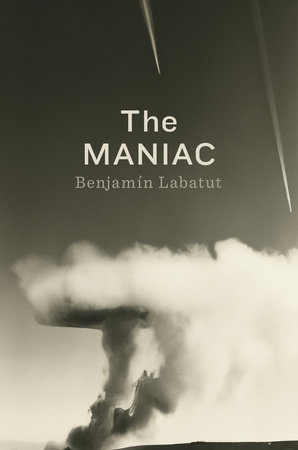
The Maniac 
by Benjamin Labatut 
September, 2023 – 368 pp 
Read by Gergo Danka, Eva Magyar, 8h 51m
Rating – 9.5 / 21st Century fiction 
(both read and listened)

It’s a strange one in many ways, but for me it got almost personal. So yesterday, I was skimming some reviews (see what other people thought) and one of them had what looked to be an unrelated, but interesting video link in it. I clicked and then proceeded to watch a 90-minute prize-winning documentary. This is a seriously odd thing for me to do, folks. – I don’t even watch many movies, but I do enjoy a good documentary. This one is called “AlphaGo.”  
https://www.youtube.com/watch?v=WXuK6gekU1Y

The strange thing about reading the book is that it covers exactly the same material as the documentary, but reading the book I got further inside the competition than I did via the movie. There was more detail even if that part was only about 25% of the book. The book was much more than the computer challenging a pro to a game of Go. I just didn’t notice the connection when I clicked to watch because I hadn’t gotten to that part in the book yet.  LOL!   I had no clue.  

Anyway, in some thematic ways The Maniac is similar to Labatut’s first book, “When We Cease To Understand The World” First, it seems like a dark and crazy-ass book, but it’s a fictionalization of the life of John von Neumann who was a brilliant physicist, mathematician, early computer developer, and much more.

Just as Hitler was in his ascendency, Neumann and his wife, both Jewish, immigrated from Hungary to the US where they had a child and later divorced. He was recruited for the Manhattan Project at Los Alamos and worked on it alongside other physicists and mathematicians. Many of whom won Nobel Prizes later and their friendships continued after the war with work on computers and AI beckoning.  

These fictionalized memories give first person perspectives for the first 3/4 of the book. Included are Neumann’s family members. his mother, a brother, 2 wives and a daughter, as well as other scientists. Eugene Wigner, George Polya, Theodore Von Karman,  Gabor Szego, Richard Feynman, Sydney Brenner, Nils Hall Barricelli, Vincent Ford. Some have one brief memory, others have two or three. The memories are basically in chronological order. There are more people mentioned than those who “write little memories.”  

There are the physicists and mathematicians of WWII who also had to come to grips with the theories of Nils Bohr, Max Planck, Albert Einstein and other brilliant scientists. Not all fared so well with their understanding of how the world works because the old ways evaporated when they were extended to the sub-atomic level – or should I say realm.  They had thought the math was solid and unquestionable, but its solidity started to wobble and the firm foundations were no longer universally agreed to. 

 Epigraph: 
“She approached me dreadfully fast and put her foot on my neck, and cried out in a terrible voice; ‘Do you know who I am?’ And I said, ‘Yes, Long have you caused me pain and woe. You are my soul’s faculty of reason.’” 
Hadewijch of Brabant, Thirteenth-Century Poet and Mystic  

The title, The MANIAC, refers to MANIAC I, the acronym of Mathematical Analyzer Numerical Integrator and Automatic Computer Model I which was developed in 1952  using architecture from John von Neumann. https://en.wikipedia.org/wiki/MANIAC_I  .That was used until 1958 after which Model II was developed and used until 1965 by which time Model III was in operation between 1957 and 1964.    

*****
 An interview with Benjamin Labatut, NPR – 
https://www.npr.org/2023/10/07/1204450958/benjamin-labatuts-novel-the-maniac-follows-an-ai-scientist-troubled-by-his-work

https://www.bbvaopenmind.com/en/science/leading-figures/von-neumann-the-smartest-person-of-the-20th-century/

The narration is beautifully performed by Gergo Danka and Eva Magyar, although to my ears there was a little too much accent.

Posted in books | 1 Comment

Vera Wong’s Unsolicited Advice for Murderers ~ by Jesse Q. Sutanto

I definitely got lucky with this nicely humorous book which has a more serious plot line and a heart-warming theme, too.  


Vera Wong’s Unsolicited Advice for Murderers 
by Jesse Q. Sutano 
2023 / 
Read by Eunice Wong  10h 41m
Rating: B+ / cozy mystery 

Vera Wong owns and operates “Vera Wong’s World Famous Tea House,” a tiny tea shop in Chinatown of San Francisco.  She’s 60 years old now and lives alone in the rooms above it.  Except for phone calls with her son, Tilly, in Silicone Valley, has been alone and very lonely since her husband died quite a few years. One morning going downstairs to the tea shop, she finds the body of a dead man.  She is very curious, confident and self-motivated.  She snoops around before calling the police.  

Julia is married to Marshall Chen who treats her, and most people including his own toddler daughter, very badly. There’s no physical abuse but the years of grinding belittlement from Marshall has worn Julia down, Marshall left her the night before we meet Julia and his things are in the black plastic bags she’s already angrily packed.  

She, Riki, Olivier and Sana turn out to be Vera’s suspects because she has no use for the police. The suspect’s names and phone numbers were from the man’s phone Vera took while snooping.  

Vera Wong cooks lots of excellent Chinese food and generally plays the role of bossy Chinese mother to the X-generation suspects, all of whom seem to need one. 

Only once in awhile the almost-romances got a bit much, but that was light and temporary. The narrator is terrific. 

Posted in books | Leave a comment

April in Spring ~ by John Banville

Well this book was a disappointment except for the wee bits of action or suspense up until the last 75 pages or so. Then it got quite good. The quality, or what I consider quality, of Banville/Black’s books is, to me, very uneven. 

April in Spring
by John Banville
2021 /
read by John Lee 8h 43m
Rating 8/A-, literary crime


I totally advise anyone taking up these books to start with Christine Falls – the first one – and then go in order.  It’s not going to be like anything you might be familiar with because if you’re a fan of Banville’s literary offerings this isn’t that – there’s some serious crime to solve woven through the middle of the lush descriptive passages and there is some violence. If you’ve been enjoying the Dublin thrillers of Tara French or Adrian McKinty you’re in for a shock – there’s only a wee slow bit of tension-building here but it finally does get to a crescendo and climax in the final chapters. It seems like Henry James is trying to partner with Dean Koontz – LOL!  

And, what often takes the author of a good series upwards of twenty or so books to get to, Banville got to in only 8 –  What do they get to?  What I’ve experienced is they tend to need a change so they take their characters and plot lines out of the country. Starting with Murder She Wrote and “Jessica Parker,” I’ve noticed how James Lee Burke, Louise Penny, Monica Ferris and several other authors of long running series kind of run out of steam along the way and the protagonist goes to England or Thailand or France or El Salvador or somewhere. Also and contributing to the changes, how many dastardly murders can occur in one small area?   (Big cities excluded here.)  

John Banville has changed things up quite a lot since he started writing mysteries. He wrote “The Book of Evidence” back in 1989 and that’s a mystery of sorts – with a very unreliable narrator and I thoroughly enjoyed it even if it’s not one of his better known novels.. Then, after a few Booker winners he tried writing spin-offs for books by the likes of Henry James, Arthur Conan Doyle, and Raymond Chandler. (Imo, he’s most like Henry James.) 

And it was with Christine Falls, the first book in what became the Quirke series (2006),  he gave himself the pseudonym of Benjamin Black. That lasted for 6 or 7 Quirke books and then it was back to Banville for the next and most recent 3 including Snow in which Quirke barely makes an appearance. 

The Quirke series is set in and around Dublin, Ireland of the 1950s, so there’s lots of drinking and smoking with a good little sprinkling of sex. With April in Spring, Black – er -it’s Banville again,  took Quirke and his new wife, Dr Evelyn Blake, to Spain for a nice long hiatus.  Okay fine – lovely, in fact. But then Quirke thinks he sees some woman he knows in a restaurant. Could it be? Oh dear God, huh?  He’s introduced to her, the guest of an acquaintance, but that name is wrong somehow. Besides, the 20-something young woman is deliberately casting her eyes away from him and she’s covered her hair and most of her face with a black Spanish mantilla. Is this woman in hiding? 

Then Quirke remembers the name, April Latimer, his daughter Phoebe’s friend who was killed in some very suspicious circumstances a few years prior; no body was ever found. (Elegy for April, 2011 – my review on this site). Later Quirke calls Phoebe in Dublin and now Phoebe wants to go to Spain. After some discussions with a few regular characters in Dublin, Phoebe gets on a plane to Madrid. Hastings, the police sergeant and a long-time friend of Quirke, convinces St John Strafford to go along for Phoebe’s safety. A couple of Irish gangsters show up at some point, and the really ugly family problem of “Elegy for April” reappears briefly in this short novel.  

This is not my favorite Banville book (that’s The Sea or Snow or ???)  For one thing the story didn’t get interesting until about 1/2 way through, but I think Banville is trying to write an atmospheric and realistic crime series ala Raymond Chandler, but using the darkness of mid-20th century Ireland.

I’m ready for The Lock-up just published in May of this year.

Posted in books | Leave a comment

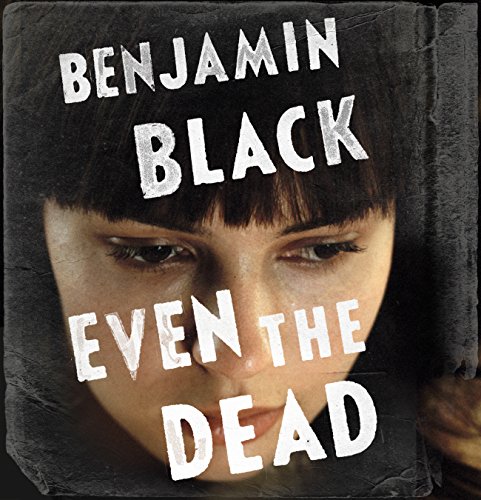
Even the Dead ~ by Benjamin Black

Good book again!  But, and I emphasize this, although it’s the same guy Benjamin Black is quite a different writer from John Banville. Sometimes I think Black gets back into the groove of writing literary novels even though as Black he writes crime novels of various sorts including this series. 

** PLEASE READ THESE IN ORDER! **

Even the Dead 
by Benjamin Black – 2016
Read by John Keating 9h 27m
Rating –  8/A+ Literary crime
(#7 in Quirke series) 

Fom the beginning of this book we have Quirke seeing a new woman, Doctor Evelyn Blake, a psychiatrist. His adult but motherless daughter Phoebe has gotten a job in Blake’s office and has also just met a new friend with the unlikely name of Lisa Smith, Lisa is in trouble because her boyfriend was just killed in a car collision with a tree. Lisa was a witness AND she’s pregnant. Phoebe, being Phoebe, has to help.

Meanwhile, Detective Hacket, Quirk’s police force buddy, finds that the dead man’s father is an old, long-time “friend” who happens to owe him some favors. The tale gets messy with history, both personal and Irish. 

Quirt’s half brother Mal and new wife, Rose, are involved in this story. but now Mal is seriously ill and Rose is … um .. rather forward, imo, but … 

This book is lighter in some way with hints of humor, but the darkness is always there, just waiting to come out and show itself. 

I look forward to April in Spain, number 9 in his series of 10. I read Snow (#8) awhile back and out of order. (My review is here.) The author went back to the name of John Banville for Snow and for these next 2 books, too.

Posted in books | Leave a comment

Six Degrees of Separation

Okay – here we go … it’s time for Six Degrees of Separation hosted by Kate over at Books Are My Favourite and Best and followed by many.  🙂  

I Capture the Castle by Dodie Smith (1948)  is Kate’s starter book so thank you, Kate.  I read this back in 1999 or so  (?) and that blog was terminated long ago. Anyway Smith’s book is set in a dilapidated old English castle with two destitute sisters struggling in many ways.  

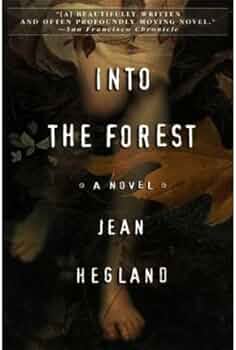
Into the Forest by Jean Hegland  (1966) –
Smith’s book reminds me so much of Into the Forest that I sometimes conflate the two even if they’re really quite different.  The Hegland book has two sisters temporarily home alone in the redwood forests of Northern California. While their parents are gone the world is rendered out-of-order by a super-massive power-failure – now everyone is “off the grid” because there is no grid. The girls (ages 12 and 15?) are permanently stranded. These two books are both about sisters coming-of-age in the countryside and in serious poverty.  One set of sisters has parents there while the other set of parents is gone. I read this one a few years after I Capture the Castle – 2001? 

New York 2140 by Kim Stanley Robinson (2017)
Another dystopian novel but this time it’s about New York after the seas rise. The connection is dystopian climate change  I thoroughly enjoyed this book and it was the first I’d read by Robinson who’s been around a long time, writing and getting awards – like 40 years. I’d seen his name but …???

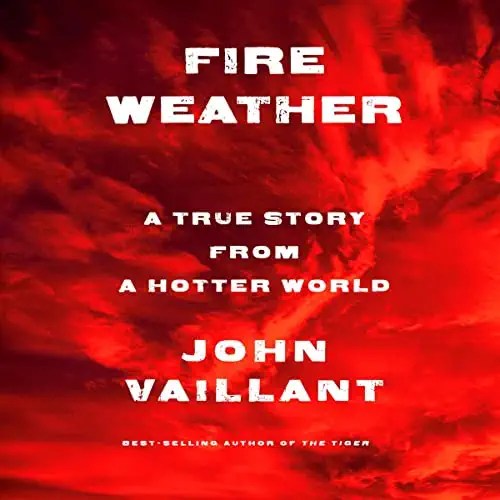
Brings me to an incredible nonfiction book called Fire Weather: A True Story from a Hotter World by John Valiant (2023)  which is about the enormous fire in the Boreal forests of Canada where we get our bitumen to make enormous quantities of synthetic crude oil. There’s a lot of nonfiction “meat” here, but It reads like a novel with the characters all trying to get out fast 
https://mybecky.blog/2023/07/20/fire-weather-by-john-vaillant-fire-weather/

And from a fire in northern Canada we go to a hurricane in southern Louisiana and find Salvage the Bones by Jesmyn Ward (2011). Not a fire this time, instead, this one is about a small, poor dysfunctional Black family and their struggles to escape and survive the horrendous storm and flooding brought on by Hurricane Katrina.  The family is not in a city which makes it rougher. Read in 2012 so I had to edit my blog.) 

For the 5th book in this chain of 6 Degrees I’ll chose Tin Roof Blowdown by James Lee Burke (2007). This is i the Dave Robicheaux seres which is set mostly in the Bayou area just  east of New Orleans.The crime mirrors the ferocity of the storms so this one has it all with the bodies in the wreckage of the storm along with the bodies and looting of the but there’s survivors. But there’s also great courage, kindness and love. I read this when I was between blogs.

And lastly – to bring us back to what is actually a somewhat less violent story (or less violently told anyway) we have White Doves at Morning (2002) by, again, James Lee Burke and mostly set in his home state of Louisiana. But rather than murder and mayhem amidst a 100-year hurricane – it’s the story of his ancestors, Robert Perry and Willie Burke, who settled there only to fight later in the Civil War,

Posted in books | 5 Comments

Holy Orders ~ by Benjamin Black

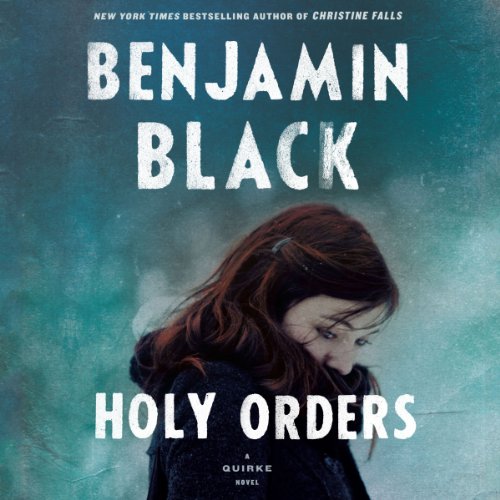
For awhile during the middle of this book, the 6th in the Quirke series by Benjamin Black (aka John Banville of Booker Prize fame) I thought that Black had disappeared, replaced by the old John Banville and his long-winded, highly stylized novels – (literary, you might say – lol). 


Holy Orders
By Benjamin Black
2013
Reader:  John Keating 8h 39m
Rating: A+/8 – / literary mystery 
(Quirke series #6)

But no!  There he was, more apparent toward the end, but with all the tension and suspense of your average noir thriller. Don’t get me wrong – I love Banville and his novels. I read 6 I believe,  but it seemed as though he went on a hiatus from “literary fiction” for about 10 years (2006 – 2016) during which time he wrote the Quirke series (8 to date?) and some standalone novels including a couple mysteries. He wasn’t quite able to escape his natural literary leanings, so he put that to great use bringing it back to the name Banville, even for the Quirke books – (See The Lock-Up and others).  

The Quirke books have more substance than I first thought. Set in the 1950s when the Catholic Church was still very powerful in the new Republic of Ireland, Black conjures up the noir of the times, a darkness rife with corruption and violence in the Church, the police force and the politics. Tensions still run high between Protestants and Catholics with a high rate of poverty among Catholics. Quirke, because of his background, is a lower-middle class Protestant and friendly with Catholics. He even has a certain awe and respect for their ways.

All the usual characters of the series are here in Holy Orders starting with Dr Quirke (with no first name), a consulting pathologist for the city of Dublin. (And fwiw, I advise reading this series IN ORDER – yes, in order to know each of the ongoing characters.)  So there’s Quirke, his police force buddy Detective Hackett and another pathologist, Dr David Sinclair. Then there is Quirke’s daughter Phoebe (not raised by him), his girlfriend Isabel, the sister and  husband of Quirke’s deceased wife It was Sarah and Malachi who actually raised Phoebe and did a fine job of it although she’s a bit screwed up.  Holy Orders also involves some Irish “travelers” (“Tinkers” in the book) and a small bunch of local priests from the still very powerful Irish Catholic clergy. A local newspaper and employees are involved briefly as the victim was a reporter.  

This book does NOT move quickly to where the action is.  This is literary crime in a very good sense but we miss some of the ongoing tension building of lesser authors (James Patterson?) When the action picks up though, it’s good and there are twists right up to the end – although Black doesn’t pack his books with twists, either. 

The literary is in the details, especially of people, their appearance and their thoughts as well as details of place. But read carefully because with the next paragraph (no, not chapter) the reader might find himself thrown from the trailer of a “tinker” with Quirke and a victim, back at Phoebe’s apartment where she’s having some physical rouble with her own guest.  

Quirke’s own very sad background is an overarching theme of the series as is his drinking problem and those two might be connected. The psychological problems of both Quirke and his daughter Phoebe produce tension in the series as a whole. And for more tension, Black adds devices like cliff-hanger chapter endings, unknown persons appearing suspicious and the narrative abruptly switching scenes.

In Holy Orders (to finally get to it) the mystery is a who-done-it in that a nice young, local, single man was found dead in the canal, probably having been beaten to death. A note mentioning a certain priest was found. Hackett and Quirke are on it. (Quirke rarely needs to be involved in detecting work, but he gets curious and Hackett encourages it.)  

I’m going to have to get on with the next book in the series, Even the Dead and not take my dawdly time like I have been with these prior books. 

John Keating, the narrator, is perfect for these books and does most of the books in the Quirke series. My only criticism is his whispering is too low to hear easily, even at highest volume setting.   

This link is terrific if you’re interested in this kind of thing: 
The Noir Landscape of Dublin in Benjamin Black’s Quirke Series

Posted in books | Leave a comment

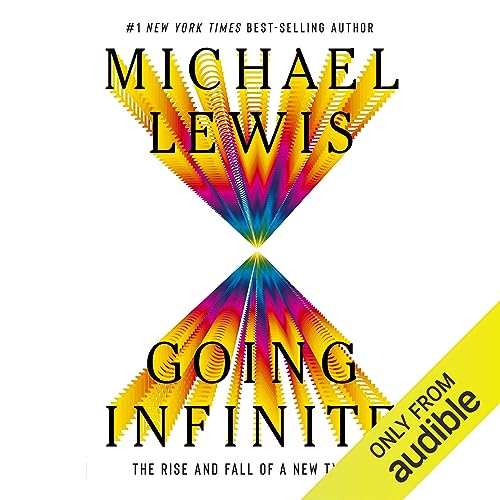
Going Infinite ~ by Michael Lewis

This is not Michael Lewis’ usual clear and excellent reporting on something a bit complex. And he’s generally such a good explainer.  Unfortunately, if you’re listening to this there are a couple of PDFs mentioned which don’t seem to be available on the Audible site (not that I found anyway, so I sent them a complaint).  

Going Infinite: The Rise and Fall of a New Tycoon
by Michael Lewis
10/2023 
Read by author 8h 56m
Rating – 9.5   / biography – finance 

Sam Bankman-Fried and his younger brother grew up in well-to-do family in the Bay Area where his parents were both professors at Stanford. Sam was unusually bright and was sent to a private school which his parents thought seemed to help him at least gain interest in school, but apparently didn’t. Sam was interested in what was going on in his own head and some computer games. He was a math whiz though and went to special summer camps.  

Going by what I’ve read online, Bankman-Fried  has apparently been diagnosed as autistic and I know there are many kinds and degrees of autism. Besides, I’ve taught many autistic Kindergarteners who are slightly autistic and I kind of knew the symptoms when Lewis was describing Sam.  They can be a LOT of different ways.  But that’s a reason for Sam not seeming to get along with other people – not really wanting to.

Some autistic people may really be philanthropic (?) because you never can tell what some of them develop fixations on. Bankman-Fried proclaimed himself to be an Effective Altruist while at MIT and he made friends with that group and they worked with him  for a long time  That link is from the
“Chronicle of Philanthropy” (10/4/2023)  with a heading of “Disgraced Philanthropist.” It’s a book review.

Odd how his trial started right this very week – was that a publishing PR stunt? Okay fine. 

The verdict? at some point I think Bankman-Fried knew what he was doing and that it was wrong and against the law, but maybe not at first. And then for awhile he was in denial (as were his parents),  but from maybe July of 2022 on, whenever he was relocated to Bermuda, he was staying there for a reason.  So he’ll be spending a lot of time in jail and I thinks parents will have some fines – although I don’t know how guilty they’ll be. And there are his buddies (from high school and math camp?). as well as his “girlfriend” – how guilty is she?

About Lewis, I think he wanted to like Bankman-Fried but there are limits.  BF wasn’t interested in people liking him or in him liking them.  He was busy playing mental games.  

Also:  from the Chronicle of Philanthropy – under a heading of “Disgraced Philanthropist” –  10/4/2023: 

Quote from the book – : 
“Fault is just a construct of human society – it serves different purposes for different people.  It can be a tool to discourage bad action, an attempt to recover pride after in the face of hardship. An outlet for rage and many more things.  I guess maybe the most important definition, to me at least, is how did everyones’s actions reflect on the probability distribution  of their future behavior. How did everyones’s actions reflect on the probability distribution  of their future behavior. “   (Chapter 5? )

  Review from Washington Post:
https://www.washingtonpost.com/opinions/interactive/2023/michael-lewis-sam-bankman-fried-ftx-crypto/

Posted in books | Leave a comment

The Secret Hours ~ by Mick Herron

The first chapter is kind of like a Prologue, but it’s not really because the tale alternates between 2 time frames- “2 years prior” and “now.”  And then it goes back to some old spy tales of the Cold War, but the setting is basically 2022 and 2020, London with a bit in Berlin. This is not in any way a part of the Slough House series, but the names of a couple minor players come up.  

The Secret Hours
by Mick Herron
Sept, 2023 
Read  (brilliantly) by Gerard Doyle 12h 48m
Rating: A- / spy novel

 The story opens with Max waking in bed and checking out his house and but sneaking out because he fears an intruder. He lives in a rather rural neighborhood and we find out that the intruder(s) prefer Max alive, but they’ll take him dead if necessary. So Max sneaks down the lane and eventually gets away but it’s not until daylight when he is able to get back home, fix and egg sandwich, check on Dolly, and get on his way again. He’s age 63 now, not exactly the prime age for this kind of chasing through fields in the dead of night. 

In Chapter 2 the whole situation changes and we are introduced to the “Monochrome Inquiry” along with Griselda Fleet and Malcolm Kyle, two Intelligence employees of the Government. Anthony Sparrow is their director and he reports to the Prime Minister. Sparrow may have some shady friends himself. The assignment of Griselda and Malcolm for the last few years has been to run an investigation into the doings of Regent’s Park (the MI5s). They get the material they need, BUT it’s all smashed together and they’re only given 18 months to get it sorted – (Ha!)

Everyone is suspect and everyone is dangerous.  Read this book carefully and PAY ATTENTION!!! 

That said, I wasn’t as crazy about The Secret Hours as I’ve been about Herron’s Slough House series I think I was so attached to those characters and these new ones never really come out of the fuzzy stage.  The writing is as bright, witty and sly ever – fascinating. I may give it another go – I had to do that with Down Cemetery Road (Zoe Boehm series by Herron).

Posted in books | Leave a comment

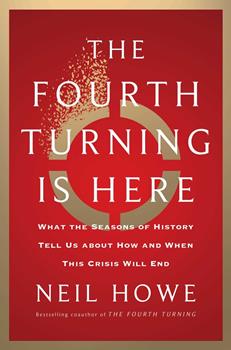
The 4th Turning ~ by Neil HoweThe 4th Turning: 

 “To everything turn, turn, turn
There is a season turn, turn, turn
And a time to every purpose under Heaven.”

That’s from a song with music and lyrics by Pete Seeger and based closely on  Ecclesiastes chapter 3 in the Old Testament. I always loved the song. https://en.wikipedia.org/wiki/Turn!_Turn!_Turn!

chttps://en.wikipedia.org/wiki/Ecclesiastes_3

The 4th Turning: What the Seasons of History Tell Us About How and When This Crisis Will End
by Neil Howe
2023 / 587 pgs
Read by the author 20h 29m
Rating: 8 / history – sociology
?
(Both read and listened) 

It’s been used again by William Strauss and David Howe for their books about “generational theory”
https://en.wikipedia.org/wiki/Strauss–Howe_generational_theory

Howe tells us that we’re due for a 4th “turning” for “every purpose under heaven.” At least that’s how I read this book, The Fourth Turning.  He and William Strauss wrote several books dealing with their “generational theory of history” before Strauss died in 2007.  

I’ve always been interested in the idea of patterns in history, but with this one it felt like I was reading Nostradamus or something because the whole thrust, from the title on, is “what’s coming next?”   That’s how it felt at first anyway. But maybe Howe is one of those historians who wants to create some kind of “unified theory of history.” That’s fortune telling via astrology or shamans to me, but … who knows? Howe might have something…  And the book does end with what’s coming next in “Part Three: Coming of Spring” so it’s not a grim, doomsayer’s tale. Parts are redolent of Steven Pinker.

First though, there’s “Part One – the Seasons of History” which includes chapters on Time, Life, American History, and Complexities…  Howe goes back to the Arthurian Generation of 1433-1460 and the Humanist Generation (which I just read about in Humanly Possible by Sarah Bakewell).  He goes through the time cycles (Saeculua – the plural of saeculum) in these Chapters:  Reformation, the New World, the Revolutionary, the Civil War, Great Power, and finally Millennial – with 4 generation per Chapter.

 Then there’s “Part Two; Climax of Winter,” which fills in the details about what we’re going through now.. And after that there’s “Part Three: the Coming of Spring.” 

Some of this got kind of crazy and I’ll have to read it again.  It’s laid out here though – https://en.wikipedia.org/wiki/Strauss%E2%80%93Howe_generational_theory

And after I got past the midway point I got interested in the way he described all the different generations of our more current times. I think this is what Howe organized it because starting at “Part Two “Climax of Winter,” and Chapter 6, “A Winter Chronology,”  I started seeing my Baby Boomer place and that of my kids (X’ers) and my mother (a G.I.) and even my grandmother (a Missionary)  not to neglect the up and coming grandkids (a Millennial and a Homeward).  

I’ve watched the impact of the Boomers since I could read the newspaper about how the elementary schools were impacted by the of Baby Boomers and how the toys, TV and movies were all for us from Daniel Boone caps to Hula Hoops right down to Barbie Dolls.   

I may not be entirely sold on the whole “generational theory” – in trying for detail it gets quite convoluted and I think he missed a few items. For instance the Boomrs getting the birth control pill in 1960/’61 or so which freed us up to rebel and live life to the fullest while the war in Vietnam had the draft numbers so we smoked pot and looked for that religion we’d lost in the suburbs. Got through college and married and had babies, anyway. No wonder we were a bit wild in our search for freedom.

I did get a different perspective on how selfish we really were, though.  (Fwiw, the author, Howe, is a Boomer.) 

And I really appreciated some insights into my kids, to say nothing of my parents and their parents. Wow – well no wonder Grandma was how she was – and my Mom, the G.I.! The grandkids are so sweet and special. I’ve always thought the upcoming generations, the Millennials and Homewards, were sweet.

The Boomers were NOT usually sweet – lol! I may think my case is different but we are ALL formed to some degree by our times and environments and our places in it.

The first I heard about this kind of overarching theory of history was in college when Oswald Spengler’s name came up. He, a German of the 19th and early 20th centuries,  theorized about civilizations being organic and having a Spring, Summer, Fall and Winter. Howe uses the term Winter – first on page 50 but then he almost overdoes the idea – (Do a “search” for “winter,” if you’re on a Kindle.). Spengler’s most famous work is The Decline of the West (1918).   

But there are many such theories known as “social cycle theories.”  This site:  https://en.wikipedia.org/wiki/Social_cycle_theory lists and describes a number of them including the Strauss-Howe Generational Theory or “Fourth Turning theory” which is mainly a theory based on the US. Howe touches on the theory of Ibn Khaldun’s (14th century) which sounds interesting, but none of the others.  

As I said, I have a few bones to pick with The 4th Turning as described in the book but I suppose they’re minor in the overall scheme of things.  

If you’re interested in this sort of thing it’s probably a relatively book – if not you’ll likely be bored out of your skull.  LOL I think I might read it again to see if I can make a bit more sense of the theory itself.

Posted in books | Leave a comment

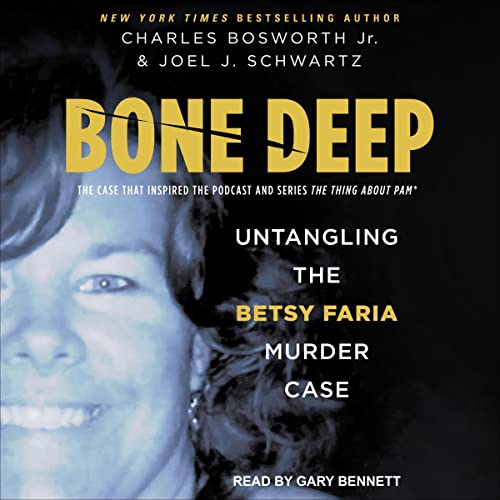
Bone Deep ~ by Charles Bosworth and Joel Schwartz

On December 27, 2011 Russ Ferria of Troy, Missouri, was arrested for brutally killing his wife, Betsy.  He had found her body, called 911,  and ended up in jail with very manipulative police officers. He got an attorney and.was released but was later arrested again and after about 18 months the case went to trial. Joel Schwartz, Russ’ defense attorney was experienced and very highly regarded. The prosecutors were incompetent from the police officers on down, the judge was brand new and made serious mistakes in not allowing evidence which would incriminate someone else. Ferria’s defense attorney, Joel Schwartz, is the co-author.  

Bone Deep: Untangling the Betsy Faria Case
By: Charles Bosworth, Joel Schwartz; 2022 
Read by Gary Bennett, 11 hrs and 20 mins
Rating:  8 – A  / True Crime 

This was a brutal knife slaying with dozens of stabs wounds and a knife left stuck in the victim’s neck. Russ was totally horrified but he had a solid alibi. He was horrified by the event and his arrest. Schultz was filing an appeal.  Should they get Dateline on it?  You bet. 

And so it goes using every twist and trick that crime fiction just makes up. There aren’t any chase scenes in Bone Deep but I had to re-listen to sections to make sure I really got what all was there.   As I’ve noted before, with true crime, especially those books with lots of courtroom drama, some repetition is to be expected. The witnesses usually tell the truth and they want to say the same thing as before and as other witnesses will say. The evidence doesn’t change. It’s going to be the same story from different people possibly with their own agendas. One of the reviews says it’s 

There are several different Dateline NBC episodes about the Russ Ferria case which appear over a rather long period of time. You can find them online as they were very popular episodes of Dateline.  

Posted in books | Leave a comment

The Wager ~ by David Gann

Again!  I get to Chapter 4 or something in a book from the library and I’m not at all happy with the narrator, but plugging away and getting very sleepy. The next morning I started in again and after a few pages … um … Big oops!  

The Wager: A Tale of Shipwreck, Mutiny and Murder
By David Grann; April, 2023
Read by Dion Graham / David Grann
Rating 9+ / literary history – suspense  
(Both read and listened)

This is terrific stuff!  I want the maps! I want the Notes!  I want the Author’s Note!  I see by the sample at Amazon that the Kindle version has those things.  Oh dear – lol! So I already had the library audio book (Libby) and now promptly added the Kindle version.

Then I started over.  LOL!  I’d only gotten to page 20 or so before I realized this book was a whole lot better than I’d thought it would be. And this time I was taking notes about the crew and the troubles – at least for awhile.

I’ve read all three of Grann’s books and they’ve just gotten better and better. There was The Lost City of Oz in 2008, Killers of the Flower Moon in 2017 and now, The Wager, 2023.

I think when nonfiction reads like a novel it’s often called “creative nonfiction.”  The Wager is definitely, imo, “creative nonfiction.” This is NOT to say it’s inaccurate or uses questionable sources. Rather, it’s “creative” in the sense that it uses a structure which builds tension into some dry facts. It might also include allusions, metaphors, and other literary tropes and devices.  Plus there’s some poetic and specialized vocabulary added to the story.  

This book,  probably classified as world history in most places, includes all of the above and adds an interesting Author’s Note, Acknowledgements, Source Notes, an Index, a Bibliography, and a meaningful photos section.  It’s nonfiction which “reads like a novel.”  

The time period for the book is 1738 – to 1748, from the time of departure until the time of the memoirs of a tragic shipwreck in a place very near Antarctica. This was when England was at war with Spain over who gets what in their contentious competition for Empire. https://en.wikipedia.org/wiki/War_of_Jenkins%27_Ear

The specific story of shipwreck, horrors, and mutiny takes place between 1740 and 1742 at the southernmost tip of South America – Cape Horn.   

I’ve read enough non-fiction adventure stories, fiction and non-, to know what I’m getting into. Some are great, others are so-so. They can either numb me out of hold me spellbound – I just have to see for myself.

It was described as horror by some reviews but if it’s nonfiction that’s okay with me. (Who cares what a person can make up?) And it is horrifying to read about ships on the verge of total destruction with scurvy and other diseases plus rats and vermin running around disfiguring the already deceased.

There are basically 3 characters who are followed by Grann mainly because of their journals and logs.

1st Lieutenant – David Cheqp – Scotsman who joined Navy for personal reasons at home.  He’s confident and he loves the English Navy. He wanted to be a captain and spent much of his life at sea. He  knew what a really great ship the Centurion was   

John Byron –  a 16-year old midshipman, poor but from the noble line at Newstead Abbey. Lord Byron the romantic poet was his grandson.

John Bulkeley (the gunner) – part of the mutiny – to find him online Google: John Bulkeley Wager .  

Check the reviews – it’s a great book. I hope it wins some awards.

Posted in books | 1 Comment

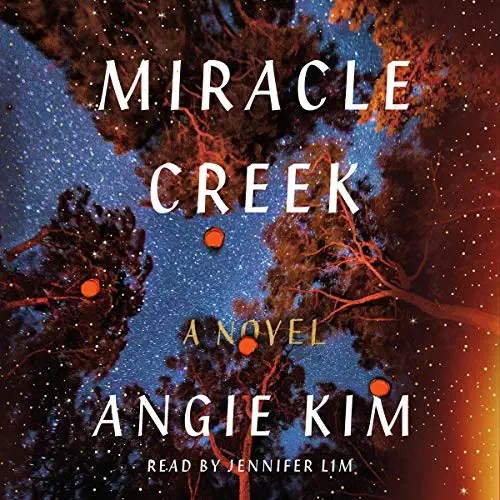
Miracle Creek ~ by Angie Kim

Now how could I resist this??? The New York Times headline for their review of this book reads “A Novel That’s Equal Parts Murder Mystery, Courtroom Drama and Immigration Tale.”   Okay – gotta do this. I’ve loved mysteries since I discovered Nancy Drew in the 4th grade. I’m a legal crime fan, especially love the courtroom drama parts. And immigration novels have been a bright spot of literary fiction for me for years.  Yup – and there it was waiting at the library (Libby).   

Miracle Creek A Novel
By: Angie Kim / 2019
 Read by Jennifer Lim 14h 5 
 Rating; 8.5-A /  literary- crime 

This debut novel won the Edgar Award and a number of other awards plus it was named one of the best books of the year by Time, The Washington Post, Kirkus, and the Today show.  I kept seeing it as I visited Audible, Amazon and a couple of blogs I read.  I don’t know why I didn’t really check it out further earlier. (I got it from the library.)

The book opens with an explosion and a fire at a health center. Then Chapter 1 takes place in a courtroom where a murder trial about the fire is going on. The chapter ends as the jury returns with a verdict, but not saying what that verdict is. The rest of the book includes a short build-up to the fire after which it changes off between the courtroom, after court, or backstories of various situations, time frames, focus characters and so on

The set-up is intriguing for a who-done-it, but the relationships and difficulties of the characters almost overshadow the mystery  – not quite.

There are a lot of characters many of whom turn out to be suspects. You might want to keep a little list of characters as they appear but I found one already made up at: https://www.bookcompanion.com/miracle_creek_character_list.html

Pak Yoo and his wife, Young Yoo, immigrated from Korea several years prior and set up their own healing business with HBOT, a “hyperbaric oxygen therapy system” which uses a lot of oxygen under pressure which is pushed into large cylinders where reclining patients get their oxygen. These are in real use today:

https://www.mayoclinic.org/tests-procedures/hyperbaric-oxygen-therapy/about/pac-20394380

Matt Thompson is a medical doctor being treated for infertility and his wife, the perfectionist Janine is doing a variety of things behind hubby’s back.  There are many other characters, but it’s Elizabeth Ward who is actually on trial for deliberately starting the fire at the HBOT which killed her son, Henry and her good friend Kitt, another mom.  This isn’t counting the “protestors” who are outraged and decry any attempt at all to try to “cure” autism. They march around the center daily.

The patients on the HBOT dive which exploded were the autistic eight-year-old Henry Ward and Kitt, Elizabeth’s friend. 

There’s a lot happening here – there’s the main plot of who started the fire which killed two people and burned the entire business. There’s a whole tangle and theme of immigrant problems in the Yoo family,  There’s the infertility problem of Matt who is pressured by his wife to have a a child. There’s the theme of handicapped children and alternative medicine along with the stresses and work of it. And there’s the difficulty of a single parent raising a child with disabilities.  

Competition and lysing are big time themes. All the relationships seem to have these problems and they aren’t one-time events or only found in one relationship, they’re pervasive. Using other people for your own gain is a theme. Protecting your children super important – how far would you go to protect yours?

This is NOT a simplistic domestic suspense story with some human dilemmas thrown in on the side. There is far more nuance and texture and complex human emotion and depth than that. Meanwhile, tension is woven through it, lightly at first, but building to a multi-faceted ending.  

Good insight – interview – explanation – etc at the Guardian

Book review at the Washington Post (may have a pay wall)

And a good review is at Bookbrowse,– as usual.

Posted in books | Leave a comment

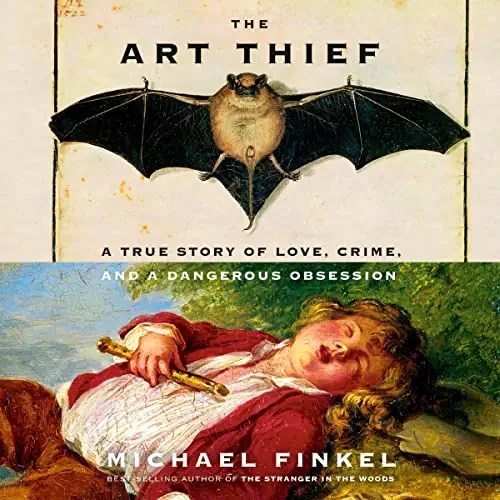
The Art Thief ~ by Michael Finkel

This is one of the very best true crime books I’ve read in years.  I should probably have gotten the Kindle version to go with it but it seemed strong on its own, the reviews didn’t talk about pictures and I didn’t see a Notes section in the sample at Amazon. But I was a bit hasty because in a review I read later I saw there was a photo insert placed in the center of the book should have gotten the Kindle version,

The Art Thief: 
A True Story of Love, Crime, and a Dangerous Obsession
by Michael Finkel
2023 /  Narrated by  Edoardo Ballerini,5h 39m
Rating  9/ true crime 

The author, Michael Finkel wrote The Stranger in the Woods which I read back in 2017 and my review is at the link.  

So this tale – in 1975, the 24-year old Frenchman Stéphane Breitwieser, started stealing pieces of art from museums and galleries and antique shops. A short time later his girlfriend, Anne-Catherine Kleinklauss started coming with him to stand look-out and keep an eye on things.

Breitwiser was good at his craft – it wasn’t a trade because he was never in it for anything other than love of the aesthetics. He wanted thesis pieces for the room he got free at his mother’s house where he and Catherine lived. And Stéphane knew good art when he saw it – so with the little Swiss Army knife he kept in his pocket he freed the work from its frame, slid it under his coat and the two departed as though they were simply two art lovers enjoying the day. The thing is that they did this thousands of times and their attic storage room was rally quite full with what was said to be 2 BILLION US dollars worth of art His mother knew nothing about it.

a French loves art of many kinds but mostly he loves old art, the kind of art which lives in museums.  And he doesn’t want to just visit the art,  and he doesn’t want to sell it. Breitwieser wants to take it home to his attic where it can live all the other pieces he’s lifted over the years. He wants  to keep it for himself, for his own private appreciation, sharing with his girlfriend Anne-Catherine. of course, in the cramped attic at his mother’s house where they have lived free for several years.  And he ended up with about 2 BILLION dollars worth of art?  Just he and his girlfriend? Yup – No big “ring” of thieves researching every square inch and every minute of time?   Nope.  

There may be spoilers here but this was what was in the newspapers and other media back a few years ago.  
https://en.wikipedia.org/wiki/St%C3%A9phane_Breitwieser

The writing is very nice and Edoardo Ballerini does a great job as usual (I like him narrating.) 

Reviews: 
https://www.nytimes.com/2023/06/24/books/the-art-thief-michael-finkel.html
(Good review) 

https://lithub.com/the-bizarre-true-story-of-the-worlds-greatest-living-art-thief/
Very interesting read about the book and art thieves by the author of The Art Thief 

https://en.wikipedia.org/wiki/Michael_Finkel

Posted in books | Leave a comment

Mindhunter ~ by John E. Douglas, Mark Olshaker

This is the second book and first memoir of John Douglas, one of the most famous FBI agents ever (except J Edgar of course) tells the story of how he grew up as basically middle class middle American boy. He was fairly intelligent with some athletic prowess and joined the Air Force after dropping out of college.  This was published after his retirement from the FBI in 1995.  

Mindhunter 
Inside the FBI’s Elite Serial Crime Unit
by: John E. Douglas, Mark Olshaker
Read by Richard M. Davidson- 15h 24m

Rating: 6 / true crime, FBI profiling

Warning, the narration is very distracting in many places it gets overly emotional. .The content really doesn’t need that.  Fortunately at about 1/2 or 2/3 the reader mellows a bit – but not all the way.  

But maybe the problem is that Douglas is very opinionated and only sometimes gives lip service to the other point of view. He generally takes the position that although these folks are not legally insane they should NOT be released to the public no matter what the parole board and their psychologists say. Douglas wants them to stay locked up.  (Considering the danger to society based on real prior activities, I mostly tend to agree with him, but I”m not quite so adamant about it)

And, with a 1995 publication date, I think maybe the book is somewhat dated.  Multiple Personality Disorder doesn’t get much attention these days. Psychopathic is not psychotic. Douglas gets into this in the last chapters.  But profiling was a very controversial technique30 years ago, it’s not so much now.    We could probably use some profiling on the school shooters and other mass shooters.  (I think we’d find the same thing – loners, feeling of inadequacy, interest in guns, the list goes on.)

Profilingi is for times when law enforcement doesn’t have a real “suspect” or even “persons of interest.” these unspecified persons are called Un-Subs meaning Unknown Susupects. This technique seems to be more valuable when the victims are random . Profiling gives law enforcement some direction to the search. Profiling helps with locating the un-subs, too.

There are sections about serial killers, sexual deviants, kidnappers, bombers, stalking and all sorts of crimes where the suspects can be substantially narrowed down by profiling and with Douglas the crime can sometimes be satisfactorily solved.  At first he got a lot more education and moved into teaching the subject for the FBI school at Quantico and other places.  

Local law enforcement calls ehe FBI because of an interstate crime or some other reason. Maybe they want some profiling done on a particular case.  That’s what the book is about, the profiling Douglas along with others developed in order to track down and capture their suspects.  

This is not sloppy stereotyping by race, ethnicity, religion, neighborhood, and so on. Douglas is looking at more specific things like feelings of inadequacy, living with parents, moving around at night, being possessive and controlling. Yes, hating women or certain ethnic groups is one of the factors.  

Women are discussed but none specifically – they’re usually victims and internalize their stressors. Women are actually quite rare as violent criminals.

The Green River murders of the 1980s are described, but the capture and incarceration of Gary Ridgway is not. He was arrested in 2001 and the improved DNA testing was instrumental in his arrest and plea bargain. The happened after Mindhunter was published.

He ends with Jack the Ripper and then the BTK killer of 1979 – 1993 neither of which were captured and convicted at the time of writing. Then after some personal advice about stressors he closes with his retirement from the FBI in the year this book was first published.   He’s written many books since but I’m not sure they tempt me. There are really too many great ones out there.

Posted in books | 2 Comments

Mother-Daughter Murder Night ~ by Nina Simon

This was fun without being as silly as I half-expected. Mother-Daughter Murder Night was released this week and I decided on the spur of the moment that I just needed another mystery now.  It seemed to have gotten good customer reviews and I know I saw one blog which appreciated it, maybe two.  I usually glance at reviews, but really try not to actually read more than necessary prior to reading the book. I do NOT like spoilers. But I enjoy reviews after reading a book to see what others thought of it.  And there won’t be any spoilers in my blog without plenty of warning. 


Mother-Daughter Murder Night 
by Nina Simon
9/2023 
Read by Jane Oppenheimer 12h 38m
Rating; A- / mystery 

This debut novel is set in the beautiful and fertile as well as aquatic life-filled seaside area of Elkhart Slough about 30 miles south of Santa Cruz in California,

Beth Rubicon’s 15-year old daughter, Jacqueline “Jack,” is glad to suddenly share her very small but cozy home with Beth’s somewhat flamboyant. LA-realtor mother, Lana. Beth herself wouldn’t be so sure, but Lana has just been diagnosed with brain cancer and is staying in Jack’s bedroom while undergoing treatment at Stanford Medical Center the nearby Beth is an RN at a local nursing home and has the knowledge, skills and connections, or access to them, to help her mother, whom she calls, “Ma.” Although they are not estranged, Beth and Lana have had a difficult relationship, but Jack loves and gets along easily with both of them and they both love her dearly. There are no fathers, husbands or even boyfriends in the picture for any of them. These are two very independent women with another one growing up. (Explore the links to see how big the slough is and how much goes on there. it’s a real place and rather difficult to describe being barely outside the main Bay Area.)
https://en.wikipedia.org/wiki/Elkhorn_Slough

A few days into Lana’s stay a dead body is found in the slough where Jack, a freshman or sophomore in high school, gives tours for a small kayak shop. She’s a great kayaker and nature lover herself, and in ways a budding scientist. Before long there is a second death, this time in the nursing home where Beth works, and some less than cordial detectives show up about the slough murder.  

I had such high hopes for this book and it started out great – excellent setting, (I’m kind of familiar with it), some very likable characters, fun dialogue, etc.  And then suddenly there were too many characters and I wished I had kept a character list as I frequently do, but it was too late to start over. I really plugged into this novel because the relationships are so compelling (and I’m not a. relationship reader). Besides, the general plot and most of the other characters were fine, only paling against the exceptionally well-drawn primary characters, Lana, Beth and Jack. And now that we have those primary characters and the setting in place, I wouldn’t mind seeing a series here.  🙂

Happy reading, 

Becky 

Posted in books | Leave a comment

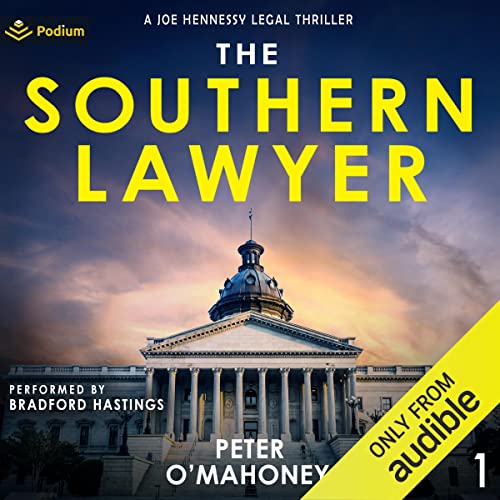
The Southern Lawyer ~ by Peter O’Mahoney

I had this in my wish list when it went on sale. And there I was in need of a break from nonfiction with crime fiction or true crime. I caved and it turned out longer than I expected.  


The Southern Lawyer 
by Peter O’Mahoney / 2021
Read by Bradford Hastings; 8h 34m
Rating: B (due to narration) / legal thriller 
(#1 in  Joe Hennessy series)

I think it was the narration which messed it up for me although the plot was a bit too generally gritty in places for my usual tastes.  The narration had an overpowering Southern accent.  I’ve listened to lots of novels which are set in the South and I don’t recall any of them having this problem. The protagonist, Joe Hennessy a lawyer turned vineyard keeper who returns to lawyering in Charleston, SC when too many droughts put his acreage in financial jeopardy. He takes a case from a very shady character as well as a young woman who has been arrested for murdering her boyfriend.  

On their own, the plots are pretty good and nicely developed, but the characters are mediocre. I never could care about any of them and I don’t usually consider that. The courtroom drama is very nicely done. I just had to lower the rating by a point due to that accent problem. 

Posted in books | Leave a comment

Spell the Month in Books

Spell the Month in Books is a linkup hosted on Reviews From the Stacks on the first Saturday of each month, so here we are, a week later instead. I grabbed it from Lisa, but saw the meme earlier elsewhere and I’ve been a lurker for too long on these things. This one sounded interesting. Let’s see – From my TBR List.

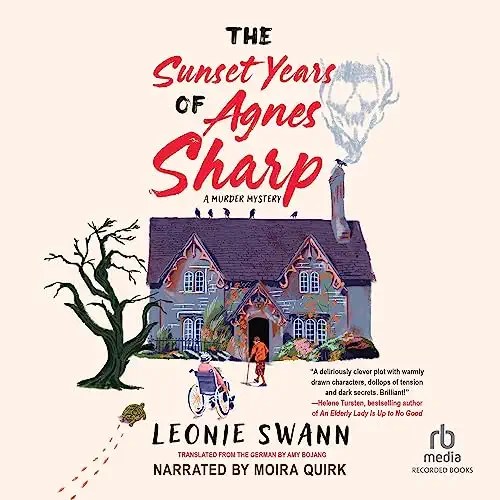
S –The Sunset Years of Agnes Sharp
Agnes Sharp Murder Mysteries, Book 1
By: Leonie Swann
2023

E – Even the Dead
A Quirke Novel
By: Benjamin Black
2016

P – Presidents of War (nonfiction – history)
By: Michael Beschloss
2018

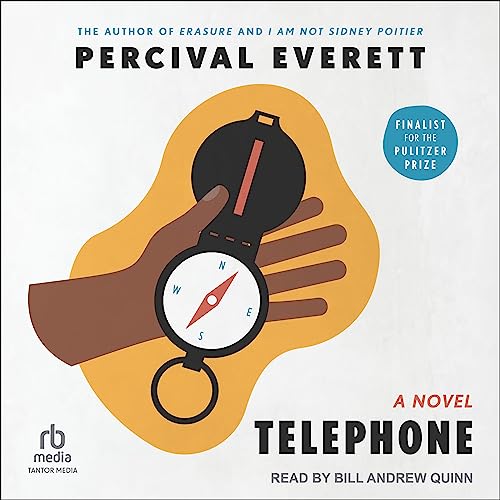
T – Telephone: A Novel
By Percival Everett
2023

E – Eating to Extinction (nonfiction science)
The World’s Rarest Foods and Why We Need to Save Them
By: Dan Saladino
2022

M – Midnight at Malabar House
(The Malabar House Series, Book 1)
By: Vaseem Khan
2020

B- The Bookbinder of Jericho: A Novel
By: Pip Williams
2023

E – Eat the Buddha (nonfiction – travel)
Life and Death in a Tibetan Town
by Barbara Demick
2020

R – Russia: Revolution and Civil War, 1917-1921 (nonfiction history)
by: Antony Beevor
2022

Posted in books | 3 Comments