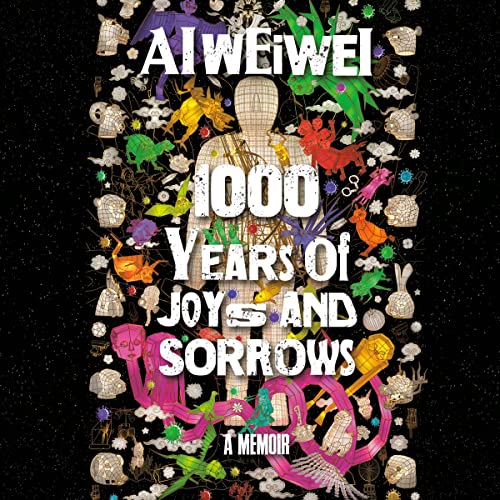
After finishing Ai Weiwei: a Memoir, https://mybecky.blog/2024/09/14/ive-read-a-few-books-in-the-last-week-or-two/ I wanted to know more about China’s 20th Century history so seeing the book Mao’s Great Famine on sale at Audible I just got it, only knowing a few tidbits, but nothing documented. This book provided more than enough hard history (as hard as Chinese history ever gets anyway). There are more archives available although whether these are accurate is always an issue.
Mao’s Great Famine:
The History of China’s Most Devastating Catastrophe, 1958- 1962
by Frank Dikotter, 2010
Read by Daniel York Loh 15h 43m
Rating: 9.5 / academic-ish history
(Volume 1 of 2)
First came the Chinese Revolution fomenting from about 1920 with Mao almost literally at its head to lead the way. Then came the consolidation and conflict.
The West had some information due to it trickling out of China regarding the hi-lights of 1920, 1949, and 1957, when the Great Famine started, there wasn’t much and a lot of it was wrong. The real number of people killed during the Great Famine of 1958-1962 may never be known but is probably somewhere between 30 and 50 million people. This is a LOT of people slaughtered for pride, really. Letters and reports, etc. have been found as primary source material, but few people are under any illusion that these are the entire story or terribly accurate. The information includes lies, exaggeration because it was originally written up for political purposes, to impress the world, to push Mao’s supporters, to stay in the Chairman’s favor.
https://www.npr.org/2012/11/10/164732497/a-grim-chronicle-of-chinas-great-famine
Frank Dikotter, the author, is a noted Dutch historian with over a dozen academic books re 20th Century China under his belt. https://en.wikipedia.org/wiki/Frank_Dik%C3%B6tter
This book is first in his series, “The People’s Trilogy” which goes “Mao’s Great Famine: The History of China’s Most Devastating Catastrophe, 1958- 1962,” then “The Tragedy of Liberation: A History of the Chinese Revolution, 1945-1957,” and finally, “The Cultural Revolution: A People’s History, 1962-1976.” I don’t know if I can read them all. I’m curious and they are so good, all prize-winners,, in part because of Weiwei’s memoir https://mybecky.blog/2024/09/14/ive-read-a-few-books-in-the-last-week-or-two/ – my very brief review on this site,but there are so many books on my nightstand (my Wish List). – http://www.frankdikotter.com/
So the story – in October of 1949, Mao came out of the mountains with his peasant army, picked up the old abandoned WWII Japanese weapons and formally proclaimed the People’s Republic of China. It then took many bloody years for the opposition forces including Chiang Kai-shek to leave him to it. The end of that period is when Book 1, The Great Famine, takes up.
In Book 2 of the series, “The Tragedy of Liberation: A History of the Chinese Revolution, 1945-1957,” Dikotter catches up by focusing on the earlier years, 1949 (or 1911 if you want to go way back) through 1958. This is the book which relies more on the newly opened archives.
Mao wanted China to be able to compete with the US and England in production in strength and reputation. He pushed with the tricks of the industrial revolution on one side and increased agriculture production on the other. China was to be up-and-running pronto – like Stalin had done with Russia. This cost a tremendous amount in lives as well as in money. The people starved and got worked to death. The “managers” lied to their bosses, the bosses lied to their own bosses and they in tern lied to Mao who just kept it going. If anyone found out about the lies they were severely punished, so no one was squealing if they could help it.
Then there came a small opposition group which quietly worked to take the reins from Mao. That coup failed in the throes of the Cultural Revolution and Mao came down hard on the offending forces. In fact, the Cultural Revolution was a reaction on the part of Mao to fight his opposition. It worked but China is not necessarily better for it.
There is so much good data in this book but it’s a rather academic tome – not for the general public. I id manage to get a lot out of it but I’m afraid I missed a lot, too.
Mao’s great Famine
https://en.wikipedia.org/wiki/Mao%27s_Great_Famine
Great Chinese Famine:
https://en.wikipedia.org/wiki/Great_Chinese_Famine
National Library of Medicine:
https://www.ncbi.nlm.nih.gov/pmc/articles/PMC1127087/













 Becky's Books -