Thoughts about historical fiction

avatar-readingIt’s probably apparent from my reading choices and ratings that I really enjoy and appreciate good historical fiction but what does that mean,  “good”?   I know it when I read it?   (LOL!)    Pretty much.  It can mean different things in different books but –  as far as I can tell  …

1. The only common thread has to be that it takes place at least 50 years ago (or prior to the author’s birth).  Before that and I’d have to call it  “nostalgic-al”  fiction.   Imo,  the author should not have memory of the events and very very little family relationship associated with them  – s/he should have had to have researched his era, etc. via the usually reliable and verifiable sources – these sources will not change,  and I can go hunt up the original or a confirming source.

2.   The history doesn’t have to be factually accurate – there are lots of conflicting reports about a whole variety of things.  Sometimes the tone of the book serves as warning to the reader that this account may not really be literally factual (see John Barth or Thomas Pynchon or Gabriel Garcia Marquez).  But other times the tone is straight and the historical material is in error – then it will irritate me.

3.   Where does the history end and the story begin?  Is a given book history first and fiction second?   I think you just have to look it up every time – I’ve been so surprised to verify some things but,  otoh,  there have been times when the supposed history is just not accurate and the story (fictional characters, plot, etc.) works (or doesn’t work)  from there.   I’m not a big fan of alternative history,  but it can be done well enough –  this is largely a matter of personal (in)ability to suspend disbelief.  I’m getting better at allowing an author of historical fiction more leeway in creating his own story.

4.  If I’m reading fiction I do NOT want to be beat over the head with irrelevant tidbits the author happened to find in the course of research. The material has to have some bearing on the story – with fiction the story and style come first.  If I wanted to read non-fiction I’d go get it and not have a big problem with some digression.  But be warned,  Dear Author,  if your story is draggy or the characters boring,  no amount of research will fix it.  Otoh,  a great story can support an enormous amount of research –  love it!

5.  I enjoy it when the author shows how the history (social and political – all kinds) and the times play into the lives of the people – not when it’s simply background.  The story should be integrated with the history – it shouldn’t be able to take place anywhere although “universal” themes can obviously be used.

6.  I really don’t care if an author supplies some notes about his sources  or not.  I’d rather that was kept for the end so as to leave the story intact but … that’s not my call.  It’s up to me if I want to find sources – it’s just for my own interest anyway – fiction is fiction.

Actually,  with some books it’s a wee bit disrespectful of both the imagination of the author and the intelligence of the reader to include a note on the history sources when that material is readily available for the checking.  It might even detract from the “mystique” of some novels to include it.  Not all source notes are disrespectful or detract – some history is pretty obscure.  Generally,  I figure if I don’t know it or can’t find my own verification, the “history” is invented.

Some of my favorite historical fiction is (in no particular order):

Hillary Mantel’s Thomas Cromwell series – (16th c. England)
War and Peace by Tolstoy – (19th c. Russia – historical when written)
One Hundred Years of Solitude by Gabriel Garcia Marquez (early 20th c.. Colombia)
Against the Day by Thomas Pynchon  (20th c. world)
The Name of the Rose by Umberto Eco (14th c. Europe)
The Greenlanders by Jane Smiley (14th c. Greenland)
The Long Ships by Frans G. Bengtsson (10th c. Sweden)
Europe Central by William Vollmann  (Europe – WWII)
Memoirs of Hadrian by Marguerite Yourcenar  (2nd c. Rome)
Shogun by James Clavel (17th c. – Japan)
The Killer Angels by Michael Shaara (US Civil War)
The Far Pavilions by M.M. Kaye (India – mid 19th c. – lots of HF re India)
Things Fall Apart by Chinua Achebe (Nigeria – 19th c.)
Teahouse by Lao She  (China – early 20th c. –  a play)

There are lots and lots more where those came from –
Posted in books | 2 Comments

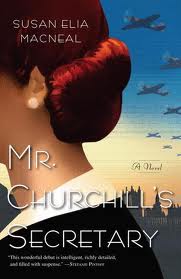
Mr. Churchill’s Secretary

mrchurchillMr. Churchill’s Secretary
by Susan Elia MacNeal
2012/ 384 pages
read by Wanda McCadden 9 h. 48m.
Rating:  D / historical crime/spy

I’m still wondering just what this book is –  is it historical fiction,  feminist fiction, a mystery or a spy novel?  Whichever,  it’s all wrapped up in Harlequin style romance.  (gag!)

Set right before the London Blitz,  the mystery is >>>>MORE>>>>

Posted in books | Leave a comment

Homicidal

homicidalHomicidal
by Paul Alexander
2011/ 77 pages
read by Paul Christy 2h 47m
rating  8 / true crime

This is the story of Lonnie Franklin Jr, known as the Grim Sleeper,  who unbeknownst,  pretty much terrorized LA for decades killing or attempting to kill more than at least a dozen young women.  Although Franklin was arrested and arraigned two years ago, as of August 1, 2013,  the trial has not even been scheduled yet.   The narrative is very straight-forward,  police-procedural style.   The author was a reporter for Time and other periodicals.

Posted in books | Leave a comment

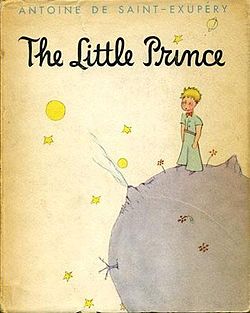
The Little Prince

LittleprinceThe Little Prince
by Antoine de Saint-Exupery (French)
1943/112 pages
rating 10/classic

I have no idea how I missed this book,   but in deference to Saint-Exupery I felt really should read it.   It is his most famous work by a long shot, world-famous,  and I kind of dismissed his “Wind, Sand and Stars” as being thoughtlessly sexist.

The story of The Little Prince is lovely and fantastical. It’s illustrated with delightfully simple little pictures.  I’m just using a freebie pdf file found on the net but they’ve done a good job.  The book has been in the  >>>>MORE >>>> 

Posted in books | Leave a comment

Norwegian by Night

norwegianNorwegian by Night
by Derek B. Miller
Read by Sean Mangan 10h. 36m.
2013 / 306 pages
Rating:  A / crime (basically)

Sheldon Horowitz,  an 82 year-old Jewish-American,  has been transplanted to Oslo to live with his granddaughter, Rhea and her husband Lars,  and he is not particularly happy.  The couple is trying to have a baby and it’s not been easy.  Then there are the foreign neighbors (probably Southern European) who are argumentative to the point of abusive.  A small boy lives with them.  >>>>MORE>>>>

Posted in books | Leave a comment

thoughts on war books

avatar-readingI really do NOT like war books but war books are pervasive now,  pervasive and innocuous and you can’t tell from the cover or the blurbs.  But many,  many mainstream and detective novels have  huge chunks of war scenes in it.   War has become like the sex of old – gratuitous -lately it seems like  every good novel has to have a war scene or two – backslashes, usually,  explaining deviant behavior or whatever.    Just in my July (!) reading,  I found war-scenes in these books:

(cr) Norwegian by Night by Derek Miller –  Korea, WWII, Vietnam
The Redbreast by Jo Nesbo –  WW2
Light of the World by James Lee Burke – Vietnam
Reef by Romesh Gunesekera – Sri Lankan conflict (minimal)
Wind, Sand and Stars by Antoine de Saint-Exupéry – Spanish Civil War – WW1?
The Short Nights of the Shadow Catcher by Tim Egan –  Little Big Horn
Vanity Fair by WM Thackeray – Crimean War

I read all these books in July, 2013 – (and I read 9 others).   I try to avoid war books but these came up without anyone mentioning that aspect to warn me –  (sheesh!)

Posted in books | Leave a comment

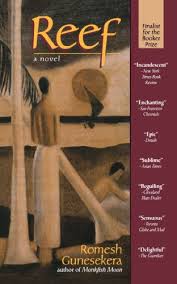
Reef

reefReef
by Romesh Gunesekera (Brit/Sri Lanka)
1994/190 pages
rating:  9 / contemp fiction

I suppose this is a sort of coming-of-age story,  set in Sri Lanka roughly between  1962 and 1971 and later.   The 1st person protagonist is a Sri Lankan teenager named Triton who is hired as a house-boy in the home of one Mr. Salgado, an ocean researcher.  When the main man servant is fired with cause, Triton gets his job.  Triton is an excellent cook, highly praised,  perhaps he should have gone to cooking school but he practices his talent  >>>>MORE>>>>

Posted in books | Leave a comment

Wind, Sand and Stars

windsandandWind, Sand and Stars
by Antoine de Saint-Exupéry  (French)
1939/103 pages
rating:  6/classic

I’m not a fan of this book – imo it’s not meant for women – the author likely would have thought his ideas would just confuse women.   I’m not saying it’s overtly sexist – it’s just thoughtlessly so –  but it is written by, for and about men in male roles – and there is a tone of superiority about those men because of their roles.

Critics have attempted to define  “mankind” as “humankind,”  but that doesn’t work here without a LOT of very determined thinking.  >>>>MORE>>>>

Posted in books | Leave a comment

River Thieves

riverthievesRiver Thieves
by Michael Crummey  (Canada)
2001/352 pages
rating: 9 / historical fiction

I read Michael Crummey’s more recent work,  Galore (2012), last year and thoroughly enjoyed it,  so when another group selected River Thieves, his first novel,   for discussion I was delighted.

The setting is still Newfoundland (Crummey is from St. Johns) , but in the early days of the  19th century rather than the early 20th.   >>>>MORE >>>>

Posted in books | Leave a comment

Light of the World

lightoftheworldLight of the World
by James Lee Burke  (US)
2013 / 560 pages
read by Will Patton 19h 3m
rating:  A+ (crime)
(# 20 in Dave Robicheaux series)

Oh I waited for this one and got it within minutes of it’s becoming available.   (I happened to be up in the wee hours on 6/23).  Imo,  Burke has been going a bit downhill in the last few years but I’m still optimistic.  And Will Patton is far and away his best narrator.

So here we are in the north country of Montana,  NOT the Bayou >>>>MORE>>>>

Posted in books | Leave a comment

The Stockholm Octavo

stockholmThe Stockholm Octavo
by Karen Engleman  (US)
2012/ 433 pages
rating  7.75 /   historical fiction

Octavo:   a book or pamphlet made up of one or more full sheets of paper on which 16 pages of text were printed, which were then folded three times to produce eight leaves.   Each leaf of an octavo book thus represents one eighth the size of the original sheet. 

In 1789,  the same  year as the French Revolution,  >>>>MORE>>>>

Posted in books | Leave a comment

The Science Fiction Omnibus

omnibusThe Science Fiction Omnibus
Great Books Foundation
2007 / 592 pages
Rating:   A  (Sci-Fi short stories)

I have no idea why these works were selected for the Omnibus – perhaps for marketability,  perhaps for relevance to today’s readers,  perhaps due to copyright issues, perhaps for a good cross-section sampling –  no idea – probably a bit of all.  I fell in love with sci-fi as a kid although my first love was mysteries,  then my husband read a lot of it and passed his favorites on to me.  In recent years I’ve read sci-fi to catch up on classics I missed, or to keep up with contemporary fiction in general and because  I read everything  (except romance)  I’m a pretty omnivorous bookworm – equal opportunity genre-ically speaking).  >>>>MORE>>>>

Posted in books | Leave a comment

Mortimer Gray’s History of Death

AsimovsSF-1995aprMortimer Gray’s History of Death
by Brian Stableford;
1995 /  67 pages
Rating: A+  (sci-fi/novella)
(first appeared in Asimov’s Science Fiction: 4/1995)

Mortimer Gray is an Earth historian in the early 29th century who is concerned primarily with death – specifically,  he thinks that the great progress of  humankind developed because of a fear of death.

He has first hand experience with near- >>>>MORE>>>>

Posted in books | Leave a comment

The Short Nights of the Shadow Catcher

shortnightsThe Short Nights of the Shadow Catcher: The Epic Life and Immortal Photographs of Edward Curtis
by Tim Egan  (US)
2012/384 pages
rating  9.25
/history-biography

I love reading about American Indian history and culture and I don’t feel I’ve read nearly enough.  I’ve got several books still on my tbr shelf but this is  the All Non-fiction Group selection for August.

I’d heard of Edward Curtis prior to reading but very little – I think I read a short magazine type piece a couple years ago – way prior to the publication of this book but it may have been by Egan.

The book opens with a young Curtis photographing the last Indian of Seattle,  Princess Angeline >>>>MORE>>>>

Posted in books | Leave a comment

Alexander Upshaw

upshaw

1907, in piedi da sinistra: Alexander Upshaw (interprete Crow), non identificato, Edmond Meany, Jack Nuvola Rossa
http://www.farwest.it/new/index.php?topic=2753.30
Seduto: Nuvola Rossa

I’m currently reading  “The Short Nights of the Shadow Catcher” by Tim Egan and keeping my little notes and doing my little searches.  I came across the name Alexander Upshaw which was vaguely familiar but I wanted a refresher and did some Googling.

I came up with the incredible post I re-blogged  (below).   Now I see I’ll have more on my TBR piles and wish lists.   My next job is to travel and see some of  the places again with info I didn’t have in my younger days.

Posted in books | Leave a comment

Vanity Fair: A Novel without a Hero

vanityfairVanity Fair: A Novel without a Hero
by  William Makepeace Thackeray (English)
1847-48 (serial) 564 pages
started 7/10 – finished 7/
rating:  10 / classic

This is basically the story of two young women in early 19th century England,  Becky Sharp and Amelia Sedley,  one born to poverty the other to wealth.  As they get out of school and on with their lives they meet many people,  but all,  with precious few exceptions,  seem to be motivated by greed.

I’ve wanted to read this for a LONG time >>>>MORE>>>>

Posted in books | Leave a comment

Houston, Houston, Do You Read?

HoustonhoustonHouston, Houston, Do You Read?
by James Tiptree Jr.
1976 /  56 pages
Rating:   7.75 / classic sci-fi novella
(included in Great Books Science Fiction Omnibus)

Three men are on their way home to Earth from a trip around the sun and beyond.   They have a hard time contacting Houston but when they finally do make a connection,  it isn’t with Houston and it isn’t in the same generation,  or even the century they left.  Suspi-cions arise.

Earth is 300 years older as they approach to return.  Fortunately,  >>>>MORE>>>> 

Posted in books | Leave a comment