
After I’d pulled this down from my Audible library I discovered I’d read it some time ago – in 2012, to be exact. That’s more than a decade ago! I guess I wasn’t too thrilled then, because it only got a rating of 7.5. This time it was much better – I think I took a dislike to the narration which I was able to tolerate this time although it is kind of overly dramatic. (I understand that the physical book is full of italics and headline-type fonts along with graphics/photos).
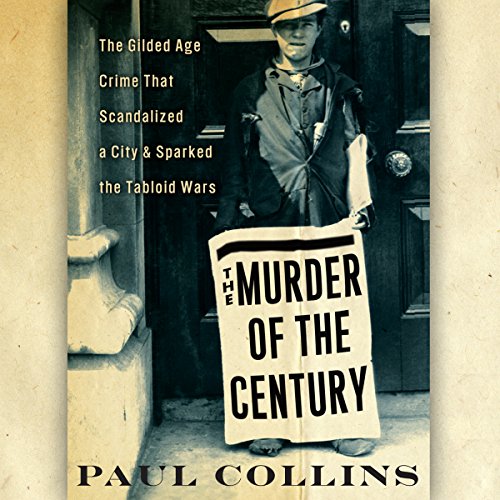
Murder of the Century:
The Gilded Age Crime That Scandalized a City & Sparked the Tabloid Wars
by Paul Collins 2011
Read by William Durfis 9h 43m
Rating: 9 / True Crime
This time I was kind of enchanted in a way. It’s “True Crime” which I usually really enjoy and it’s historical true crime which I’ve grown to appreciate. I’m glad I know as much about the place and era as I do but am still curious about. I like when the author takes time to highlight aspects of that background without it taking over the main tale. Almost needless to say, there’s seldom a lot of tension in true crime because the mystery of it was usually resolved awhile back and the book is written that way. That said, there are always new to me details the author includes. If I know too much about a crime story I won’t read the True Crime book.
When I got to Chapter 5 I recognized quite a lot from the Gaslight Murders series by Victoria Thompson. They’re both set in New York at the turn of the 20th Century and Collins mentions a midwife who says she is licensed, but since that wasn’t required in NY, he doubts it. Thompson’s protagonist, Sarah Brandt and her friend Detective Frank Malloy are not real friendly with the tabloids. Teddy Roosevelt is Police Commissioner, at least for a couple years prior to his national service., Joseph Pulitzer and Wm Randolph Hearst were in competition for most powerful New York newspaper between 1895-98. Teddy Roosevelt was only police commissioner between 1895 and ’97 but made a lot of progressive changes. There were dozens of papers and their reporters seemed to be acting as detectives more than the actual lowly paid NYPD.
Collins focuses on the frenzy of what was called yellow journalism (ie yellow headlines) and how reporters competed with the police for resolving the crime – the reporters even had badges of some kind and stories were followed by the sensationalist trials with their super-star lawyers which evoked as much or more excitement as the O.J. Simpson trial.


 Becky's Books -