
At times while reading this book it was hard to believe it was non-fiction. Yes, okay I agre it is nonfiction, but it’s very literary nonfiction and I don’t mean “creative” nonfiction where the author uses uses enough literary devices so that it “reads like a novel” while including a reasonable number of sources. (I am NOT devaluing either creative or literary nonfiction, sometimes it’s the best of two worlds.)
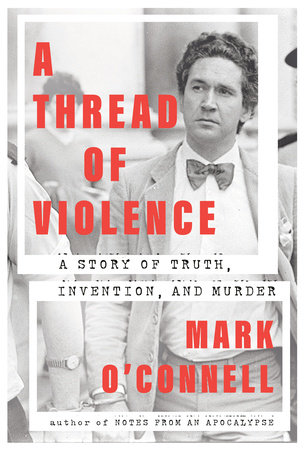
A Thread of Violence:
A Story of Truth, Invention, and Murder
by Mark O’Connell, 06-27-23
read by the author, 7 hrs and 25 mins
Rating: 9.5 / literary/true crime
In Wikipedia the story of Malcolm Macarthur is included under the article “GUBU” where the first line of information states, “The acronym standing for grotesque, unbelievable, bizarre and unprecedented” referring to a strange series of incidents in Ireland in the summer of 1982 which culminated in a double-murderer, Malcolm MacArthur, being apprehended in the home of then-Attorney General, Patrick Connolly. https://en.wikipedia.org/wiki/GUBU
Until I opened this book I’d not heard a thing about any of it, not that I remember, anyway. The main events all occurred more than 40 years ago. And in 2012 the culprit, Malcolm Macarthur, was quietly released from prison after 30 years of incarceration. Since then he has lived quietly in Dublin, mostly walking and frequenting the bookstores.
And that’s where Mark O’Connell, the author of A Thread of Violence, found him in 2020 after O’Connell had pretty much decided to write a book about this strange man and his crimes. Macarthur’s name had come up when O’Connor was focused on John Banville for his PhD in Literature. Banville’s novel, The Book of Evidence (1998) , and its main character, Freddie Montgomery, were based on Macarthur and McArthur knew this and occasionally talked about it. . I read Banville’s book in 2002 or so and I still read Banville’s books today. Anyone knowledgeable about Banville’s work will attest to the beautifully crafted, immaculate styling of his multiple award-winning oeuvre. .
But A Thread of Violence uses many elements of literary fiction. The theme of social class is very important here – but in what way – It seemed to me that Macarthur considered himself of an upper status which didn’t have to work for their livelihood. Also memory and reality vs perception intertwine throughout. Those and other ideas are the more thoughtful, maybe philosophical or aesthetic themes. There might be themes related to psychological impulses like insanity or denial and hidden motives.There is a small hint that the “thread” in the title might be a genetic thread.
Dublin, Ireland is the setting by happenstance and O’Connor doesn’t let that slide. It’s apparent with the language and social structure and the change the times have brought, even without the social difficulties being spelled out. James Joyce is mentioned more than once and Banville is from Dublin.
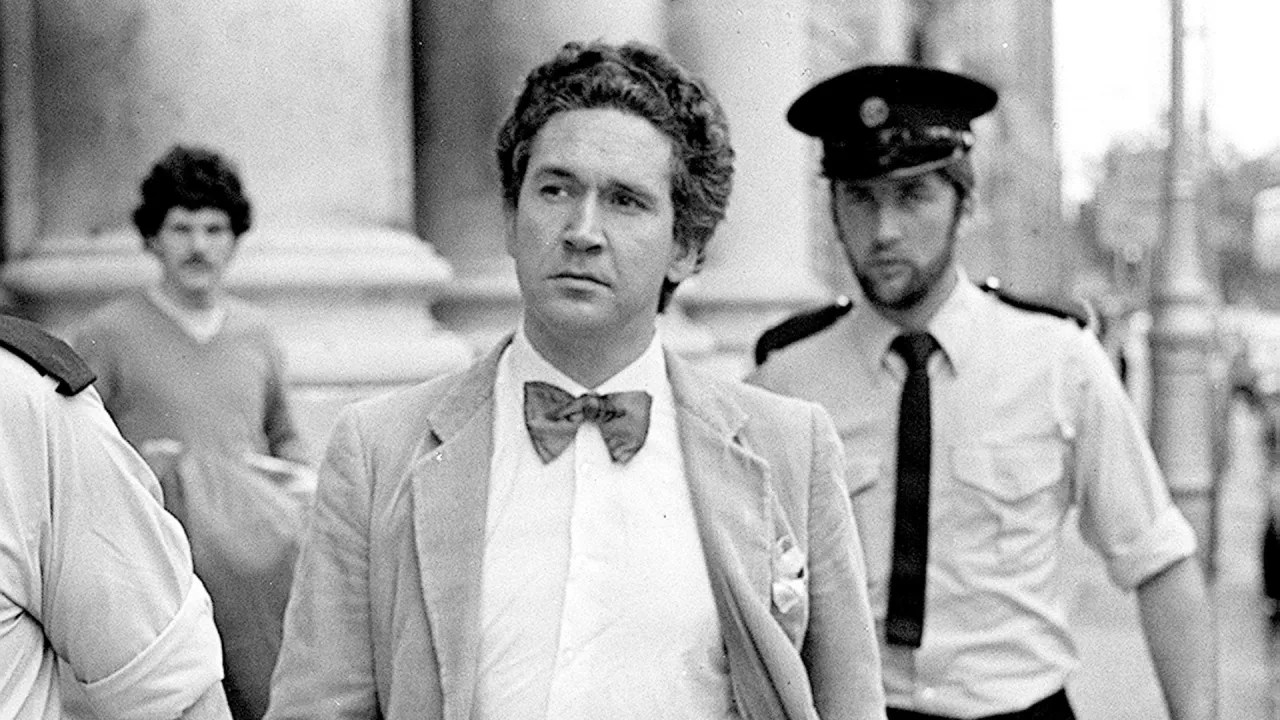
As to the plot and structure, first there are the years between 1945 and 1982 when Malcolm Macarthur is born and grows up as the only child of somewhat dysfunctional, but upper class parents (“landed gentry”) who live on inherited funds with an nid3 estate in central Ireland. Times are not great for the family though, they are down to three servants and Malcolm, very bright but definitely a loner, has to go to the government (public) high school. He seems to have had no ambition particularly, although he enjoyed reading and learning about nature. His parents’ expectations didn’t seem to include adult employment for him, but people in the aristocracy don’t usually considers that. His parents marriages is not a happy one, so while Malcolm was still young they divorced.
In 1982, when Macarthur was 37 years old he killed a man and a woman in cold blood and in separate incidents. He’s found guilty and is sentenced to life in prison but in 2012, after 30 years, Macarthur is quietly released.
This is when Mark O’Connell decides to locate Macarthur and see where that leads. He’d like an interview at least, although he’s hoping for a book. He’s been working on his PhD in Literature, focusing on John Banville whose novel, The Book of Evidence (1998), was based on the Malcolm Macarthur case. They met and with Macarthur being very lonely and O’Connell being very inquisitive it works well. It works well except – that Connell never gets a complete answer on some of his more profound questions.
The writers I started reading in the early 1990s, Ann Rule, Joe McGuinness, James Bledsoe, Gregg Olsen, and there were others who were top-notch but the ones mentioned set the standard for what, after while, became a kind of formula with variations as to whether the books be police procedurals or family problems – or both.. Now there aer historical true crime books and books when are written as they unfold.


 Becky's Books -