
This book sounded interesting and I’d had it on my Wish List at Audible for a couple months for when I got bored with crime novels and bought it. The first chapter was kind of a slog but then when Rawlence started talking about the Samis (Chapter 2) I got involved and then hooked. My own ancestry might include a Sami or two since I come from Norwegian and Finnish ancestry; But that was just for starters. This is an amazing book, part travelogue part climate warming and what it’s doing to the northernmost forests. (It’s not pretty.)
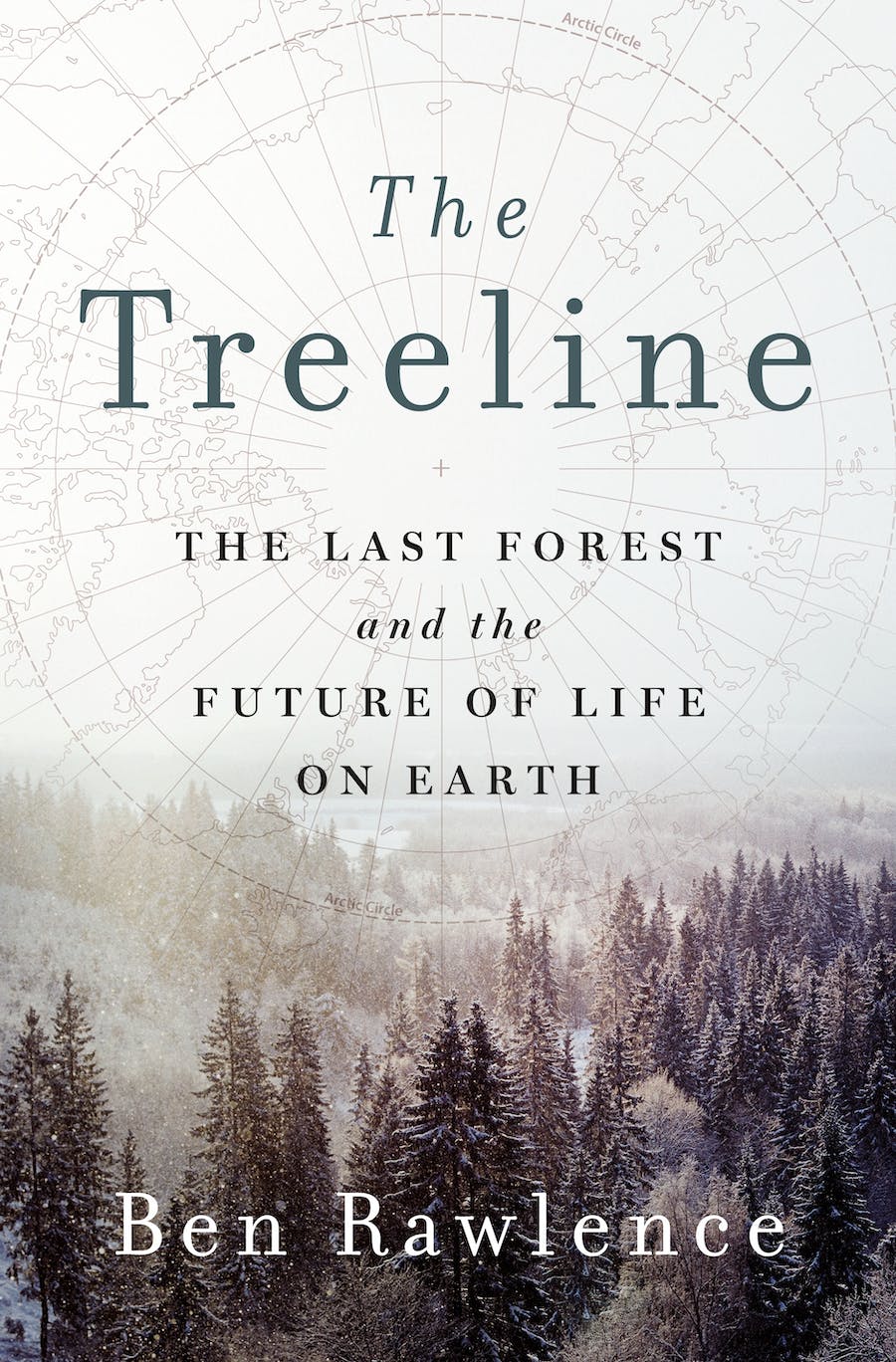
The Treeline: The Last Forest and the Future of Life on Earth
By Ben Rawlence
Read by Jamie Parker 11h 59m
Fab 15, 1921
Rating: 9,5 / climate-biology / travelogue
“The arctic tree line is the northernmost latitude in the Northern Hemisphere where trees can grow; farther north, it is too cold all year round to sustain trees.[21] Extremely low temperatures, especially when prolonged, can freeze the internal sap of trees, killing them.” (Actual trees- not shrubs.)
It seems that with global warming the trees are growing further and further north the old tree line is north of where it was a few decades ago. It’s not cold enough far enough south to maintain the balance we have known for millennia There are a lot of lives at stake and how will the trees do. That’s the subject of Ben Rawlence’s most recent book.
There’s quite a lot of scientific information here but it’s also a travelogue as he goes around the world checking out life on the 60th latitude, a bit more and less. How is life changing for the people who live in those regions? And it’s part poetry – his love for the earth and the places he visits stands right out.
‘The treeline is out of control’: how the climate crisis is turning the Arctic green. theguardian.com
Due to climate change, the treeline is extending beyond the 65º or so latitude and up toward the 70º +. It affects all life up there.

Northern Scotland, where there were once magnificent forests, is now peat bogs and solo pines, excellent sources of carbon.
Shown; Solo pine trees and peat bogs,
He then travels to a place just west of Finnmark in upper Norway where the latitude is 69º. There he meets the members of a small Sami tribe and discusses global warming and other changes in their lives. The Sami are scattered throughout the northernmost parts of Norway, Sweden. Finland, and Russia with more being located in Norway and are the only indigenous people remaining in Western Europe.
The Sámi identity, their oneness with nature, dies with the habitat that sustains it. They are feeling the brunt of climate change now, but in the long run it will be the people in hotter places or in coastal cities who will be in more serious trouble from floods and heatwaves. The Arctic is projected to come under increasing pressure from refugees as people flee crop failure and extreme temperatures further south.4 The Sámi will probably be able to adapt where they are.
“You are not on the top. Nature is on top. And if you are working against the top, it will come and attack you. And that is what is happening.”
You take what you need from the earth, never a surplus, and you leave the rest because you are not alone. This is the Sami concept of self-sufficiency called birgejupmi. It is the exact opposite of the modern idea of sustainability which is based on the maximum surplus that can be extracted without destroying nature’s capacity to sustain the resource.”
Climate change may not be as gradual as many of us have been taught. It may be abrupt and catch many people way off guard. I tend to agree because how can you prepare for the unexpected or unknown? There has been extreme warming in the Arctic, “The sleeping bear (Russia) is awakening.”
In Chapter 3, The Sleeping Bear, Rowlence travels to the Russian boreal, the enormous taiga, of Russia which is forested with larch trees. Stretching from where Norway meets Russia in the west to the Bering Strait and the international dateline next to Alaska, This is the greatest forest in the world, including the Amazon. Here the problem is not deforestation so much as it is in retreat by either fire or replacement species while the permafrost is melting.
The reindeer herders are turning more and more to fishing which also brings good money. It’s very cold but overall much warmer than it has been. They don’t use the the “baloch,” now – the old tent frame on skis transportable behind reindeer. They haven’t migrated for several years. Times are changing – they also don’t search for wood like they used to, There is no reason for much of what they used to do and coal and is easier but Alexis, age 72, has no use for schools or vodka and markets and smartphones. There are signs that the times are changing – “birds, bugs, birds, butterflies and bubbles under the ice.”
Rawlence gets as far north as Syndassko – above 73º latitude (and you can only go to 90º). This is a place where things have been done mostly the same way for generations and few people are in touch with the outside world at all. Born in 1952, Dzhasta is the last of the old times – even before the Soviets got there. The forest was more sheltered, there was firewood and lichen. When the Soviets expanded they were looking for workers for production – not land. Shaman were esteemed and spirits were everywhere – then all that went with the Soviets. It’s now the “Iced Culture of the Nganasan” – a relic preserved in the permafrost/“
https://en.wikipedia.org/wiki/Shamanism_in_Siberia
*****
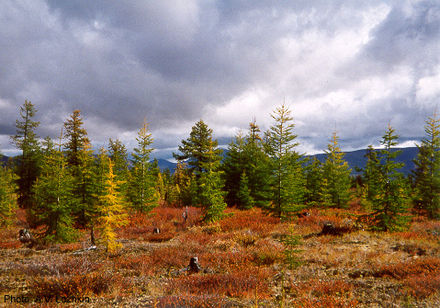
Larix gmelinii – the toughest trees of all the taiga and
therefore the world. The only species that has evolved to survive this far north.
*****
Some people are suspicious because you can’t tell if it’s warming or not so they believe that it’s a hoax perpetrated by Moscow to save gas and But there are new species of birds and fish. “Greta [Thunberg], she’s just a puppet, she’s being coached, right?” P 128 And Rawlence doesn’t feel so safe. There are many possible futures.
This is just 50 miles across the Bering Strait from Alaska.
The Frontier –
Fairbanks Alaska 64º 50’ 37’ N
Two keystone species not in Siberia – spruce and beavers and those change the directions of evolution. Russia is not Siberia.
There is no uniform relationship between treeline position and latitude. Treelines decline steeply between temperate and boreal latitudes but are relatively constant between ~32°N and 20°S, and the pattern is not symmetrical around the equator.
https://www.nature.com/scitable/knowledge/library/global-treeline-position-15897370/#:~:text=There%20is%20no%20uniform%20relationship,not%20symmetrical%20around%20the%20equator.
And so it goes around the world with no really good news at the end. We’re on count-down now. The stage is set for at least 2º warmer and that means death to a lot of species as well as people. Scientists are working at saving the most valuable of the northlands now. God speed.


 Becky's Books -
Pingback: Six Degrees of Separation – from Travels In Siberia to The Fire Next Time | Becky's Books –