
I read the first two books in this series a couple years ago and enjoyed them both. Timothy Dalton, the narrator of the audiobook, does an excellent job and the story is intelligent and beautifully written, as always, from John Banville aka Benjamini Black. The era and place are the 1950s, Dublin. Quirke, the eponymous protagonist, is a pathologist as well as being a widower and a drunk. Phoebe Griffin is Quirke’s adult daughter raised separately by her mother’s sister Elizabeth and husband, Mal Griffin In this book Phoebe has just found out that Quirke is her natural father.

Elegy for April
by Benjamin Black
2010 /
Read by Timothy Dalton 8h 29m
Rating 8/5; literary crime
April Latimer, a young, junior doctor from a very respectable but somewhat snobbish family, has not been heard from in over a week. Her friend, Phoebe, is worried so she tells Quirke who has just been released from an addiction program – his addiction of choice is booze.
He goes to the police even though Phoebe doesn’t want him to. Quirke spent his childhood in institutions before becoming a “man of the cloth.” And now his life is in shambles, his wife has been dead for over 20 years, and their child, Phoebe, was raised by his wife’s sister Elizabeth.
April’s family has all but disowned her (they’ll do that, too) for failing to live up to their good family name. It seems April is somewhat unmanageable, doing whatever she wants to do whenever she wants to do it. This includes taking up with unseemly men and going off somewhere for a week every once in awhile.
Based on Quirke’s report the police begin an investigation. This isn’t much of a procedural book and it’s certainly not a thriller or even much of a who-done-it. It’s more of a “what happened?” book. But the ambiance Black creates around a young woman whose blood was found on the floor when she disappeared, is rich and compelling. It’s a bit slow compared to the thrillers on the market these days but it’s more redolent of the 1950s which is when this takes place and I understand the characters better for that.
The themes are timely for the 21st century with abortion, social status, racial issues, and perhaps primarily white male dominance front and center, so mostly this is a very compelling book about a depressing situation.
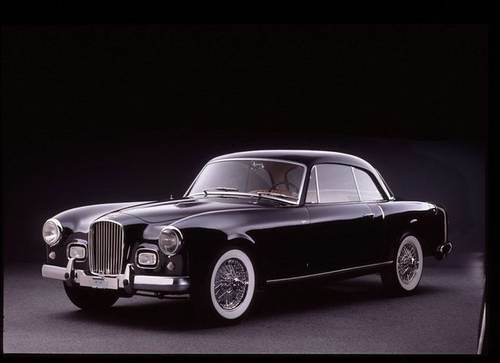
Fortunately, Banville/Black can provide humor relief, too, and here he has Quirke buying a brand new and very expensive 1956 Alvis TC 108 G Graber Super Coupé. This is funny because Quirke doesn’t know how to drive.


 Becky's Books -